Table of Contents >> Show >> Hide
- Why Yoga Can Trigger Neck Pain (Even If You’re “Flexible”)
- Quick Self-Check: What Kind of Neck Pain Are We Talking About?
- What to Do Right Now (First 48 Hours)
- The Usual Suspects: Yoga Poses That Commonly Aggravate the Neck
- Form Fixes That Save Necks (Without Ruining Your Flow)
- Neck-Friendly Alternatives (So You Don’t Feel Like You’re “Skipping” Yoga)
- Simple Rehab Moves (Gentle, Not Gritty)
- When You Can Go Back to Yoga (and How to Avoid Round Two)
- Prevention: The “Future You” Plan
- Frequently Asked Questions
- Real-World Experiences: What People Commonly Run Into (and Learn the Hard Way)
- Conclusion
Yoga is supposed to be the thing that un-kinks your body, not the reason you start turning your whole torso just to look at your friend.
If your neck hurts after yoga, you’re not aloneand you’re not “bad at yoga.” Neck pain usually comes down to mechanics: too much load,
too much range, too fast, or too many reps… sometimes with a side of “I saw it on social media and thought, how hard could it be?”
The good news: most mild-to-moderate neck pain improves with smart self-care and better form. The better news: you can keep doing yogajust
with a few upgrades to your technique, pacing, and pose choices. Let’s break down what’s happening, what to do today, and how to keep your
practice neck-friendly long-term.
Why Yoga Can Trigger Neck Pain (Even If You’re “Flexible”)
Neck pain after yoga most commonly comes from irritated muscles, joints, or nerves around the cervical spine (your neck). Yoga can challenge
the neck in a few predictable ways:
1) You accidentally turned your neck into a support beam
Some poses place body weight near the neck (or tempt you to do so). If the neck is bearing load it wasn’t trained for, tissues can get cranky.
That’s especially true for advanced inversions and deep spinal flexion/extension shapes.
2) You “found” extra range by borrowing it from the neck
It’s common to compensate with the neck when the upper back (thoracic spine), shoulders, or hips don’t have the mobility or strength your body
needs. Example: you want a deeper backbend, so your neck does the bending instead. It looks dramatic. It feels… dramatic. Your neck agrees.
3) You held tension where you needed stability
Many people unconsciously shrug the shoulders, clench the jaw, or brace the neck during challenging poses. That constant “mini-grip” can
overload the upper traps and neck extensorsespecially if you practice frequently or do fast flows.
4) You scaled up too quickly (or practiced unsupervised)
Yoga is generally considered safe when practiced appropriately, but injuries can happenespecially when people jump into advanced poses,
push through pain, or learn without guidance. Progression matters, and the neck is not the place to “power through.”
Quick Self-Check: What Kind of Neck Pain Are We Talking About?
Not all neck pain is the same. This quick check can help you respond appropriately (and avoid making it worse).
Common, usually mild patterns
- Muscle soreness or tightness (upper traps, base of skull, sides of neck)
- Stiffness when turning your head, especially the next morning
- A dull ache after a lot of chaturangas, planks, or long downward dog holds
- Tender spots that feel better with heat or gentle movement
Red flags: don’t “stretch it out”
Seek urgent medical care (or prompt evaluation) if neck pain is severe after an injury (fall, car accident), or if you have symptoms such as:
- Pain radiating down an arm with weakness, numbness, or tingling
- Severe headache, fever, neck stiffness, or feeling very unwell
- Trouble walking, balance problems, or loss of coordination
- Loss of bowel or bladder control
- Difficulty breathing or swallowing along with neck pain
- Pain that wakes you at night or keeps worsening despite self-care
If you’re unsure, get checked. Being cautious is not being dramaticit’s being smart with your spinal cord and nerves.
What to Do Right Now (First 48 Hours)
If your neck pain started after yoga and feels mild to moderate, the goal is to calm irritation, keep gentle movement, and avoid re-triggering
positions.
Step 1: Stop provoking poses (yes, even if the playlist is amazing)
Skip anything that recreates the painespecially deep neck flexion (chin jammed down), aggressive backbends (head dropped back), or weight-bearing
inversions. “No pain, no gain” is not a yoga sutra.
Step 2: Use cold or heat strategically
- First 48 hours: cold packs can help reduce soreness and irritation. Keep sessions brief (about 10–15 minutes), and protect your skin.
- After that: heat can relax tight muscles and improve comfort before gentle mobility work.
Step 3: Keep the neck movinggently
Complete rest can stiffen things up. Instead, try slow, pain-free range of motion:
look left/right, ear toward shoulder (lightly), and nod up/down within comfort.
Keep it easythis should feel like “oil the hinge,” not “force the hinge.”
Step 4: Modify your day (because “tech neck” loves company)
If you’re on a laptop or phone a lot, neck pain after yoga can be amplified by forward head posture.
Raise your screen, take micro-breaks, and keep shoulders relaxed and down.
The Usual Suspects: Yoga Poses That Commonly Aggravate the Neck
Plenty of poses are neck-friendly, but these are the ones most likely to create troubleespecially when alignment, strength, or setup is off.
Inversions and cervical compression risks
- Headstand variations (risk increases if you dump weight into the head/neck)
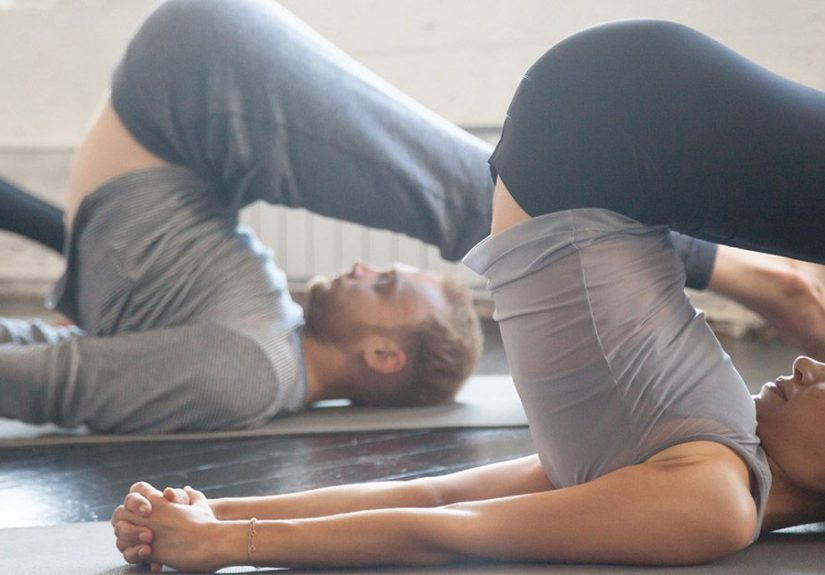
- Shoulderstand and Plow (deep neck flexion and pressure on cervical tissues)
- Unsupported “fancy” inversions attempted without preparation
If you’re working with inversions, think “shoulders and upper back do the work; neck stays long.”
Use props and progress graduallyor skip them if you have a history of neck issues.
Backbends that become “neckbends”
- Wheel or deep camel variations with the head dropped back too soon
- Upward-facing dog done by cranking the neck instead of lifting through the chest
- Fish pose with pressure through the throat/neck
Strength poses where the shoulders creep up
- Plank, side plank, chaturanga
- Downward-facing dog when shoulders shrug toward ears
- Arm balances without shoulder stability
Form Fixes That Save Necks (Without Ruining Your Flow)
Neck-friendly yoga is less about avoiding poses forever and more about distributing load where your body is designed to handle it:
shoulders, upper back, hips, and core.
Golden rule: keep a “long neck” (and a quiet jaw)
A long neck doesn’t mean rigid. It means no pinching, no aggressive tucking, and no dramatic flinging.
Relax your jaw and let your shoulder blades settle down your back.
Use the “chin tuck” lightlydon’t jam it
A gentle chin tuck can help stack your head over your spine (useful for posture and many strength poses),
but it’s a small movement: glide the chin straight back without tipping the head up or down.
Make your upper back do its job
Many neck problems are “upper-back problems in disguise.” In backbends, aim to lift and broaden through the chest.
In planks and dogs, push the floor away and keep the shoulder blades stable.
Prop like a professional
- Blankets can reduce neck strain in shoulderstand-style setups by elevating shoulders and giving the neck more space.
- Blocks bring the floor closer in triangles, half-moon, and forward foldsso your neck doesn’t strain to “reach.”
- Bolsters support restorative shapes so you’re not gripping your neck to relax (the irony!).
Neck-Friendly Alternatives (So You Don’t Feel Like You’re “Skipping” Yoga)
If your neck is irritated, swap in alternatives that keep the benefit without the cervical drama.
Instead of shoulderstand or plow
- Legs-up-the-wall (great inversion-like effect with minimal neck stress)
- Supported bridge (block under the sacrum, neck neutral)
- Reclined bound angle with support (opens chest without cranking neck)
Instead of deep backbends with head dropped
- Sphinx (gentle extension, easier to keep neck neutral)
- Low cobra focusing on chest lift, not chin lift
- Supported fish on a bolster (head supported, throat not compressed)
Instead of long down dog holds
- Puppy pose with forehead supported (neck relaxes)
- Tabletop with a long spine and steady shoulders
- Wall dog (hands on wall, hips backmuch less load)
Simple Rehab Moves (Gentle, Not Gritty)
If symptoms are mild and you don’t have red flags, these basics are commonly used in neck pain self-care and rehab:
easy range of motion, posture work, and light strengthening over time.
1) Slow neck range-of-motion “reset” (1–2 minutes)
- Turn head left/right slowly in a pain-free range
- Nod up/down gently (avoid end-range forcing)
- Ear toward shoulder lightly (no shoulder shrugging)
2) Gentle chin tucks (posture practice)
Sit tall. Glide chin straight back like you’re making a “double chin” on purpose (it’s finenobody’s filming).
Hold 2–3 seconds. Repeat 8–10 times. Stop if it causes sharp pain or increases arm symptoms.
3) Shoulder blade squeezes (because the neck loves strong neighbors)
Pinch shoulder blades gently back and down (not up toward ears). Hold 3–5 seconds. Repeat 8–10 times.
This can reduce the “neck does everything” problem by waking up upper-back support.
If pain persists beyond a week, keeps returning, or limits normal activity, consider evaluation and/or physical therapy.
Evidence-based neck care often combines mobility work with shoulder girdle endurance and strengthening.
When You Can Go Back to Yoga (and How to Avoid Round Two)
Returning to yoga is usually about progressive loadingadding challenge back in slowly while maintaining alignment.
Here’s a practical ramp:
Phase 1: Calm and restore (a few days)
- Short sessions (10–20 minutes)
- Neutral neck work: supported poses, gentle mobility, breathing
- No long holds in down dog, no inversions, no intense backbends
Phase 2: Rebuild stability (1–2 weeks)
- Add light strength: plank variations on knees, wall dog, supported warrior shapes
- Focus on shoulders down/back, neck long, ribs controlled
- Use props early and often
Phase 3: Reintroduce challenge (only if symptoms are quiet)
- Shorter holds and fewer reps at first
- Stop at the first sign of “pinchy” neck feedback
- Save advanced inversions for skilled instruction (or skipyour yoga membership doesn’t get revoked)
Prevention: The “Future You” Plan
Warm up the shoulders and upper back first
A couple minutes of shoulder circles, cat-cow, and gentle thoracic extension can prepare your body so your neck doesn’t take the hit.
Prioritize technique over depth
Depth is optional. Joint irritation is not. Choose a range where you can breathe smoothly and keep your neck out of the spotlight.
Pick the right class for your neck
Fast vinyasa and hot classes can be fun, but they also make it easier to rush, fatigue, and lose alignment.
If you’re prone to neck pain, balance your week with slower sessions, mobility work, and restorative practices.
Tell your instructor (and be specific)
“My neck gets sore with long down dog holds and deep backbends” is much more useful than “I have a weird neck thing.”
Clear info = better modifications.
Frequently Asked Questions
Is it normal to have neck pain after yoga?
Mild soreness can happen, especially after new poses or longer holds. But sharp pain, radiating symptoms, or recurring flare-ups are signals
to adjust your technique, intensity, or pose selection.
Should I stretch my neck if it hurts?
Gentle movement is often helpful, but aggressive stretching into pain can worsen irritation. Think “comfortable motion,” not “maximize range.”
If stretching increases symptoms down the arm, stop and get evaluated.
Do I need imaging (X-ray or MRI)?
Many neck pain cases improve with conservative care, and imaging is usually reserved for specific situationsespecially red flags or persistent
neurological symptoms. A clinician can guide this based on your history and exam.
Real-World Experiences: What People Commonly Run Into (and Learn the Hard Way)
To make this feel less like a textbook and more like real life, here are common experiences yoga practitioners describe when neck pain shows up
and what typically helps them turn it around.
The “Down Dog Marathon” Experience: A lot of people notice their neck feels tight after a flow class where downward-facing dog
appears approximately 400 times. The pattern is usually the same: shoulders creep up toward the ears, the head presses forward, and the neck
works overtime to “hold the pose.” The fix is surprisingly unglamorous: bend the knees, push the floor away, and treat down dog like a shoulder
and upper-back posenot a neck endurance contest. Many people say the moment they stop trying to force heels down and start prioritizing a long
spine, their neck calms down quickly.
The “I Dropped My Head Back Because It Looked Cool” Experience: In camel, wheel, or any big backbend, it’s common for people
to lead with the chin, fling the head back, and then wonder why their neck feels angry the next day. The lesson they report learning is this:
the backbend should come from the upper back and hips, not the cervical spine. Practitioners often do better when they keep the neck more neutral
at firstgazing forward or slightly upuntil the chest is truly lifted. They also learn that using blocks, a wall, or a supportive setup isn’t
“cheating,” it’s smart training.
The “YouTube Headstand Tutorial” Experience: People love the idea of inversions, and the internet makes them look like a quick
weekend project. A common story is someone practicing headstand without enough shoulder strength, then unknowingly dumping weight into the head
and neck. The outcome can be a sore neck, a headache-y feeling, or tingling that convinces them the pose is “not for them.” What often helps is
swapping to inversion prep: dolphin pose, forearm planks, wall-supported drills, and a hard rule that pain is a stop sign. Many people find they
get the confidence and benefits of inversions without the neck risk by choosing alternatives like legs-up-the-wall or supported bridge.
The “I’m Flexible, So I Must Be Safe” Experience: Flexibility can be a superpowerand also a trap. Some practitioners notice
neck pain because they can easily move into deep ranges without the stability to control them. They might sink into end-range in shoulderstand,
plow, or deep twists and feel fine in the moment, only to wake up stiff later. The aha moment is learning to back off slightly and build strength
around the range they already have. A slower class, longer warm-ups, and strength-focused yoga (or Pilates/physical therapy exercises) often
become the missing piece.
The “My Neck Hates My Desk Job, and Yoga Was the Final Straw” Experience: This one is everywhere. People spend hours with a head-forward
posture at work, then go to yoga and ask already-fatigued neck muscles to stabilize planks, dogs, and chaturangas. Yoga wasn’t the villainit was
the final input in an overloaded system. When they improve their daily posture (screen height, breaks, shoulder blade strength) and adjust yoga
to be more neck-neutral, their symptoms often drop dramatically. In other words: your neck lives 24/7, not just on the mat.
The “Props Felt Embarrassing Until My Neck Stopped Hurting” Experience: Lots of people admit they avoided props because they worried
it meant they weren’t advanced. Then neck pain arrived and forced a rethink. After trying blankets for shoulder support, blocks to bring the floor
closer, or bolsters for restorative shapes, they often report two things: (1) their neck feels better, and (2) their poses actually look cleaner
because they’re not compensating. The common takeaway is that props don’t make yoga easierthey make yoga more precise.
If any of these experiences sound familiar, you’re in good company. Neck pain after yoga is often a solvable puzzle: reduce the aggravator,
restore comfortable movement, rebuild strength, and return with better alignment. Your practice can still be challengingjust not in a “my neck
is filing a complaint” kind of way.
Conclusion
Neck pain from yoga doesn’t mean yoga is “bad for you.” It usually means your neck is doing a job that belongs to your shoulders, upper back,
or coreor you’re moving into ranges and loads faster than your tissues can adapt. Start with smart self-care, avoid provocative poses, and
rebuild with technique and props. If symptoms are severe, persistent, or come with neurological warning signs, get evaluated promptly.
The goal isn’t to quit yoga. The goal is to do yoga with a neck that stays quietand lets you enjoy savasana instead of negotiating with your pillow.