Table of Contents >> Show >> Hide
- What Are Giblets (and Why Do They Make Gravy So Good)?
- Old-Fashioned Giblet Gravy: The Game Plan
- Ingredients
- Step-by-Step: Old-Fashioned Giblet Gravy Recipe
- How to Get the Texture Just Right
- Gravy Troubleshooting (Because Holidays Are a Contact Sport)
- Make-Ahead, Storage, and Reheating
- Food Safety Notes (Quick, Practical, Not Buzzkill)
- Serving Ideas: Where This Gravy Shines
- Optional Variations (Still Old-School, Just With Personality)
- of Real-Life Experience With Old-Fashioned Giblet Gravy
If Thanksgiving had a love language, it would be gravy. Not the “I opened a jar and hoped for the best” kind
(no judgmentholiday survival is valid), but the old-fashioned giblet gravy that tastes like someone’s grandma
knew secrets and refused to write them down. This is that gravy: rich from turkey drippings, deeply savory from
a homemade giblet stock, and comforting in the way only a warm sauce can be when it hits mashed potatoes and
makes everyone suddenly act polite at the table.
We’re going classic on purpose: simmer the neck, heart, and gizzard into a fragrant stock; add liver at the end
(so it behaves); build a roux; whisk like you mean it; then stir in finely chopped giblets for that “yep, this is
the real deal” flavor. You’ll get a silky gravy with old-school backbonewithout the lumps, panic, or mysterious
gray sheen that haunts lesser sauces.
What Are Giblets (and Why Do They Make Gravy So Good)?
“Giblets” usually means a little packet of turkey parts tucked inside the bird: the neck, gizzard, heart, and liver.
Old-fashioned cooks didn’t toss those flavor gold barsthey simmered them into stock and turned that stock into gravy
that tastes like turkey’s greatest hits album.
- Neck: Big flavor, plus tender meat you can pick off after simmering.
- Gizzard: A tough, hardworking muscle that becomes tender after a longer simmer.
- Heart: Mild and meatyexcellent finely chopped in gravy.
- Liver: Powerful, distinct flavor; add late to avoid bitterness and overcooking.
Old-Fashioned Giblet Gravy: The Game Plan
Good giblet gravy is basically a three-act play:
- Act 1: Make giblet stock (it’s the flavor foundation, like drywall behind fancy paint).
- Act 2: Make a roux with turkey fat/drippings (this is how you get body and silkiness).
- Act 3: Whisk in stock, season, then add chopped giblets (and optional egg, if your family is Team Egg).
Ingredients
For the Giblet Stock (about 4–5 cups)
- Turkey giblets (neck, heart, gizzard; liver reserved for later)
- 6 cups water (or low-sodium turkey/chicken broth for extra richness)
- 1 onion, quartered
- 1–2 celery stalks, roughly chopped
- 1 carrot, roughly chopped (optional, but nice)
- 2 cloves garlic, smashed (optional)
- 1 bay leaf (optional)
- 6–8 peppercorns (optional)
- 1–2 sprigs thyme or a pinch of dried thyme (optional)
- Salt (go easy; you can season later)
For the Gravy
- Turkey pan drippings (skimmed) plus enough fat to total about 4 tablespoons
- 4 tablespoons all-purpose flour
- 3–4 cups warm giblet stock (from above), plus more as needed
- Picked meat from the neck, plus chopped heart and gizzard (and liver, if using)
- Salt and black pepper, to taste
- Optional: 1 hard-boiled egg, finely chopped (very old-school Southern vibe)
- Optional: a pinch of sage or poultry seasoning
- Optional: 1 teaspoon apple cider vinegar or a squeeze of lemon (for “wow, what is that?” brightness)
Step-by-Step: Old-Fashioned Giblet Gravy Recipe
Step 1: Make the Giblet Stock
- Rinse and sort. Remove giblets from the turkey. Set the liver aside in the fridge; we’ll add it later.
-
Simmer the tough guys first. Put the neck, heart, and gizzard in a pot with water (or broth), onion,
celery, and any optional aromatics. Bring to a gentle boil, then reduce to a low simmer. -
Let time do the work. Simmer 60–90 minutes, partially covered, until the gizzard is tender-ish and the
stock tastes turkey-forward. Skim foam if you see it. -
Add liver late (optional). If using the liver, add it for the last 20–30 minutes of simmering. This
keeps the flavor robust but less likely to turn bitter or chalky. -
Strain and save. Strain stock into a bowl. Pull meat off the neck; chop neck meat, heart, gizzard, and
liver (if used) very finely. Old-fashioned gravy is about tiny, tender bitsnot mystery chunks that start debates.
Pro tip: Keep the stock warm. Warm liquid blends into a roux smoothly; cold liquid makes whisking feel like an
upper-body workout you didn’t schedule.
Step 2: Prep the Pan Drippings (The “Turkey Gold”)
After roasting the turkey, pour drippings into a heat-safe container. Let it sit for a minute so the fat rises.
Spoon off fat for the roux. Keep the brown drippings (the flavorful juices) for the gravythis is where the “roast”
taste lives.
Step 3: Make the Roux (No Fear, Just Whisk)
-
Measure fat. In a saucepan, add about 4 tablespoons of turkey fat (from drippings). If you don’t have
enough, top up with butter. - Add flour. Sprinkle in 4 tablespoons flour and whisk constantly. You’re making a smooth paste.
-
Cook it out. Cook 2–4 minutes over medium heat, whisking, until it smells nutty instead of raw flour.
Keep it blonde to light goldenperfect for turkey gravy that tastes rich but not scorched.
Step 4: Whisk in Stock and Build the Gravy
-
Add warm stock slowly. Pour in warm giblet stock in a thin stream while whisking. Start with about
3 cups, then add more if needed. -
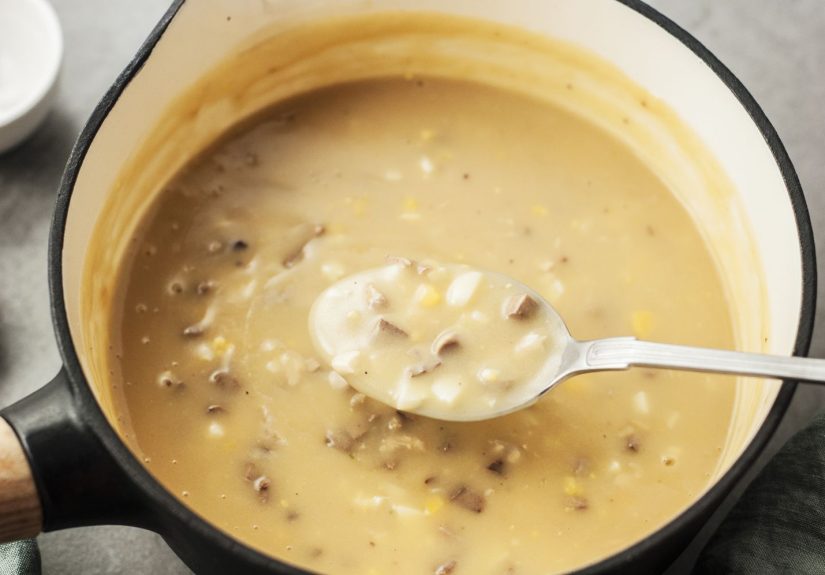
Simmer to thicken. Bring to a gentle simmer. The gravy should thicken in a few minutes. If it’s too
thick, add stock. If it’s too thin, keep simmering a bit longer. -
Season thoughtfully. Add salt and plenty of black pepper. If you love a classic Thanksgiving profile,
add a pinch of sage or poultry seasoningsmall pinch, not “I accidentally poured the whole bottle.” -
Add the good bits. Stir in finely chopped neck meat, heart, gizzard, and liver (if using). Add the
optional chopped hard-boiled egg if your family expects it (and if you enjoy delightful chaos). -
Finish with balance. Taste. If it tastes flat, add a tiny splash of vinegar or lemon. This doesn’t
make it “sour”it makes it taste more like itself.
How to Get the Texture Just Right
Gravy texture is personal. Some people want “coats a spoon,” others want “could patch drywall.” Here’s how to steer:
- Too thick: Whisk in warm stock a splash at a time.
- Too thin: Simmer longer, whisking often.
-
Need a quick fix: Mix 1 tablespoon flour (or cornstarch) with 2 tablespoons cold water, whisk into
simmering gravy, and cook a few minutes. Use this sparinglyroux-based gravy has the best flavor and texture.
Gravy Troubleshooting (Because Holidays Are a Contact Sport)
Help, It’s Lumpy
- Whisk vigorously while adding stock slowly.
- If lumps already moved in and changed the locks, strain the gravy through a fine mesh sieve, then return to the pot.
- An immersion blender can rescue you fastjust blend briefly so you don’t pulverize your giblet bits into pâté.
It’s Too Salty
- Add more unsalted stock or a splash of water.
- Balance with a little acidity (lemon/vinegar) and black pepper.
- If you have time, simmer with a chunk of onion, then remove it (old-school “simmer therapy”).
It Tastes Bitter
- Overcooked liver can do this. Next time, add liver late or skip it.
- A too-dark roux can also lean bitterkeep it blonde to golden for turkey gravy.
- Try a tiny pinch of sugar or a small pat of butter to soften harsh edges (tiny, not dessert).
It’s Greasy
- Skim more fat from the top.
- Whisk in a little extra stock and simmerfat can separate if the balance is off.
Make-Ahead, Storage, and Reheating
Yes, you can make giblet gravy ahead. In fact, it’s a sanity-saving holiday flex. Make the giblet stock 1–2 days in
advance and refrigerate it. On the big day, build the roux and finish the gravy with drippings and chopped giblets.
- Refrigerate: Cool quickly, store in an airtight container, and use within about 3 days.
- Freeze: Freeze up to about 3 months. Thaw overnight in the fridge for best texture.
-
Reheat: Reheat on the stovetop, whisking often. If it thickens too much, loosen with stock or water.
For safety and quality, reheat gravies by bringing them to a boil and ensuring they’re thoroughly hot.
Food Safety Notes (Quick, Practical, Not Buzzkill)
-
Cook turkey thoroughly. Turkey is considered safe when it reaches 165°F in the thickest parts.
Use a thermometer; guessing is how legendsand dry turkeyare made. - Handle giblets promptly. Keep them refrigerated until you’re ready to simmer.
-
Leftovers matter. Refrigerate gravy within a safe window after the meal and reheat leftovers until
piping hot (aim for 165°F) before serving.
Serving Ideas: Where This Gravy Shines
Obviously: mashed potatoes. But don’t stop there. This gravy is also amazing on:
- stuffing/dressing
- biscuits (thanksgiving brunch energy)
- open-faced turkey sandwiches
- roasted vegetables (yes, gravy can be a vegetable motivator)
- leftover turkey + rice (weekend comfort mode)
Optional Variations (Still Old-School, Just With Personality)
Extra-Rich “Company’s Coming” Version
Add a splash of cream at the end (a few tablespoons) and a pat of butter. It’s like putting a velvet jacket on your gravy.
Herby, Peppery Version
Stir in finely minced fresh thyme or parsley and crank the black pepper. This tastes especially good if your turkey is simply seasoned.
No-Giblet “Giblet-Style” Gravy
If you’re not into chopped giblets, you can still make a deeply flavorful gravy using the neck to build stock, then strain it and keep the gravy smooth.
You get the old-fashioned flavor without the texture debate at the table.
of Real-Life Experience With Old-Fashioned Giblet Gravy
The first time I made old-fashioned giblet gravy, I learned an important truth: gravy is not hard, but it is honest.
It reflects exactly how calmly you behaved while making it. If you whisk like you’re diffusing a bomb, the gravy knows.
If you dump cold stock into a hot roux all at once, the gravy knows. If you wander off to “just check the rolls real quick”
and forget the roux is on medium heat, the gravy definitely knowsand it will announce your mistake to everyone with a faint
burnt smell that makes relatives sit up like prairie dogs.
Over time, giblet gravy became my favorite kind of kitchen ritual because it turns “extra parts” into the best part.
There’s something satisfying about taking the neck, heart, and gizzardthings that look like they belong in a biology lab
and turning them into a stock that smells like Thanksgiving morning. The house changes when stock is simmering. People drift
into the kitchen pretending they’re looking for water, but really they’re sniffing the air like cartoon characters following
a scent trail.
I also learned that every family has a gravy philosophy. Some want it silky and perfectly smooth. Others want “specks,”
meaning tiny chopped giblets that prove you did the work. And then there’s the hard-boiled egg crowd, which is less a preference
and more a tradition handed down like an heirloom. The first time I added chopped egg, I thought it was… unusual. Then I tasted it.
It’s not there to be fancy. It’s there to be comforting, like an edible memory. Even people who swear they don’t like giblets
suddenly become strangely quiet when that gravy hits the plate.
The biggest “experience” tip I can give is this: make the stock when you’re not rushed. The holidays make everyone act like time is
an Olympic sport, and gravy punishes haste. If you simmer the giblets earlier in the day (or even the day before), you’ll have warm,
flavorful stock ready when the turkey comes out. That means when the oven door opens and the kitchen turns into a bustling airport,
your gravy is the one thing that feels under control. It becomes your calm cornerjust you, a whisk, and the gentle bubble of a pot.
Finally, gravy is a confidence builder. Once you’ve made giblet gravy from scratch, you start looking at other kitchen challenges like,
“Oh, you think you can scare me, soufflé? I have stared into the abyss of turkey drippings and emerged victorious.” And on the days when
things don’t go perfectlywhen it’s slightly thicker than you planned, or you had to strain a few lumpsyou’ll still have something
undeniably delicious. People won’t remember the tiny imperfections. They’ll remember that the gravy tasted like the holidays were made
by someone who cared. And they’ll ask for “just a little more,” which is the highest culinary compliment in the gravy universe.