Table of Contents >> Show >> Hide
- What happened
- Who Rebecca Cheptegei was
- Why this story hit so hard (and why it’s not “just a sports story”)
- How to report these cases without turning them into clickbait
- What sports organizations can do (practically, not performatively)
- What teammates, coaches, and fans can do
- Resources for readers in the United States
- Conclusion
- Experiences related to the topic: what survivors and running communities often describe
Content warning: This article discusses domestic violence and severe injury. If that’s not something you can read right now, it’s okay to skip itand it’s always okay to ask for help.
The world loves a comeback story. An Olympian pushes through pain, doubt, and a training schedule that looks like it was designed by a caffeine-fueled spreadsheet. But sometimes the most dangerous part of an athlete’s life isn’t a downhill turn at mile 23it’s what happens off the course, behind a closed gate, inside a relationship that has turned into a threat.
In early September 2024, Ugandan Olympic marathon runner Rebecca Cheptegei was attacked at her home in Kenya, doused in petrol, and set on fire, according to police and reporting at the time. She later died from her injuries. The case horrified the running worldand also exposed something many advocates have warned for years: elite performance doesn’t make women safer. Sometimes it makes them a target.
What happened
Reports said the attack occurred on September 1, 2024, at Cheptegei’s residence in western Kenya’s Trans Nzoia County, a region near training hubs where many East African runners live and prepare for competition. Authorities and multiple news outlets reported that her partner (described in different accounts as a boyfriend or former boyfriend) allegedly poured petrol on her and set her on fire during a domestic dispute.
Cheptegei was taken to a referral hospital in Eldoret, Kenya, with burns reported across more than three-quarters of her body. She died a few days later, with reporting attributing her death to complications including organ failure.
The man accused in the attack was also reported to have suffered significant burns and later died in hospital, according to subsequent coverage.
A timeline (as widely reported)
- September 1, 2024: Cheptegei is attacked at home in Trans Nzoia County, Kenya; reporting says petrol was used to set her on fire.
- Early September 2024: She is treated in Eldoret with severe burns covering most of her body.
- September 5, 2024: Cheptegei dies from injuries sustained in the attack, according to multiple reports.
- September 9–10, 2024: The accused attacker is reported to die from burn-related complications.
- September 2024: Paris officials announce plans to honor Cheptegei by naming a sports facility after her.
Who Rebecca Cheptegei was
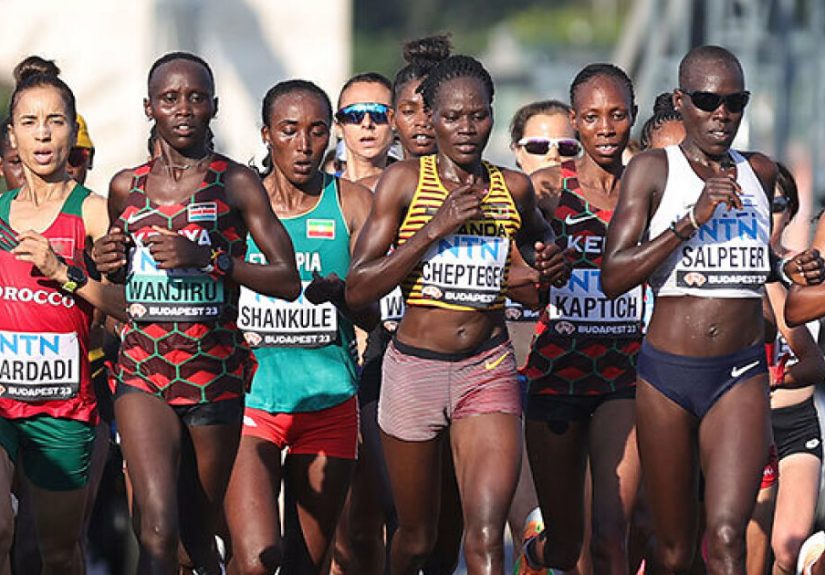
Cheptegei was not “just” an Olympianshe was the kind of athlete distance running is built around: resilient, consistent, and unglamorous in the best way. She competed in the women’s marathon at the Paris 2024 Olympics, and reports noted she finished 44th. That number may look ordinary to people who only watch medal ceremonies, but anyone who has ever tried to run 26.2 miles knows the truth: finishing an Olympic marathon is an extreme accomplishment, full stop.
She was also reported to be Uganda’s national record-holder in the marathon, and coverage highlighted her success in other endurance disciplines as well. Several outlets reported she was a mother of two, and Reuters also reported she served in Uganda’s defense forces, later receiving military honors at her burial.
Put simply: Cheptegei had built a life that required rare disciplinetraining, travel, competition, family responsibility, and public pressure. She was running at the highest level in the world, and she was still not protected from intimate-partner violence.
Why this story hit so hard (and why it’s not “just a sports story”)
It’s tempting to treat tragedies involving famous people as isolated shocksunthinkable, extraordinary, “out of nowhere.” But multiple reports emphasized that Cheptegei’s death fit into a wider pattern of gender-based violence affecting female athletes in Kenya’s running ecosystem. In the years leading up to 2024, high-profile casesincluding the killing of Kenyan runner Agnes Tiropprompted renewed calls for reforms, accountability, and real safety planning.
Kenya is a global center for distance running. It’s also a place where many athletesespecially womentrain far from extended family support systems, sometimes living in rural homes or training camps. When danger escalates, isolation can be an accelerant: fewer witnesses, fewer nearby relatives, fewer places to go quickly.
Success can attract control
Reuters reporting described dynamics that advocates often underline: when a woman’s earning power rises, an abusive partner may intensify tactics to regain control monitoring spending, demanding property rights, threatening public humiliation, or escalating to violence when a victim tries to leave.
In Cheptegei’s case, reporting connected the conflict to property and landone of the most common pressure points in domestic disputes because it’s not just money. It’s autonomy. It’s stability. It’s the ability to say, “I can live without you,” and mean it.
Violence isn’t a “private matter” when it becomes lethal
Too many communities still treat intimate-partner violence as a domestic issue that outsiders shouldn’t “interfere” with. But when threats are repeated, when stalking begins, when isolation increases, when a partner’s anger becomes unpredictablethose aren’t relationship problems. They are risk factors.
Sports culture can make this worse. Athletes are trained to endure discomfort and downplay painphysically and emotionally. When “push through” becomes a personality trait, it can also become a trap: victims may minimize danger to keep training, competing, and “staying focused.” Abusers often exploit that: they know their partner is conditioned not to quit.
How to report these cases without turning them into clickbait
The headline version of this story is shockingand that’s exactly the problem. If the audience only remembers the horror, we lose the lesson. Responsible coverage should do three things:
- Name the violence clearly: This is intimate-partner violence, not “a lovers’ quarrel” and not “a tragic dispute.”
- Center the victim’s life: Cheptegei was an athlete, a parent, and a professionalher identity is bigger than her death.
- Point to prevention: Patterns are visible. Interventions exist. Safety planning is not hopelessit’s necessary.
Even a small language choice matters. “Set on fire” is accurate reporting, but it can also pull readers toward morbid curiosity. The better focus is the mechanism of harmcoercive control escalating into attempted murderand what systems failed to stop it.
What sports organizations can do (practically, not performatively)
Statements of condolence are easy. Prevention is harder. But if federations, clubs, and event organizers want to be part of the solution, there are concrete steps:
1) Build domestic-violence response into athlete support
Elite athletes already receive support for nutrition, injury rehab, and travel logistics. Safety should be treated the same way: confidential reporting channels, trained staff, and referral networks for legal aid, counseling, and emergency housing.
2) Treat coercive control as a red flag, not “drama”
Control often shows up before physical violence: isolating the athlete from teammates, sabotaging training, demanding passwords, tracking location, controlling prize money. These are not “relationship issues.” They are warning signs.
3) Support financial and legal independence
Reporting around Cheptegei highlighted money and property tensions. Organizations can help athletes protect earnings, property documentation, and legal rights. Not because athletes are naïvebut because abusers often weaponize bureaucracy and intimidation.
4) Partner with local services where athletes actually live
Many runners train in rural or semi-rural areas. A “policy” that only exists in a capital city office is not a safety plan. Real partnerships mean local shelters, local police liaison, and community advocates who can respond quickly.
What teammates, coaches, and fans can do
Most people want to helpbut don’t know how without making things worse. Here are better defaults:
- Believe patterns, not excuses: If someone repeatedly shows up scared, controlled, or isolated, take it seriously.
- Offer options, not orders: “Do you want me to stay with you?” lands better than “You need to leave.”
- Help with logistics: Safe rides, a spare phone, a place to keep documents, a contact listthese details save time when danger spikes.
- Don’t confront the abuser directly: It can escalate risk. Focus on the victim’s safety plan and professional support.
- Keep it confidential: Gossip is gasoline. Privacy can be protection.
Resources for readers in the United States
If you or someone you know may be experiencing relationship abuse, help is available:
- National Domestic Violence Hotline: 1-800-799-SAFE (7233)
- Text: “START” to 88788 (Hotline)
- If you’re in immediate danger: call 911
If you are reading this outside the U.S., local hotlines and women’s support organizations may be available in your country or region.
Conclusion
Rebecca Cheptegei’s story is devastating, and it’s also clarifying. It forces a hard truth into the open: talent, discipline, and public recognition do not shield women from violence at home. If anything, success can provoke a dangerous backlash from people who believe they’re entitled to control it.
The running world responded with grief and outrage. Paris officials publicly discussed honoring Cheptegei’s memory. Those gestures matterbut the real tribute is prevention: building systems that treat intimate-partner violence as an urgent safety issue, not a side note to an athlete’s career.
The finish line worth chasing isn’t just faster times. It’s a world where women can train, compete, and come home safely.
Experiences related to the topic: what survivors and running communities often describe
It’s important to say this plainly: there is no “typical” survivor story, and no one deserves harmever. Still, advocates and support organizations often describe recurring patterns in cases of intimate-partner violence, including those involving athletes. The following are common experiences people report (shared here in an educational way, not as medical or legal advice).
“It didn’t start with violence. It started with control.”
Many survivors describe a slow shift that’s easy to miss at first: a partner who “just worries,” who “just wants to know where you are,” who “doesn’t like your coach,” who “hates your teammates,” who “thinks the sport is taking you away.” In running culture, where schedules are intense and travel is frequent, controlling behavior can disguise itself as normal concern: Who are you training with? Why did you get home late? Who was messaging you after the race? What looks like jealousy can turn into monitoring. What looks like monitoring can turn into isolation.
The training environment can amplify risk
Elite runners often live far from their families, especially when they relocate for better coaching, altitude, or competition access. Survivors sometimes describe the same three stressors: distance from relatives (fewer safe homes to run to), public visibility (social media attention that triggers jealousy), and financial pressure (prize money, contracts, and property decisions becoming relationship battlegrounds).
Some athletes describe a partner who insists on “managing” moneyholding ATM cards, demanding bank access, pressuring them to buy land in the partner’s name, or arguing that the athlete “owes” them for support. When an athlete tries to set boundariesseparate accounts, independent decisions, or a breakupabusers may escalate quickly, especially if they feel their control slipping.
Leaving can be the most dangerous moment
A heartbreaking pattern in survivor accounts is that the period right after a breakupor even after a victim begins planning to leavecan carry the highest risk. That’s when stalking, threats, and “last chance” pleas can intensify. Survivors sometimes describe partners who show up unexpectedly at training routes, at churches, at markets, outside school gatesany place that says, “I can reach you whenever I want.”
In sports settings, this can be complicated by travel: a survivor might feel safest at a major meet with security and crowds, but most of life happens back at home, where routine becomes predictable. Survivors often say that the scariest moments weren’t dramatic fightsthey were quiet escalations: a partner waiting in the dark, a phone suddenly missing, a neighbor saying they saw someone near the gate, a threatening message that reads like a promise.
Teammates’ support can be lifesavingwhen it’s specific
Survivors frequently describe that what helped most wasn’t a vague “let me know if you need anything.” It was practical help offered without judgment: a ride to a safe location, someone who stayed on the phone during a walk home, a teammate who held copies of documents, a coach who connected them with a trusted advocate, a friend who quietly checked in after the “everything’s fine” text.
People also describe the harm of public pressure: being told to “focus on training,” being urged to “keep it private,” or being warned that speaking up will “ruin sponsorships.” Shame is one of abuse’s favorite tools. A supportive community reduces shame and increases options.
Healing isn’t linearand athletes don’t need to “earn” safety
Survivors often describe how trauma affects sleep, concentration, appetite, and confidencethings athletes typically treat as performance variables. That can lead to self-blame: Why can’t I train like I used to? But safety is not a medal you qualify for. It’s a baseline human right. Many survivors rebuild gradually: one trusted relationship at a time, one practical safeguard at a time, one day at a time.
If you’re reading this and recognizing pieces of your own life, you don’t need to wait for “proof” or a worst-case moment to reach out. Talking to a hotline, counselor, or trusted local organization can be the first step in creating a plan that fits your reality.