Table of Contents >> Show >> Hide
- What “Open and Airy” Actually Means (It’s Not Just Fewer Walls)
- Plan First, Demo Later: The Non-Instagram Part of Renovation
- Opening Up Walls: Structural Smarts (and Permit Reality)
- How to Make a Kitchen Feel Brighter (Even Without New Windows)
- The Island: Your Airy Kitchen’s MVP (If You Size It Right)
- Open Shelving: Airy, Trendy, and a Little Bit of a Trap
- Ventilation Is Non-Negotiable in an Open Concept Kitchen Remodel
- Layered Lighting: The Secret Ingredient for “Airy” After Sunset
- Sound, Clutter, and Privacy: The “Open Concept” Trade-Offs (and Fixes)
- Budget Talk: What an Open and Airy Kitchen Renovation Typically Costs
- A Renovation Timeline That Won’t Surprise You (Much)
- Common Mistakes That Make Kitchens Feel Less Open
- Experiences: What Living Through an Open and Airy Kitchen Renovation Feels Like (The Real-Life )
- Conclusion
If your kitchen feels like a cave where joy goes to quietly wilt (right next to the stale cereal), you’re not alone.
A truly open and airy kitchen renovation isn’t just about knocking down a wall and calling it “modern.”
It’s about light, flow, function, and yesmaking sure you can open the dishwasher without body-checking the island.
In this guide, we’ll break down how to create an airy kitchen design that looks bigger, feels brighter, and works better
for real life: weekday breakfasts, chaotic meal prep, family “helping,” and that one friend who always hangs out exactly
where you’re trying to chop onions.
What “Open and Airy” Actually Means (It’s Not Just Fewer Walls)
“Open and airy” is a combo of design choices that increase visual space and improve usability.
Most successful open concept kitchen remodels share a few traits:
- Clear sightlines (you can see across the room without cabinetry interrupting your view)
- Natural light that travels farther (windows, doors, or skylights aren’t blocked by partitions)
- Smarter circulation (people can move through the kitchen without funneling into a single choke point)
- Layered lighting for evenings (because daylight doesn’t RSVP for dinner)
- Clutter control (open kitchens are beautiful… until the mail pile is on the counter forever)
Important note: “Open” doesn’t have to mean “one giant echo chamber.” Many homeowners are choosing a
broken-concept layoutbigger openings, partial walls, or architectural dividers that keep the airy feel
while adding privacy and noise control. That’s often the sweet spot.
Plan First, Demo Later: The Non-Instagram Part of Renovation
Before you start removing walls like you’re auditioning for a home makeover show, get clarity on three things:
your layout, your budget, and your structural reality.
Open and airy kitchen renovations can be straightforward, but they can also snowball if you discover plumbing, wiring,
HVAC, or load-bearing surprises.
Start With Flow: Work Zones Beat “The Triangle” Hype
The old “kitchen triangle” (sink, stove, fridge) is still useful, but most modern kitchens function best with
work zones:
- Prep zone: landing space near the sink with tools, trash, and cutting boards
- Cooking zone: range/cooktop, utensils, spices, and ventilation
- Cleaning zone: sink, dishwasher, and dish storage that don’t collide
- Food storage zone: fridge/pantry with a clear “drop zone” for groceries
- Serving/social zone: island seating, beverage station, or snack access away from the cook
This is how you get a kitchen that feels open and works when multiple people are in it. Airy shouldn’t mean
“we’re all standing in a line waiting to pass.”
Clearances Matter More Than Your Pendant Lights
One of the fastest ways to ruin an open kitchen is to create bottlenecks. Use practical spacing guidelines when
planning aisles and appliance zones:
- Work aisles: plan generous space for cooking and prepespecially if more than one person cooks
- Walkways: routes through the kitchen should stay clear, even when appliances are open
- Appliance “landing” areas: give yourself counter space near the fridge, oven, and microwave
If you’re working with a designer or contractor, ask them to sanity-check your plan against established kitchen
planning recommendations. A beautiful layout that causes daily traffic jams is just a very expensive inconvenience.
Opening Up Walls: Structural Smarts (and Permit Reality)
Removing a wall can be the moment your kitchen finally exhalesmore light, better connection to dining/living areas,
and space for an island. But it can also be the moment your house says, “Oh, you thought that wall was decorative?”
Here’s what to treat as non-negotiable:
- Confirm whether the wall is load-bearing. If it is, you’ll likely need a beam and proper support.
- Plan for mechanical systems. Walls often hide wiring, plumbing vents, ductwork, and HVAC returns.
- Expect permits and inspections when structural, electrical, plumbing, or gas work is involved.
- Budget for engineering if your project changes structure.
Pro tip: If your goal is openness, you don’t always need to delete every wall. Widening a doorway, adding a cased
opening, or creating a half wall with a counter can deliver the airy effect without a full structural overhaul.
How to Make a Kitchen Feel Brighter (Even Without New Windows)
Natural light is the headline act in an airy kitchen design, but it’s not the only performer. You can amplify light
with smart finishes and layout tweaks.
High-Impact Ways to Boost Brightness
- Light-reflective surfaces: glossy tile backsplashes, satin paint, or lightly polished stone
- Consistent flooring: extending the same floor through adjacent areas can make the whole space feel larger
- Glass elements: glass-front uppers (used sparingly) keep things airy without going full “open shelf anxiety”
- Lower visual clutter: fewer competing materials = calmer, brighter feel
- Cabinet choices: lighter finishes and simple door styles reduce visual weight
If you’re adding windows or doors, consider how they’ll affect layout. A giant window is gorgeousunless it forces
you to put the range in a weird corner where no one can reach the spatula drawer without doing yoga.
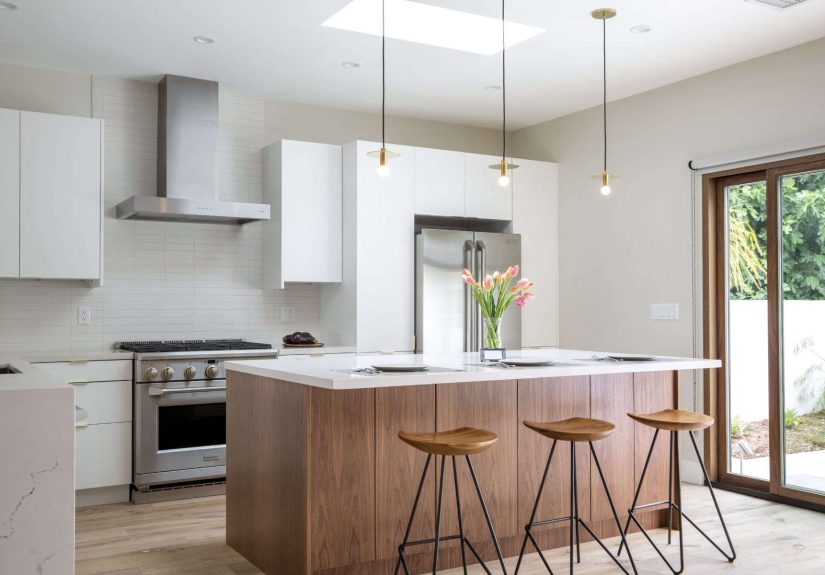
The Island: Your Airy Kitchen’s MVP (If You Size It Right)
In many open and airy kitchen renovations, the island becomes the heart of the space: prep station, hangout zone,
snack distribution center, and occasional laptop desk (we won’t judge).
The key is making sure your island supports flow rather than blocking it. A too-large island can turn an open
kitchen into a maze. A too-small island becomes a decorative speed bump.
What to Build Into the Island (So It Earns Its Keep)
- Storage: deep drawers for pots, pans, and small appliances (hello, toaster collection)
- Trash pull-out: near prep space so you’re not drip-walking across the kitchen
- Seating: positioned away from the main cook path so guests aren’t standing in your sauté zone
- Power: outlets for mixers, phone charging, and the inevitable air fryer phase
- Optional prep sink: great for multi-cook kitchens (but adds plumbing cost)
Example: In a family kitchen that opens to a living room, an 8-foot island with drawers on the kitchen side and
seating on the living side creates a natural boundaryopen, but organized.
Open Shelving: Airy, Trendy, and a Little Bit of a Trap
Open shelves can make a kitchen feel lighter, but they also put your dishware on stage. If your style is
“mismatched mugs acquired from emotional support road trips,” open shelving will tell on you.
A practical approach is the hybrid strategy:
- Use a small run of open shelves in a low-splash area (like near a coffee bar)
- Keep most storage behind doors (because dust and grease are undefeated)
- Use closed cabinetry for pantry items, plastics, and anything with a label you don’t want to see daily
In many real remodels, homeowners still prioritize closed storagethen sprinkle in open shelving where it adds
personality without creating constant maintenance.
Ventilation Is Non-Negotiable in an Open Concept Kitchen Remodel
When your kitchen opens to the rest of the home, cooking smells travel farther and linger longer. That means your
ventilation strategy matters more than ever. A great range hood is the unsung hero of an airy kitchenbecause
“airy” should not mean “the entire living room smells like last night’s fish.”
Ducted vs. Ductless: What Works Best?
- Ducted hoods vent air outside and generally remove heat, smoke, and odors more effectively.
- Ductless (recirculating) hoods filter and return air to the room; they can help, but performance depends on filters and maintenance.
How Much Power Do You Need?
A common rule of thumb for gas cooking is sizing ventilation based on total burner output.
For many households, planning adequate airflow helps keep an open plan comfortableespecially if you cook often or at high heat.
Also consider noise. A hood that sounds like a jet engine will not be used, and an unused hood is basically
decorative wall art with buttons.
Layered Lighting: The Secret Ingredient for “Airy” After Sunset
Natural light sells the dream during the day. Layered lighting makes you love the kitchen at night.
A well-lit kitchen uses multiple lighting layers so the space feels bright, warm, and functional.
The Three Lighting Layers That Actually Matter
- Ambient: overall room light (recessed lights, surface fixtures, or well-placed ceiling lighting)
- Task: focused light for work zones (under-cabinet lighting, pendants over an island, sink lighting)
- Accent: mood and depth (toe-kick lighting, inside glass cabinets, picture lights, or subtle sconces)
If you do one upgrade for “open and airy” vibes, make it under-cabinet lighting. It reduces shadows on counters,
makes the space feel more high-end, and helps you see what you’re chopping (including your dignity after a long day).
Sound, Clutter, and Privacy: The “Open Concept” Trade-Offs (and Fixes)
Open kitchens are social and bright, but they also come with real-life issues:
noise travels, mess is visible, and privacy is limited. The goal is not pretending these problems don’t exist.
The goal is designing around them.
Design Fixes That Keep Things Open Without Losing Your Mind
- Create zones: use lighting, rugs, ceiling treatments, or furniture placement to define areas
- Add a buffer: a beverage station or pantry wall can keep traffic out of the main cooking zone
- Use “broken concept” elements: partial walls, interior windows, slatted dividers, or wide cased openings
- Control clutter: more drawers, appliance garages, and pantry storage = calmer counters
- Soften sound: textiles, upholstered seating, and acoustic-friendly finishes reduce echo
Open doesn’t have to mean exposed. You can keep the airy feel while still having places to hide a blender,
a charging station, and the random pile of papers that appears like it pays rent.
Budget Talk: What an Open and Airy Kitchen Renovation Typically Costs
Kitchen remodel budgets vary widely based on size, region, materials, and how dramatic the changes are.
In general, costs climb fast when you change the layout, relocate plumbing or gas, or remove structural walls.
A practical way to think about budget is by “scope level”:
- Cosmetic refresh: paint, lighting, hardware, maybe countertopsminimal layout changes
- Mid-range remodel: new cabinets, counters, appliances, improved lighting, possible minor layout tweaks
- Major renovation: layout changes, structural work, new systems, custom features, premium finishes
If resale value matters, many homeowners aim for a well-executed mid-range remodel: durable finishes,
improved function, and a brighter feel without going so bespoke that you’re paying luxury prices for
someone else’s future taste.
A Renovation Timeline That Won’t Surprise You (Much)
Every remodel has its own personality. Some are calm and orderly. Others are basically a dust-filled saga.
But most open concept kitchen renovations follow a similar sequence:
- Planning & design: layout, finishes, budget, and contractor bids
- Permits & engineering: especially for structural, electrical, plumbing, or gas changes
- Demo: remove old finishes and (carefully) open up walls
- Rough-ins: electrical, plumbing, HVAC adjustments
- Drywall & paint: repair, smooth surfaces, prime
- Cabinets & millwork: install base and upper cabinets, panels, trim
- Counters & backsplash: templating, fabrication, install
- Lighting & fixtures: pendants, under-cabinet, faucets, hardware
- Final punch list: adjustments, touch-ups, and the ceremonial first meal
Common Mistakes That Make Kitchens Feel Less Open
- Oversizing the island: it looks impressive until it blocks every path
- Skipping task lighting: shadows on counters kill the bright-and-airy effect at night
- Not upgrading ventilation: open plans need better odor and smoke control
- Under-planning storage: “open” becomes “cluttered” fast without hidden homes for stuff
- Too many materials: visual noise makes the room feel smaller, not larger
Experiences: What Living Through an Open and Airy Kitchen Renovation Feels Like (The Real-Life )
An open and airy kitchen renovation sounds glamorous until you’re eating dinner off paper plates while your
microwave sits on a folding table like it’s the guest of honor. And honestly? That’s normal. Homeowners often
say the most surprising part isn’t choosing cabinet colorsit’s realizing how much daily life revolves around
the kitchen, even when the kitchen is temporarily… not exactly a kitchen.
The first “experience” many people share is the emotional roller coaster of demolition. There’s genuine excitement
when walls come down and light starts traveling farther through the home. You can finally see the potential.
But then reality shows up wearing steel-toe boots: exposed studs, surprise wiring, and the discovery that your
“simple” wall opening is home to plumbing that apparently has been freelancing without supervision since 1987.
This is where good planning earns its keep.
Another common lived moment: the noise. Open concept kitchen remodels can be loud even before you get your open
concept kitchen. During renovation, sound bounces through the house, phone calls become “walk outside” events,
and pets develop strong opinions about nail guns. After the renovation, homeowners often notice the new kind of
noise toothe good kind, like conversations flowing between the kitchen and living room, and the not-so-good kind,
like the dishwasher becoming part of movie night. That’s why people who are happiest long-term tend to think ahead:
quieter appliances, soft surfaces nearby, and a layout that keeps the loudest work zones away from the couch.
Then there’s the “decision fatigue” chapter. An airy kitchen design looks effortless in photos, but it’s built from
dozens of tiny choices: paint sheen, cabinet finish, hardware size, faucet style, backsplash texture, grout color,
and lighting temperature. Homeowners often describe hitting a point where even choosing a trash pull-out feels like
a personality test. The best antidote is a clear design direction early on: pick a simple palette, repeat finishes
intentionally, and avoid adding new materials just because they’re trendy. Open and airy kitchens thrive on calm,
cohesive visual rhythm.
One of the most relatable experiences is learning how much you love (or hate) the island. People imagine it as a
social huband it often becomes exactly that. Kids do homework there. Friends gather there. Someone always leans
there with a drink while you’re trying to plate food like you’re on a cooking show. Homeowners who love their final
result usually planned seating so it doesn’t interrupt the cooking path, added outlets for real life, and built in
storage so the island isn’t just a big empty block taking up oxygen.
Finally, there’s the moment you notice the “airy” part isn’t only visual. When lighting is layered correctly, when
ventilation actually handles weeknight cooking, and when the space flows without collisions, the kitchen feels
lighter to live in. The house feels more connected. Hosting becomes easier. Even ordinary mornings feel less cramped.
And yes, you may still have a pile of mail on the counter sometimesbecause you’re humanbut now you’ll have a
drawer nearby that can hide it in under two seconds. That’s what a successful renovation really delivers: beauty
you can actually use.
Conclusion
An open and airy kitchen renovation is equal parts design and strategy. The magic comes from
combining smart layout planning, ample lighting (natural and layered), strong ventilation, and clutter-taming storage.
Whether you fully embrace an open concept kitchen remodel or choose a “broken concept” approach, the goal stays the same:
a kitchen that feels brighter, bigger, and betterwithout sacrificing how you actually live.