Table of Contents >> Show >> Hide
- First: What OpenAI Actually Said About Encryption
- What ChatGPT Uses Today: Encryption Is Already Here (Just Not the “Zero-Knowledge” Kind)
- So What Is “Client-Side Encryption,” and Why Is Everyone Excited?
- The Important “But”: AI Still Has to Read Your Message to Respond
- Why This Is Happening Now: Trust, Lawsuits, and the “Data Gravity” Problem
- What Stronger Encryption Would Mean for You (By User Type)
- What Encryption Won’t Do (So You Don’t Over-Trust the Lock)
- How to Protect Your ChatGPT Privacy Right Now (Before New Encryption Arrives)
- Will Client-Side Encryption Change Features Like Memory, Search, and Safety?
- What This Means in Plain English
- Conclusion: Privacy Is Becoming a Product Feature (Finally)
- Real-World Experiences: How Encryption Changes the Vibe
- Experience #1: The freelancer who keeps rewriting client emails
- Experience #2: The startup operator juggling investor updates
- Experience #3: The person asking health questions they’re embarrassed to Google
- Experience #4: The lawyer who wants to brainstorm but can’t share facts
- Experience #5: The parent using ChatGPT like a planning assistant
If you’ve ever typed something into ChatGPT and immediately thought, “Wow, I just said that out loud to a robot,” you’re not alone. We treat chatbots like a mix between a search engine, a therapist, a coworker, and that friend who always answers at 2 a.m. Which is exactly why the words “encryption for ChatGPT” hit differently. Encryption is the lock. Your messages are the diary. And OpenAI has publicly said it’s working toward a future where your private conversations can be “inaccessible… even [to] OpenAI.” That’s a big dealtechnically, legally, and emotionally (because yes, your midnight “is my boss mad at me?” spiral deserves privacy too).
In this guide, we’ll break down what OpenAI’s encryption plans likely mean, what ChatGPT already does today, and what you should do right now if privacy matters to you (spoiler: it does). We’ll keep it practical, avoid the tinfoil-hat vibes, and include real-world examples like the time you pasted a contract clause into chat and suddenly remembered confidentiality exists.
First: What OpenAI Actually Said About Encryption
OpenAI has stated that its long-term roadmap includes client-side encryption for your messages with ChatGPT, describing it as a way to keep private conversations “private and inaccessible to anyone else, even OpenAI.” That language strongly suggests a move toward an end-to-end-ish model where the provider can’t easily read stored message contents. (We’ll get into the “ish” part in a minute, because AI systems still have to process your text to answer you.)
The timing of the statement matters. It came in the context of public debate around data retention and legal demands for chat logs. Translation: encryption isn’t just a nice-to-have featureit’s becoming a trust-and-safety battleground, and OpenAI is signaling a direction that aligns with stronger user control.
What ChatGPT Uses Today: Encryption Is Already Here (Just Not the “Zero-Knowledge” Kind)
Before we talk about “planned encryption,” let’s clarify something that surprises a lot of people: most modern online services already encrypt data in transit and often at rest, and OpenAI states it uses industry-standard cryptography for business and enterprise offerings.
1) Encryption in transit: the “no eavesdropping on the wire” layer
When you chat with ChatGPT, your data is typically protected while traveling across the internet using modern transport encryption (think TLSwhat makes the little lock icon in your browser feel like it’s doing something). This helps prevent interception while data moves between you and the service.
2) Encryption at rest: the “if someone steals a hard drive” layer
OpenAI also describes encrypting stored data at rest (for example, AES-256 in certain contexts). This reduces risk if storage systems are accessed improperly or backups leak. Howeverand this is the keyat-rest encryption doesn’t automatically mean OpenAI can’t read it, because the service typically controls the keys needed to decrypt.
So yes, encryption exists today. But it’s mostly the standard “secure storage and transport” modelnot the “provider can’t access content” model people associate with truly private messaging apps.
So What Is “Client-Side Encryption,” and Why Is Everyone Excited?
Client-side encryption generally means encryption happens on your device before data is stored on a server. If done in a “zero-knowledge” way, the provider never receives the key needed to decrypt what’s stored. That’s the dream scenario for privacy: even if a company wanted to read your stored chats, it couldn’t. Even if someone demanded access, the content would be unreadable without your key.
Think of it like this:
- Today’s common model: Your chat is encrypted while traveling and stored encrypted, but the provider can decrypt it if needed.
- Client-side / zero-knowledge style: Your device encrypts the chat; the provider stores ciphertext; only you hold the key.
If OpenAI implements something close to that, it could meaningfully reduce who can access stored ChatGPT conversations. That’s huge for people using ChatGPT for sensitive work, legal drafting, health questions, journaling, orlet’s be honestventing.
The Important “But”: AI Still Has to Read Your Message to Respond
Here’s the honest technical catch: ChatGPT can’t generate a useful answer from text it can’t read. So even with client-side encryption, there are a few possibilities:
Option A: Encrypt what’s stored, not what’s processed
The most realistic approach: your message is decrypted temporarily for processing, then stored in an encrypted form that OpenAI can’t later decrypt. That still improves privacy in two ways: (1) it reduces internal access to stored history, and (2) it limits what can be produced later via searches, audits, or data demands.
Option B: Confidential computing / secure enclaves
Another approach is using hardened hardware environments so even the service operator can’t inspect what’s processed. This is complex, expensive, and comes with trade-offs, but it’s one way companies try to bridge privacy and server-side computation.
Option C: “End-to-end” for specific features (history, memory, exports)
OpenAI may roll encryption out in targeted areaslike stored chat history, memory, or especially sensitive modesbefore it becomes universal. That’s common in security roadmaps: start where risk is highest and requirements are clearest.
Bottom line: “client-side encryption for messages” is still a meaningful privacy upgrade, even if the model must temporarily see plaintext to respond. The big win is reducing long-term access to stored content and limiting who can retrieve it later.
Why This Is Happening Now: Trust, Lawsuits, and the “Data Gravity” Problem
AI chat is becoming a de facto place people store thoughts. That creates a “data gravity” problem: once your most personal or business-critical info lives in a platform, it attracts riskbreaches, misuse, accidental sharing, and legal demands.
OpenAI has also publicly discussed the tension between privacy expectations and legal preservation requests in litigation. That context makes it easier to understand why OpenAI would invest in stronger encryption. If users expect deletion, confidentiality, and control, platforms need technical toolsnot just policy languageto back that up.
What Stronger Encryption Would Mean for You (By User Type)
If you’re a regular ChatGPT user
Stronger encryption could reduce anxiety around using ChatGPT for personal topicsrelationships, finances, family questions, sensitive planning. It could also reduce the risk of “I deleted it, but is it still somewhere?” by making stored content unreadable without your key.
Practical example: You ask ChatGPT for help writing an apology text, and you include details you wouldn’t want showing up in any internal review queue. Client-side encrypted storage makes it far less likely those details are accessible later.
If you use ChatGPT for work
Work use cases are where encryption becomes less about vibes and more about compliance: contracts, strategy memos, customer support drafts, and internal documentation. Many organizations already require encryption at rest and in transitand may demand tighter controls for retention and access.
A client-side encryption model (especially paired with admin controls) could help companies adopt AI more confidently, because it reduces the number of people and systems that can access message history.
If you’re in regulated or high-sensitivity fields
Healthcare, legal services, finance, and security roles have extra constraints. In these settings, even “accidental access” can be a serious incident. It’s not just “don’t leak,” it’s “prove you prevented it.”
OpenAI has been rolling out privacy-focused segmentation in certain experiences (like health-focused modes), which signals a direction: separate sensitive domains, limit training use, tighten controls, and harden security. Encryption can be one of the foundations that makes that segmentation credible.
What Encryption Won’t Do (So You Don’t Over-Trust the Lock)
Security features work best when you know their limits. Even strong encryption won’t solve:
- Oversharing: If you paste passwords, API keys, or secrets, you can still compromise yourselfencryption doesn’t undo copy/paste decisions.
- Device compromise: If your laptop is infected or your account is hijacked, attackers can read what you can read.
- Metadata: Encryption may protect message contents, but some metadata (timestamps, usage patterns) can still exist.
- Screen captures and exports: The oldest vulnerability is the human with the “Share” button.
The healthy mindset is: encryption reduces risk; it doesn’t replace judgment. Think of it like a seatbelt, not invincibility.
How to Protect Your ChatGPT Privacy Right Now (Before New Encryption Arrives)
Waiting for a roadmap item is like waiting for a gym membership to make you fit. You can take steps today. Here’s a practical, non-paranoid checklist:
1) Use temporary/ephemeral chat options when appropriate
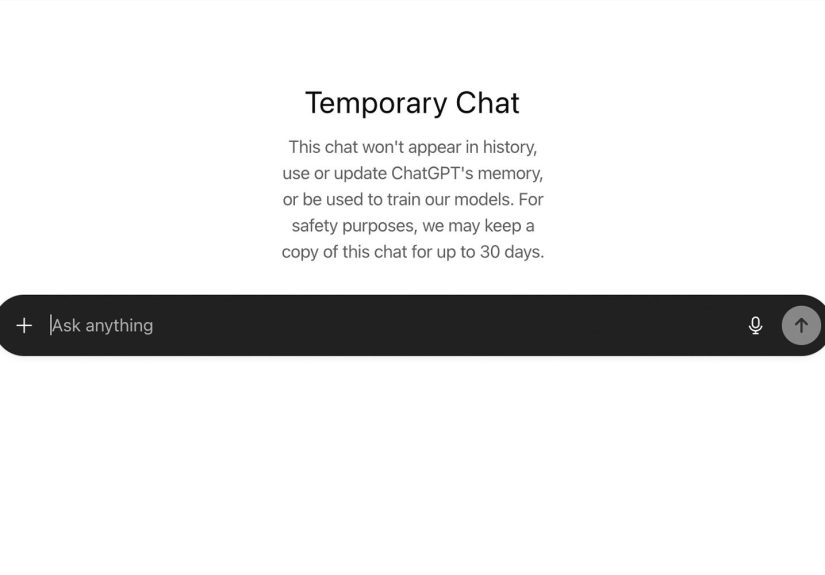
If you’re discussing something sensitive (medical symptoms, HR drama, legal hypotheticals), use modes designed for shorter retention when available. “Temporary” or similar settings can reduce how long content is kept.
2) Keep secrets out of prompts
Don’t paste passwords, private keys, or customer PII “just to format it.” If you need help, redact it. Replace real names with “Client A,” and account numbers with “XXXX.” You’ll still get a useful answer, and you won’t feel like you just handed your life to autocomplete.
3) Separate identities and contexts
If you use ChatGPT for both personal journaling and work strategy, consider separating those activities. The fewer mixed contexts, the easier it is to manage what’s stored and what’s not.
4) Turn on strong account security
Encryption can’t help if someone logs in as you. Use strong passwords, enable multi-factor authentication where available, and review connected apps/tools you don’t recognize.
5) Understand your product tier’s controls
Business and enterprise offerings often include additional privacy commitments, retention controls, and admin settings. If you’re using ChatGPT in an organization, ask what’s enabled and what policies applybecause “we’re fine” is not a policy.
Will Client-Side Encryption Change Features Like Memory, Search, and Safety?
Possibly. Encryption is powerful, but it can force design trade-offs:
Chat history and search
If the service can’t decrypt stored chats, “search my history” gets harder unless it’s done locally on your device or through privacy-preserving methods. Expect some feature changes if encryption becomes truly zero-knowledge.
Personalization and memory
“Remember my preferences” sounds great until your preferences include things you don’t want remembered. If encryption is applied to memory, it could give users more controllike keeping personal memory encrypted and portable. But it may also limit server-side convenience features.
Safety and abuse detection
OpenAI has suggested a direction where safety detection becomes more automated. With stronger encryption, platforms may rely more on on-device checks, behavioral signals, or narrowly scoped scanning rather than broad access to stored content.
In other words: encryption doesn’t kill safety work, but it can reshape how safety is implemented.
What This Means in Plain English
If OpenAI delivers client-side encryption for ChatGPT messages in a meaningful way, the likely benefits are:
- Less internal access to stored conversations (fewer humans and systems able to retrieve content later).
- Stronger protection against breaches (stolen stored data is less useful without user-held keys).
- More credible deletion and retention promises (because unreadable storage reduces “ghost copies” risk).
- Higher trust for sensitive use cases (health, legal, security, and personal topics).
The realistic caveat: the AI still needs to read your message to respond, unless major architectural changes happen. So the most practical near-term win is: encrypt what’s stored so it can’t be retrieved later, even if it must be processed briefly in plaintext.
Conclusion: Privacy Is Becoming a Product Feature (Finally)
For years, “privacy” online has often meant “we wrote a policy and hoped you didn’t read it.” The shift toward stronger encryption is different: it’s a technical commitment, not just a marketing promise. If OpenAI follows through on client-side encryption for ChatGPT messages, it could mark a new era where AI tools are not only helpful, but also structurally designed to keep your conversations private.
Until then, you can still treat ChatGPT like a powerful assistantjust don’t hand it the keys to your kingdom while you’re waiting for the locks to improve.
Real-World Experiences: How Encryption Changes the Vibe
Let’s talk about what this looks like in actual human lifewhere “data privacy” isn’t an abstract debate, it’s the difference between “I feel safe using this” and “I’m going back to yelling into the void.” These aren’t spooky stories; they’re the everyday moments where stronger encryption would matter.
Experience #1: The freelancer who keeps rewriting client emails
A freelance designer drafts proposals in ChatGPT because it helps them sound confident without accidentally promising the moon. But proposals contain pricing, timelines, and client namesaka “things you don’t want floating around forever.” Today, the freelancer might redact details (“Client A,” “Project X”) and use a temporary chat mode for sensitive drafts. With client-side encrypted storage, they could feel safer saving a conversation thread for later reference, without worrying that a stored transcript is readable by someone else down the line. The vibe changes from “useful but risky” to “useful and manageable.”
Experience #2: The startup operator juggling investor updates
A startup COO uses ChatGPT to turn messy notes into a clean investor update: runway calculations, hiring plans, product setbacks, and the kind of blunt honesty that is fine in a draft but not something you want searchable in perpetuity. Right now, the safest workflow is: strip numbers, generalize details, keep the draft local, and paste only what’s necessary. If encrypted chat history becomes a reality, the COO could keep continuity (which makes ChatGPT better) without feeling like they’re trading strategy secrecy for convenience. It doesn’t remove the need for judgmentbut it reduces the penalty for using the tool the way it’s meant to be used.
Experience #3: The person asking health questions they’re embarrassed to Google
Plenty of people ask “Is this normal?” questions they’d never ask a coworker. They want clear language, not shame. A privacy-forward, encrypted space makes this feel less like broadcasting and more like consulting a private notebook. Even if the AI must read the question to answer it, knowing that the stored conversation is encrypted in a way that limits later access can make people more willing to seek help earlybefore anxiety turns into panic-scrolling. Ironically, better privacy can lead to better outcomes, because people are more honest when they feel protected.
Experience #4: The lawyer who wants to brainstorm but can’t share facts
Lawyers love hypotheticals, but they also love not getting disbarred. A common pattern is using ChatGPT to brainstorm structure: arguments, checklists, clause languagewithout pasting privileged facts. Stronger encryption could help in two ways: it could make the “safe template drafting” workflow feel safer, and it could enable firms to adopt AI tools more confidently with strict retention policies. The lawyer still shouldn’t paste client secrets, but encryption reduces risk around the meta-work: patterns, frameworks, and drafts that help them move faster.
Experience #5: The parent using ChatGPT like a planning assistant
Parents ask about school issues, developmental milestones, family budgeting, and tricky conversations. It’s not classified information, but it’s intimate. People don’t want those details living forever in a readable log. With stronger encryption, a parent might feel more comfortable using ChatGPT for long-running planning (“help me track routines,” “draft an email to a teacher,” “organize our moving checklist”) without worrying that their family’s day-to-day life is exposed to unnecessary risk.
Across all these experiences, the core insight is the same: encryption doesn’t just protect datait protects behavior. People use tools more responsibly and more effectively when they trust the boundaries. If OpenAI’s client-side encryption plans materialize, it could make ChatGPT feel less like a public help desk and more like a private workspaceone where you can think out loud without feeling like you’re leaving fingerprints everywhere.