Table of Contents >> Show >> Hide
- The Night the “Unstoppable” Story Took a Hit
- What Exactly Is the Kinzhal?
- Why the Patriot Could Hit It
- Why This Was a Strategic Shock
- The Catch: One Great Intercept Does Not Make Air Defense Easy
- What This Means for Ukraine, Russia, and the West
- Experience on the Ground: What This Kind of Intercept Actually Feels Like
- Conclusion
- SEO Tags
Every war produces its own mythology. Some myths are born in speeches. Others are forged in marketing brochures, defense expos, and dramatic slow-motion videos set to music that practically begs you to whisper, “Well, that looks expensive.” Russia’s Kh-47M2 Kinzhal missile arrived with exactly that kind of aura: fast, modern, hard to stop, and promoted as the sort of weapon that could embarrass traditional air defense systems on command.
Then came May 2023. Ukraine said it used a U.S.-made Patriot air defense system to shoot down a Kinzhal over the Kyiv region, marking the first publicly confirmed instance of the missile being intercepted in combat. In missile-defense language, that is a “kill,” which sounds dramatic because it is dramatic. But it is also a technical word for the successful defeat of a target. One moment, Russia’s prized “unparalleled” missile looked like the future. The next, it looked like a very fast object that had run into some brutally effective math.
This was not just another entry in the daily blur of battlefield updates. The Patriot-Kinzhal clash mattered because it challenged a central assumption about modern missile warfare: that so-called hypersonic weapons automatically render older defenses obsolete. They do not. They make the problem harder, yes. They do not turn physics into a fairy tale.
The Night the “Unstoppable” Story Took a Hit
Ukraine said the first successful Patriot intercept of a Kinzhal took place during a nighttime Russian attack on May 4, 2023, and publicly announced it two days later. That claim drew instant global attention because the Kinzhal had been sold for years as one of Russia’s crown-jewel weapons. It is air-launched, extremely fast, and designed to complicate interception. In theory, it was supposed to be exactly the kind of missile that would make defenders sweat through their uniforms.
Instead, the episode flipped the script. U.S. officials later confirmed that Ukraine had in fact shot down a Kinzhal using Patriot. That confirmation mattered. In war, everyone talks; the hard part is sorting signal from noise. Once American officials backed the Ukrainian account, the story moved from “claim” to “strategic turning point.”
The shock grew even larger less than two weeks later, when Ukraine said it had intercepted multiple Kinzhal missiles during a massive Russian barrage on Kyiv. Even if you treat wartime claims with appropriate caution, the broader pattern became hard to ignore: the Kinzhal was dangerous, but not untouchable. Russia’s “invincible missile” marketing department had just experienced a rough quarter.
What Exactly Is the Kinzhal?
Dangerous, fast, and a little less magical than advertised
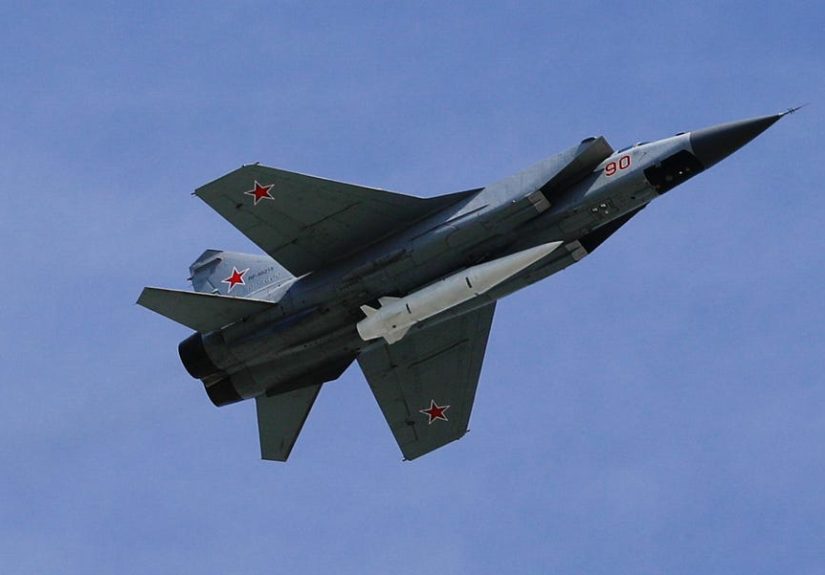
The Kinzhal, which means “dagger,” is widely described as a hypersonic missile because it can reportedly reach speeds of up to Mach 10. That headline number is real enough to terrify anybody with a calculator. But here is the important nuance: speed alone does not make a weapon a science-fiction cheat code.
Experts have long noted that the Kinzhal is best understood as an air-launched ballistic missile, not the kind of revolutionary hypersonic glide vehicle that often dominates modern defense debates. Analysts at CSIS have argued that it is likely derived from the ground-launched Iskander-M ballistic missile, modified for launch from aircraft such as the MiG-31K. That air-launch method gives it useful advantages. The aircraft can release the missile closer to the target area and from a favorable altitude and direction, which increases range and complicates defensive timing.
That does not mean the weapon is fake, overhyped junk, or a mere prop with a Russian accent. The Kinzhal is a serious threat. Its speed, maneuverability, and launch profile make it difficult to track and difficult to defeat. It can carry conventional or nuclear payloads. It was designed to threaten high-value targets and to strain systems that rely on rapid detection, classification, and intercept decisions.
But “difficult” is not the same as “impossible.” That distinction is the whole story.
Why the word “hypersonic” can mislead people
One reason the Patriot shootdown mattered so much is that it exposed a lazy habit in public discussion: treating the word hypersonic as if it automatically means cannot be stopped. That is not how missile defense works. Analysts at Brookings and technical experts quoted by PBS NewsHour have pointed out that the Kinzhal’s widely repeated Mach 10 speed refers to peak speed, not some constant magical sprint from launch to impact. Missiles slow down during flight, especially as they reenter denser layers of the atmosphere. In other words, “Mach 10” is not a permanent costume. It is a performance peak.
That nuance matters because air defense is a timing problem. Radar tracks, software predicts, commanders classify, and interceptors are launched into a shrinking window. If that window exists, a defense can work. Not always. Not cheaply. Not without stress. But it can work.
Why the Patriot Could Hit It
A Cold War nameplate, a modernized brain
At first glance, the result looked like an old system beating a new one. That is partly true and partly misleading. Patriot first entered service decades ago, but the current Patriot ecosystem is the product of constant upgrades in radar, software, command-and-control, and interceptor design. Calling it “old” without that context is like calling a modern airliner old because humans figured out wings a while ago.
The key interceptor family tied to Patriot’s anti-ballistic role is PAC-3, especially the PAC-3 MSE variant. Unlike older missiles that rely more heavily on explosive fragmentation, PAC-3 MSE uses hit-to-kill technology. That means the interceptor is designed to slam directly into the incoming target with extreme kinetic force. It is not trying to scare the missile into making better life choices. It is trying to erase the appointment.
This is where software, networking, and sensor fusion become as important as the missile itself. Defense industry analysis and U.S. Army material emphasize that modern Patriot variants are built for high-speed threats, including ballistic and maneuvering targets. Defense One argued that Ukraine’s shootdown demonstrated something bigger than one tactical win: the United States already has a rough form of hypersonic defense in the field when the target can be tracked and engaged in the right envelope.
That last phrase matters: in the right envelope. Air defense is never universal. It is geometry, timing, training, and luck mixed together under pressure.
Why This Was a Strategic Shock
Because deterrence is partly about reputation
Weapons do not only destroy things. They also shape decisions before they are fired. A missile advertised as unstoppable can influence enemy planning, civilian morale, alliance politics, and procurement budgets. That is why the Patriot intercept landed with such force in strategic circles. It punctured the Kinzhal’s reputation.
Russia had promoted the missile as a symbol of technological superiority. Putin had publicly highlighted it as proof that Russia possessed weapons capable of overcoming existing defenses. So when Patriot brought one down, the event was not merely tactical. It was rhetorical. The intercept did not just destroy a missile. It damaged a narrative.
RAND later noted that Patriot interceptors had downed Kinzhal missiles despite Russian claims that the weapon was effectively invulnerable. That single fact rippled through the wider defense conversation. If a highly touted Russian “hypersonic” system can be intercepted, then every country working on expensive next-generation strike systems has a new homework assignment.
Because it reshaped the debate over “hypersonic supremacy”
For years, the phrase hypersonic weapons has carried a near-mystical tone in public discourse. Budgets ballooned. PowerPoint decks got shinier. Think-tank panels multiplied like caffeinated rabbits. The Patriot-Kinzhal episode did not prove that hypersonic threats are overblown or easy to defeat. It did prove that hype and reality are not the same thing.
Brookings argued that the Kinzhal episode should cool some of the breathless assumptions surrounding hypersonics. That does not mean advanced missiles are irrelevant. It means the offense-defense competition is still exactly that: a competition. Every new missile generates new tracking methods, new software upgrades, new intercept concepts, and new doctrine. No side owns the future permanently.
The Catch: One Great Intercept Does Not Make Air Defense Easy
There is a temptation, after a dramatic success like this, to overcorrect and pretend the Patriot has solved the missile problem forever. It has not. Not even close.
First, interceptors are expensive. RAND has highlighted the brutal economics of air defense: high-end missiles can cost millions of dollars each. That makes layered defense essential. Countries need a mix of systems to deal with everything from drones to cruise missiles to ballistic threats. Using your premium interceptor for every cheap incoming target is a terrible long-term business plan.
Second, defenses can be saturated. Reuters and other reporting from spring 2023 described how Russia increased the intensity of missile and drone attacks, at least in part to strain Ukrainian air defense stocks and probe for weaknesses. Even successful defenses operate under pressure. Crews can be exhausted. Missiles can run low. Repair timelines matter. During the large May 16 barrage, U.S. officials said one Patriot system was likely damaged, though not destroyed. So yes, the shield worked. No, the shield was not living a stress-free life.
Third, geography and timing matter. Patriots are powerful, but they are not everywhere. Cities, military installations, and critical infrastructure all compete for protection. Air defense is a game of prioritization, not perfection.
What This Means for Ukraine, Russia, and the West
For Ukraine, the intercept was proof that advanced Western air defense could blunt some of Russia’s most dangerous long-range attacks. That matters at both the military and civilian levels. The better Ukraine’s air defense becomes, the harder it is for Russia to use missile terror as a strategic shortcut.
For Russia, the message was uncomfortable: premium missiles do not guarantee premium outcomes. The Kinzhal still threatens Ukraine, still forces defenders to expend precious resources, and still complicates planning. But its image as a silver bullet has taken visible damage.
For the United States and NATO, the takeaway is broader. Patriot’s performance in Ukraine suggests that existing systems, when upgraded and well operated, can still be relevant against advanced threats. That does not eliminate the need for next-generation missile defense, better sensors, or new counter-hypersonic tools. It does suggest that modernization, integration, and operator training may deliver more practical value than dramatic buzzwords alone.
In plain English: the future may arrive at Mach 10, but it still has to pass through a radar picture.
Experience on the Ground: What This Kind of Intercept Actually Feels Like
The Patriot-versus-Kinzhal story can sound abstract if you read it only as a duel between machines. Radar sees target. Software solves geometry. Interceptor launches. End of story. But that version leaves out the human experience, which is where the real weight of the event sits.
For civilians in Kyiv, air defense success does not arrive like a neat green check mark on a screen. It arrives at night. It arrives with sirens, vibrating windows, hurried phone checks, messages from relatives, and that awful mental arithmetic people do under stress: how far away, how many, how long, what was that sound? AP reporting from Kyiv in May 2023 captured the fatigue of repeated nighttime attacks. Even when defenses work, the city still lives through the noise, the uncertainty, and the falling debris. A successful intercept is not silence. Often it is the reason for a different kind of explosion overhead.
For air defense crews, the experience is the opposite of cinematic swagger. It is compressed time. A threat appears, gets classified, gets prioritized, and has to be engaged in a window measured in moments, not speeches. Nobody in that process is pausing to admire the historical significance. They are following procedure, trusting training, and trying to be exactly right while the consequences of being wrong are enormous. The psychological strain is easy to underestimate because the public mostly sees the result after the fact. What it feels like in real time is probably closer to controlled panic than triumphant music.
There is also a strange emotional split built into modern air defense. When an intercept succeeds, the defenders feel relief, but the broader environment may still feel chaotic. Debris can cause damage. More missiles may be coming. A “good night” can still involve injuries, fires, shattered windows, and almost no sleep. That is one reason the Patriot-Kinzhal moment resonated so strongly: it offered genuine evidence of protection in a war where protection is always partial.
For military planners and analysts, the experience is different again. Their version of the story is not one night but a forced reassessment. Long before the intercept, the Kinzhal had been discussed as a prestige weapon, a symbol of Russia’s advanced strike capability, and part of the wider debate over hypersonic warfare. After the intercept, those same experts had to update the model. Not abandon the threat. Update it. The missile remained dangerous, but the aura around it changed. In strategic terms, that matters almost as much as the destroyed target.
Even manufacturers and defense officials likely felt the shift. A system like Patriot is often discussed in procurement language that sounds dry enough to lower your pulse on contact: batteries, interceptors, envelopes, readiness, inventory. But combat changes the tone. Real-world performance in Ukraine became a kind of brutal product test, only with geopolitical consequences instead of customer surveys. Patriot’s success was not just a battlefield event; it was a message to allies, rivals, and budget committees around the world.
And for ordinary observers, the emotional effect was unusually clear. The intercept offered a rare modern war lesson that people could understand instantly: a weapon called unstoppable had been stopped. That does not make the war less tragic, simpler, or safer. It does remind everyone that military technology is never just about who builds the shiniest missile. It is about who adapts faster, integrates better, and performs under pressure when the theory becomes a real night sky.
Conclusion
The first publicly confirmed Patriot interception of Russia’s Kinzhal missile was a headline event for a reason. It exposed the gap between fearsome branding and battlefield reality. It showed that advanced air defense, when properly deployed and modernized, can still defeat some of the most intimidating missiles in active combat. And it reminded policymakers, analysts, and the public that “hypersonic” is not a synonym for “invincible.”
That does not make the Kinzhal harmless, and it certainly does not solve Ukraine’s air-defense burden. Missiles remain scarce, attacks remain intense, and layered defense remains expensive. But the Patriot-Kinzhal clash changed the conversation. It proved that the contest between offense and defense is still alive, still evolving, and still capable of surprising anyone who mistakes marketing for destiny.
Turns out the future of warfare is not only about who can build the fastest dagger. It is also about who can teach a shield to move smarter.