Table of Contents >> Show >> Hide
- What Is a PDO Thread Lift?
- How the PDO Thread Lift Procedure Works
- Benefits of a PDO Thread Lift
- Who Is a Good Candidate?
- How Long Do PDO Thread Lift Results Last?
- PDO Thread Lift Side Effects and Risks
- A Quick Word on FDA Language and Why It Matters
- PDO Thread Lift vs. Facelift
- How to Choose a Provider
- Common Experiences Before, During, and After a PDO Thread Lift
- Final Thoughts
- SEO Metadata
If the phrase “PDO thread lift” sounds like something invented in a lab by people wearing very expensive glasses, you are not entirely wrong. But in plain English, it is a minimally invasive cosmetic procedure that uses absorbable threads to create a modest lift in areas with early sagging. It is not a surgical facelift in disguise, and it definitely is not a magic wand. Still, for the right person, it can offer a fresher look, a little collagen encouragement, and far less downtime than a traditional operation.
That balance is exactly why the procedure keeps getting attention. People want improvement, but many do not want an operating room, weeks of recovery, or a dramatic “What did you do to your face?” reveal. A PDO thread lift lands somewhere in the middle: more structural than a cream, less dramatic than a facelift, and highly dependent on technique, anatomy, and expectations.
This guide breaks down how a PDO thread lift works, what happens during the procedure, who may benefit most, what side effects are common, and what real experiences often feel like before, during, and after treatment. Spoiler alert: the best results usually come from patients who want subtle improvement, not a time machine.
What Is a PDO Thread Lift?
A PDO thread lift is a nonsurgical or minimally invasive facial rejuvenation treatment that uses polydioxanone, often shortened to PDO, an absorbable suture material that has long been used in medicine. During the procedure, a qualified provider places fine threads under the skin with a needle or cannula. Once positioned, the threads help support tissue and create a small lifting effect.
The appeal is twofold. First, there is the immediate mechanical effect: the tissue is repositioned slightly. Second, the threads can trigger a healing response that encourages collagen production over time. That collagen response is one reason many people say their skin looks a bit firmer or smoother in the weeks after treatment, even though the threads themselves gradually dissolve.
PDO thread lifts are commonly used on the cheeks, jawline, lower face, neck, brows, and around the mouth. Different thread designs may be chosen depending on the goal. Some are smoother and used more for collagen stimulation, while others are barbed or textured to provide more grip and lift.
How the PDO Thread Lift Procedure Works
Before the procedure
A consultation comes first, and it should be more than a five-minute sales speech with flattering lighting. A good provider evaluates your skin quality, facial anatomy, degree of laxity, medical history, and aesthetic goals. This is also when expectations should be adjusted to reality. If someone has significant sagging, heavy jowls, or a lot of loose skin, a thread lift may underdeliver. In those cases, a surgical facelift or a different combination approach may be more appropriate.
You may be asked to avoid certain blood-thinning medications or supplements before treatment if your clinician advises it. Photos are usually taken, and the treatment areas are marked. This planning stage matters because thread placement is not random. It is strategy, not arts and crafts.
During the procedure
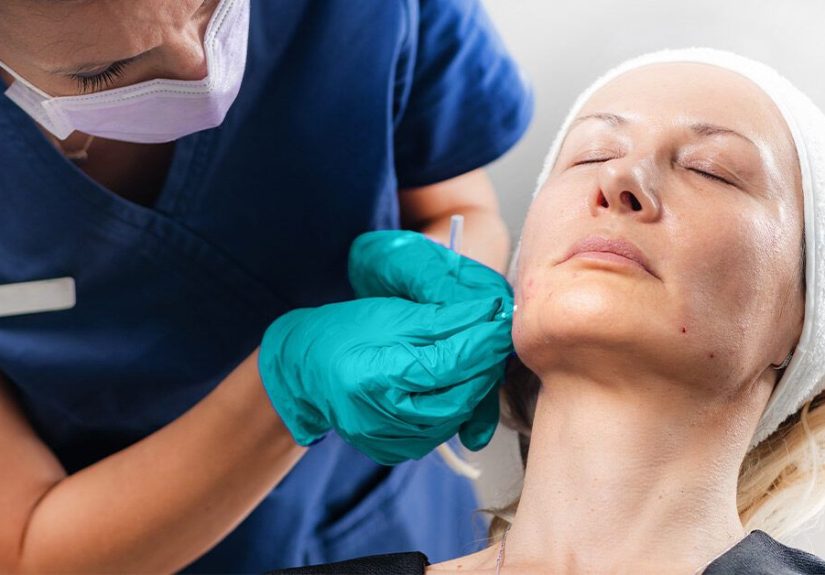
Most PDO thread lift treatments are done in an office setting using local anesthesia. In other words, you are awake, but the treated area is numbed. Once the skin is prepared, the provider inserts the threads through tiny entry points using a fine needle or cannula. The threads are then guided beneath the skin and adjusted to create the desired lift and contour.
The procedure often takes under an hour, although timing depends on the number of threads used and the areas treated. Patients commonly describe feeling pressure, tugging, or odd little movements under the skin rather than sharp pain. It is more “strange” than “agonizing,” which is not exactly a spa slogan, but it is honest.
After the procedure
Once the threads are placed, the provider trims any exposed ends and reviews aftercare instructions. There are no large incisions, which is one reason recovery is faster than surgery. Still, “minimal downtime” does not mean “zero evidence anything happened.” Swelling, bruising, tenderness, and a tight feeling are all common in the first few days.
Patients are often told to avoid heavy exercise, exaggerated facial movements, rubbing the face, sleeping on the side, and sometimes makeup or certain skin-care products for a short period. Many are advised to sleep with the head elevated and treat the area gently while the threads settle.
Benefits of a PDO Thread Lift
1. It is less invasive than a facelift
This is the headline benefit. There is no general anesthesia in most cases, no large incisions, and usually no long home recovery. That makes the procedure appealing for people who want some lift without committing to surgery.
2. Downtime is relatively short
Many patients can return to desk work quickly, sometimes the same day or within a day or two, depending on bruising and swelling. Social downtime may be a separate issue, of course. You might physically feel fine while still looking like you had an enthusiastic disagreement with gravity.
3. Results can look subtle and natural
For patients with early skin laxity, a PDO thread lift can create a refreshed look rather than an obviously altered one. The best outcomes usually whisper, not shout. That is a plus for people who want to look less tired or slightly tighter without dramatic change.
4. Collagen stimulation may improve skin quality
Beyond the lift itself, the threads may support collagen remodeling over time. That can translate into modest improvements in firmness, texture, and overall skin support, especially in patients whose main issue is mild laxity rather than major tissue descent.
5. It can complement other treatments
PDO threads are often part of a bigger plan rather than a solo performance. Some patients combine thread lifts with fillers, neuromodulators, lasers, ultrasound-based skin tightening, or skin resurfacing. That combination approach may give more balanced results because aging is rarely caused by just one problem.
Who Is a Good Candidate?
The ideal PDO thread lift candidate usually has mild to moderate skin laxity, realistic expectations, and a desire for subtle improvement. This often includes adults in their late 30s to early 50s, though age alone does not decide candidacy. Skin quality, facial structure, and treatment goals matter more than the number on a birthday cake.
You may be a good candidate if you:
- Notice early sagging in the cheeks, jawline, brows, or neck.
- Want a small lift without surgery.
- Understand that results are temporary.
- Prefer a shorter recovery period.
- Are willing to follow aftercare instructions carefully.
You may be a poor candidate if you:
- Expect facelift-level results.
- Have significant skin laxity or heavier facial tissues.
- Have very thin skin where threads may be more visible.
- Have an active skin infection or uncontrolled medical issues.
- Want a permanent solution from a temporary procedure.
How Long Do PDO Thread Lift Results Last?
This is where marketing and reality sometimes go on separate vacations. PDO thread lift results are temporary. The exact duration varies by thread type, technique, area treated, tissue quality, age, and what a person means by “results.” The visible lifting effect may soften earlier, while collagen-related improvement can linger longer.
Some people notice the best look once initial swelling settles and the tissue relaxes into place. Others find the lift is modest from the start and fades gradually. In general, the procedure is better viewed as a temporary tune-up than a permanent structural reset. If you like the effect, repeat treatment may be an option.
PDO Thread Lift Side Effects and Risks
Like any cosmetic procedure, a PDO thread lift has possible side effects. The good news is that many are mild and temporary. The less fun news is that some complications are real, provider-dependent, and worth taking seriously.
Common side effects
- Swelling: Usually mild to moderate during the first few days.
- Bruising: Especially in areas with more vascularity.
- Tenderness or soreness: The face or neck may feel tight, achy, or sensitive.
- Tightness: Some people feel pulling when smiling or chewing early on.
- Minor irregularity: Small puckers or unevenness can happen initially and may settle.
Less common but important risks
- Infection: Redness, warmth, drainage, worsening pain, or fever should prompt a call to the provider.
- Dimpling or skin puckering: This can happen if the thread catches tissue unevenly.
- Asymmetry: One side may look more lifted than the other.
- Thread visibility or extrusion: A thread can become visible, palpable, or poke through the skin.
- Lumps or contour irregularities: These may resolve, but some require adjustment or removal.
- Unsatisfying result: Sometimes the biggest complication is simply that the result is too subtle to feel worth it.
Rare complications reported in the medical literature can include persistent irregularities, migration, deeper structural injury, or more serious infection. That is why provider skill and patient selection matter so much. A thread lift may be minimally invasive, but it is not casual. Your face is not the place for bargain-bin anatomy experiments.
A Quick Word on FDA Language and Why It Matters
Patients often hear the phrase “FDA-approved” tossed around like confetti. With thread lifts, that language can get slippery. Different thread products have different regulatory pathways, materials, and indications. Some devices are cleared for specific facial suspension uses, while others are described in FDA materials as absorbable sutures for dermatologic soft-tissue approximation rather than broad lifting claims.
That does not mean every thread treatment is unsafe. It does mean patients should ask smart questions. Which product is being used? What is it specifically cleared or indicated for? Is the treatment on-label or off-label? A qualified, transparent provider should be able to answer without sounding offended that you asked.
PDO Thread Lift vs. Facelift
A PDO thread lift and a facelift are not direct substitutes. They live in different neighborhoods.
Thread lift
- Minimally invasive.
- Usually done with local anesthesia.
- Shorter recovery.
- Subtle improvement.
- Temporary results.
Facelift
- Surgical procedure.
- More downtime and higher upfront commitment.
- More powerful correction for moderate to severe laxity.
- Longer-lasting results.
- Better for deeper structural aging changes.
If your main concern is very mild sagging and you want to ease into treatment, PDO threads may make sense. If you want dramatic lifting or have substantial loose skin, a facelift generally offers more meaningful and durable change.
How to Choose a Provider
This part is not glamorous, but it may be the most important section in the whole article. PDO thread lifts should be performed by a properly trained, experienced medical professional who understands facial anatomy, complication management, sterile technique, and aesthetic balance.
Look for a provider with appropriate board certification, a strong track record with facial procedures, before-and-after photos that look natural, and a willingness to explain risks as clearly as benefits. Be cautious if the consultation sounds like a sales event, if the provider promises dramatic results from a small procedure, or if questions about device type and training are brushed aside.
Common Experiences Before, During, and After a PDO Thread Lift
Now for the part many people secretly care about most: what the experience actually feels like. Not the glossy brochure version. The real human version.
Before treatment, many patients describe a mix of curiosity and hesitation. They usually are not looking to transform their face. They want to look a little less tired, a little less saggy, a little more like themselves on a very good day. A lot of people arrive hoping for a middle path between “do nothing” and “full surgery,” which is exactly where PDO thread lifts tend to live.
During the procedure, the most common description is not intense pain but weirdness. Patients often feel pressure, tugging, tiny pinches from numbing injections, and a sense that something is moving under the skin. It can feel strange to hear or sense the tissue being adjusted, especially around the cheeks or jawline. Some people leave saying, “That was easier than I expected.” Others say, “That was not awful, but I would not call it relaxing.” Both reviews can be true.
In the mirror right after treatment, experiences vary. Some patients see an immediate lift and love it. Others mostly see swelling, asymmetry, or mild puckering and need reassurance that early irregularities can happen. This is one reason good pre-procedure counseling matters. If someone expects to walk out looking instantly airbrushed, they may panic during the normal early healing phase.
The first few days after treatment are often the most awkward. Smiling can feel tight. Chewing may feel funny. Sleeping flat may be discouraged. Some patients become suddenly aware of how often they touch their face, laugh hard, sleep on their side, or forget every aftercare rule within twelve minutes. Bruising may be minimal or surprisingly colorful. Social plans are sometimes rescheduled, not because recovery is severe, but because people do not always want to debut their “I definitely did not just have a cosmetic procedure” face too early.
Over the next few weeks, many patients report that the face settles, the tightness eases, and the result begins to look more believable and less freshly engineered. This is often when satisfaction improves. The face may not look dramatically younger, but it can appear better supported, slightly lifted, and less fatigued. For the right patient, that subtle shift is exactly the point.
Emotionally, satisfaction often tracks expectation. People who understand that a thread lift is a modest enhancement tend to be happier than those who expect surgery-level correction. Patients seeking refinement often describe the result as “natural,” “refreshed,” or “more defined.” Patients seeking major lifting may call the outcome “fine,” which is polite language for “not what I hoped.”
Longer term, experiences also vary. Some patients are pleased enough to repeat the procedure later. Others decide the upkeep is not worth it and move on to different treatments. A few discover that what they really needed was volume restoration, skin tightening, or eventually a surgical option. In that sense, a PDO thread lift can be a useful treatment, but it can also be an information-gathering experience. It teaches people how much change they want, how they feel about downtime, and whether subtle improvement feels satisfying or merely like an appetizer.
Final Thoughts
A PDO thread lift can be a smart option for people with early facial or neck laxity who want a minimally invasive treatment with relatively short recovery and subtle results. It may create a modest lift, stimulate collagen, and help refresh the face without surgery. That said, the procedure has limits. It is temporary, technique-sensitive, and not designed to outperform a facelift.
The most successful PDO thread lift stories usually have three things in common: a good candidate, a skilled provider, and realistic expectations. When those line up, the result can be elegant and worthwhile. When they do not, the procedure can feel underwhelming, uneven, or simply not worth the trouble.
If you are considering one, ask careful questions, choose experience over hype, and remember this golden rule of cosmetic medicine: subtle can be beautiful, but only when it is intentional.