Table of Contents >> Show >> Hide
- Why Parking Outside the Lines Feels So Personal (Even When It’s “Not”)
- The “Revenge” That Actually Works: Make Bad Parking Hard to Repeat
- 1) Start With the Fastest Fix: A Calm, Specific Conversation
- 2) Make the Lines Impossible to Miss (The Petty-But-Professional Move)
- 3) Use the Rulebook: Lease, HOA Rules, and Local Ordinances
- 4) Document Like a Grown-Up (Not Like a Spy Movie)
- 5) Try Mediation When You Actually Want Peace (Not Just Compliance)
- 6) Know the Difference Between Public-Street Problems and Private-Lot Problems
- 7) Towing: The Nuclear Option That Requires Actual Rules (Not Just Anger)
- Scenario Playbook: Three Common Parking Feuds (And the Cleanest Way Out)
- What Not to Do (Because “Petty” Can Turn Into “Illegal” Fast)
- The Secret Sauce: Make the “Right Way” the Easy Way
- Real-World Experiences: What Actually Works (And Why People Swear It’s “Revenge”)
- Conclusion
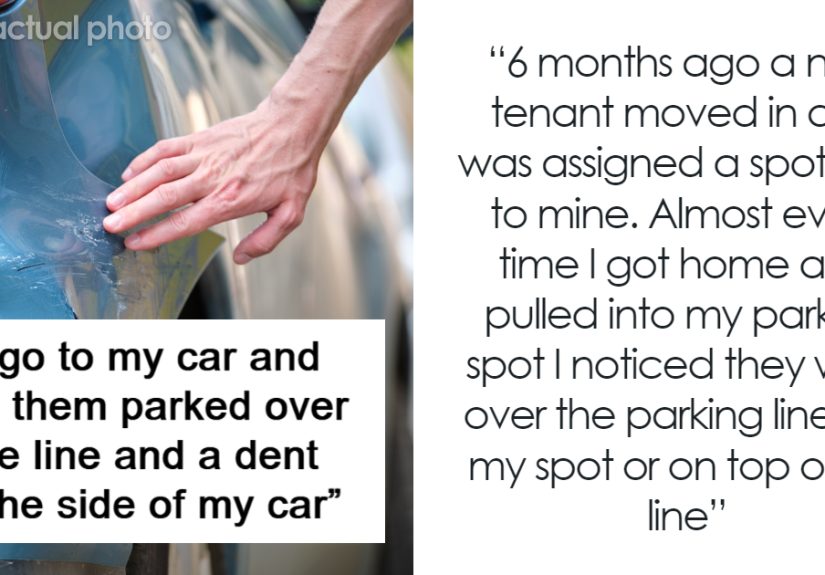
There are two types of people in a parking lot: the “I will center my car like I’m docking a spaceship” crowd, and the “lines are just vibes” crowd. If you’ve ever come back to your spot and found your neighbor’s tire casually camping over the stripe like it pays rent, you already know how fast a tiny parking problem can turn into a full-blown neighborhood soap opera.
The funny part? Most “parking revenge” stories don’t end with a dramatic showdown. They end with something far less cinematic and far more effective: a boring, legal, extremely satisfying fix that makes it impossible (or at least inconvenient) to keep parking like a raccoon on roller skates.
This article breaks down what’s really going on in parking feuds, why they escalate, and how to solve them without vandalism, threats, or turning your driveway into a passive-aggressive art installation. The goal is simple: get everyone back inside the linesliterally and socially.
Why Parking Outside the Lines Feels So Personal (Even When It’s “Not”)
On paper, parking outside the lines is a small issue. In real life, it hits three emotional buttons at once: space, fairness, and respect. Parking is one of those daily-life systems that only works if everyone agrees to the same tiny rules. When one person ignores them, it can feel like they’re saying, “My convenience matters more than yours.” That message is what people actually react to.
Add scarcitytight apartment lots, narrow condo garages, street parking competitionand you’ve got the perfect recipe for “parking wars.” The most common escalation pattern looks like this:
- Stage 1: Annoyance (“Really? Again?”)
- Stage 2: Avoidance (parking elsewhere, sighing louder, telling friends)
- Stage 3: Documentation (photos, timestamps, the birth of a spreadsheet)
- Stage 4: Confrontation (a note, a chat, or a text that starts with “Hey…” and ends with “Thanks.”)
- Stage 5: Enforcement (property manager, HOA, code enforcement, mediation)
Notice what’s missing from that list: “Create a revenge masterpiece using chaos.” Because the truth is, the best revenge is a solution that sticks.
The “Revenge” That Actually Works: Make Bad Parking Hard to Repeat
If your neighbor keeps drifting over the stripe, you don’t need a villain arc. You need a system that nudges behavior back into normal. Think of it as redesigning the situation so the easiest choice is also the correct choice.
1) Start With the Fastest Fix: A Calm, Specific Conversation
This is the least exciting option, which is precisely why it’s powerful. If the person isn’t doing it on purpose, a friendly heads-up can solve it in 24 hours. The key is to be specific and non-theatrical:
- Point to the exact issue (“When your car is over the line, I can’t open my door.”)
- Ask for a concrete change (“Could you re-center in the space?”)
- Keep it short (short messages don’t invite long arguments)
If you’re worried about conflict, you can frame it as a logistics problem, not a personality flaw: “I’m struggling to get out when the line’s crossed.” People can argue with opinions, but it’s harder to argue with doors that physically won’t open.
2) Make the Lines Impossible to Miss (The Petty-But-Professional Move)
Here’s where the “revenge” gets deliciously practical: if the striping is faded, confusing, or poorly laid out, you can often fix the root cause by pushing for fresh, high-visibility lines. This is the ultimate non-toxic flex because it’s helpful to everyoneand it quietly removes the neighbor’s excuse.
In many U.S. parking facilities, standard line widths are commonly in the 4-inch range, and roadway marking guidance recognizes “normal” line widths in the 4–6 inch range depending on context. When lines are bright, consistent, and reflective, drivers center better without even thinking about it.
If you’re in an apartment, condo, or HOA-managed community, this is usually a property management request: “The stall lines are faded and we’re getting frequent overlap issuescan we re-stripe?”
Bonus points if you suggest small upgrades that reduce repeat offenses (only with management approval):
- Wheel stops in spots that encourage creeping (helps drivers stop at the same depth every time)
- Numbered stalls or clearer assignment signage (less ambiguity = fewer arguments)
- End-cap buffer zones if spots are unusually tight
This approach is “revenge” in the sense that the chronic line-crosser no longer has a messy, faded, “I didn’t realize” runway. They now have bright boundaries that practically shout, “Stay between us.”
3) Use the Rulebook: Lease, HOA Rules, and Local Ordinances
When the behavior is repeatedand especially when it blocks accessrules matter. The right authority depends on where the parking happens:
- Apartment/condo lot: lease terms + property management policies
- HOA-controlled private roads or lots: HOA rules and enforcement procedures
- Public streets: municipal codes + parking enforcement/police non-emergency
Many HOA parking conflicts come down to jurisdiction: an HOA often has clearer authority on private streets and common-area lots than on public streets maintained by the city or county. If your issue is in a shared private lot, the HOA or management can usually enforce community rules (warnings, fines, towing policies when legally compliant). If it’s on a public street, enforcement is usually a city/police matter.
4) Document Like a Grown-Up (Not Like a Spy Movie)
If you end up reporting the issue, you’ll want a simple record:
- Date and time
- What happened (over the line, blocked access, repeated pattern)
- Photos only if needed for enforcement (and only from your own property/common areas where permitted)
- Any steps already taken (friendly request, management ticket, etc.)
Documentation isn’t about “winning.” It’s about making the situation easy for a third party to understand quickly. Property managers and HOA boards respond faster when the issue is clear and repeatable.
5) Try Mediation When You Actually Want Peace (Not Just Compliance)
If you have to live next to this person for years, “victory” that poisons the relationship can be expensive in a thousand tiny ways. Mediation can be a surprisingly strong tool for neighbor disputes, including parking-related conflicts, because it creates a structured conversation with ground rules and a neutral facilitator.
A good mediator helps both sides focus on practical solutions: assigned spots, clearer boundaries, an agreement about guest parking, or even a shared plan for communicating when there’s a one-off issue (moving truck, guests, emergencies).
6) Know the Difference Between Public-Street Problems and Private-Lot Problems
This is where many people get stuck. The same bad parking behavior can be handled completely differently depending on where it occurs.
If it’s on a public street: cities often route parking complaints through parking enforcement or police non-emergency lines. Many city FAQs explicitly list parking as a “non-emergency” categorymeaning it’s valid to report, just not through 911 unless there’s an immediate danger.
If it’s on private property (apartment lots, HOA lots, private facilities): enforcement typically runs through management or the association, and towing (if it’s even allowed) usually requires strict compliance with state and local rules, including signage requirements and authorized approval.
7) Towing: The Nuclear Option That Requires Actual Rules (Not Just Anger)
Towing is the part of parking disputes that people talk about the mostand understand the least. In many places, private-property towing is heavily regulated, and the right to tow often belongs to the property owner or their authorized agent, not an individual resident with a grudge.
Some states and cities require specific tow-away signage and other protections. For example, Texas publishes detailed tow-away signage requirements for parking facilities, including wording and lettering size. Other jurisdictions, like the City of Tucson, have ordinances that standardize private towing signage and limit certain fees. Translation: towing is not “call a truck and vibe.” It’s a compliance process.
If your community already has a posted towing policy, your best move is to let management enforce it consistently. If your community doesn’t, pushing for a clear, legally compliant policy (with visible signage and written procedures) is more effective than trying to freelance enforcement yourself.
Scenario Playbook: Three Common Parking Feuds (And the Cleanest Way Out)
Scenario A: Apartment Lot, Unassigned Parking, Chronic Line-Crosser
What it feels like: Every night is a gamble. You’re playing “Find a spot” plus “Can I exit my vehicle like a normal human?”
What works best: Report to management with a short log and a request for a property-level fix: re-striping, clearer stall markings, reminders, and a documented warning process. Communities that publish parking policies (guest rules, permits, tow policy) reduce “parking wars” because residents know what happens after repeated violations.
Scenario B: HOA Community, Confusion About Street Authority
What it feels like: Everyone has a different opinion about what the HOA can enforce, and the loudest person acts like that equals “law.”
What works best: Confirm whether the street is public or private and follow the correct channel. If it’s private/common-area, use HOA enforcement steps (warnings, fines, hearings). If it’s public, use city parking enforcement processes. Don’t waste months arguing in group chats when the answer is literally, “Who maintains the road?”
Scenario C: Shared Driveway or Tight Duplex Parking
What it feels like: A spatial problem disguised as a personality problem.
What works best: Redesign the routine. Agree on who parks where, when, and how close to the boundary. If the physical layout is the issue, ask the owner/landlord about repainting boundaries or adding physical guides (again: permission first). When neighbors stop guessing, they stop resenting.
What Not to Do (Because “Petty” Can Turn Into “Illegal” Fast)
Let’s be clear: if your plan involves damaging a vehicle, blocking someone in, messing with tires, or “teaching them a lesson” with anything adhesive, sharp, corrosive, or permanentstop. That’s not revenge. That’s property damage, harassment, or worse, and it can land you with a bill or a charge.
Also, avoid escalating in ways that make you look like the problem:
- Threatening notes (they read like evidence, because they are)
- Public shaming (turning neighbors into enemies is a long-term hobby you do not want)
- Calling emergency services for a non-emergency issue
The goal is to fix the pattern and protect your daily lifenot to create a bigger story than the parking lot deserves.
The Secret Sauce: Make the “Right Way” the Easy Way
The most durable solutions aren’t emotional. They’re structural. If you want your neighbor to never park outside the lines again, build an environment where:
- The lines are bright and unambiguous
- The rules are written and consistently enforced
- The escalation path is clear (warning → citation → consequence)
- There’s a peaceful option (mediation) before things get toxic
That’s how you “win” a parking dispute without losing your peace. The best revenge is going to sleep without rehearsing arguments in your head.
Real-World Experiences: What Actually Works (And Why People Swear It’s “Revenge”)
Parking conflicts show up in real communities more often than anyone wants to admit, and they usually follow the same pattern: a small habit (parking slightly over) becomes a repeated inconvenience, then becomes a story people tell about “respect.” What’s interesting is how often the final fix is not dramaticit’s procedural.
In many apartment complexes, residents describe a turning point that sounds almost too simple: management repaints the lot. Fresh striping doesn’t just make the property look better; it changes behavior. People who were “kind of” over the line suddenly start centering their cars because the boundaries are visible again. It’s not magic, it’s psychology: a crisp line feels like a rule, while a faded line feels like a suggestion. When the lot gets restriped, the chronic offender often stops because the visual cue is stronger than their old habit. Neighbors call it “revenge” because the fix is public and undeniableyet it’s also completely legitimate.
In HOA neighborhoods, the most common “I can’t believe this worked” story is enforcement consistency. Residents often report that nothing changed until the HOA stopped treating violations like personal drama and started treating them like policy. One warning becomes a second warning, then a hearing, then a fineexactly as written. The neighbor who used to sprawl across two spaces suddenly parks perfectly within the lines, not because they had a moral awakening, but because the consequences became predictable. People experience that predictability as satisfying because it restores fairness without anyone having to play vigilante.
Community mediation stories sound even less glamorous, but they can be surprisingly effective. When a neutral facilitator helps both sides name the real issuetight stalls, poor visibility at night, an oversized vehicle, or a misunderstanding about assigned spotsneighbors sometimes agree on a practical reset: swap spaces, mark boundaries more clearly, limit guest parking to certain areas, or create a quick “text me if you’re having trouble” rule for one-off situations. The “revenge” feeling comes from the relief of no longer being trapped in daily irritation. It’s the emotional payoff of a problem finally becoming manageable.
Another experience people commonly share is that documentation matters far more than arguments. Residents who keep a short logdates, times, and what happenedtend to get faster results from managers and boards. Not because anyone loves paperwork, but because clarity speeds up decision-making. The neighbor who parks outside the lines often relies on ambiguity: “It wasn’t that bad,” “It was just once,” “You’re exaggerating.” A simple, factual record removes the fog. Again, this gets labeled as “revenge” in casual storytelling because it feels like the universe finally took your side. In reality, it’s just a clear process doing its job.
Finally, lots of people learn the hard way that “petty” solutions can backfire. The most shared regret is escalating too quicklyleaving an angry note, confronting someone in the heat of the moment, or trying to solve a private-lot issue by calling the wrong authority. The better experiences come from escalation ladders: friendly request first, then management/HOA, then mediation or code enforcement as appropriate. People who follow the ladder get what they want more often, with fewer long-term social consequences. And in the end, the sweetest kind of “revenge” is boring: a parking lot that runs smoothly, a neighbor who stays inside the lines, and a life that no longer revolves around a stripe of paint.