Table of Contents >> Show >> Hide
- The Night The Bear Made Emmy History
- So… Why Are People Calling It “Category Fraud”?
- How the Emmys Decide Comedy vs. Drama (Hint: It’s Not Just Runtime Anymore)
- Why a Network Might Prefer the Comedy Track
- The Best Argument for The Bear as a Comedy
- The Best Argument Against It (and Why People Keep Getting Stuck Here)
- What the Controversy Says About TV Right Now
- Will the Emmys Change Anything?
- Conclusion: A Record Win, a Real Debate, and a Genre That Won’t Sit Still
- Experiences: What This Controversy Feels Like in Real Life (and Why It Won’t Go Away)
Award shows are supposed to be the fun part of TV fandom: tuxes, speeches, surprise wins, and that one camera cut to a celebrity who looks like they just remembered they left the oven on.
But every so often, an awards night becomes a full-on group chat argumentone that starts with, “Congrats!” and ends with, “Okay, but… is it even a comedy?”
That’s exactly what happened when FX’s The Bear piled up a record-setting number of comedy-category Emmy wins, reigniting a debate that has been simmering hotter than a flat-top grill at dinner rush:
How does a tense, high-stakes kitchen series keep cleaning up in the comedy lanes?
The controversy isn’t really about whether The Bear is “good” (most people agree it’s great). It’s about something trickier: genre, category strategy, and what the Emmys are actually rewarding in the streaming erawhere half-hour shows can be emotionally devastating and hour-long dramas can be laugh riots.
The Night The Bear Made Emmy History
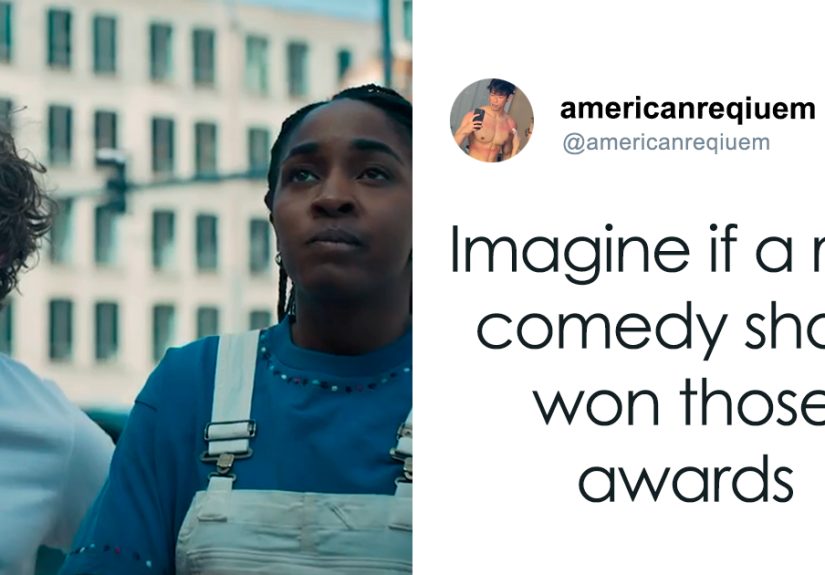
At the Primetime Emmys, The Bear set a new mark for comedy-category wins in a single yearan eyebrow-raising feat made even more dramatic by the fact that it had already broken the record not long before. In other words: it didn’t just make history; it updated its own history.
The show’s awards haul included major performance wins and key craft winsexactly the kinds of trophies that tell you voters didn’t just “like” the show; they loved it. And yet, the bigger story for a lot of viewers wasn’t the count.
It was the category label attached to the count: comedy.
That label matters because the comedy field is its own ecosystem with its own traditions: joke-forward writing, comedic timing, and performances built around laughter as the primary engine.
When a series that many people experience as intense, anxious, and emotionally heavy dominates comedy awards, some fans of more traditional comedies feel like they’re watching a basketball team show up to the Super Bowl and still somehow win MVP.
So… Why Are People Calling It “Category Fraud”?
“Category fraud” is the spicy term that pops up whenever a show’s genre feels mismatched to its awards placement. The argument goes like this:
The Bear may have jokes and funny moments, but its core identity is pressure-cooker dramagrief, ambition, dysfunction, and the kind of workplace stress that makes you want to apologize to your own email inbox.
So, critics ask, why is it competing against comedies that are built primarily to make you laugh?
The pushback isn’t new. But record-breaking wins have a way of turning mild grumbling into a full-volume debate, because winning is when category questions feel most consequential. If a “borderline” show is nominated, people shrug. If it wins everything in sight, the conversation changes to:
Are the Emmys rewarding the best comedy… or the best show that happens to be filed under comedy?
And to be fair, the debate isn’t only about The Bear. It’s about a broader shift in TV storytelling:
today’s series often blend comedy and drama so seamlessly that old genre labels can feel like trying to sort soup into “solid” and “liquid.”
How the Emmys Decide Comedy vs. Drama (Hint: It’s Not Just Runtime Anymore)
A big reason this debate keeps resurfacing is that the rules have evolved. For years, “half-hour equals comedy” was a common expectation in TV culture.
But the Television Academy changed its approach so that episode length isn’t the deciding factor the way it once was.
In the modern system, categorization can involve how a program is positioned and submittedmeaning the people behind a show have significant influence over whether it runs in comedy or drama.
That’s not automatically sinister; it’s often just practical. But it does mean the Emmys have created a world where genre is partly a strategic choice.
This matters because streaming blurred the old boundaries. A “half-hour” show might be 21 minutes one week, 38 the next. A season might mix episodes that are hilarious with episodes that feel like a stress test for your nervous system.
When the format stops behaving, the categories stop feeling intuitive.
Why a Network Might Prefer the Comedy Track
Let’s talk incentivesbecause awards campaigns are not powered by vibes alone. Studios and networks consider where a show is most competitive, where it best fits the voting culture, and where its talent has the clearest path to wins.
1) The competition can be different
Some years, the drama field is stacked with cultural juggernauts. Other years, comedy is the deeper bench. Category placement can feel like choosing which line to stand in at a crowded brunch spot:
you’re not changing what you wantyou’re deciding where you’ll actually get seated before you turn into a human hunger montage.
2) Tone is subjective, but trophies are specific
Comedy performances can be subtle and undervalued. Meanwhile, dramatic intensity often reads as “prestige.” If a show blends both, it may benefit from drama-level gravitas in comedy categories.
That’s not a knock on the show; it’s a reality of how awards bodies tend to respond.
3) The industry loves a “breakout” narrative
A series that feels freshstylistically bold, emotionally raw, culturally buzzycan become the consensus pick. Once momentum builds, voters may check the box because they believe they’re voting for quality.
The category label becomes an afterthought… until it becomes the headline.
The Best Argument for The Bear as a Comedy
If you think the “comedy” label is ridiculous, you’re not alone. But there’s also a strong case that The Bear belongs exactly where it isjust not in the way people traditionally define comedy.
First, the show is packed with humoroften the kind that happens in high-pressure workplaces where jokes are a survival mechanism. It’s the comedy of:
- Chaos (everything is on fire, metaphorically and occasionally spiritually)
- Character collisions (egos, quirks, insecurities, and love languages made of sarcasm)
- Absurd specificity (the hyper-detailed reality of kitchen culture turned into punchlines)
- Timing (rapid-fire dialogue that lands like a volley of plates you somehow catch)
Second, the show is built like a workplace comedy in structure. There’s a core ensemble. There’s a central location. There are recurring patterns of conflict and resolution.
If you squint, you can see the DNA of a classic workplace sitcomjust with sharper knives and fewer “very special episodes” (because every episode is special, emotionally speaking).
In a streaming era, “comedy” can mean more than punchlines. It can mean rhythm, character interplay, and the way humor and pain sit on the same barstool.
The show doesn’t always aim for laughter as the main eventbut it uses comedy as an essential ingredient.
The Best Argument Against It (and Why People Keep Getting Stuck Here)
The counterargument is simple and powerful: for many viewers, The Bear doesn’t feel like a comedy most of the time.
It feels like anxiety with excellent cinematography.
Comedy categories have historically been where writers and performers are rewarded for delivering laughterespecially in a medium where dramatic acting is often treated as the “serious” art.
When a show that reads as emotionally intense dominates, some worry it crowds out comedies that are doing the hard, technical work of being funny as the primary mission.
It can also warp what voters look for. If voters start rewarding “prestige intensity” inside comedy fields, then comedy becomes less about comedic craft and more about overall qualitycreating a situation where:
the best show wins, but the best comedy might not.
That’s why the debate gets heated. It’s not just semantics; it’s about recognition and fairnessespecially for sitcoms and joke-driven series that rarely get the same prestige aura as “serious” TV.
What the Controversy Says About TV Right Now
This is bigger than one show. The The Bear controversy is basically a symptom of three industry changes:
1) Genres are blending faster than awards can adapt
“Dramedy” used to be a helpful label. Now it feels like a default setting. Many shows are built to make you laugh, then immediately make you reflect on your childhood, then make you hungry, then make you question your life choices.
Awards categories struggle when storytelling refuses to stay in its lane.
2) Prestige is no longer tied to episode length or format
A half-hour series can be as ambitious and emotionally layered as any hour-long drama. The idea that comedies are “lighter” doesn’t fit modern TV.
The problem is that awards categories still imply that division.
3) Awards strategy is now part of the content ecosystem
Studios don’t just release shows; they position them. Viewers notice. And when positioning feels out of step with how people experience a series, it becomes part of the conversationsometimes louder than the art itself.
Will the Emmys Change Anything?
The Television Academy has adjusted rules in the past, and it may continue refining how shows are categorized as the landscape changes.
But any fix is tricky:
- If you rely on runtime, streaming makes runtime meaningless.
- If you rely on tone, tone is subjective and genre-blended by design.
- If you rely on voting committees, you risk inconsistent decisions and backlash.
One possible future is a clearer “comedy-drama” lane or stronger criteria about what qualifies as primarily comedic.
Another possibility is that the industry simply accepts that “comedy” now includes shows that are funny in texture rather than funny in punchlines.
Either way, the controversy is a sign that audiences still care deeply about awardsif not as definitive proof of quality, then as a cultural scoreboard that shapes careers, renewals, and what gets marketed as “must-watch.”
Conclusion: A Record Win, a Real Debate, and a Genre That Won’t Sit Still
The Bear winning a record number of comedy Emmys is both understandable and controversialand those two things can be true at the same time.
It’s understandable because the show is exceptionally made, brilliantly performed, and often genuinely funny.
It’s controversial because the comedy label feels mismatched to many viewers’ lived experience of watching itwhite-knuckled, emotionally invested, and occasionally pausing to breathe like the TV is grading you on oxygen intake.
In the end, the Emmys didn’t just hand out trophies. They accidentally staged a debate about what “comedy” even means in modern television.
And if nothing else, that may be the most on-brand outcome possible for a show that thrives on contradiction: humor and pain, chaos and craft, love and pressureserved hot, behind the line.
Experiences: What This Controversy Feels Like in Real Life (and Why It Won’t Go Away)
If you want to understand why the “Is The Bear a comedy?” argument keeps returning like a reusable water bottle at a college campus, don’t start with rulebooks. Start with peoplehow they watch, talk, and emotionally file a show into their personal mental shelves.
Experience #1: The Watch-Party Split Screen.
Picture a living room on Emmy night: snacks on the table, group text buzzing, someone insisting they’re “just here for the outfits” while secretly tracking every category like it’s a fantasy league.
When The Bear wins again, half the room cheers because they love the performances. The other half laughsnot at the show, but at the category.
The debate turns into a friendly roast: “If that’s comedy, then my taxes are a rom-com.”
And yet, five minutes later, everyone is quoting the show’s funniest line deliveries anyway. That contradictionjoy + skepticismis the entire controversy in miniature.
Experience #2: Comedians Doing the Math.
In comedy circles, awards can feel like a rare moment when the craft gets publicly validated. Some stand-ups and sitcom writers talk about comedy like it’s a technical sport:
timing, rhythm, escalation, surprise, character logic, and the invisible engineering of laughs.
So when a show that many viewers describe as stressful or emotionally heavy dominates comedy categories, it can create a specific frustration:
it’s not “Why did this win?” so much as “What are we rewarding when we say ‘comedy’?”
That question isn’t pettyit’s about professional identity. If “comedy” becomes a label for “prestige but short,” it risks turning comedic craft into the thing people applaud… but don’t actually honor.
Experience #3: Restaurant Folks Watching a Kitchen Show Win Awards.
For people who’ve worked in restaurants, The Bear can land like a spotlight. Some viewers describe it as cathartic. Others describe it as “too real” in the way that makes you sit up straight.
When it wins comedy awards, reactions can be complicated:
pride that the industry is being depicted with detail and respect, mixed with a raised eyebrow at the idea that workplace intensity equals “comedy.”
But there’s also a recognition that kitchen culture is full of gallows humor and fast banterjokes that happen because the work is hard.
To those viewers, calling it comedy isn’t necessarily wrong; it’s just incomplete. It’s comedy as coping.
Experience #4: The Monday-Morning Office Debate.
The day after the Emmys, the controversy often shows up in the safest battlefield possible: casual workplace conversation.
Someone says, “It broke the comedy record,” and someone else replies, “Cool. Name three times you laughed.”
Then a third person jumps in: “I laughed a lot! It’s just… anxious laughing.”
That’s when you realize the argument isn’t about whether humor exists. It’s about the primary feeling.
Many people experience sitcoms as comfort and lightness; they experience The Bear as intensity and momentum.
When awards categories ask viewers to treat those feelings as the same thing, the audience naturally resists.
Experience #5: Awards Strategists Seeing a Blueprint.
In the background, industry professionals watch these outcomes and learn. If a genre-blended series can dominate comedy categories, others may follow the same pathnot because they’re scheming, but because the system rewards certain kinds of shows.
That’s why this debate matters beyond one title: it shapes what gets made, how it’s marketed, and where talent is positioned.
The controversy won’t go away until the categories match how modern TV actually worksor until everyone collectively agrees that “comedy” is no longer a promise of laughter, but a broad label for a certain format and style.
So yes, the Emmys sparked controversy. But they also revealed something honest: audiences still want words to mean what they feel.
And when a show makes you laugh and clench your jaw, the argument isn’t just inevitableit’s basically the post-credits scene of modern television.