Table of Contents >> Show >> Hide
- Start With the Big Truth: Sleep Is Won Before You Board
- Seat Selection: Your Sleep Real Estate Matters
- Build a “Sleep Kit” That Fits in One Small Pouch
- Set Up Your Seat Like a Pro (In Under 60 Seconds)
- Food and Drink: The “Don’t Sabotage Yourself” Section
- Movement: The Secret Ingredient Everyone Forgets
- Jet Lag Strategy: Sleep Smarter, Not Longer
- Sleep Aids: What to Consider (And What to Avoid)
- Cabin Etiquette: Sleep Without Becoming the Villain
- Landing Recovery: How to Wake Up Like a Functional Adult
- Extra : Real-World Economy Sleep Experiences (What Actually Works)
- Conclusion: Your Economy Sleep Plan in One Breath
Economy class is a magical place where time slows down, knees learn new languages, and the seat in front of you reclines exactly 0.7 inchesjust enough to
make you wonder if gravity is personally mad at you. But yes, you can sleep in economy. Not “I woke up refreshed and solved world peace” sleep, but real,
useful rest that makes you feel human when you land.
This guide breaks down what actually works: smart seat strategy, a simple sleep kit, food and drink timing, jet lag hacks, and comfort tweaks that don’t require
a first-class budget or the flexibility of a gymnast. Let’s turn your cramped flying tube into a temporary nap-friendly habitat.
Start With the Big Truth: Sleep Is Won Before You Board
The biggest mistake travelers make is trying to “wing it” (pun fully intended). If you want to sleep on a plane, your best chance starts earlier:
pick the right flight time, adjust your expectations, and set your body clock up for success.
Pick flights that match your natural sleep window
If you’re a night owl, a late departure can be your friend. If you conk out easily in the afternoon, a midday long-haul might work better than a red-eye.
Your goal isn’t perfectionit’s alignment. The more your flight overlaps with the time you’d normally sleep, the less you’ll have to “force” it.
Decide: “Destination time” or “home time”
For trips crossing multiple time zones, it often helps to start thinking in destination time during the flight: sleep, eat, and light exposure decisions become
more purposeful. Public health guidance commonly recommends timing your in-flight activities to the destination schedule, especially for jet lag management.
Seat Selection: Your Sleep Real Estate Matters
In economy, your seat is your bedroom, desk, snack bar, and emotional support bench. Choose wisely.
Window seat: best for uninterrupted sleep
If sleeping is the mission, the window seat is usually the MVP. You get a wall to lean on, you’re less likely to be bumped by carts and elbows, and you won’t
be asked to stand up every time your rowmate needs the aisle. If you’re a light sleeper, this is the easiest “upgrade” you’ll ever buy.
Aisle seat: best for movers, stretchers, and frequent bathroom trips
If you know you’ll want to get up to stretch (or you’re on a hydration plan that actually hydrates you), an aisle seat can reduce stress. It’s also easier to
do quick walks and circulation breaks on long flights. The tradeoff: you may get bumped more, and cart traffic can be annoyingly close.
Middle seat: we don’t panic, we prepare
If the middle seat chose you (it happens), your strategy becomes “comfort engineering.” You’ll lean on gear more (pillows, eye mask, headphones), and you’ll
want to set polite expectations early with your seatmates (“If I’m asleep, tap my shoulder if you need out.”). Also: claim both armrests if you can do it
without starting an international incident.
Bonus tip: choose your neighborhood
- Avoid high-traffic zones if possible (near lavatories/galley) because light and foot traffic can interrupt sleep.
- Prefer seats where you can recline (some last rows have limited recline).
- Consider noise: galleys can clatter during service; engines can hum; babies can… practice vocals.
Build a “Sleep Kit” That Fits in One Small Pouch
You don’t need a suitcase of gadgets. You need a small, reliable kit that blocks the three great enemies of airplane sleep:
light, noise, and temperature.
The core items
- Eye mask (the darker, the better). Cabin lighting and screens are sleep kryptonite.
- Earplugs or noise-canceling headphones to reduce engine noise and chatty neighbors.
- Neck support (neck pillow or scarf trick) to keep your head from doing the dreaded “sleep bob.”
- Layers: a hoodie, cardigan, or light jacket. Cabin temps can swing from cozy to “why is my soul shivering?”
The comfort extras (pick 2–3)
- Thin blanket or large scarf for warmth and a little privacy bubble.
- Compression socks or cozy socks for comfort on long sits.
- Lip balm + hand lotion for dry air (keep liquids travel-sized for carry-on rules).
- Sanitizing wipes for tray table/armrests (your “bedroom surfaces”).
- Small snack (something simple, not a garlic festival) in case hunger keeps you awake.
Packing note: if you’re flying through U.S. security, liquids/gels/aerosols in carry-ons are typically limited to travel-sized containers. Keep your “comfort
liquids” small and easy to access so you’re not rummaging like a raccoon at midnight.
Set Up Your Seat Like a Pro (In Under 60 Seconds)
You’re not just “sitting and hoping.” You’re building a sleep station.
Step 1: Create a stable head position
The main reason economy sleep fails is neck strain. Use a neck pillow, scarf, or rolled hoodie to support your head so your muscles don’t fight gravity all
night. If you’re in a window seat, use the wall as a brace (and add padding so you’re not sleeping on hard plastic).
Step 2: Support your lower back
That curve in your spine? It misses you. Slide a small pillow, folded sweater, or lumbar roll behind your lower back. This reduces the “hunched shrimp”
posture that leads to stiff hips and an angry morning.
Step 3: Keep your feet happy
If your feet dangle, pressure builds behind your thighs. If you’re shorter, use a bag (soft, not a brick) as a footrest. If you’re taller, focus on keeping
knees and hips as open as possible: slide feet slightly forward and avoid crossing legs for long stretches.
Step 4: Belt smart
Keep your seat belt fastened while you sleepturbulence can happen without warning. A classic trick is buckling it over your blanket so flight
attendants can see it without waking you.
Food and Drink: The “Don’t Sabotage Yourself” Section
In-flight sleep isn’t only about pillows. Your stomach and nervous system get a vote, too.
Hydrate early, then taper
Being dehydrated can make you feel lousy and can worsen fatigue. Sip water steadily earlier in the flight, then ease off a bit right before your main sleep
block if bathroom trips tend to wake you fully. The goal is “comfortable,” not “camel mode.”
Be careful with caffeine timing
Caffeine can be helpful for landing-day alertness, but it can also haunt your sleep window. If you’re trying to sleep soon, avoid late-flight coffee and
energy drinks. If you do use caffeine, treat it like a tool: small dose, deliberate timing.
Alcohol: tempting, but often a sleep trap
A drink might make you drowsy at first, but it can lead to lighter, more fragmented sleep and earlier wake-ups. If you want the best chance at solid rest,
skip it or keep it minimalespecially close to bedtime.
Go light on heavy meals
Huge, rich meals right before you sleep can backfire. Aim for something easy: a normal portion, not an endurance-eating contest. If you’re hungry later,
choose a small snack that won’t spike discomfort.
Movement: The Secret Ingredient Everyone Forgets
Economy sleep improves when your body isn’t stiff and cranky. Long sitting can leave you sore and restless, and it’s also smart to keep circulation going on
long trips.
The 2-minute circulation routine (no yoga certification required)
- Heel raises: toes down, lift heels 10–15 times.
- Toe raises: heels down, lift toes 10–15 times.
- Ankle circles: 10 each direction per foot.
- Gentle knee lifts: one at a time, small range, a few reps.
On very long flights, stand up or walk occasionally if you can do so safely and without annoying a sleeping row. Even brief movement breaks can reduce that
“my legs feel like bricks” vibe.
Jet Lag Strategy: Sleep Smarter, Not Longer
Jet lag isn’t just “I’m tired.” It’s your internal clock being out of sync with local time. The fastest way to adjust usually involves light,
sleep timing, and consistent cues.
Use light like a remote control for your brain
Light exposure is one of the strongest signals for shifting your body clock. As a general rule, getting appropriate daylight at your destination helps you
adapt. If you’re traveling east, morning light can be especially useful; if you’re traveling west, later-day light can help you stay up longer. (Timing details
depend on route and how many time zones you cross.)
Nap rules that won’t wreck you
- Short naps can help, especially if you’re dangerously sleepy.
- Long naps late in the day often make nighttime sleep harder, so keep naps controlled when possible.
- Align naps with your destination schedule if you’re trying to adjust quickly.
Sleep Aids: What to Consider (And What to Avoid)
Let’s talk about the thing people whisper about like it’s a secret spy gadget: sleep aids. Some can help. Some can backfire. And some are a bad idea if you
haven’t used them before.
Melatonin: potentially useful for jet lag, but be thoughtful
Melatonin is a hormone your body naturally produces at night. As a supplement, it may help some travelers shift their sleep timing for jet lag. If you’re
considering it, talk with a healthcare professional firstespecially if you’re younger, pregnant, have medical conditions, or take other medications. Start low,
and never “experiment for the first time” mid-flight.
Avoid mixing substances
Don’t combine alcohol with sleep aids. Don’t take unfamiliar sedatives on a plane. And be cautious with anything that causes grogginesswaking up disoriented
at 35,000 feet is not the vibe.
Try non-medication sleep triggers first
- Pre-sleep routine: brush teeth, face wipe, hoodie on, mask downsimple cues tell your brain “it’s bedtime.”
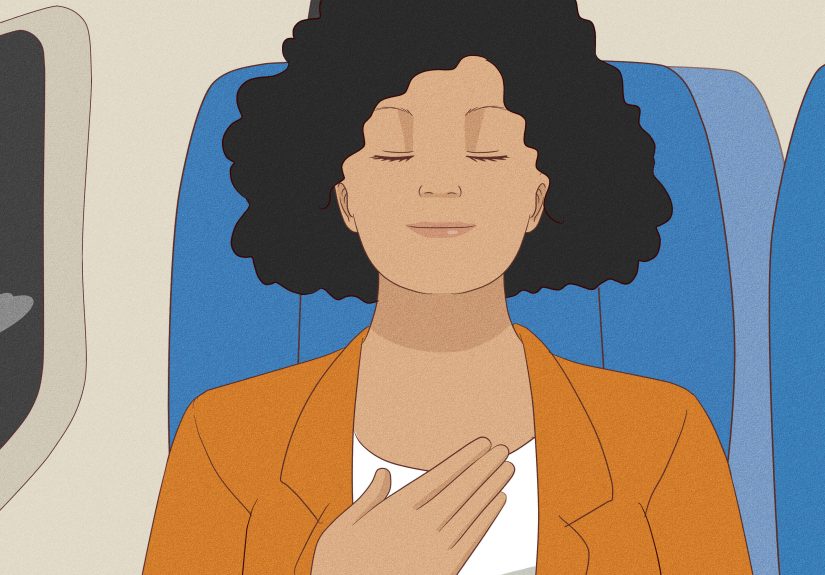
- Breathing reset: slow inhale, longer exhale (repeat 5–10 cycles).
- Progressive relaxation: tense and release shoulders, hands, calves.
- Audio cue: white noise, calm music, or a familiar podcast at low volume.
Cabin Etiquette: Sleep Without Becoming the Villain
Economy sleep is a shared ecosystem. A little courtesy buys you a lot of peace.
- Recline politely: check behind you before going full lean-back.
- Own your space, not everyone’s space: keep elbows and gear contained.
- Communicate early: if you’re planning to sleep, a quick “Let me know if you need out” prevents awkward mid-snooze shoving.
- Set phone brightness to low and avoid blasting overhead lights like you’re interrogating yourself.
Landing Recovery: How to Wake Up Like a Functional Adult
Even if you slept, your body may feel stiff. Your mission after landing is to speed up recovery without crashing.
Do a “soft reset” within the first hour
- Drink water and eat something reasonable.
- Get daylight when appropriate for your destination schedule.
- Move your body: a short walk beats a heroic nap that ruins the night.
- Keep naps short if you must napthink “recharge,” not “hibernation.”
Extra : Real-World Economy Sleep Experiences (What Actually Works)
Frequent flyers will tell you the same thing in different accents: the best economy sleep is built from small wins. One traveler swears the entire game changed
the day they stopped treating the airplane blanket like a luxury item and started packing a big scarf. “It’s a blanket, a pillow cover, and a privacy curtain,”
they’ll saybecause pulling fabric up near your face (without blocking airflow) creates a tiny psychological signal that the world is quieter now. Is it
technically the same seat? Yes. Does it feel like you’ve established your own little fort? Also yes.
Another common story: the first time someone uses a truly dark eye mask, they’re shocked by how much easier sleep becomes. Cabin lighting isn’t always bright,
but it’s inconsistentscreens flicker, aisle lights pop on, someone two rows back decides it’s the perfect time to search for a charging cable using the power of
the sun. Blocking light removes a constant “micro-wake” trigger. Pair that with steady audio (white noise or noise-canceling), and suddenly your brain stops
scanning for interruptions like it’s on airport security duty.
Seat choice stories are basically a personality test. Window-seat sleepers talk about “the lean”that stable side support that keeps your head from snapping
forward. They’ll admit the bathroom tradeoff, but they accept it like a monk accepts silence. Aisle-seat sleepers, on the other hand, are the planners. They
like hydration, stretches, and not having to negotiate an exit at 2 a.m. They’ll also tell you a secret: if you choose aisle, your headphones matter more,
because you’ll hear everything from cart clinks to the classic “can I just squeeze past you?” shuffle.
The best experiences often include a simple pre-sleep routine. People who sleep well on planes tend to repeat the same steps: wipe down their space, swap shoes
for socks, put on a layer, sip water, and lower stimulation (dim screen, calmer audio). That predictable sequence becomes a bedtime cueeven in a weirdly dry,
humming cabin. And yes, some travelers add humor as a coping mechanism: one described their hoodie as “my emotional support garment,” because pulling it up
signals “do not perceive me.”
Food and drink experiences are where optimism goes to learn boundaries. Plenty of travelers report that alcohol feels like a shortcutuntil it isn’t. They fall
asleep fast, then wake up a few hours later feeling hot, dry, and annoyed, like their body filed a formal complaint. The more consistent success stories are
boring (which is exactly why they work): water in sensible amounts, a lighter meal, and caffeine used earlier rather than later. The “I ate a giant mystery
pasta and then tried to sleep” crowd usually ends up in the “I watched six episodes of a show I don’t even like” club.
The most relatable lesson from experienced economy sleepers is this: don’t aim for perfect sleepaim for useful sleep. Two solid hours can be the
difference between landing okay and landing like a confused zombie who forgot their own name at passport control. Build your kit, choose your seat like it
matters (it does), and stack small comfort advantages. That’s the real pro move.
Conclusion: Your Economy Sleep Plan in One Breath
To sleep comfortably in economy class, you don’t need luckyou need leverage. Choose a sleep-friendly seat, pack a tiny “block light and noise” kit, dress in
layers, hydrate intelligently, avoid late caffeine and alcohol, and use a simple routine to tell your brain it’s bedtime. Add small movement breaks to stay
comfortable, time sleep with your destination when crossing time zones, and keep safety in mind by staying buckled while you snooze. Economy will still be
economybut you can absolutely arrive more rested than the person rage-scrolling beside you at full brightness.