Table of Contents >> Show >> Hide
- What Is the Twin Mustang, Exactly?
- Why the Twin Mustang Is “Extremely Rare”
- Rebuild vs. Restore: What “Rebuilding” Really Means Here
- The Rebuild Process: A Realistic Walkthrough
- 1) Research, Identification, and “What Variant Are We Actually Holding?”
- 2) Airframe Triage: Corrosion, Cracks, and Hidden Damage
- 3) The Center Section: Where the Twin Mustang Earns Its Name
- 4) Engines and Propellers: Twice the Power, Twice the Decisions
- 5) Systems Resurrection: Wiring, Hydraulics, Cooling, and Controls
- 6) Cockpits and Crew Stations: Two Offices, One Airplane
- 7) Surface Finish, Markings, and “Truth in Paint”
- A Real-World Example: Bringing an XP-82 Back to Flight
- Why Rebuild One at All?
- What Makes Twin Mustang Restoration Uniquely Difficult
- Hands-On Lessons From a Twin Mustang Rebuild: Experience Notes
- Conclusion
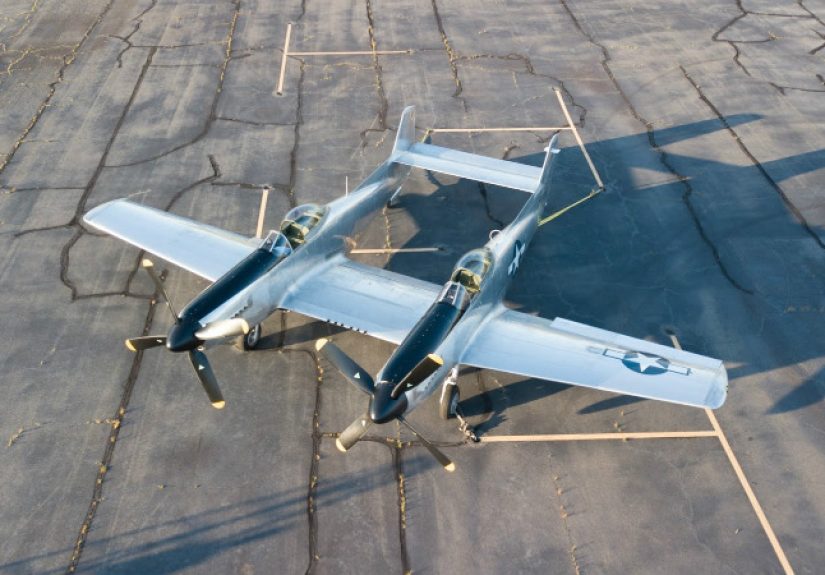
If you’ve ever looked at the F-82 Twin Mustang and thought, “Who let a P-51 go through a photocopier?”
you’re not alone. The Twin Mustang looks like two Mustangs sharing a single set of wings and a whole lot of attitude.
But the truth is even better: it’s a purpose-built, late-WWII idea that arrived just as the world sprinted into the jet agethen
disappeared so fast it left behind a near-mythical reputation and a restoration challenge that can make seasoned mechanics stare into the distance like
they’re remembering a long winter.
Rebuilding an extremely rare Twin Mustang isn’t just “fixing an old plane.” It’s closer to restoring a one-off classic car that was hand-built,
never mass-supported, and whose spare parts are now scattered across time. Every step involves research, detective work, and a little stubborn optimism.
This article walks through what makes the Twin Mustang special, why it’s so rare, and what a real-world rebuild process looks likedown to the
unglamorous details (because reality is mostly wiring, corrosion, and paperwork).
What Is the Twin Mustang, Exactly?
The Twin Mustang started as a practical problem: long-range escort missions. The concept was simple and brilliantput two crew positions on a fighter
so pilots could trade off and stay sharp on marathon flights. Production deliveries didn’t begin until early 1946, which is aviation’s version of
showing up to the party when the host is already sweeping confetti into a trash bag.
The Twin Mustang is often described as “two P-51s joined together,” but it’s more accurate to call it a new design that borrowed Mustang DNA.
It carried a pilot and a second crew member (often a co-pilot/navigator, or in some versions a radar operator) and evolved into roles ranging from bomber escort
to all-weather interception.
Why It Was a Big Deal (Even in a Hurry-Up-and-Replace-It Era)
- Range and endurance: It was designed for missions where “just one more hour” wasn’t a joke.
- Two crew stations: Reduced fatigue and expanded mission capability.
- Adaptable mission gear: Some variants carried radar equipment for all-weather interception.
- Performance: Depending on variant, it could be very fast for a piston fighteryet it entered service as jets took over the spotlight.
Why the Twin Mustang Is “Extremely Rare”
Rarity isn’t just about “how many were built.” It’s also about how many survived the brutal math of postwar budgets, fast-moving technology,
and the reality that specialized aircraft often get scrapped, cannibalized, or forgotten.
The Twin Mustang had a short window to prove itself. Still, it made history. In Korea, F-82G all-weather aircraft based in Japan were among the first USAF
planes operating over Korea, and on June 27, 1950, F-82Gs were credited with shooting down the first three North Korean aircraft destroyed by U.S. forces.
That’s not a footnotethat’s an opening chapter.
On the home-front and in peacetime testing, the type also became famous for endurance. The F-82B nicknamed “Betty-Jo” flew from Hawaii to New York
on Feb. 27–28, 1947, a distance of 5,051 milesa record-setting nonstop run for a propeller-driven fighter that still gets mentioned with a
kind of respectful disbelief.
Rebuild vs. Restore: What “Rebuilding” Really Means Here
In warbird circles, “restoration” can mean anything from careful conservation to a full teardown and return to flight. “Rebuilding” a Twin Mustang tends to mean
the hard mode: structural work, systems resurrection, and parts fabricationbecause the usual supply chain is “call a museum archivist, then call three collectors,
then start machining.”
Two Big Truths of Twin Mustang Rebuilds
-
You’re rebuilding documentation as much as metal.
Manuals, drawings, photos, and maintenance notes become as valuable as any part on the aircraft. -
Every “easy fix” has a Twin Mustang twist.
Two fuselages, a unique center wing section, specialized cooling arrangements, and variant-specific systems mean nothing is quite standard.
The Rebuild Process: A Realistic Walkthrough
Below is a practical framework used by top restoration shops and museum teams. The exact order varies, but the logic is consistent:
prove what you have, stabilize it, then rebuild it safely and correctly.
1) Research, Identification, and “What Variant Are We Actually Holding?”
Twin Mustangs aren’t one-size-fits-all. For example, museum technical notes list the F-82G with two Allison V-1710 engines (1,600 hp each),
a max speed around 400 mph, and a range around 2,240 miles. Meanwhile, the F-82B “Betty-Jo” is documented with two
Packard V-1650 engines (1,380 hp each), a max speed listed at 482 mph, and a range around 2,200 miles.
Those are not small differencesyour rebuild plan depends on which airframe and configuration you’re recreating.
The research phase also sets the restoration philosophy:
Are you building a static display? A taxiable aircraft? Or a flying example that must satisfy modern airworthiness requirements?
The earlier you answer this, the fewer “expensive surprises” you’ll collect later.
2) Airframe Triage: Corrosion, Cracks, and Hidden Damage
Warbirds don’t age politely. Expect corrosion in seams, behind panels, and around fastenersespecially where moisture can sit unnoticed.
Add old repairs, possible hangar rash, and decades of storage changes. The Twin Mustang’s unusual layout means you’re inspecting two fuselages and
a center section that ties everything together.
A rebuild-worthy inspection often includes:
- Detailed structural checks of spars, longerons, attachment fittings, and control surface hinge points
- Inspection of landing gear mounts and hydraulic lines (leaks are common in long-stored aircraft)
- Verification that alignment hasn’t driftedbecause “slightly off” at the joints becomes “noticeably weird” in flight
3) The Center Section: Where the Twin Mustang Earns Its Name
The visual drama of the Twin Mustang is also its engineering reality: the center wing section and horizontal tailplane must keep two fuselages flying as one.
The rebuild team has to ensure geometry and rigidity are correctbecause this is the core structure that makes the aircraft behave like a single airplane,
not a committee.
This phase can involve careful fitting, non-destructive testing, and, when required, fabrication of structural componentsalways matched to original materials
and specifications as closely as possible for safety and authenticity.
4) Engines and Propellers: Twice the Power, Twice the Decisions
Engines are where restorations go to become “projects” instead of “plans.” Twin Mustangs used different engine families depending on variant.
And beyond overhaul work, a rebuild can hinge on something deceptively simple: rotation direction.
A famous restoration story illustrates the challenge. In one documented effort to return an XP-82 to the air, the team’s priority included finding a
left-hand turning Merlin engine to maintain the proper counter-rotating setupbecause changing that can ripple into handling characteristics,
authenticity, and engineering approvals. This is the kind of problem that doesn’t show up in a generic “how to restore an airplane” checklist, but it defines
a Twin Mustang rebuild.
5) Systems Resurrection: Wiring, Hydraulics, Cooling, and Controls
Aircraft systems are where time does the most mischievous work. Insulation hardens. Connectors corrode. Rubber seals turn into something that looks like
licorice but behaves like glass. Rebuild teams typically:
- Rewire or repair major electrical runs, preserving original routing where feasible
- Rebuild hydraulic components and landing gear systems with fresh seals and verified tolerances
- Restore cooling systems (critical on high-power piston aircraft)
- Overhaul flight controls, pulleys, bellcranks, and cables to precise spec
If the aircraft is an all-weather interceptor variant, avionics and radar-related components can become a museum-grade detective mission.
Even if modern equipment is used for safety or practicality, the rebuild often preserves external appearance and key historical configuration.
6) Cockpits and Crew Stations: Two Offices, One Airplane
The Twin Mustang is as much about crew management as aerodynamics. Some models used two full-control cockpits, while interceptor configurations may feature
a radar operator station. A quality rebuild treats the cockpit(s) as functional systemsnot just pretty panelsbecause ergonomics, instrumentation reliability,
and control feel matter for safe operation.
7) Surface Finish, Markings, and “Truth in Paint”
The finishing phase is where public attention spikesbecause nothing says “restoration success” like a gleaming aircraft under good lighting.
But the best rebuilds don’t just paint. They research correct stenciling, squadron markings, and time-appropriate configuration.
Museums have even documented their own renovation work on F-82 displays, including refinishing and stenciling as part of exhibit updatesproof that even
non-flying restorations demand serious craftsmanship and historical care.
A Real-World Example: Bringing an XP-82 Back to Flight
If you want a case study in what “rebuilding an extremely rare Twin Mustang” looks like, you don’t have to imagine it.
A widely reported XP-82 return-to-flight effort included an unexpected milestone: during what was supposed to be a high-speed taxi test,
the aircraft accelerated so quickly that the test pilot chose the safer optioncontinue into a short flight rather than risk running out of runway.
The performance comparison is part of why that moment makes sense. One account notes the XP-82 having about 1,860 hp per side
(3,720 total), compared to roughly 1,500 hp for a single-engine Mustang, while weighing about 14,700 pounds versus
roughly 9,500 pounds for a P-51. In plain English: it’s not just “two Mustangs.” It’s a whole different level of shove.
That same restoration effort was reported as a 10½-year project involving approximately 207,000 labor hours. Numbers like that
aren’t for bragging rightsthey’re what happens when you’re reconstructing a rare aircraft with limited parts availability, specialized systems,
and a responsibility to do it safely.
Why Rebuild One at All?
Because the Twin Mustang represents a hinge moment in aviation historyan engineering answer to WWII-range problems that ended up bridging into Cold War
interception and early Korean War combat. It’s also a reminder that aviation progress isn’t a straight line. Sometimes the “last and best” piston fighters
arrive just as the future changes the rules.
Three Big Reasons Rebuilds Matter
- Education: A rebuilt Twin Mustang teaches design evolution better than any diagram.
- Preservation: With so few surviving, every saved airframe matters.
- Craft continuity: These projects keep rare mechanical and fabrication skills alive for the next generation.
What Makes Twin Mustang Restoration Uniquely Difficult
Plenty of warbirds are hard. The Twin Mustang is hard in a very specific way: it combines the complexity of a high-performance piston fighter with the
logistical reality of a low-production type. That means:
- Parts scarcity: Many items are custom, rare, or must be fabricated.
- Variant complexity: Engine families, mission equipment, and crew arrangements can differ drastically.
- Documentation gaps: The best rebuilds are often built on research as much as wrenching.
- Certification realities: Any flying restoration must satisfy modern safety expectationswithout erasing history.
Hands-On Lessons From a Twin Mustang Rebuild: Experience Notes
Spend enough time around a serious warbird rebuildespecially something as rare as a Twin Mustangand you learn that the “romance of aviation” is mostly
a romance with problem-solving. The glamorous part (the first engine run, the first taxi, the first flight) is real, but it sits on top of months where the
highlight of the day is finding the correct fastener or discovering that a bracket is salvageable instead of needing to be recreated from scratch.
Restorers often talk about the hangar becoming a mix of workshop, library, and archaeology site. One moment you’re measuring a worn component and arguingpolitely,
but with convictionabout whether it was modified in service or simply “aged creatively.” The next moment you’re studying period photos to confirm the routing of a line
or the placement of a stencil. On a Twin Mustang, that detective work doubles because you’re effectively caring for two fuselages and the structural center section
that makes them behave like a single aircraft.
There’s also a special kind of humility that comes with rare aircraft. With more common types, you can sometimes borrow knowledge from a broad community:
“Oh, that’s a known issuehere’s the fix.” With a Twin Mustang, the community is smaller, the examples are fewer, and each airframe may have lived a unique life.
So teams build their own references: photo logs, part catalogs, hand-written notes, and careful “before/after” documentation that will help the next caretaker.
The rebuild becomes a living archive.
The most memorable “experience lesson” is how much effort goes into preventing future problems, not just repairing old ones. It’s tempting to aim for cosmetic completion
paint, polish, a dramatic reveal. But experienced rebuild teams obsess over things nobody sees: the condition of wiring behind panels, the integrity of a fitting you’ll
never photograph, the way a control cable sits in a pulley groove. Those hidden details decide whether the aircraft is merely impressive to look ator truly safe and
reliable for operation.
Finally, there’s the emotional moment when the project stops being “a collection of parts” and starts being “an airplane” again. It might be the first time both engines
idle smoothly and the gauges behave like they remember their job. It might be the first time the landing gear cycles correctly without a leak that requires three rags and
an apology. Or it might be a quiet moment at the end of a long day when someone steps back, looks at the Twin Mustang’s unmistakable shape, and realizes that the machine
is returningnot as a museum rumor, but as a real, functioning artifact of American aviation history.
Conclusion
Rebuilding an extremely rare Twin Mustang fighter is equal parts engineering, historical research, and persistence. The aircraft’s dual-fuselage layout and mission flexibility
made it extraordinarybut those same qualities make it difficult to restore today. Whether the goal is a museum-quality display or a return to flight, the best rebuilds respect
two things at once: the facts of history and the realities of safety. When done right, the Twin Mustang stops being a curiosity and becomes what it
always wasan ambitious, powerful answer to a very real problem, preserved for people who weren’t alive when piston fighters ruled the sky.