Table of Contents >> Show >> Hide
- Why 1945 Is the Right Starting Line
- The House as Japan’s Design Laboratory
- Key Houses That Explain the Story
- 1950s: Rebuilding With Modernism, but Not Blindly
- 1960s: The Rise of the Urban Experiment
- 1970s: Concrete, Introspection, and the Art of Withholding
- 1980s: Lightness, Technology, and New Domestic Freedom
- 1990s and 2000s: Fragmentation, Community, and Life in Pieces
- 2010s to the Present: Transparency, Micro-Lots, and Radical Clarity
- What Makes This Book Required Reading
- The Reader Experience: Why This Material Stays With You
- Final Thoughts
If you care about architecture, cities, design history, or even the humble question of why one small room can somehow feel bigger than your entire emotional support group, The Japanese House Since 1945 deserves a spot on your reading list. Not because it is trendy. Not because “Japanese minimalism” photographs well on social media. And definitely not because every white wall and neatly folded blanket automatically qualifies as enlightenment.
It matters because the post-1945 Japanese house tells one of the sharpest, smartest stories in modern architecture. In Japan, the house became more than a shelter. It became a testing ground, a cultural mirror, a pressure chamber, and occasionally a beautifully civilized act of rebellion. Architects used the domestic scale to wrestle with density, memory, family life, scarcity, technology, privacy, nature, and the unnerving reality that cities do not stop moving just because you want a quiet cup of tea.
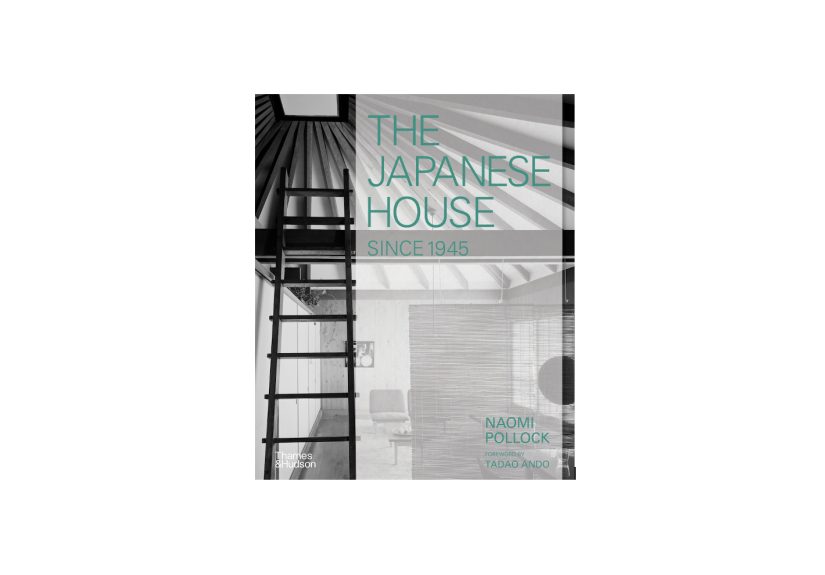
That is what makes Naomi Pollock’s The Japanese House Since 1945 so compelling. The book takes readers through nearly eight decades of architect-designed homes and shows how Japanese domestic architecture evolved from postwar necessity into one of the world’s richest laboratories of design invention. The result is not just a parade of pretty houses. It is a study of how a nation rebuilt itself room by room, courtyard by courtyard, concrete slab by concrete slab.
Why 1945 Is the Right Starting Line
The year 1945 is not a random marker. It is the hinge point. After World War II, Japan faced devastation, housing shortages, material scarcity, social change, and the enormous challenge of reconstruction. When a country must rebuild at speed, architecture stops being abstract theory and becomes something more urgent: a tool for survival, adaptation, and cultural self-definition.
That context matters because it shaped everything that followed. The postwar Japanese house was born in conditions of pressure. Land was limited. Cities were rebuilding. Families were changing. Modern materials and foreign influences were arriving, but tradition had not vanished. Instead of choosing between old and new, many Japanese architects did something more interesting: they forced the two into conversation.
That tension is one of the great pleasures of reading about Japanese houses after 1945. You see timber ideas translated into concrete. You see courtyards reimagined in brutally tight urban lots. You see sliding divisions, shifting levels, ambiguous thresholds, and spaces that can act as living room, workspace, lookout point, and nap zone depending on the hour. In other words, the Japanese house often behaves less like a static object and more like a well-mannered accomplice.
The House as Japan’s Design Laboratory
One of the most famous statements in this tradition came from Kazuo Shinohara, who declared that “a house is a work of art.” That line has become almost unavoidable in discussions of postwar Japanese domestic architecture, but the reason it stuck is simple: it captured the seriousness with which architects treated the single-family house. In many countries, the house is where architects compromise. In Japan, it often became the place where they experimented hardest.
Why the house? Because it offered freedom. A private residence could test ideas that would be too risky, too personal, or too strange for a large public commission. It could absorb contradictions. It could be poetic without being monumental. It could be compact, radical, and deeply specific. And because Japanese urban land is often fragmented into unusually small or awkward parcels, the house naturally became a site of inventive problem-solving.
That is why the best houses in this story are not just “beautiful homes.” They are arguments. They argue about how a family should live. They argue about how much privacy a person really needs. They argue about whether a house should protect you from the city or open itself to it. They argue about whether architecture should be solid and permanent, or flexible and fleeting. Some of those arguments are cozy. Some are confrontational. A few are so bold they make the average suburban floor plan look like it gave up halfway through a yawn.
Key Houses That Explain the Story
1950s: Rebuilding With Modernism, but Not Blindly
In the early postwar years, architects such as Kenzo Tange and Kiyonori Kikutake helped define new directions for Japanese domestic design. The question was not simply how to build again, but how to build differently. Modernism offered new forms, materials, and structural logic, yet Japanese architects rarely copied it in a purely imported form. Even when concrete, steel, and new planning methods arrived, older ideas about spatial fluidity, framed views, thresholds, and flexible living quietly persisted.
Kikutake’s Sky House from 1958 remains one of the clearest early statements. Elevated above the ground and organized with service elements that could be adjusted over time, it treated domestic life as something that changes. That sounds obvious today, but it was revolutionary in a period when many homes still behaved as fixed containers. Sky House suggested that family life is dynamic, and the building should be ready to move with it.
1960s: The Rise of the Urban Experiment
By the 1960s, Japan’s rapid urbanization made the house even more intellectually charged. Small sites, growing cities, and shifting lifestyles pushed architects toward sharper, stranger responses. This was the era when the house stopped apologizing for being unusual.
Takamitsu Azuma’s Tower House from 1966 is one of the great examples. Built on a tiny triangular urban site, it stacked family life vertically. Instead of treating limited land as defeat, it used constraint as a design engine. The result was dense, urban, and memorable. It also made an important point: the Japanese house did not need to retreat from the city. It could confront it directly, even elegantly.
This is also where Shinohara’s influence becomes impossible to ignore. His work and writing helped frame the house as a place for ideas as much as a place for living. He rejected easy nostalgia and resisted the notion that domestic architecture had to be either traditionally Japanese or obediently international. In his hands, the house became both intellectual and emotional, disciplined and weird. A difficult combination, but a glorious one.
1970s: Concrete, Introspection, and the Art of Withholding
The 1970s brought some of the most intense and inward-looking houses in the postwar canon. If the 1960s often felt like architectural debate in public, the 1970s sometimes felt like philosophical retreat behind a wall.
Tadao Ando’s Row House in Sumiyoshi is still a landmark because it strips domestic life down to essentials while making a courtyard the center of the experience. Instead of maximizing conventional comfort, it insists on awareness: of weather, movement, light, and the act of crossing from one part of daily life to another. It is rigorous, almost severe, yet unforgettable.
Toyo Ito’s White U, designed in 1976 for his sister after the death of her husband, is another defining work. With its inward-facing plan and emotional weight, it shows how the Japanese house can hold biography, grief, and ritual inside a highly controlled architectural form. This is one reason the best books on Japanese houses never succeed if they treat the buildings as mere sculpture. The good ones remember that people actually lived there, cooked there, mourned there, and figured out where to put the socks there.
1980s: Lightness, Technology, and New Domestic Freedom
In the 1980s, the Japanese house became lighter in several senses. Material experimentation expanded. The relationship between enclosure and openness loosened. Architects explored transparency, slenderness, and a more provisional feeling of dwelling.
Toyo Ito’s Silver Hut from 1984 captures this shift beautifully. It feels airy, inventive, and anti-monumental. Here the house is not a fortress. It is more like a delicate apparatus for everyday life, filtering light and softening boundaries. Ito’s early residential work mattered because it challenged heavy ideas of structure and permanence without sacrificing seriousness. The result was not fragility for fragility’s sake, but a different vision of domestic freedom.
This broader move toward lightness also helped set the stage for later architects such as Kazuyo Sejima and Ryue Nishizawa, whose work would refine openness into something almost impossibly clear and precise. Their architecture often feels effortless, which is one of the cruelest tricks architects can play on the rest of us.
1990s and 2000s: Fragmentation, Community, and Life in Pieces
After the bubble era, Japanese architecture did not lose its edge. If anything, it became more inventive about modesty, fragmentation, and social nuance. Houses no longer had to read as singular boxes containing a single family in a single predictable arrangement. They could splinter, stack, open, share, and negotiate.
Ryue Nishizawa’s Moriyama House from 2005 is a masterpiece of this phase. Rather than one unified volume, it breaks the house into multiple small units spread across the site like a tiny domestic village. Some units serve one resident; others can be rented. Outdoor passages connect everything. Privacy and community are not locked into separate zones but actively balanced. The project feels both intimate and urban, solitary and social.
That is why Moriyama House became such an emblem of contemporary Japanese domestic architecture. It rethinks what a house can be in a dense city. It also reflects a reality Pollock is especially good at explaining: Japanese residential design is not just about formal beauty. It is about land conditions, economics, habits, and evolving social structures.
2010s to the Present: Transparency, Micro-Lots, and Radical Clarity
By the 2010s, Japanese architects were still pushing domestic design into startling territory. Sou Fujimoto’s House NA became famous for its extraordinary transparency and layered platforms. It treats the floor less as a flat surface and more as a series of inhabitable ledges and levels. Shoes come off, surfaces become seats or desks, and the whole house operates like a vertical landscape of daily actions.
Fujimoto’s House K offers another angle on the same restless imagination. With its sloped roof, minimal internal walls, and landscape-like presence, it blurs the line between dwelling and terrain. These are not gimmicks. They continue long-running Japanese conversations about flexibility, ground, roof, threshold, and the possibility that domestic space can be open-ended without becoming chaotic.
The contemporary Japanese house, at its best, still balances two things that rarely coexist gracefully: conceptual daring and everyday usefulness. That balance is what keeps the tradition alive. If a house looks brilliant in photographs but makes breakfast feel like a tactical exercise, it may be art, but it is not a convincing domestic future.
What Makes This Book Required Reading
There are plenty of books that turn Japanese houses into aesthetic trophies. Pollock’s approach is better. She pays attention to the architecture, of course, but she also gives readers the context that makes the buildings legible: economics, technology, materials, family change, urban density, disasters, and lived experience. That wider frame is crucial.
It is also what separates serious architectural history from glossy surface admiration. The Japanese house after 1945 is not remarkable because it is tidy or minimalist or photogenic. It is remarkable because it kept reinventing the relationship between tradition and innovation under conditions of real pressure. These houses did not emerge from a vacuum. They emerged from rubble, recovery, growth, oil shocks, bubble economies, shrinking households, and recurring questions about how to live well in very limited space.
That is why this subject rewards rereading. It speaks to architects, but also to urbanists, historians, designers, and ordinary readers who suspect that the way we arrange domestic space shapes our values more than we admit. The Japanese house shows that a home can be compact without feeling defeated, modern without being generic, experimental without being empty, and connected to nature without pretending the city does not exist.
The Reader Experience: Why This Material Stays With You
One of the most striking experiences of reading about the Japanese house since 1945 is the feeling that you are not simply moving through a sequence of buildings. You are moving through changing ideas of daily life. The houses may be small, but the questions inside them are huge. What does privacy mean in a crowded city? What counts as a family? How much openness is liberating, and how much is exhausting? Can a house be calm without becoming dull? Can it be social without destroying solitude?
That is where the subject becomes more than an architecture lesson. It becomes strangely personal. Even if you have never visited Tokyo, never studied Japanese design, and never once used the phrase “spatial sequencing” in public without embarrassment, these houses still get under your skin. They make you think about your own home differently. Suddenly you notice your hallway is wasted space. You wonder why your windows frame parking lots instead of trees. You start questioning whether the giant open-plan kitchen in lifestyle magazines is actually the peak of civilization or just a very expensive way to watch somebody ignore the dishes.
There is also a real sensory pleasure in the material. Japanese houses of this period are often described through plans, sections, photographs, and crisp theoretical language, but what lingers is the atmosphere: the filtered light, the compressed stairs, the surprise courtyard, the low sill, the roof plane that seems to float, the view edited with extraordinary precision. These are houses that teach you to pay attention. A wall is not just a wall. It is a decision about light, privacy, sound, heat, and the rhythm of everyday movement.
For many readers, the most memorable experience is the tension between intimacy and abstraction. On the page, some of these houses look almost unreal, like idealized diagrams. Then you learn who lived there and why, and everything changes. A transparent house is no longer just a formal experiment; it is a wager about trust and visibility. A closed courtyard house becomes not merely a geometric exercise, but a way of making refuge. A fragmented compound becomes not an eccentric composition, but a practical answer to loneliness, rent, independence, and shared urban life.
That human layer is what gives the topic emotional force. The best writing on Japanese domestic architecture understands that houses are never just authored by architects. They are co-authored by residents, children, habits, weather, neighbors, budgets, and time. A kitchen added later, a curtain improvised for modesty, a garden used for laundry, a room repurposed after a death or a birth: these details matter. They turn architecture from a frozen image into a living record.
There is another experience tied to this subject that feels especially relevant today: humility. In an age of oversized houses, inflated amenities, and endless marketing around “luxury living,” postwar Japanese houses remind readers that smallness can be intelligent, and restraint can be generous. These buildings do not worship clutter, but neither do they worship emptiness for its own sake. At their best, they are edited, not sterile; precise, not pretentious. They show how little space can do a surprising amount of emotional and practical work.
By the end, that is why the material lingers. It is not simply because the architecture is inventive. It is because the houses keep asking a question that never goes out of date: how should we live now? Postwar Japan answered that question again and again with unusual bravery. Some answers were austere, some playful, some deeply personal, some almost utopian. But taken together, they form one of modern architecture’s richest conversations. Reading them feels less like studying a style and more like overhearing decades of brilliant people trying to make daily life wiser, lighter, and more humane.
Final Thoughts
The Japanese House Since 1945 is required reading because it captures a body of work that is both highly specific and globally influential. These houses emerge from Japanese history, urbanism, and culture, yet they speak to universal architectural concerns: how to live with less, how to build with intelligence, how to respect habit while embracing change, and how to make domestic life feel meaningful rather than merely efficient.
In the end, that is the real lesson. The Japanese house after 1945 is not important because it looks cool in black-and-white photographs or because it flatters our fantasies about minimalism. It is important because it proves that the home can still be a place of serious design thinking. And when architecture takes everyday life seriously, even a small house can change the way the whole discipline thinks.