Table of Contents >> Show >> Hide
- What Makes a Cape Ann Gambrel Different (and Worth Saving)
- Start Like a Historian, Not a Demolition Crew
- Diagnose the Building Before You Design the Dream
- The Gambrel Roof: Your Biggest Asset (and Biggest Responsibility)
- Exterior Walls: Clapboards, Shingles, and the Art of “Do Less, Better”
- Windows and Doors: Keep the Wavy Glass (and Improve Comfort)
- Interiors: Plaster, Floors, and the “Don’t Make It Too Perfect” Rule
- Modern Systems in a 1720 Shell: Comfort Without Collateral Damage
- Safety Reality Check: Lead Paint and Old-House Dust
- Working With Historic Commissions (and Winning Friends Instead of Headaches)
- A Real-World Snapshot: Restoring an Ipswich River Cape Ann Gambrel
- Common Mistakes (and How to Dodge Them)
- Field Notes: of Real Restoration Experiences
- Conclusion
A 1720 Cape Ann gambrel isn’t just an “old house.” It’s a time capsule with opinionsstrong ones.
It will tell you, loudly, what it thinks about modern drywall, vinyl windows, and anyone who assumes
8-foot ceilings were a universal human right. Restoring one is equal parts building science, local history,
craftsmanship, and the humility of realizing a three-hundred-year-old timber frame has outlasted every trend
on your social feed.
Done well, restoration doesn’t mean freezing a home in amber. It means preserving the features that make
the building historically legibleits form, materials, and workmanshipwhile thoughtfully upgrading safety,
comfort, and durability. The goal is a house that still reads “1720,” but lives like it’s met electricity.
What Makes a Cape Ann Gambrel Different (and Worth Saving)
The Cape Ann gambrel is a New England original: compact, weather-ready, and surprisingly clever about space.
That double-sloped roof isn’t decorationit’s a strategy. The gambrel shape expands usable attic volume,
creating headroom and a more functional upper story without turning the house into a tall, wind-catching sail.
In coastal Massachusetts, where nor’easters show up uninvited, that matters.
Many early homes in the region were timber-framed, built with heavy posts and beams joined by mortise-and-tenon
connections. Over centuries, these houses were altered (ells tacked on, chimneys modified, windows resized).
Your job isn’t to pretend those changes never happened; it’s to understand what’s significant, what’s fragile,
and what’s simply worn out.
Restoration starts with respect for the “defining features”
On a gambrel, defining features typically include the roof shape, the massing, original framing, historic window
openings and trim, clapboards or shingles, and interior details like wide-plank floors, exposed beams, and plaster.
The trick is to identify what carries the storyand protect it during every modern upgrade.
Start Like a Historian, Not a Demolition Crew
1) Document before you touch anything
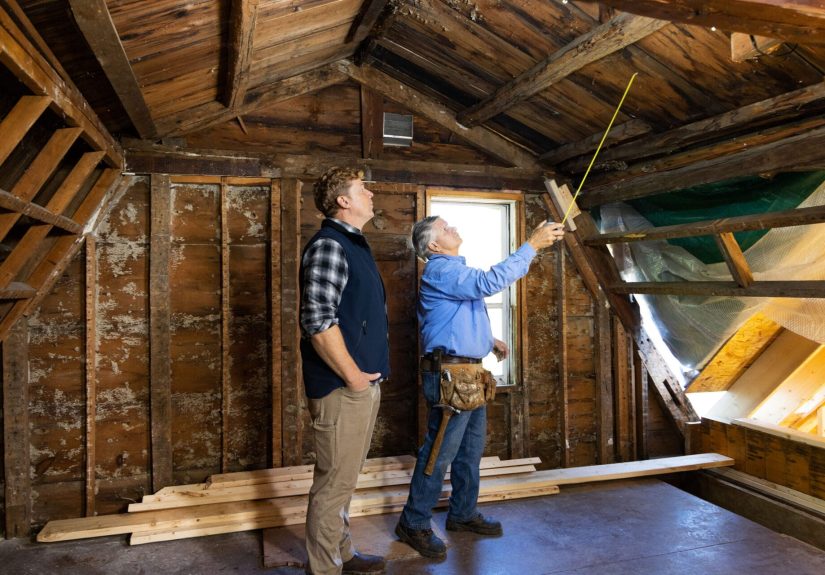
Before a single board comes off, do a full photo sweep: exterior elevations, roof planes, window details,
interior trim profiles, framing in the attic, basement sills, chimney joints, floor slopeseverything.
Add measured sketches or a basic existing-conditions floor plan. If you later need to rebuild a cornice,
duplicate a muntin profile, or prove what was original, your camera roll becomes your best contractor.
2) Make a “significance map” room by room
Create a simple matrix: Keep, Repair, Replace in-kind,
Rework sensitively. This keeps decisions from turning into vibes-based chaos halfway through
the project when someone says, “We could just…open everything up?” and the house quietly weeps into its sash weights.
3) Build the right team early
For a 1720 structure, “handy” is not the same as “qualified.” The best outcomes usually involve:
- An architect or preservation consultant familiar with early New England houses
- A structural engineer who understands timber frames and old foundations
- A restoration carpenter comfortable splicing, consolidating, and replicating profiles
- Trades who can work cleanly around historic fabric (plaster, trim, floors)
If your home is in a local historic districtor even just in a town that takes its early architecture seriously
early coordination with local boards can prevent expensive backtracking later.
Diagnose the Building Before You Design the Dream
Structure: level the plan, not the history
Old houses settle. Floors slope. Doors swing shut like they’re haunted. Some of that is normal.
What you’re looking for is movement that’s active or dangerous: rotted sill sections, compromised posts,
insect damage, undersized members, failing chimney supports, or a foundation that’s crumbling rather than
merely rustic.
A thoughtful structural plan often includes selective jacking (slow, staged, monitored), sistering where appropriate,
reinforcing connections, and repairing sills with in-kind wood species and joinery. The goal is stability and safety,
not making every floor behave like a brand-new condo slab.
Moisture: the real villain wears a raincoat
In coastal New England, moisture management is the make-or-break issue. Bulk water, capillary rise,
wind-driven rain, and winter condensation can all wreak havoc. Before cosmetic work, ensure the house can dry:
functioning gutters and downspouts, good site drainage, sensible grading away from the foundation, proper flashing,
and roof details that don’t funnel water into joints.
If you only remember one restoration rule, make it this: Stop water first, then fix wood.
Otherwise you’ll be repainting the same boards forever, like a historical-themed Groundhog Day.
The Gambrel Roof: Your Biggest Asset (and Biggest Responsibility)
Repair the roof like it’s the house’s umbrellabecause it is
A 1720 gambrel’s roof is both a defining architectural feature and the first line of defense. If wood shingles are
part of the historic character, roof work should favor repair and in-kind replacement. Pay special attention to
flashing at chimneys, valleys, and transitionsthose are the spots where “historic charm” turns into “surprise ceiling stain.”
Insulation without rot: upgrade carefully
Energy improvements are possible, but older buildings behave differently than new ones. A gambrel roof may have
cathedral-like interior ceilings in certain spaces, and modern insulation can change drying potential and condensation risk.
If you want exposed ceilings under a roof plane, you need a strategy that keeps the assembly warm enough to avoid
moisture problemsand detailed air-sealing so interior humidity doesn’t sneak into cold cavities.
One real-world solution used in a Cape Ann gambrel restoration involved installing foam insulation panels over the
roof sheathing, allowing exposed ceiling conditions inside while still improving performance. It’s not the only approach,
but it’s a good example of matching a modern technique to a historic form without forcing the house into a system it can’t tolerate.
Exterior Walls: Clapboards, Shingles, and the Art of “Do Less, Better”
Exterior woodwork on a 300-year-old house often has more paint layers than a theater actor has costumes.
The instinct is to strip everything to bare wood and start fresh. Sometimes that’s necessarybut not always.
If paint is sound and protecting the wood, aggressive removal can create more damage than the peeling ever did.
Painting and prep: boring, essential, and oddly satisfying
Start with cleaning, gentle scraping where paint has failed, compatible primers, and breathable topcoats.
Avoid blasting methods that drive water into the wall assembly. Your restoration should not include
“We power-washed it and now the plaster is doing interpretive dance.”
Repair wood in-kind whenever possible
Patch, splice, consolidate, and reinforce deteriorated elements rather than replacing entire assemblies.
When replacement is unavoidable, match species, dimensions, and profiles. The goal is continuityso the new work
doesn’t look like it was printed from a “Colonial Starter Pack.”
Windows and Doors: Keep the Wavy Glass (and Improve Comfort)
Historic wood windows are usually repairable, and the most common cause of decay is moisture.
That’s good news: fix the moisture pathways, and the windows can last a very long time.
Evaluate unit by unit
Instead of a blanket “replace all windows” plan, document each window’s condition: paint, frame, sill, sash,
glazing, hardware, and overall severity. This produces a realistic scope and often saves original material.
Comfort upgrades that don’t erase history
- Weatherstripping to reduce drafts
- Storm windows (interior or exterior) to boost performance while keeping historic sash
- Re-glazing and sash repair to restore operation and reduce water entry
- Hardware tuning so windows actually open without a negotiation
You can keep character and improve comfort at the same time. It’s not magicjust maintenance and careful detailing.
Interiors: Plaster, Floors, and the “Don’t Make It Too Perfect” Rule
Plaster: repair beats replacement (most of the time)
Historic flat plaster can crack from structural movement, settlement, vibration, or moisture. The repair approach
should match the cause. Hairline cracks may be patched; loose plaster can often be reattached rather than torn out.
In many cases, plaster washers and screws can secure loose areas back to lath, preserving historic surfaces that
modern drywall can’t replicate.
If you do need to patch larger areas, use appropriate systems and blends. Old plaster often relied on lime-based
mixes and multi-coat applications. The closer your repair is to the original behavior, the better it will age.
Floors and framing: stabilize, then refinish thoughtfully
Wide-plank floors and old joists tell the truth about agewear patterns, slight crowns, and nail history included.
Save what you can, repair what you must, and refinish with restraint. A floor that’s been gently restored reads as authentic;
a floor sanded into oblivion reads as “brand-new farmhouse aesthetic,” which is not a year.
Kitchen and baths: make the new work feel earned
Kitchens and bathrooms usually require the most invasive systems work. The best restorations treat new plumbing stacks,
ventilation, and wiring as carefully routed “surgical” interventionsminimizing disruption to original framing and trim.
When adding new cabinetry or tile, let old and new coexist instead of forcing the entire house to cosplay as 1720.
Modern Systems in a 1720 Shell: Comfort Without Collateral Damage
HVAC: plan early, route gently
Heating and cooling upgrades should respect the building’s layout and fabric. Ductwork is often difficult in early houses,
so many restorations lean toward hydronic heat, high-velocity mini-duct systems, or ductless mini-splitsdepending on goals
and the home’s ability to accommodate chases without destroying historic material.
Whatever you choose, focus on: air sealing, ventilation, and moisture management.
A super-tight house with no ventilation is a mold factory with better insulation.
Electrical and fire safety: invisible upgrades that matter
Early houses often have layered, inconsistent wiring histories. Modernizing electrical service, adding smoke/CO protection,
and upgrading lighting can be done with minimal visual impact if planned from the start. Run new wiring through basements,
attics, closets, and carefully chosen chasessaving decorative plaster and original trim.
Safety Reality Check: Lead Paint and Old-House Dust
Any home built before 1978 may contain lead-based paint. Renovation activities that disturb painted surfaces can create
hazardous dust. If you hire contractors for compensated renovation work, lead-safe requirements can apply, including
containment, prohibited practices, cleaning verification, and pre-renovation education.
Even if you’re doing some work yourself, treat dust like the enemy: isolate work zones, use HEPA filtration, wet methods,
and careful cleanup. Restoration is not the moment for “We’ll just sand it real quick” optimism.
Working With Historic Commissions (and Winning Friends Instead of Headaches)
Many Massachusetts towns have local historic district commissions or review processes for exterior changes.
If your project involves additions, visible alterations, or significant material replacement, reach out early.
Bring documentation, show intent to preserve defining features, and present alternatives that meet your needs
without flattening the building’s character.
A practical mindset helps: preservation boards aren’t there to ruin your lifethey’re there to stop the neighborhood’s
oldest house from becoming a vinyl-sided “heritage-inspired” rectangle.
A Real-World Snapshot: Restoring an Ipswich River Cape Ann Gambrel
In one documented restoration of a 1720 Cape Ann gambrel in Ipswich, Massachusetts, the home sat on a riverfront lot and
started as a modest footprint with a later ell. The ell was in such poor shape that engineers deemed it unsound and it was
removed. The restoration plan expanded livability with a new one-story ell for open-plan living and a two-story addition
that included a garage and a primary suitewhile retaining the historic gambrel house as the core.
The project also navigated real constraints: river setbacks, conservation restrictions, and site limitations.
During excavation, an old cistern was discoveredexactly the kind of “surprise archaeology” that makes contingency budgets
feel less like pessimism and more like wisdom.
One particularly instructive detail: the design aimed for an airy interior feel while keeping gambrel ceilings visually present,
using an insulation approach compatible with exposed interior roof planes. That’s restoration in practice: protect the silhouette,
keep the historic structure legible, and make smart upgrades so the house can keep doing its job for another century.
Common Mistakes (and How to Dodge Them)
-
Replacing before evaluating: Many historic elements are repairablewindows, floors, trim, even plaster.
Start with assessment and pilot repairs. -
Sealing the house so tight it can’t dry: Air sealing is good; moisture trapping is not.
Plan ventilation and understand the assembly. - Using overly hard modern materials: In masonry work, mortar should be compatible and often softer than the surrounding historic material.
-
Over-stripping paint “because it looks cleaner”: If paint is sound, it’s doing its job.
Remove layers only where failure demands it. - Ignoring water management: Missing flashing, bad gutters, and poor grading will undo your work faster than any design mistake.
- Skipping documentation: If you don’t record what you had, you can’t credibly recreate it later.
Field Notes: of Real Restoration Experiences
Here’s what restorers tend to learn the hard wayshared in the spirit of saving you a few headaches and at least one
late-night spiral into “should we have bought a ranch instead?”
First: the house will reveal itself in layers. You’ll think you’re fixing a sagging corner, then discover the sag was
a decades-old workaround for a sill that spent a century wicking moisture. The moment you address drainage outside,
the “mystery rot” inside starts making sense. Water is patient, and it keeps receipts.
Second: the best restoration days are not glamorous. They’re the days you correct the boring stuffrebuilding a flashing
detail, tuning a gutter run, regrading a corner, or repairing a window sill so it sheds water correctly. Those tasks never
go viral, but they keep the building alive. If you want a house that lasts, learn to love the unsexy checklist.
Third: you’ll meet the “Why is nothing square?” stage. Cabinets don’t sit flush. Tile lines argue with baseboards.
Doors insist they were installed during a different geologic era. The coping strategy is simple: build in adjustability.
Use scribe strips, shim thoughtfully, and accept that a historic house is a living object, not a spreadsheet.
Fourth: when you preserve original windows, you gain a weird superpowercomfort that feels earned. After re-glazing,
weatherstripping, and adding storms, the drafts calm down, the house gets quieter, and the wavy glass still catches
light in a way modern panes can’t imitate. That’s the moment homeowners usually say, “Okay, I get it now.”
Fifth: expect at least one archaeological surprise. Sometimes it’s a cistern, sometimes it’s an old chimney footprint,
a buried threshold, or evidence of a previous addition. Treat discoveries like data, not disasters. Photograph them,
decide what should be preserved, and adjust the plan with a cool head. This is also when your contingency fund stops
feeling like an optional accessory and starts feeling like a seatbelt.
Finally: the emotional win is not perfectionit’s coherence. The house feels right when the new work is respectful:
additions that don’t bully the original massing, materials that match in texture and proportion, and systems upgrades
that disappear into the background. When guests walk in and say, “It feels oldin a good way,” you’ve nailed it.
And when you realize you’ve stopped apologizing for the low beam you used to bump your head on? Congratulations:
you’re officially living with history instead of fighting it.
Conclusion
Restoring a 1720 Cape Ann gambrel is a long conversation between what the house is and what you need it to be.
The most successful projects follow a simple rhythm: document, stabilize, stop water, repair what’s historic, and
introduce modern comfort with minimal collateral damage. When you treat the building as a systemstructure, moisture,
materials, and human living patternsyou don’t just “renovate.” You extend a legacy.
The payoff is rare: a home that feels grounded, specific, and deeply human. Not because it’s trendy, but because it’s survived.