Table of Contents >> Show >> Hide
- Why Runners’ Quads Get Tight (and Why It Matters)
- Stretching Smart for Runners: Timing, Dosage, and Rules
- The 3 Essential Quad Stretches for Runners
- When to Use These Stretches: A Simple Runner Routine
- Troubleshooting: If You “Don’t Feel It” (or Feel It in the Wrong Place)
- How Quad Flexibility Fits into Better Running (Without Overpromising Miracles)
- Runner Experiences: of Real-World Quad Stretch Reality
- Conclusion
If you run long enough, you’ll eventually discover a universal truth: your quads are drama queens.
They’ll behave for easy miles, then throw a full-on tantrum after hills, speedwork, or that “casual”
downhill you forgot was basically a ski slope.
The good news: you don’t need a circus-level stretching routine or a yoga retreat in the desert.
You need three quad stretches you can do consistently, correctly, and without turning your living room
into a scene from an infomercial. Below are the 3 essential quad stretches for runners,
plus exactly when to use them, how long to hold them, and the mistakes that quietly
steal the benefits.
Why Runners’ Quads Get Tight (and Why It Matters)
Your quadriceps group sits on the front of your thigh. In running, quads help extend the knee, stabilize
the leg at landing, and control your body as you move forward. On flat ground, they work steadily.
On downhills, they do a ton of eccentric work (they lengthen while under tension),
which is a fancy way of saying: “Hello soreness, my old friend.”
Tight quads can make your stride feel choppy and can tug on the mechanics around the knee and hip.
This doesn’t mean “tight quads = guaranteed injury,” but it does mean poor mobility can make running
feel harder than it needs to. Stretching won’t replace strength training, sleep, or sane training volume
but it’s a simple lever that can improve comfort and range of motion when used wisely.
Stretching Smart for Runners: Timing, Dosage, and Rules
Rule #1: Warm muscles stretch better
Stretching cold muscles is like trying to fold a frozen burrito without cracking the tortilla. Warm up first:
5–10 minutes of easy movement (walk, jog, cycle) makes everything more cooperative.
Rule #2: Use dynamic before a run, static after
Before running, focus on dynamic mobility (controlled movement through range) to prepare
your nervous system and joints. Save longer static stretches (holding a position) for after
the run or separate mobility sessions. This approach matches what many sports medicine and training resources
recommend: warm-up first, move dynamically before effort, and hold longer stretches when the workout is done.
Rule #3: Hold times and sets that real humans will actually do
A practical standard for static stretching is 15–30 seconds per rep, repeated
2–4 times per side. If you like longer holds (some runners do), you can gradually build to
45–60 secondsespecially post-runso long as it feels like a stretch, not a medieval punishment.
Rule #4: No bouncing, no sharp pain, no heroic suffering
Stretching should feel like mild-to-moderate tensionthink “productive discomfort,” not “I just saw my life flash.”
Breathe normally and keep the movement slow and controlled. If you feel sharp pain (especially in the knee or low back),
stop and adjust.
The 3 Essential Quad Stretches for Runners
1) Standing Quad Stretch (The Classic That People Still Mess Up)
This is the go-to quadriceps stretch most runners know. Done well, it targets the front thigh.
Done poorly, it turns into a balance test, a lower-back arch, and a knee that hates you.
How to do it (step-by-step)
- Stand tall. Hold a wall, railing, or chair for balance if needed (recommended, not “cheating”).
- Bend your right knee and bring your heel toward your glute.
- Grab your right ankle or top of the foot with your right hand (same-side hand helps align the knee).
- Keep your knees close together and point your right knee straight down.
- Tuck your pelvis slightly (think “zip up your jeans”), squeeze your right glute gently, and keep your ribs down.
- Hold 15–30 seconds. Repeat 2–4 times. Switch sides.
What you should feel
A stretch along the front of the thigh. If you feel it mainly in the low back, you’re probably arching.
If you feel knee discomfort, reduce the knee bend and focus on alignment.
Common mistakes (and quick fixes)
- Knee flares out to the side: bring knees closer; aim the bent-knee point toward the floor.
- Lower-back arching: ribs down, pelvis gently tucked, glute engaged.
- Yanking the foot: ease into tension; don’t crank.
- Wobbling wildly: hold support. Balance training is greatjust not during your stretching rep.
Runner-friendly modifications
- Quad stretch with a strap: loop a yoga strap or towel around the ankle instead of grabbing with your hand.
- Wall-supported version: stand side-on to a wall for stability so you can focus on form.
2) Side-Lying Quad Stretch (The “Stop Falling Over” Option)
If standing quad stretches turn into interpretive dance, the side-lying version is your new best friend.
It reduces balance demands and helps keep hips alignedgreat for runners who compensate when tired.
How to do it (step-by-step)
- Lie on your right side with your body in a straight line (ear–shoulder–hip stacked).
- Bend your left knee and bring your left heel toward your glute.
- Grab your left foot or ankle with your left hand and gently draw it back.
- Keep your hips stacked (don’t roll backward) and keep your left knee pointing down, not forward.
- Optional: gently press the left hip forward a touch to deepen the stretch.
- Hold 15–30 seconds. Repeat 2–4 times. Switch sides.
What you should feel
A clean front-thigh stretch without wobbling. If your low back feels it more than your thigh, re-stack your hips
and keep your torso stable.
Common mistakes (and quick fixes)
- Rolling backward: stack hips; imagine your top hip is balancing a glass of water.
- Top knee drifting forward: bring it back so it points down; this keeps the stretch in the quad.
- Neck tension: support your head with your arm or a pillow.
Runner-friendly modifications
- Strap assist: if grabbing the foot is awkward, use a strap around the ankle.
- Knee comfort: reduce the bend angle if your knee feels crankystretching isn’t a contest.
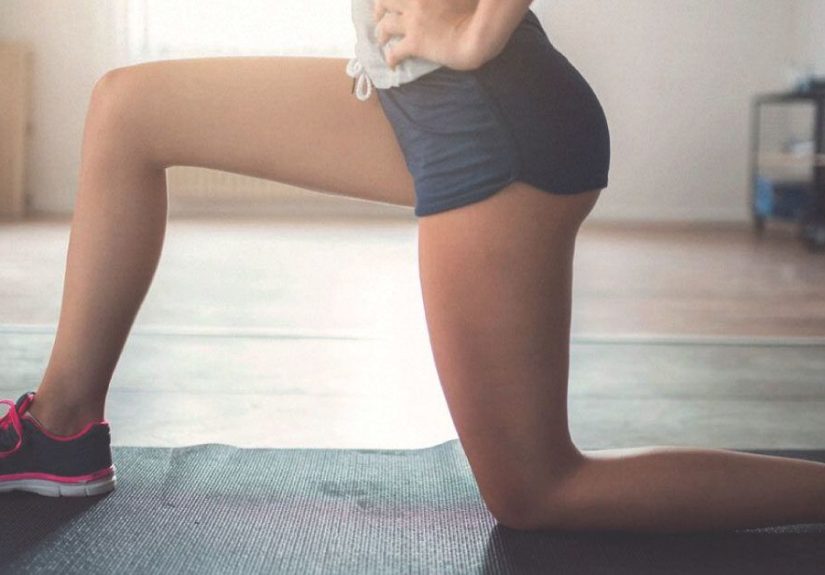
3) Couch Stretch (Half-Kneeling Quad + Hip Flexor Stretch)
If you sit during the day (desk job, driving, doomscrollingno judgment), your hip flexors and the
rectus femoris (a quad muscle that also crosses the hip) can get stiff. The couch stretch
targets that front-of-hip + front-of-thigh combo that often feels tight in runnersespecially after hills
and speed sessions.
How to do it (step-by-step)
- Kneel in front of a couch, bench, or wall.
- Place your right shin up against the couch (or your right foot on the couch) so your right knee is on the floor.
- Step your left foot forward into a lunge. Left knee stacked over left ankle.
- Get tall: squeeze your right glute and gently tuck your pelvis (avoid low-back arching).
- Slowly shift your hips forward just enough to feel a stretch in the right quad/hip flexor area.
- Hold 30–60 seconds (work up gradually). Repeat 1–3 times. Switch sides.
What you should feel
A deep stretch in the front of the thigh and possibly the front of the hip. If you feel pinching in the front
of the hip, back off the range and focus on glute squeeze + pelvis position. If your low back takes over,
you’re likely archingreset your ribs and tuck slightly.
Common mistakes (and quick fixes)
- Overarching the low back: glute squeeze + ribs down. This one cue changes everything.
- Knee discomfort on the floor: use a pad, folded towel, or yoga mat under the knee.
- Too intense too fast: start with a lower setup (foot against wall, less knee bend), then progress.
Runner-friendly modifications
- Wall version: place the shin against a wall for more control.
- Beginner setup: keep the back foot lower (not high on the couch) to reduce intensity.
When to Use These Stretches: A Simple Runner Routine
After your run (best for static stretching)
Pick 2–3 stretches, keep it simple, and be consistent:
- Standing Quad Stretch: 2–4 reps × 15–30 sec/side
- Side-Lying Quad Stretch: 2–4 reps × 15–30 sec/side
- Couch Stretch: 1–3 reps × 30–60 sec/side
Before your run (keep it dynamic and short)
Instead of long holds, do 5–8 minutes of easy jogging or brisk walking, then add a few dynamic moves that
gently take the quads through range. For example:
- Walking lunges (controlled, no bouncing) × 8–10 steps/side
- Leg swings (front-to-back) × 10–12/side
- High-knee marching × 20–30 seconds
Save the longer static holds for after the run, later in the day, or on recovery days.
Troubleshooting: If You “Don’t Feel It” (or Feel It in the Wrong Place)
If you feel it in your low back
You’re likely extending your spine instead of stretching the front thigh. Reset:
ribs down, slight pelvis tuck, gentle glute squeeze on the stretching side.
If your knee feels irritated
Reduce the knee bend angle, avoid yanking the foot, and keep knees aligned. Use padding in kneeling positions.
If knee pain persists, consider swapping to the side-lying version and check in with a clinician if needed.
If one side is dramatically tighter
That’s common. Start with the tighter side, but don’t double the volume into “revenge stretching.”
Keep total work balanced and let consistency do the job.
How Quad Flexibility Fits into Better Running (Without Overpromising Miracles)
Stretching isn’t a magic spell that makes you injury-proof. But it can help you run with a smoother stride,
feel less restricted after workouts, and maintain the range of motion needed for efficient mechanics.
The biggest win comes when stretching supports (not replaces) smart training:
progressive mileage, strength work for hips and legs, and enough recovery to actually adapt.
Runner Experiences: of Real-World Quad Stretch Reality
Let’s talk about what happens in actual runner lifewhere your warm-up is sometimes “I’m late,” your cooldown
is “I need snacks,” and your stretching routine is mostly wishful thinking.
The first time most runners notice their quads, it’s usually after hills or downhills. You finish the run feeling
fine, then the next day you walk downstairs like a baby giraffe learning physics. That’s when the quad stretches
suddenly become interesting. In my experience working with runners (and being around enough post-race hobbling
to qualify for a minor degree in human limping), the biggest mistake isn’t choosing the wrong stretch. It’s
choosing too much stretch, too soon, because you’re mad at your legs.
Here’s what tends to work: do less, but do it more often. The standing quad stretch is the classic. It’s also the
stretch most likely to turn into a circus act after a hard sessionyour ankle is in your hand, your other arm is
windmilling, and your brain is focused on not face-planting. The fix is hilariously simple: hold onto something.
A wall. A chair. A countertop. Anything stable. Once balance stops stealing your attention, you can actually
align the knee, tuck the pelvis, and feel the front-thigh stretch you came for.
The side-lying quad stretch is the unsung hero for runners who feel “tight everywhere” after speedwork.
When you’re lying down, you can pay attention to the little detailskeeping the hips stacked, making sure the
knee isn’t drifting forward, and breathing like a normal person instead of a stressed-out accordion. A lot of
runners report that this version feels more targeted and less cranky on the knee because you can control the
position better.
And then there’s the couch stretch: the stretch that makes confident athletes question their life choices.
It’s intense when you do it rightwhich is why it’s also easy to do wrong. The number-one “aha” moment for runners
is learning that the couch stretch is not a low-back extension challenge. If you arch, you’ll feel powerful…
and also completely miss the point. The magic is in the glute squeeze and gentle pelvis tuck. When runners nail
that, the stretch shifts from “my spine is doing something weird” to “oh wow, that’s the front of my hip and thigh.”
Another real-world observation: runners who stretch best aren’t the most disciplined. They’re the most strategic.
They attach stretching to an existing habitafter showering, while the coffee brews, or during that two-minute wait
for the microwave. Consistency beats the occasional 30-minute stretching marathon that leaves you sore and annoyed.
Finally, a note on expectations: stretching often improves how you feel quickly, but lasting changes take time.
Give it two to four weeks of regular work before you declare it “doesn’t work.” Your quads are stubborn, but they’re
not immune to a routine that shows up calmly, repeatedly, and without trying to set a world record for discomfort.
Conclusion
If you want happier quads, you don’t need 27 stretches and a complicated flowchart. You need three dependable moves:
the Standing Quad Stretch, the Side-Lying Quad Stretch, and the
Couch Stretch. Use dynamic movement before runs, hold longer stretches after runs, and keep the
intensity sensible. Your legs will still complain sometimesbecause they’re runners’ legsbut they’ll complain less.