Table of Contents >> Show >> Hide
- Why a Salt Cellar Beats a Shaker (and Your Crumpled Salt Box)
- Meet Blackcreek Mercantile: Craft You Can Use (Not Just Admire)
- The Standout: Porcelain + Cherry Wood Salt Cellars
- What to Look for in a Great Salt Cellar (Blackcreek-Inspired Checklist)
- Choosing the Right Salt for Your Blackcreek-Style Cellar
- How to Use a Salt Cellar Like a Pro (Without Becoming a Food Safety Cautionary Tale)
- Care & Keeping: Make Wood and Porcelain Last
- Styling & Placement: Where a Blackcreek Salt Cellar Belongs
- FAQ: Salt Cellars, Salt Pigs, and Other Tiny Mysteries
- Kitchen Stories: Living With a Blackcreek Salt Cellar (Extra of Real-Life Flavor)
- Conclusion: A Small Upgrade That Pays Off Every Day
There are two kinds of kitchens: the ones where salt lives in a cardboard box that’s been folded and refolded like an origami tragedy,
and the ones where salt has a proper homeeasy to reach, easy to pinch, and honestly kind of adorable.
If you’ve ever watched a chef season with that casual three-finger pinch and thought, “Must be nice to have confidence,”
you’re already halfway to understanding why salt cellars matter.
Now zoom in on a very specific corner of this salty universe: Salt Cellars from Blackcreek Mercantile.
These aren’t the “I grabbed it at the checkout aisle” containers. They’re the kind of objects that make you pause for half a second,
appreciate a curve, and then immediately use them while yelling, “Who put the pasta water on without salting it?”
(It was you. It’s always you. No judgment.)
Why a Salt Cellar Beats a Shaker (and Your Crumpled Salt Box)
Pinch control: the seasoning superpower
A salt shaker is like trying to water your plants with a fire hose that sometimes coughs and sometimes floods.
A salt cellaropen bowl, lidded crock, salt pig, salt boxgives you tactile feedback.
You feel the grains. You learn what “a pinch” means in your hand. You season as you go, instead of panic-salting at the end
like a contestant on a cooking show with 12 seconds left on the clock.
Speed + consistency = better food
When salt is within arm’s reach, you use it the way good cooks do: in small, frequent additions throughout cooking.
Eggs get seasoned before they hit the pan. Pasta water gets salted like it means it.
Greens get a pinch early so they don’t taste like they’re doing community service.
That little habit change can make everyday cooking taste more “restaurant” with zero extra effort.
Meet Blackcreek Mercantile: Craft You Can Use (Not Just Admire)
Blackcreek Mercantile & Trading Co. (often shortened to BCMT) is rooted in the idea that handmade objects should be
both beautiful and hardworking. Founded by woodworker and designer Joshua Vogel in Kingston, New York,
the studio emphasizes small-scale manufacturing, real materials, and the kind of quiet details you notice over timelike
how a curve fits your hand or how a lid lands with a soft, satisfying certainty.
The Blackcreek approach doesn’t scream for attention. It’s more like: “Hi, I’m here. I’m well-made. Use me every day.”
And that’s exactly the energy a kitchen tool should haveespecially one that deals with salt, the ingredient you touch
more than almost anything else in the kitchen.
The Standout: Porcelain + Cherry Wood Salt Cellars
When people talk about Salt Cellars from Blackcreek Mercantile, they’re often pointing to a specific collaboration:
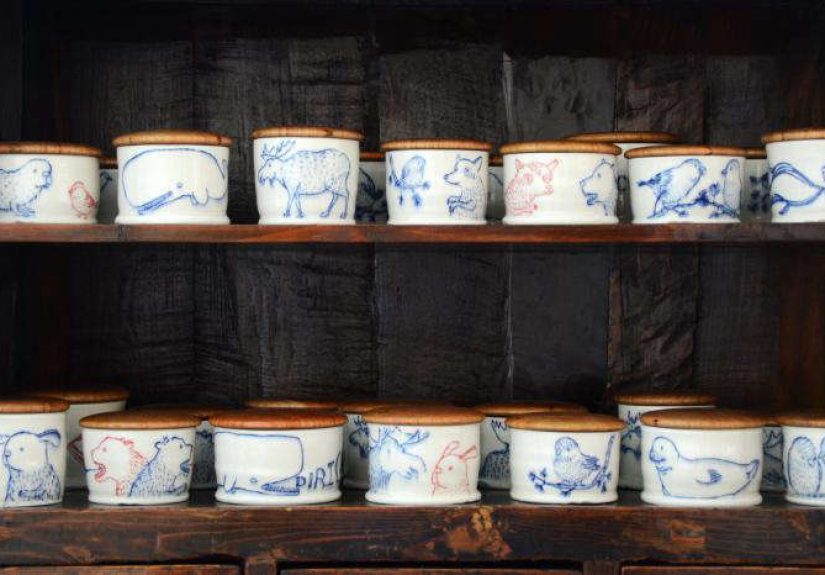
porcelain cellars with turned cherry wood lids, created with ceramic artist Ayumi Horie.
The concept is deceptively simple: luminous white porcelain, playful etched animals, and a domed wooden lid that feels
like it belongs in your palm.
A collaboration with a point of view
The story behind these cellars is part of the charm. Horie (a Maine-based potter known for animal imagery)
and Vogel teamed up to create an object that’s functional, stable, and designed for real cookingnot just shelf life.
The thicker porcelain walls help the cellar stay put when your kitchen pace hits “weeknight chaos,” and the lid is shaped
to lift easily with one hand (because the other hand is usually holding a spoon, a pan handle, or your last shred of patience).
Limited editions, lasting influence
If you’re hunting these exact pieces, you should know they were produced as limited batches rather than an endlessly stocked line.
That scarcity is part of why they’re talked about with a certain reverence: they sit in the sweet spot between
“daily kitchen essential” and “functional collectible.”
What to Look for in a Great Salt Cellar (Blackcreek-Inspired Checklist)
1) One-handed access
If you cook often, you’ll open this thing constantly. A lid that lifts easily, stays put, and doesn’t require
a two-step choreography is the difference between “love it” and “why do I own this?”
Blackcreek’s cherry lid concept nails the goal: quick access without feeling flimsy.
2) A wide mouth that welcomes a real pinch
The best salt cellars let you comfortably reach in with a few fingers. Too narrow and you’re grabbing salt like a raccoon
fishing in a vase. Too wide and it’s an open invitation for humidity, kitchen dust, and the occasional stray basil leaf to move in.
3) Stability (aka: not easily yeeted off the counter)
A light container can slide, tip, or spill if someone bumps the counter mid-sauté.
Heavier ceramicsand thoughtfully proportioned shapesreduce accidental salt avalanches.
It’s a small feature until the day it saves your dinner from tasting like the ocean.
4) Material that fits your habits
- Porcelain/ceramic: stable, easy to clean, doesn’t absorb odors, looks great on the counter.
- Wood: warm and classic, but needs basic care (and absolutely no dishwasher adventures).
- Marble/stone: hefty and dramatic, sometimes a bit “fancy hotel bathroom” in vibe.
- Magnetic swivel lids: great for one-handed use and keeping moisture out, especially in humid kitchens.
Choosing the Right Salt for Your Blackcreek-Style Cellar
The everyday workhorse: kosher salt
For daily cooking, many pros lean on kosher salt because the crystals are easier to pinch and distribute evenly.
It’s the “season by feel” salt. If your goal is consistency, pick one brand and learn how it behaves in your fingers.
That muscle memory is the whole point of moving from shaker to cellar.
Diamond Crystal vs. Morton: the “same label, different universe” problem
Not all kosher salts measure the same by volume. Some are fluffier; some are denser.
If you switch brands without adjusting, you can end up wondering why a recipe suddenly tastes like it took a wrong turn
into the Dead Sea. If you bake or follow precise recipes, take substitutions seriouslyand when in doubt, salt to taste
and keep notes until your hand learns the new normal.
The tabletop star: flaky finishing salt
A second, smaller cellar for flaky sea salt is an underrated flex. Flaky salt is less about “salting pasta water”
and more about that final crunchy sparkle on tomatoes, steak, chocolate cookies, or a salad that needs a mic drop.
This is where your salt cellar becomes part tool, part tiny stage.
How to Use a Salt Cellar Like a Pro (Without Becoming a Food Safety Cautionary Tale)
The clean-hand rule
Pinching salt is satisfying. Pinching salt right after handling raw chicken is… a plot twist nobody wants.
The practical rule: clean, dry hands only. Wash after touching raw proteins and before returning to the salt.
If you’re deep in meal prep and don’t want constant handwashing, keep a small spoon in the cellar and wash it regularly.
Keep two salt zones if you cook a lot
One cellar by the stove (kosher salt) for cooking. One on the table (finishing salt) for serving.
This setup keeps things cleaner, reduces cross-contamination risk, and makes you feel like the kind of person who owns
matching napkins. You don’t have to tell anyone you’re still wearing sweatpants.
Care & Keeping: Make Wood and Porcelain Last
Porcelain: easy mode
Porcelain and most ceramics are low-maintenance: wash with warm soapy water, rinse, dry thoroughly.
If the piece has an unfinished or matte exterior, avoid harsh abrasives that can dull the surface.
In general, treat it like your favorite mugexcept this one doesn’t forgive you for leaving it empty.
Cherry wood lids: simple care, big payoff
Wood and water aren’t enemies, but they’re not exactly best friends either.
Hand-wash quickly, don’t soak, dry promptly. If the wood starts looking dry or dull,
a light rub of food-safe mineral oil keeps it conditioned.
Skip cooking oils like olive oil for maintenancethose can go rancid over time and leave a lingering smell that screams,
“I tried my best, and my best was a pantry shortcut.”
Styling & Placement: Where a Blackcreek Salt Cellar Belongs
The easiest way to actually use your salt cellar is to make it visible and convenient:
- By the stove: your primary cooking salt lives here.
- Near your cutting board: ideal if you season prep ingredients constantly.
- On the table: a finishing salt cellar turns “dinner” into “dinner with intention.”
Blackcreek’s vibe (clean lines, honest materials) plays well with just about any kitchen styleminimalist, rustic,
modern farmhouse, “I have too many cookbooks” maximalist. It’s calm design that doesn’t need to be loud to be noticed.
FAQ: Salt Cellars, Salt Pigs, and Other Tiny Mysteries
Is a “salt pig” different from a salt cellar?
People use the terms interchangeably, but a “salt pig” often refers to a ceramic vessel with a hooded opening
that helps shield salt from humidity and splatter. A “salt cellar” is the broader category: bowls, crocks, boxes,
lidded containers, and yespigs, even if no actual pigs are involved.
Won’t salt get gross sitting out?
Salt itself is inhospitable to many microbes, but the real issue is what you introduce to it:
moisture, dirty fingers, kitchen grime. Keep hands clean, keep the cellar dry, and clean the container periodically.
If you ever suspect contamination (raw protein incident, anyone?), toss the salt and wash the cellar.
How often should I refill?
Refill little and often if you live in a humid climate, so salt spends less time exposed. In drier kitchens,
you can refill less frequently. The best indicator is clumping: it’s usually a moisture issue, not a “bad salt” issue.
Kitchen Stories: Living With a Blackcreek Salt Cellar (Extra of Real-Life Flavor)
Day one with a Blackcreek-style cellar is all romance and optimism. You place it by the stove like it’s moving into a penthouse.
You fill it with kosher saltmaybe Diamond Crystal, maybe whatever you’ve gotand you tell yourself this is the beginning of a new era:
an era in which you season confidently, taste frequently, and never again serve soup that feels emotionally distant.
Day two is when the muscle memory kicks in. You’re making scrambled eggs and, without thinking, you reach for the cellar.
The pinch feels naturallike you’ve been doing it forever. You realize you’re seasoning earlier, not later.
The eggs taste more like eggs (but better), and you wonder why you spent years shaking salt out of a container that
sounded like a maraca with performance anxiety.
Midweek, you start to appreciate the lid. A domed cherry lid isn’t just pretty; it’s practical.
You can lift it with one hand while stirring with the other. The lid lands back in place with a gentle “thunk”
that is weirdly satisfyinglike closing a well-made car door, but for seasoning.
You also notice how the porcelain weight keeps the cellar from scooting around when you bump the counter in a hurry.
Stability is not glamorous… until the day it prevents a salt spill that would’ve turned taco night into
“the sodium incident we do not speak of.”
Then comes the moment of truth: you’re cooking chicken and you catch yourself reaching for salt right after touching raw meat.
You stop. You wash your hands. You feel virtuous. The salt cellar has made you a slightly better adult.
Not fully betteryour fridge still contains a mystery container labeled “soup??” in markerbut better where it counts.
By the weekend, you’ve quietly added a second salt situation: flaky finishing salt on the table.
Tomatoes get a final pinch. Avocado toast gets that crunchy sparkle. Even chocolate chip cookies get a tiny sprinkle,
which makes you feel like you run an artisanal bakery out of your kitchen (you do not; you are in pajamas).
Friends notice the little cellar and ask where you got it. You act casual. Inside, you are glowing.
The funniest part is how such a small object changes your cooking behavior.
You taste more. You season earlier. You trust your hands. The cellar doesn’t teach you recipes;
it teaches you rhythm. And if it happens to be a Blackcreek collaboration pieceporcelain with etched animals and a cherry lid
it also teaches you that “practical” and “beautiful” can be the same thing, living right next to your stovetop,
watching you remember to salt the pasta water (finally).
Conclusion: A Small Upgrade That Pays Off Every Day
Salt Cellars from Blackcreek Mercantile sit at a rare intersection: serious craftsmanship, daily usefulness,
and a design story that makes the object feel like more than “just a container.”
Whether you’re drawn to the porcelain-and-cherry collaboration or simply inspired by Blackcreek’s standard of making
honest, enduring tools, the real win is how a salt cellar changes your cooking: more control, more consistency,
and more flavorone pinch at a time.