Table of Contents >> Show >> Hide
- What is secondhand smoke (and why is it so stubborn)?
- Why secondhand smoking is dangerous (even in small doses)
- Who is most at risk from secondhand smoke?
- Common places secondhand smoke shows up (even when you think it shouldn’t)
- Prevention that actually works (and myths that don’t)
- Secondhand smoke, thirdhand smoke, and vaping aerosol: what’s the difference?
- FAQ: Quick answers about secondhand smoking
- 1) Is there a safe level of secondhand smoke?
- 2) Does opening a window protect me?
- 3) Can secondhand smoke cause symptoms right away?
- 4) What diseases are linked to secondhand smoke in adults?
- 5) How does secondhand smoke affect babies and kids?
- 6) Is smoking in another room enough?
- 7) What about “smoking only when the kids are asleep”?
- 8) Do air purifiers solve the problem?
- 9) How long does smoke linger?
- 10) Is vaping around others safer than smoking?
- 11) What’s the most effective way to protect my family?
- 12) Where can someone get help to quit?
- Conclusion: Clean air is a household feature, not a luxury
- Real-life experiences: what secondhand smoke feels like in everyday life (extra)
- The “it’s only at the back door” household compromise
- The kid with asthma who can’t “be polite” to triggers
- The apartment hallway that smells like a cigarette took a nap there
- The car ride where windows-down optimism meets reality
- When quitting becomes about protecting someone else (and that actually helps)
Secondhand smoke has a special talent: it turns someone else’s habit into your problemwithout so much as a polite RSVP.
If cigarette smoke were a houseguest, secondhand smoke would be the one who shows up early, stays late, and leaves “mystery stains” on your lungs.
Jokes aside, secondhand smoking (more commonly called secondhand smoke exposure) is a serious health hazard with real, measurable effects on the heart, lungs, blood vessels, pregnancy outcomes, and child health.
This guide breaks down what secondhand smoke is, why there’s no “safe little whiff,” who’s most at risk, what actually works to prevent exposure
(spoiler: air fresheners are not force fields), plus an FAQ section you can reference the next time someone insists “I’m smoking near you, not around you.”
We’ll also touch on related topics like thirdhand smoke and secondhand aerosol from vapingbecause modern life loves adding sequels.
What is secondhand smoke (and why is it so stubborn)?
Secondhand smoke is the mix of smoke coming from a burning tobacco product (like a cigarette, cigar, hookah, or pipe) plus the smoke exhaled by the person using it.
When you breathe it in, you’re not inhaling “just a smell.” You’re inhaling a chemical cocktail made up of thousands of compounds, including toxic substances and cancer-causing chemicals.
Public health agencies commonly describe commercial tobacco smoke as containing more than 7,000 chemicals, including hundreds that are toxic
and about 70 that can cause cancer. That’s not a “maybe” listit’s a “please don’t invite this into your living room” list.
Secondhand smoking vs. “I only smoke when the kids aren’t looking”
Kids don’t have to watch you smoke to be affected by it. Smoke drifts. It clings. It seeps through doorways, vents, and the laws of physics.
Most exposure for children happens at home and in carsplaces where they can’t exactly call an Uber to escape.
Why secondhand smoking is dangerous (even in small doses)
The big headline is simple: there is no safe level of secondhand smoke exposure. “Just cracking a window” or “standing by the stove fan”
may change the vibe, but it doesn’t change the biology.
Immediate effects: the heart and blood vessels react fast
Secondhand smoke doesn’t wait for an annual performance review. Even brief exposure can cause immediate harmespecially to the cardiovascular system.
Smoke exposure can affect the lining of blood vessels and make blood platelets stickier, changes that raise heart-attack riskparticularly for people who already have heart disease.
Long-term risks: it can lead to disease and premature death
Over time, repeated exposure increases the risk of serious conditions in adults who don’t smoke, including:
- Coronary heart disease (heart attack risk rises with exposure)
- Stroke
- Lung cancer (including in people who have never smoked)
- Worsening asthma and respiratory symptoms
To put numbers on it: U.S. public health sources commonly attribute thousands of deaths each year to secondhand smoke-related heart disease and lung cancer among nonsmoking adults.
That’s why smoke-free policies aren’t “nice-to-haves.” They’re prevention.
Who is most at risk from secondhand smoke?
Secondhand smoke can harm anyone. But certain groups face higher risk either because their bodies are more vulnerable, or because they’re more likely to be exposed.
Infants and children
Children’s lungs and immune systems are still developing, and they breathe faster than adultsmeaning they take in more pollutants relative to body size.
Exposure is linked to:
- Sudden infant death syndrome (SIDS)
- Respiratory infections (like bronchitis and pneumonia)
- Middle ear disease (ear infections)
- More frequent and severe asthma and respiratory symptoms
- Slowed lung growth
Pregnant people and developing babies
Exposure during pregnancy is associated with poor birth outcomes such as low birth weight and preterm birth.
It can also complicate fertility and pregnancy health. In plain English: your baby shouldn’t have to “share” your air.
People with asthma, COPD, heart disease, or other chronic conditions
If you have asthma, secondhand smoke is a common trigger. For people with heart disease, even short exposures can be especially risky.
This is one reason healthcare providers often emphasize strict smoke-free rules at home and in cars.
People who rent or live in multiunit housing
Apartments and condos can be tricky because smoke can travel between units through shared walls, hallways, windows, and ventilation paths.
Even if you keep your own unit smoke-free, you may still get unwanted exposure when a neighbor lights up.
Health equity and exposure disparities
Exposure doesn’t fall evenly across the population. U.S. reports have documented higher exposure among some racial and ethnic groups, children,
people living below the poverty level, and rentersoften due to housing patterns, workplace exposures, and historical targeting by the tobacco industry.
Addressing secondhand smoke is not just about personal choices; it’s also about the environments people are placed in.
Common places secondhand smoke shows up (even when you think it shouldn’t)
At home
Home is the #1 exposure hotspot for many children. A “smoke room” doesn’t solve it. Smoke moves, and the particles linger.
If you want a healthier indoor environment, the most effective strategy is simple: no smoking indoors.
In cars
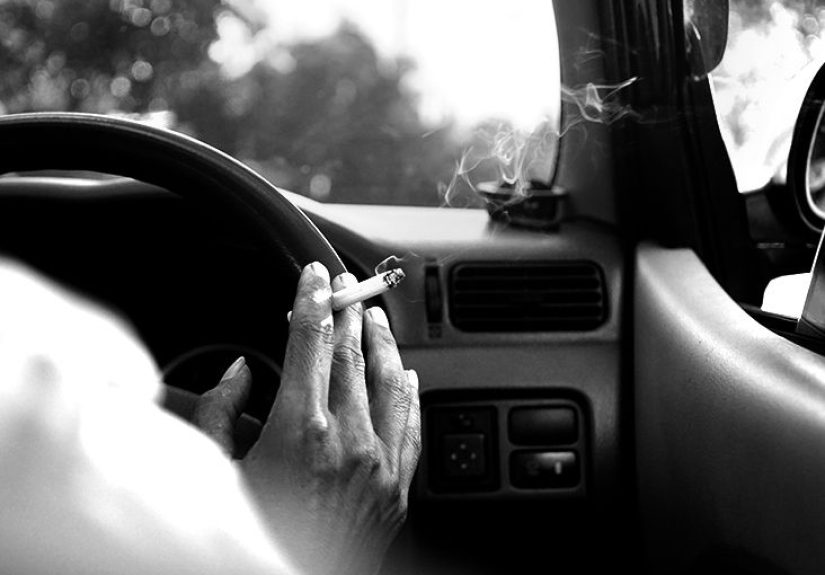
Cars are small boxes with seats. When someone smokes inside, toxins build up fasteven with windows open or air conditioning on.
For kids strapped into the back seat, “just roll it down” is not protection; it’s optimism with a side of air pollution.
Workplaces and public spaces
Smoke-free laws and workplace policies significantly reduce exposure. They also tend to nudge smoking rates down over time.
If your workplace still allows indoor smoking (or has a “smoking section”), it’s worth raising the issuepolitely, persistently, and with the confidence of someone who enjoys breathing.
Prevention that actually works (and myths that don’t)
The gold standard: 100% smoke-free indoor air
The only way to fully protect nonsmokers from indoor secondhand smoke is to eliminate indoor smoking.
Separating smokers and nonsmokers, ventilating rooms, or using air cleaners doesn’t reliably remove the smaller particles and gasesor prevent smoke from drifting into adjacent spaces.
Myth: “I smoke by the window / under the vent fan / in the bathroom with the fan on.”
Fans move air around; they don’t magically delete toxins. Ventilation can dilute some particles, but it does not eliminate exposure to a safe level.
If smoke is generated indoors, some amount of pollution will remain and spread.
Myth: “Air freshener fixes it.”
Air freshener covers up odors. It doesn’t remove the harmful chemicals. At best, it makes the room smell like “tropical breeze” with notes of “burning tobacco.”
Your lungs are not fooled.
What to do if someone in your household smokes
- Make the rule clear: no smoking indoors, ever. Not “only at night,” not “only when it rains,” not “only in the laundry room of mystery.”
- Designate an outdoor smoking area: away from doors, windows, and vents.
- Protect kids and babies: zero smoke exposure is the goal. If a baby is involved, raise the barnot the excuses.
- Reduce residue transfer: wash hands after smoking and consider changing outer clothing before holding infants.
- Consider quitting support: quitting reduces harm for everyone, including the smoker.
Multiunit housing: practical steps
If you live in an apartment or condo and smoke drifts into your space, you have optionseven if none feel instant.
Start with documentation (dates, times, where it enters), then:
- Ask property management about smoke-free building policies or designated smoking areas.
- Request maintenance checks for air leaks (gaps around plumbing, outlets, vents).
- Use weather stripping and door sweeps to reduce smoke entry (it’s not perfect, but it can help).
- If symptoms are triggered (like asthma), discuss a medical note with your clinician to support accommodation requests.
Secondhand smoke, thirdhand smoke, and vaping aerosol: what’s the difference?
Secondhand smoke
The smoke in the air from burning tobacco products and exhaled smokewhat people around the smoker breathe in.
Thirdhand smoke
Thirdhand smoke refers to the residue that settles on surfacescarpets, furniture, walls, clothing, dustand can linger long after the visible smoke is gone.
Research continues to evolve, but public health experts warn it may be especially concerning for young children who crawl, touch everything, and put objects in their mouths.
If secondhand smoke is the fog, thirdhand smoke is the sticky film it leaves behind.
Secondhand aerosol from vaping
E-cigarette aerosol isn’t “just water vapor.” It can contain nicotine and other potentially harmful chemicals.
Scientists are still learning the long-term risks of secondhand exposure, but major health organizations and the U.S. Surgeon General have warned that e-cigarette aerosol is not harmless.
When in doubt, apply the same indoor rule: keep the air cleanno smoking, no vaping.
FAQ: Quick answers about secondhand smoking
1) Is there a safe level of secondhand smoke?
No. Public health guidance consistently states there is no risk-free level of exposure.
2) Does opening a window protect me?
No. It may reduce odor, but it does not reliably protect you from harmful exposureespecially indoors or in a car.
3) Can secondhand smoke cause symptoms right away?
Yes. Some people notice eye irritation, coughing, throat irritation, headaches, or shortness of breath.
People with asthma may have attacks triggered by exposure.
4) What diseases are linked to secondhand smoke in adults?
Secondhand smoke exposure is linked to coronary heart disease, stroke, and lung cancer, and it can worsen respiratory conditions like asthma.
5) How does secondhand smoke affect babies and kids?
Infants and children face increased risk of SIDS, respiratory infections, ear infections, more severe asthma, and slowed lung growth.
6) Is smoking in another room enough?
Usually not. Smoke moves through indoor spaces and can spill into adjacent areas. The most protective approach is keeping indoor air smoke-free.
7) What about “smoking only when the kids are asleep”?
Smoke doesn’t keep office hours. Residue and particles can remain after the cigarette is out, and exposure can still occur.
8) Do air purifiers solve the problem?
Purifiers might reduce some particles, but they don’t remove all gases and toxins, and they don’t reliably reduce exposure to a safe level if smoking continues indoors.
9) How long does smoke linger?
Smoke particles can remain in the air for a while, and residue can persist on surfaces (thirdhand smoke) for much longer.
How long depends on ventilation, materials, and how much smoking occurred.
10) Is vaping around others safer than smoking?
Vaping generally produces fewer combustion-related toxins than cigarettes, but the aerosol can still expose others to nicotine and other chemicals.
“Safer than” doesn’t mean “safe for everyone in the room.”
11) What’s the most effective way to protect my family?
Keep your home and car 100% smoke-free and vape-free. If someone smokes, make it outdoors and away from entry points.
Encourage quitting support when they’re ready.
12) Where can someone get help to quit?
In the U.S., free support is often available through quitlines such as 1-800-QUIT-NOW and online programs like Smokefree.gov.
Quitting can be hard, but it’s one of the biggest health upgrades a person can makefor themselves and everyone who shares their air.
Conclusion: Clean air is a household feature, not a luxury
Secondhand smoking isn’t merely annoyingit’s medically meaningful. It increases the risk of heart disease, stroke, and lung cancer in adults who don’t smoke,
and it puts infants and children at risk for SIDS, respiratory infections, ear infections, and worse asthma. The strongest protection isn’t complicated:
no smoking indoors, no smoking in cars, and support for smoke-free policies in shared spaces.
If you’re the person who smokes, this isn’t a guilt tripit’s an information drop. You can reduce harm immediately by moving smoking outdoors and keeping it away from others,
and you can reduce harm long-term by quitting. If you’re the person exposed, you’re not being “dramatic” for wanting clean air. You’re being biologically accurate.
Real-life experiences: what secondhand smoke feels like in everyday life (extra)
The science matters, but so does the lived experiencebecause secondhand smoke isn’t encountered in a lab. It shows up at family gatherings, apartment hallways,
parking lots, and car rides that last “just five minutes.” Below are common, real-world scenarios people describe when dealing with secondhand smoke exposure.
These are not medical case reportsjust the kind of everyday moments that explain why smoke-free rules become non-negotiable once you’ve lived through the alternatives.
The “it’s only at the back door” household compromise
One family tried to split the difference: smoking was “allowed” only near the back door with it cracked open. The plan sounded reasonableuntil winter came,
the door stayed shut longer, and the smell started living in the curtains like it paid rent. The nonsmoking partner noticed morning headaches and a scratchy throat
after nights when “just one” cigarette happened. The turning point wasn’t an argument; it was a simple experiment: one week fully smoke-free indoors.
The difference in how the house felt (and how everyone slept) was so obvious that the rule wrote itself.
The kid with asthma who can’t “be polite” to triggers
Parents of children with asthma often learn quickly that triggers don’t care about social etiquette. One parent described a birthday party where several adults smoked “outside only.”
It was technically outdoors, but the smoke drifted right through the cluster of kids playing near the patio. Within minutes, their child’s breathing changedsubtle at first,
then unmistakable: tight chest, coughing, that panicked “I can’t get a full breath” look. The parent didn’t want to be the bad guy, but they also didn’t want to be the person
who ignored a preventable asthma attack. They left early. Later, they started asking about smoke exposure before events, the way you’d ask about food allergies.
It felt awkward for a week. Then it felt normalbecause ER visits are more awkward than boundaries.
The apartment hallway that smells like a cigarette took a nap there
In multiunit housing, secondhand smoke can become a surprise roommate. A renter shared how the odor (and irritation) peaked at predictable timesafter dinner, late evening, weekends.
They tried candles, sprays, fansbasically the entire “I would like to pretend this isn’t happening” aisle at the store. None worked.
What did help was documenting patterns, then approaching property management with a clear request: investigate air pathways, enforce existing lease language,
and explore smoke-free policy options. The solution wasn’t instant, but it moved from “personal annoyance” to “building air quality issue,” which is where it belonged.
The renter also learned a tough lesson: masking smells is not the same as reducing exposure.
The car ride where windows-down optimism meets reality
Lots of people believe the “windows down” rule makes smoking in a car harmless. People who’ve been stuck in the back seat tend to disagreeespecially when the car is moving,
the smoke swirls, and the person smoking keeps re-lighting because traffic is stressful. One adult recalled arriving at work smelling like smoke after a commute with a coworker,
then realizing it wasn’t just smellit was residue. They started declining rides, even when it was inconvenient, because feeling nauseated at 9 a.m. is also inconvenient.
Eventually they had a simple script: “I’m sensitive to smoke, so I can’t ride in a car where anyone smokes.” Not an accusation. Just a boundary.
Most people respected it. The ones who didn’t… provided clarity about who deserved access to their time.
When quitting becomes about protecting someone else (and that actually helps)
Some people decide to quit because of their own health. Others decide because they see how smoke affects someone they love.
A smoker described the moment they stopped smoking indoors as the beginning of quittingnot the end. They started with a smoke-free home rule,
then moved to “no smoking in the car,” then to smoking farther from doors, then to fewer cigarettes, then to calling a quitline. Progress looked messy on a calendar,
but it looked meaningful in real life: fewer arguments, fewer lingering odors, fewer “I’m fine” lies from family members who clearly weren’t fine.
The most surprising part? They said quitting felt less like “giving something up” and more like “getting the air back.”
If any of these sound familiar, you’re not alone. Secondhand smoking is often a relationship issue, a housing issue, and a public health issue all at once.
The practical takeaway is the same: clean indoor air is worth protecting, and clear rules beat wishful thinking every time.