Table of Contents >> Show >> Hide
- What Is a Standing Rib Roast?
- Why This Smoked Standing Rib Roast Recipe Works
- Ingredients
- How to Choose the Best Rib Roast
- Best Wood for Smoking a Standing Rib Roast
- Prep the Roast Like You Mean It
- How to Smoke Standing Rib Roast
- Internal Temperature Guide
- How to Carve a Standing Rib Roast
- What to Serve With Smoked Standing Rib Roast
- Common Mistakes to Avoid
- Example Cooking Timeline for an 8-Pound Roast
- Why This Recipe Is Great for Holidays and Special Occasions
- Experiences That Make You Better at Smoked Standing Rib Roast
- Final Thoughts
If a holiday ham is the reliable uncle of big-deal dinners, a smoked standing rib roast is the glamorous cousin who arrives wearing a wool coat, smells faintly of woodsmoke, and somehow makes everyone sit up straighter. This roast is rich, dramatic, and unapologetically center-stage. The good news is that it is not nearly as intimidating as it looks. With the right seasoning, a low-and-slow smoking plan, and a quick reverse sear at the end, you can make a smoked standing rib roast that is deeply flavorful, beautifully pink from edge to edge, and crusty in all the right places.
This recipe leans on the methods that consistently show up in the best smoked prime rib and standing rib roast guides: low smoker heat, careful internal temperature tracking, a generous rest, and a blast of high heat at the end for a proper crust. In other words, no guesswork, no kitchen panic, and no sad gray meat ring pretending to be “rustic.”
What Is a Standing Rib Roast?
A standing rib roast is a bone-in rib roast cut from the rib section of the cow. It is also commonly called prime rib, though the grade of the meat does not have to be USDA Prime for the roast to be called prime rib in everyday cooking. The “standing” part comes from the fact that the roast can stand on its rib bones while cooking. Those bones are not just there for drama. They add flavor, help insulate the meat, and give the roast that classic holiday-table look people quietly judge in a good way.
For this recipe, a 4-bone roast weighing about 8 pounds is the sweet spot. It feeds a crowd, cooks evenly, and still fits in most smokers without forcing you into a meat-based engineering project.
Why This Smoked Standing Rib Roast Recipe Works
The secret is treating the roast like a luxury item instead of a weeknight meatloaf with delusions of grandeur. Smoking at a lower temperature gives the beef time to absorb wood flavor and cook evenly. A final high-heat sear creates the dark, savory exterior that people expect when the knife finally comes out. The herb-garlic seasoning is bold enough to stand up to smoke without bullying the beef itself. That balance matters. Rib roast is already rich and buttery; it does not need a seasoning blend that tastes like a spice cabinet exploded.
This method also gives you more control over doneness. That matters because prime rib can go from “perfectly rosy” to “why is this roast acting like pot roast?” faster than anyone wants to admit.
Ingredients
For the roast
- 1 standing rib roast, 4 bones, about 7 to 8 pounds
- 2 tablespoons kosher salt
- 1 tablespoon coarse black pepper
- 1 tablespoon garlic powder
- 4 cloves garlic, minced
- 2 tablespoons chopped fresh rosemary
- 2 tablespoons chopped fresh thyme
- 2 tablespoons olive oil
- 1 tablespoon Dijon mustard
Optional for serving
- Prepared horseradish sauce
- Au jus or pan drippings
- Flaky sea salt for finishing
How to Choose the Best Rib Roast
If you are buying the roast from a butcher, ask for a bone-in rib roast with good marbling and an even shape. Marbling is your friend here. It melts during the cook and helps create that lush, beefy texture that makes people suddenly stop talking mid-sentence. Choice grade works beautifully, while Prime is excellent if your budget is feeling festive. Bone-in is ideal for flavor and presentation, though boneless can work if needed.
A practical rule is to plan on about 1 pound per person for a bone-in roast. That may sound generous, but some of that weight is bone, and leftovers are not a burden. Leftover smoked rib roast is less a problem and more a reward.
Best Wood for Smoking a Standing Rib Roast
Oak is the best all-around choice because it gives you a classic beef-friendly smoke flavor without overpowering the meat. Hickory is bolder and works well if you love a stronger barbecue note. Pecan is slightly sweeter and more mellow. Mesquite can work in small doses, but go easy unless your goal is for the smoke to enter the room five minutes before dinner does.
For most cooks, oak or a mix of oak and hickory gives the best balance. The roast already brings plenty of flavor to the party.
Prep the Roast Like You Mean It
Dry brine first
Pat the roast dry and season it all over with kosher salt. Set it on a rack over a tray and refrigerate it uncovered for at least 8 hours and up to 24 hours. This dry brine helps season the interior, improves moisture retention, and dries the surface so the crust forms more effectively later. It is one of those steps that feels optional until you skip it once and spend the whole meal pretending not to notice the difference.
Make the herb-garlic rub
In a small bowl, combine the black pepper, garlic powder, minced garlic, rosemary, thyme, olive oil, and Dijon mustard. Rub the mixture all over the roast. You want a thin, even coating, not a mudslide. Let the roast sit at room temperature for 45 to 60 minutes before smoking so it cooks more evenly.
How to Smoke Standing Rib Roast
1. Preheat the smoker
Set your smoker to 225°F. If your smoker tends to run hot, stabilize it before the roast goes in. This is not the time to “see how it does.” Prime rib is not your lab rat.
2. Place the roast bone-side down
Put the roast directly on the grate with the bones down and the fat cap facing up. Insert a meat probe into the thickest part of the roast, avoiding bone and large pockets of fat. This is the moment your thermometer becomes the smartest thing in the cooking setup.
3. Smoke until the roast reaches 118°F to 120°F
Smoke the roast for about 3 1/2 to 5 hours, depending on size, shape, outside temperature, and how cooperative your smoker decides to be. For an 8-pound roast at 225°F, expect around 4 to 5 hours. Always cook to temperature, not to time. Time is a suggestion. Temperature is the truth.
4. Rest briefly while you crank the heat
Remove the roast from the smoker and let it rest for about 20 minutes. Meanwhile, raise the smoker or grill temperature to 450°F to 500°F. If your smoker cannot hit that range, transfer the roast to a very hot oven.
5. Reverse sear for the crust
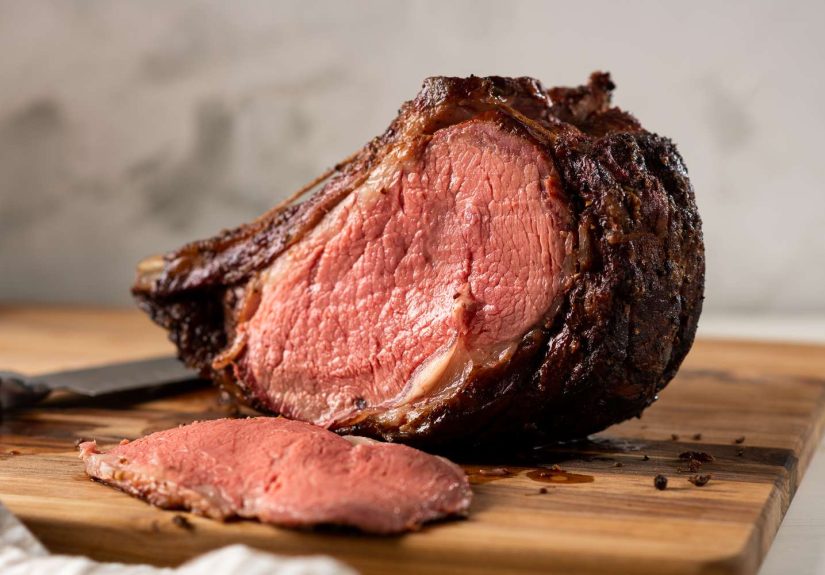
Return the roast to the high heat and cook for 10 to 15 minutes, or until the exterior is dark, browned, and beautifully crusted. Pull the roast when it reaches 125°F to 128°F for medium-rare. If you want medium, take it a bit further, to around 130°F to 135°F. Do not wander off during this step. Crust happens quickly, and so does regret.
6. Rest before carving
Transfer the roast to a cutting board and let it rest for 20 to 30 minutes. This allows carryover cooking to finish the job and helps the juices stay in the meat instead of escaping onto the board in dramatic but disappointing fashion.
Internal Temperature Guide
- Rare: pull at 120°F to 123°F
- Medium-rare: pull at 125°F to 128°F
- Medium: pull at 130°F to 135°F
For most people, medium-rare is the sweet spot for a smoked standing rib roast recipe. It keeps the texture tender, the fat silky, and the flavor at full volume.
How to Carve a Standing Rib Roast
If the bones are still attached, run a long knife along the curve of the ribs to remove them in one piece. Then slice the roast against the grain into thick or thin slices, depending on your style. Thick slices feel steakhouse-worthy. Thin slices are great for buffet service and make people think you are extremely organized.
You can also ask your butcher to cut the bones off and tie them back on before cooking. That gives you the best of both worlds: flavor and easier carving.
What to Serve With Smoked Standing Rib Roast
This roast plays well with classic steakhouse sides and holiday favorites. Mashed potatoes, creamed spinach, roasted Brussels sprouts, Yorkshire pudding, horseradish sauce, and a simple au jus are all excellent choices. A bright salad is helpful too, if only to reassure everyone that vegetables were invited.
For a full menu, pair the roast with buttery mashed potatoes, green beans with shallots, and a tangy horseradish cream. The rich beef, smoke, herbs, and sharp sauce create exactly the kind of dinner that makes people suspicious you secretly trained for this.
Common Mistakes to Avoid
Skipping the thermometer
A standing rib roast is too expensive for guesswork. Use a leave-in probe and verify with an instant-read thermometer near the end.
Using too much smoke
This is beef, not a brisket marathon. A moderate amount of wood works better than trying to turn the roast into a campfire-scented memory.
Not resting the meat
Resting is not optional. It is the difference between juicy slices and a cutting board that looks like the roast gave up.
Cooking by time alone
Every roast is different. Weight, bone count, weather, and smoker behavior all change the timeline. Trust temperature first.
Example Cooking Timeline for an 8-Pound Roast
Day before: Dry brine the roast and refrigerate uncovered.
11:00 a.m.: Remove from refrigerator and apply herb-garlic rub.
12:00 p.m.: Preheat smoker to 225°F.
12:15 p.m.: Put roast on smoker.
4:15 p.m.: Roast reaches about 120°F; remove and rest.
4:20 p.m.: Increase heat to 450°F to 500°F.
4:35 p.m.: Reverse sear roast until it reaches 126°F to 128°F.
4:50 p.m.: Rest 20 to 30 minutes.
5:20 p.m.: Slice and serve.
Why This Recipe Is Great for Holidays and Special Occasions
A smoked standing rib roast feels impressive before anyone even tastes it. It arrives with scent, size, and swagger. But beyond the looks, it is also practical for entertaining because much of the cook is hands-off. Once the roast is seasoned and the probe is in place, you are mostly managing heat and waiting for the internal temperature to climb. That frees you up to handle sides, answer doorbells, or pretend you are not checking the smoker every 11 minutes.
It also solves a common entertaining problem: how to make one main dish that feels special enough for a holiday but still appeals to nearly everyone. Beef rib roast does exactly that. It is rich without being fussy, traditional without being boring, and elegant without requiring tweezers or a culinary degree.
Experiences That Make You Better at Smoked Standing Rib Roast
Anyone who cooks a smoked standing rib roast more than once learns that the experience is as important as the ingredient list. On paper, the recipe looks straightforward: season, smoke, sear, rest, slice. In real life, each cook teaches something new. One roast teaches patience. Another teaches that “close enough” is not a useful temperature strategy. A third teaches that guests will absolutely appear in the kitchen right when you are trying to pull a 500-degree roast off the grate with dignity.
The first big lesson most people learn is that the roast always feels like it is taking forever, right up until it suddenly is not. For hours, the internal temperature climbs like a sleepy turtle. Then, late in the cook, it starts moving faster. That experience changes the way you think about timing. It makes you less obsessed with the clock and more loyal to the thermometer. Once you have seen a beautiful roast drift from “almost there” to “oops, that is medium” faster than expected, you stop playing games with doneness.
Another experience-driven truth is that smoke should support the beef, not tackle it. People often assume more smoke equals more flavor. Then they cook a rib roast with heavy wood the whole time and discover that the elegant beef flavor has been dressed in a flannel shirt and sent into the woods. After a cook or two, you learn that oak, pecan, or a restrained amount of hickory gives you a cleaner, more balanced result. The roast still tastes smoked, but it also tastes like premium beef, which is the whole point of buying it.
There is also the lesson of the rest. New cooks are tempted to slice early because the roast looks done, smells amazing, and has everyone circling the cutting board like polite sharks. But experience teaches restraint. A proper rest makes the texture better, the slices neater, and the final temperature more reliable. In other words, the rest is not dead time. It is part of the recipe.
Then there is carving, which humbles nearly everyone at least once. A roast can be cooked perfectly and still look messy if carved poorly. Over time, you learn to remove the bones cleanly, find the grain, and slice with confidence. You also learn that thicker slices feel luxurious for plated dinners, while thinner slices are smarter when feeding a crowd. Experience turns carving from a nervous event into a finishing move.
Finally, repeated cooks teach you that smoked standing rib roast is less about showing off and more about rhythm. Good meat, steady heat, smart seasoning, accurate temperature, and enough patience to let the process work. Once you have cooked it successfully, it stops feeling intimidating and starts feeling like a tradition. A very delicious, very smoky, very applause-friendly tradition.
Final Thoughts
A great smoked standing rib roast recipe is not about doing the most. It is about doing the important things well: buying a nicely marbled roast, seasoning it confidently, smoking it gently, searing it hard at the end, and respecting the thermometer like it pays the mortgage. The payoff is a roast with a rosy interior, a crackly exterior, and enough smoky, beefy richness to make the whole table pause for a second after the first bite.
If you want a main course that feels festive, tastes incredible, and earns immediate dinner-table credibility, this is it. Make it once and it might become your signature move. Make it twice and people will start asking whether you “always do the roast.” Congratulations. You are now the roast person.