Table of Contents >> Show >> Hide
- Why There Was No New Episode
- Why Fans Keep Pointing at Paramount
- The Political Backlash Made the Timing Look Even Worse
- The Boring Explanation Is Probably the Correct One
- What Paramount Still Does Not Quite Understand About South Park
- What This Means for the Show Going Forward
- The Fan Experience: Waiting for South Park in the Paramount Era
- Conclusion
- SEO Metadata
Just when South Park had everyone talking again, it did the one thing that sends modern TV fandom into immediate detective mode: it disappeared from the schedule. Again.
That is the strange little magic trick at the heart of this story. South Park came roaring back with a season premiere so loud, so rude, and so headline-hungry that it felt like the show had kicked in the door wearing muddy boots. Then, almost as quickly, it hit pause. No new episode. No smooth weekly rhythm. Just another gap in the calendar and a whole lot of fans pointing their fingers in the same direction: Paramount.
To be fair, viewers did not pull that suspicion out of thin mountain air. By the time the show took another week off, Paramount had already been tied to a messy streaming-rights fight, a delayed season launch, a very public corporate power struggle, and a climate of confusion that made every schedule shuffle feel like it came with a legal department attached. When a series built on speed, chaos, and cultural ambush suddenly starts airing like it misplaced its own calendar, fans are going to assume somebody in a conference room touched the red button.
So, is Paramount actually to blame? Sort of, maybe, indirectly, emotionally, spiritually, internet-comment-section-ly. The more accurate answer is a little messier and a lot more interesting. The week off appears to have been part programming stunt, part franchise celebration, and part symptom of a bigger identity crisis surrounding one of TV’s most durable troublemakers. In other words, classic South Park: even the scheduling drama comes with extra layers.
Why There Was No New Episode
The immediate reason for the latest break was not a secret ban, a last-minute panic attack, or an emergency corporate scrub team rappelling into the editing bay. Comedy Central programmed August 13 as “South Park Day,” a full-on anniversary celebration for the series. Instead of a fresh installment, the network filled the day with fan-favorite episodes, extras, and nostalgia bait, all leading into a special airing of “Cartman Gets an Anal Probe,” the show’s original 1997 premiere.
On paper, that is a perfectly reasonable move. Twenty-eight years after its debut, South Park is not just a cartoon. It is a grumpy national monument with more curse words. An anniversary marathon makes sense, and TV networks love a celebratory programming block because it lets them market sentiment and reruns at the same time. That is basically television’s version of finding a twenty-dollar bill in an old coat pocket.
But timing is everything, and South Park fans had already been trained to see scheduling changes as signs of something bigger. The second episode of Season 27 had arrived after an earlier gap, and many viewers were not exactly given a crystal-clear roadmap for what the rollout was supposed to look like. So when the show took yet another break, the reaction was less “Aw, how fun, an anniversary party” and more “What is Paramount doing now?”
That distrust matters. Fans usually forgive a delay when they understand the reason. They get suspicious when the reason arrives wrapped in promotional glitter after several weeks of corporate chaos.
Why Fans Keep Pointing at Paramount
The fan backlash did not start with the August break. It started earlier, when Season 27’s premiere date moved from July 9 to July 23. That delay landed right in the middle of a highly public fight over South Park streaming rights and broader negotiations involving Paramount, the company’s future, and the value of one of its most prized franchises.
Trey Parker and Matt Stone did not exactly whisper their frustration. They publicly blasted the merger-related mess surrounding Paramount and said it was “f***ing up” South Park. That kind of statement does two things at once. First, it confirms that something behind the scenes is broken. Second, it gives fans a neat villain for the story. Once the creators themselves effectively say, “Yeah, the corporate nonsense is messing with our show,” every later hiccup gets blamed on the same source.
Then came another wrinkle: South Park was pulled from Paramount+ outside the United States amid an international rights dispute. That only deepened the sense that the brand was caught in a tug-of-war between business strategy and audience expectation. From the outside, Paramount looked less like a home for South Park and more like the harried landlord trying to explain why the building elevator only works every other Wednesday.
By July 23, Paramount, Park County, and South Park Digital Studios announced a major five-year renewal that included 50 new episodes and made Paramount+ the U.S. streaming home for the library and new episodes. That should have calmed things down. In theory, it was a victory lap. In practice, it felt like the resolution to a fight fans had already been watching in real time, and it did not erase the whiplash that came before it.
So when viewers saw another skipped week, many did not interpret it as an isolated scheduling choice. They saw a pattern. They saw a company that had already helped turn a straightforward season launch into a public drama. And once a fan base starts connecting dots, it does not really matter whether those dots form a legally admissible argument. Online, vibes count as evidence.
The Political Backlash Made the Timing Look Even Worse
If all of this had happened during a quieter season, the reaction might have been milder. But Season 27 did not return quietly. It came back with a premiere that took direct aim at Donald Trump and Paramount itself, then drew a sharp response from the White House. That is not normal sitcom noise. That is full-volume cultural combustion.
The premiere generated major attention, and not just from people who still insist they “don’t really watch TV anymore.” The episode pulled in nearly 6 million viewers across Comedy Central and Paramount+ in its first few days and posted the show’s biggest premiere share since 1999. That kind of performance matters because it proved South Park was not merely surviving on old reputation. It was still capable of dominating the conversation like it had stolen the conversation’s car keys.
The White House response only amplified the frenzy. When an administration calls the show “fourth-rate,” it accidentally hands the series a giant promotional banner. South Park has always thrived on being told it went too far. Criticism is not bad weather for this franchise; it is basically fertilizer.
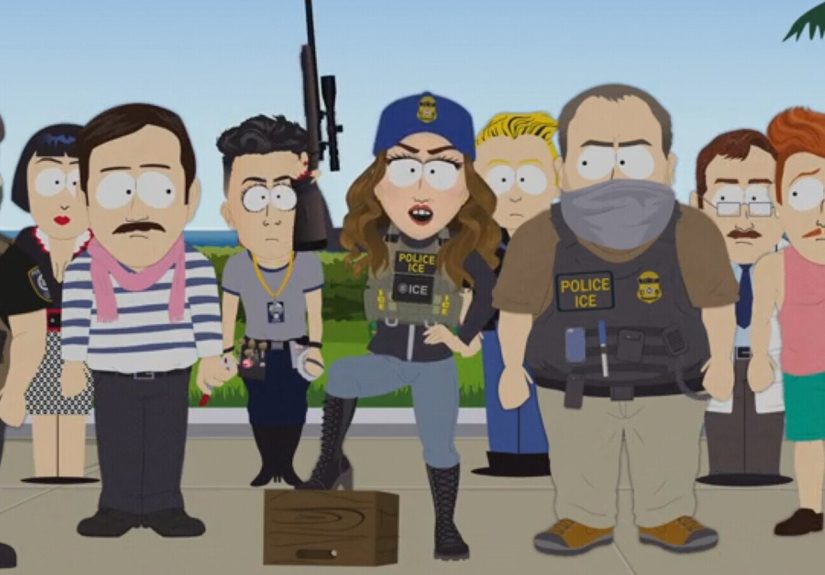
Then Episode 2 kept the momentum going by taking aim at Kristi Noem and immigration politics in a way that predictably sparked more outrage. So by the time the next Wednesday rolled around and there was no new episode, fans were primed to wonder whether the break had something to do with blowback. That suspicion may not have been supported by hard evidence, but emotionally it made sense. The show had just embarrassed powerful people, its parent company had already been tangled in public controversy, and the schedule suddenly went wobbly. Of course people started squinting at Paramount.
That does not mean Paramount pulled an episode out of fear. It means the company had already done enough to lose the benefit of the doubt.
The Boring Explanation Is Probably the Correct One
Here is the part that is less exciting, less cinematic, and therefore probably more true: the week off appears to have been planned as part of an unusual release strategy rather than a panic move sparked by politics. Later scheduling updates made it clear that Season 27 was operating on a staggered, effectively biweekly rhythm for stretches of its run. In other words, the August break was not a one-off emergency. It was part of a broader pattern.
That broader pattern actually fits the nature of South Park. The show is famous for its breakneck production process and its ability to react to events with alarming speed. That speed is a superpower, but it is also a high-wire act. If Parker and Stone want to keep making episodes that feel plugged directly into the week’s headlines, a looser schedule can give them more room to stay current instead of locking them into a rigid weekly machine.
So yes, Paramount deserves blame for helping create the climate of confusion. But the missing episode on that specific Wednesday was likely more about franchise programming and an intentionally staggered rollout than censorship or corporate sabotage. Fans were not crazy for suspecting the company. They were reacting to the story Paramount had already taught them to expect.
And that may be the most revealing part of the whole affair. The actual scheduling logic was not the problem. The trust gap was.
What Paramount Still Does Not Quite Understand About South Park
South Park is not just another content asset in a slide deck, though you can practically hear somebody in a corner office calling it that. It is a live-wire brand built on immediacy, irreverence, and the sense that it can show up any week and torch the biggest story in America before breakfast. You cannot manage that kind of show the same way you manage a comfy catalog sitcom.
When a company wraps a franchise like this in licensing disputes, merger intrigue, rollout confusion, and streamer shuffle, it chips away at the illusion that the show belongs to the audience more than it belongs to the machine. Fans will tolerate a lot from South Park. They have tolerated talking poop, woodland Christmas horrors, and enough bodily fluids to fill a small reservoir. What they do not tolerate well is feeling like executives are getting in the way of the mayhem.
That is why Paramount keeps ending up in the crosshairs. The company may not be personally unplugging episodes every week, but it has become the symbol of everything fans fear could make South Park less spontaneous, less dangerous, and more packaged. For a show that built its reputation on feeling fast and unruly, that is the cardinal sin.
What This Means for the Show Going Forward
The good news for fans is that the broader picture is not one of cancellation or retreat. Quite the opposite. The new deal with Paramount was enormous, the franchise remains valuable, and the show clearly still knows how to command attention. In raw business terms, South Park is not limping. It is marching into the room like it owns the place and demanding snacks.
The less convenient news is that viewers may need to get used to a release rhythm that does not feel as tidy as the old appointment-TV model. If the series keeps favoring staggered drops or schedule gaps in order to preserve its topical edge, fans may end up watching it more like a prestige chaos engine than a standard weekly comedy.
That may actually suit South Park. The show has never behaved particularly well inside other people’s rules. But if Paramount wants fans to stop blaming it every time the calendar shifts, it needs one very basic upgrade: clearer communication. Because when you handle a franchise this famous with vague timing and visible corporate drama, the audience will always invent the juicier explanation.
The Fan Experience: Waiting for South Park in the Paramount Era
There is a very specific kind of frustration that comes with being a South Park fan during one of these stop-and-start stretches, and it is not ordinary impatience. It is more like standing outside your favorite dive bar, hearing the music from inside, seeing the neon sign buzzing in the window, and then discovering the owner has changed the opening hours three times in one week without telling anybody. The place is still there. The energy is still there. But the uncertainty starts becoming part of the experience.
You tell yourself not to care that much because, come on, it is television. Then Wednesday night rolls around and you check the schedule anyway. You scroll social media. You look for promos. You refresh fan threads. Somebody says there is a new episode. Somebody else says it has been moved. Another person blames Paramount. A fourth person blames the merger. A fifth person claims this is all somehow Cartman’s fault, which is rarely the dumbest theory in the room.
That weird tension is part of what makes the current South Park moment so fascinating. The show still feels alive enough that missing one week matters. That is not true of every long-running series. Plenty of veteran shows can quietly slip a week and nobody notices unless a streaming app politely coughs in the corner. But South Park still creates the sense that anything could happen next, and that makes absence feel charged.
There is also the cultural timing of it all. This is a show that built its legend on speed. Fans are used to South Park arriving like a cartoon ambulance after some massive news event, sirens blaring, ready to mock everyone involved. So when it pauses after a huge episode, the break can feel almost suspiciously loud. You start wondering what joke is being delayed, what target is getting lucky, what executive memo is floating around somewhere with words like “optics” and “stakeholder alignment” in it. Whether or not that is true almost becomes secondary to the ritual of guessing.
And yet, there is something kind of fitting about all this. Waiting for South Park has become its own mini-performance, complete with annoyance, speculation, memes, and the low-grade thrill that maybe the next episode will be worth the hassle. Fans complain because they still expect impact. They blame Paramount because corporate confusion is the easiest monster to boo. But underneath all the griping is a stranger kind of compliment: people still care enough to be mad.
That is why every week off feels bigger than it should. It is not just a missing half-hour. It is a disruption in a ritual. It is the pause before the next insult, the next headline, the next impossible joke. And when the show finally does come back, fans will do what they always do: roll their eyes, hit play, and pretend they were never worried in the first place.
Conclusion
South Park taking another week off became a story because the show returned at the exact moment when corporate tension, political backlash, streaming chaos, and fan expectation were all colliding. The August break was likely not a secret act of censorship. It was more likely a scheduled anniversary celebration within a staggered season rollout. But because Paramount had already helped turn the season launch into a public mess, fans were ready to blame the company the second the schedule twitched.
In that sense, both sides of the argument are true. Paramount may not have caused every missing Wednesday, but it absolutely helped create the atmosphere where every missing Wednesday looks suspicious. And for a show as fast, topical, and combustible as South Park, perception matters almost as much as the punchline.
The good news is that the franchise is still loud, still relevant, and still powerful enough to make a skipped week feel like an event. The bad news for Paramount is that until it learns how to manage that power without looking like it is fumbling the remote, fans are going to keep blaming it for every silence between the laughs.