Table of Contents >> Show >> Hide
- What Exactly Is a “Spin” Sink Mixer?
- Why High-Arch + Swivel Is the Kitchen Power Combo
- Key Features That Actually Matter
- Swivel range: 110°, 150°, 180°, or 360°
- Spout height and reach: the two measurements people forget
- Spray options: stream, spray, and “power rinse”
- Valve type: look for ceramic disc reliability
- Materials and finishes: more than just “shiny vs. not shiny”
- Compliance and certifications: boring, but important
- Water Flow and Efficiency: The Sweet Spot Between “Weak” and “Fire Hose”
- Fit and Installation: Measure Twice, Return Zero Times
- Daily Use: The Little Things That Make You Love (or Hate) a Faucet
- Maintenance and Care: Keep the “Spin” Smooth
- Who Should Choose a Spin Sink Mixer with High Arch Spout?
- Quick Shopping Checklist
- Conclusion: A Faucet That Works as Hard as You Do
- Real-Life Experiences: Living with a Spin Sink Mixer (500+ Words of “Oh, That’s Nice”)
A kitchen faucet shouldn’t be a “character-building” experience. You know the kind: you try to rinse a sheet pan,
the water hits the back wall of the sink, ricochets onto your shirt, and suddenly you’re wearing Eau de Dishwasher.
If you’re ready to upgrade to something that feels less like a prank and more like a tool, meet the
spin sink mixer with a high arch spouta faucet style built for real life: big pots, messy baking trays,
double-basin sinks, and the occasional “How did pasta sauce get there?” moment.
This guide breaks down what “spin” really means (spoiler: it’s the swivel), why a high-arch spout is more than just
a pretty curve, what features matter, what measurements will save you from regret, and how to shop without falling
for shiny marketing glitter. Fun? Yes. Practical? Also yes. Let’s turn on the water.
What Exactly Is a “Spin” Sink Mixer?
In plain American-English terms, a “sink mixer” is a faucet that mixes hot and cold water inside the faucet body
(usually controlled by one handle). The “spin” part isn’t a carnival trickit typically refers to a
swivel spout that rotates left and right, sometimes up to a full 360°.
So when someone says “spin sink mixer,” think: single-handle kitchen faucet + swiveling spout.
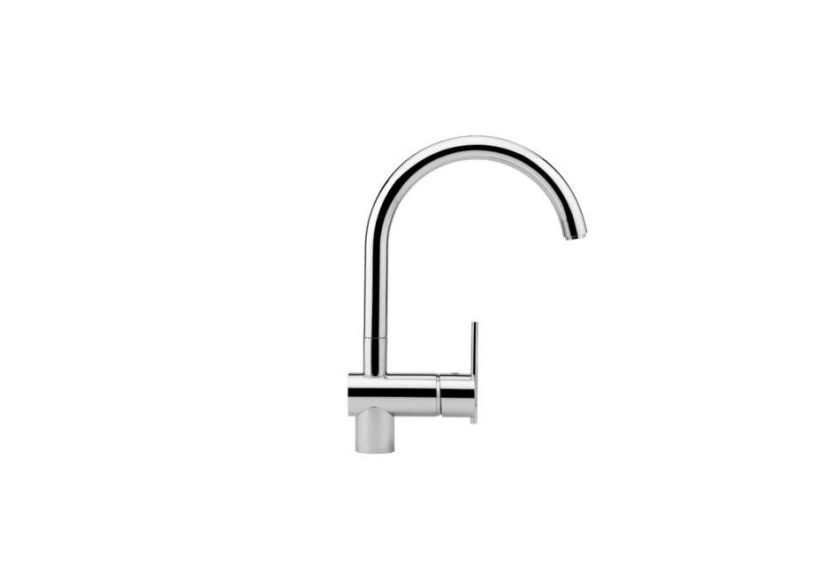
Add a high arch spout (also called a high-arc or gooseneck spout),
and you get that tall, curved profile that creates more vertical clearance in the sink areagreat for filling
stockpots, washing tall pitchers, and not smacking the faucet with your biggest pan like it owes you money.
Why High-Arch + Swivel Is the Kitchen Power Combo
1) Clearance for big cookware (and big ambitions)
The whole point of a high-arc spout is space. More room between the spout and the sink means you can maneuver larger
itemsDutch ovens, air-fryer baskets, oversized cutting boardswithout doing that awkward diagonal wiggle.
If your current faucet makes you tilt pots like you’re trying to pour latte art, high-arc is the upgrade.
2) Better reach across single or double basins
A swiveling spout can make a kitchen feel bigger because your faucet can actually cover the sink you paid for.
If you have a double-basin sink, swivel range matters even more. A limited swivel can force you to “park” the spout in
one basin and pretend the other basin is decorative.
3) Easier cleanup (less backsplash drama)
A taller spout can change the angle of the water stream, and paired with a good aerator or spray head, it can help you
direct water where you need itespecially when rinsing the corners of the sink. That said, height alone doesn’t prevent
splashing; the magic is the combo of spout height, reach, sink depth, and flow rate.
We’ll get to the “don’t soak your shirt” math in a minute.
Key Features That Actually Matter
Faucets love to advertise features the way cereal boxes advertise “fun.” Here’s what’s worth caring about when choosing
a high-arc swivel kitchen faucet.
Swivel range: 110°, 150°, 180°, or 360°
Not all “spin” faucets spin equally. Some swivel just enough for basic positioning (think 110°–180°),
while others rotate the full 360° for maximum sink coverage. Full rotation can be especially handy for
island sinks, workstation sinks, or busy kitchens where you want to move the spout out of the way quickly.
If you regularly juggle dishes in both basins, wider swivel is a quality-of-life upgrade.
Spout height and reach: the two measurements people forget
High-arc doesn’t automatically mean “fits my setup.” You want enough height for tall itemsbut not so much that the
water free-falls from the ceiling into a shallow sink like Niagara Falls. Reach matters too: if the spout doesn’t extend
far enough into the sink, water lands too close to the back wall (hello, backsplash). Too much reach and it can crowd
the front edge. The goal is to land the stream near the drain areawhere splashing is least annoying.
Spray options: stream, spray, and “power rinse”
Many modern high-arc faucets include a pull-down or pull-out spray head with multiple modes. A smooth aerated stream is
great for filling pots. A wider spray is better for rinsing produce or plates. Some designs add a focused “power rinse”
style spray for stuck-on messes. If you cook a lot (or own a baking sheet that collects burnt cheese like it’s a hobby),
a multi-mode sprayer can feel like leveling up your kitchen skills overnight.
Valve type: look for ceramic disc reliability
The valve cartridge is the faucet’s beating heart. Many higher-quality faucets use
ceramic disc cartridges known for smooth operation and durability. In practical terms, that usually means
fewer drips, less handle wobble over time, and fewer “why is it always slightly leaking?” conversations at 11 p.m.
Materials and finishes: more than just “shiny vs. not shiny”
For longevity, solid metal construction (often brass or stainless steel) is common in better faucets. Finishes vary,
but the big idea is durability: you want something that resists corrosion, tarnish, and fingerprintsespecially in a
kitchen where hands are frequently wet, greasy, or covered in flour like you’re ghost-hunting.
- Chrome: classic, bright, easy to match, shows water spots more easily.
- Stainless / brushed nickel: forgiving, hides spots well, popular in modern kitchens.
- Matte black: dramatic, trendy, can look amazingpair it with matching hardware for best effect.
- Specialty finishes: beautiful, but check how the manufacturer rates durability and cleaning needs.
Compliance and certifications: boring, but important
If you’re shopping in the U.S., you’ll see terms like “lead law compliant,” “NSF/ANSI,” or “ADA compliant” on many listings.
The takeaway: reputable brands and retailers often provide documentation that the faucet meets relevant safety and performance
expectations. If you’re buying for a household with kids, or you simply prefer peace of mind, it’s worth checking the specs
instead of trusting a random “premium luxury faucet!!!” listing with 43 emojis.
Water Flow and Efficiency: The Sweet Spot Between “Weak” and “Fire Hose”
Kitchen faucets in the U.S. have a maximum allowed flow rate, and many newer faucets are designed to be more efficient.
The key is matching the faucet’s flow to your habits. If you fill big pots constantly, you may want a faucet that offers an
efficient everyday flow while still handling occasional high-demand tasks.
Typical flow rates you’ll see
- 2.2 GPM: the traditional “max” you’ll still see on many standard kitchen faucets.
- 1.8 GPM: common in many newer designs and in regions with stricter efficiency expectations.
- 1.5 GPM: very efficient; can still work well with good spray engineering, but pot-filling takes longer.
The best experience is usually not “highest flow wins.” It’s “best control wins.” A faucet with a well-designed aerator
or spray head can feel strong while still using less water. If you’re concerned about splashing, a slightly lower flow rate
paired with a deeper sink and a well-aimed stream can be a surprisingly happy marriage.
Fit and Installation: Measure Twice, Return Zero Times
A high-arch faucet is like a tall friend: helpful, but you need to make sure they won’t hit their head on your cabinets.
Before you buy, grab a tape measure and check these:
1) Cabinet and backsplash clearance
Measure from the countertop to anything above/behind the faucet (upper cabinets, shelves, windowsill, or a thick backsplash lip).
Make sure the faucet height fits comfortably with room to operate the handle (especially if the handle swings back).
2) Sink depth and bowl geometry
If you have a shallow sink, an extra-tall spout can increase splash risk because the water falls farther before it hits the basin.
Deep sinks (or sinks with well-sloped sides) usually pair better with very high arcs.
3) Spout reach to the drain
Aim for the stream to hit near the drain area, not the back wall and not the front lip. This matters more than people think:
it affects splash, usability, and whether you’re constantly repositioning dishes to avoid water shooting onto the counter.
4) Mounting holes and deck plates
Many single-handle faucets use one hole, but older sinks may have three or four holes. A deck plate (sometimes called an escutcheon)
can cover unused holes for a clean look. Confirm what your faucet includes and what your sink requires.
Daily Use: The Little Things That Make You Love (or Hate) a Faucet
Handle feel and temperature control
A good mixer handle should move smoothly and stop preciselyno “it’s either arctic or lava.” If you have limited space behind
the faucet, look for designs that don’t require a big backward handle swing.
Docking and hose management for pull-downs
If you choose a pull-down spray head, check how it docks back into place and whether the hose retracts smoothly. A good docking
system prevents the spray head from drooping over time, which is the faucet equivalent of a tired eyelid.
Noise and spray quality
A well-designed aerator should produce a smooth stream without loud hiss. Spray modes should feel purposeful, not like a confused
garden sprinkler. If you have hard water, consider how easy it is to clean the spray face.
Maintenance and Care: Keep the “Spin” Smooth
High-arc swivel faucets are generally low maintenance, but a few habits keep them looking and working their best:
- Wipe after heavy use to reduce mineral spots, especially on chrome and dark finishes.
- Clean the aerator/spray face periodically if your water is hardmineral buildup can distort the stream.
- Check connections under the sink after installation and after the first week of use (a quick peek prevents surprises).
- Use gentle cleaners; harsh abrasives can dull finishes over time.
If you ever get dripping, inconsistent spray, or stiff swivel motion, the most common culprits are cartridge wear, debris in the
aerator, or mineral buildup. Many reputable brands provide replacement parts and diagrams, which is a quiet but real form of luxury.
Who Should Choose a Spin Sink Mixer with High Arch Spout?
Perfect for you if…
- You wash large cookware often and want more room under the spout.
- You have a double-basin sink and want wide coverage.
- You like the convenience of a single-handle mixer for quick temperature control.
- You want a faucet that looks modern and feels functional, not fussy.
Maybe reconsider if…
- Your sink is very shallow and you’re sensitive to splashing (choose a moderate height or lower flow).
- You have low water pressure and need a faucet engineered to perform well in that situation.
- Your cabinet/shelf clearance is tight (measure first, or choose a compact high-arc design).
Quick Shopping Checklist
- Swivel range: does it rotate enough for your sink layout?
- Spout height + reach: will it clear cabinets and land water near the drain?
- Spray modes: stream + spray (and maybe a stronger rinse mode) if you cook a lot.
- Cartridge: ceramic disc is a strong sign of long-term reliability.
- Flow rate: choose a balance of efficiency and convenience for your routine.
- Mounting: confirm hole count and whether a deck plate is included.
- Finish: pick what matches your kitchen and how much you care about fingerprints.
Conclusion: A Faucet That Works as Hard as You Do
A spin sink mixer with a high arch spout is one of those upgrades that pays you back daily. It’s not just aesthetics
it’s clearance, reach, control, and comfort. The right one makes dish duty faster, pot-filling easier, and cleanup less of a splash
zone. Focus on swivel range, spout reach, flow rate, and durable internals like ceramic disc cartridgesand you’ll end up with a faucet
that feels like it belongs in your kitchen, not like it wandered in from a bargain bin.
Measure carefully, choose features based on your real habits, and your future self will thank youprobably while effortlessly rinsing a
roasting pan without flooding the countertop.
Real-Life Experiences: Living with a Spin Sink Mixer (500+ Words of “Oh, That’s Nice”)
The first week with a high-arc swivel faucet is usually a mix of practical joy and mild disbelief. You’ll catch yourself doing little
“test spins” with the spout the way people flick a new penpartly to check the movement, partly because it’s oddly satisfying.
The swivel becomes the unsung hero during meal prep: you rinse vegetables in one basin, swing to the other to rinse a colander, then
park the spout out of the way so you can drain a pot without playing faucet limbo.
One of the biggest day-to-day wins is how much easier it is to handle tall items. Filling a stockpot no longer requires the pot to sit
at a weird angle, and washing a blender pitcher stops feeling like you’re trying to wash a giraffe in a bathtub. That extra height
also changes how you clean bulky pans. Instead of scraping and hoping, you can actually get water where you need it, especially if your
faucet includes a pull-down sprayer. People often underestimate how much a sprayer helps until they’re rinsing sticky rice or baked-on
cheese and realizing, “Oh. So this is what competent equipment feels like.”
There’s also a subtle ergonomic benefit: you move your cookware less. With a short faucet, you tend to lift and rotate pans to fit under
the stream. With a high-arc spout, the faucet meets you halfway, so you’re not constantly repositioning heavy items. If you cook often,
that reduction in awkward lifting is a real quality-of-life improvementespecially on busy nights when you’re multitasking and the sink is
basically a pit stop.
Of course, every upgrade comes with “tiny truths.” A very tall spout paired with a shallow sink can create more splash if the stream hits
the wrong spot. The fix is usually simple: keep the stream aimed closer to the drain, use the spray mode for rinsing dishes, and consider
an efficient flow rate if your sink is shallow. Another common reality is maintenance: finishes look best when wiped down occasionally,
especially in homes with hard water. The good news is that many modern spray heads are designed to be easy to cleanoften you can rub away
mineral buildup without a full disassembly. (Your Saturday morning self will appreciate that.)
If you’re the type who cooks with a lot of oil, sauces, or dough, you’ll probably notice how much you touch the faucet with messy hands.
This is where a single-handle mixer shines: quick temperature adjustments without fiddling with two knobs. And if your faucet has a solid
docking mechanism for the spray head, you’ll appreciate that it snaps back into place instead of hanging slightly off-center like a picture
frame that refuses to behave.
After a month, the faucet becomes less of a “new thing” and more of a dependable teammate. You stop thinking about clearance because it’s
simply there. You stop planning your dishwashing strategy around the faucet’s limitations. The swivel becomes a natural motionwash, rinse,
spin, parklike a tiny kitchen choreography you didn’t know you needed. And the biggest sign you chose well? You’ll use someone else’s
short, stiff faucet at a friend’s house and think, “Wow. We really used to live like this.”