Table of Contents >> Show >> Hide
- What Is a Sprained Ankle?
- Types of Ankle Sprains (Because Ankles Love Variety)
- Ankle Sprain Grades: How Bad Is “Bad”?
- Sprained Ankle Symptoms
- Is It a Sprain or a Fracture?
- How a Sprained Ankle Is Diagnosed
- Sprained Ankle Treatment: What to Do First (First 24–72 Hours)
- Braces, Boots, and Taping: Do You Need One?
- Rehab Matters: The “Boring” Part That Prevents the Next Sprain
- Ankle Sprain Recovery Time: Realistic Timelines
- What Can Slow Down Healing?
- Possible Complications
- Preventing Another Sprain
- Frequently Asked Questions
- Real-World Experiences: What People Learn the Hard Way (and Then Tell Their Friends)
- Conclusion
A sprained ankle is one of those injuries that feels unfairly dramatic for how small the body part is.
You’re just walking alongminding your business, trusting the ground like a reasonable personand then
your ankle decides to audition for a soap opera. The good news: most ankle sprains heal well with the
right care. The not-so-fun news: “right care” usually includes patience and rehab exercises, which are
not nearly as exciting as pretending you’re fine and sprinting back to life.
This guide covers sprained ankle symptoms, how doctors diagnose an ankle sprain, the best
ankle sprain treatment options (from home care to braces to physical therapy), and realistic
ankle sprain recovery time expectationsincluding what can slow healing down.
It’s educational information, not personal medical advice. If you’re a teen, loop in a parent/guardian
especially if you can’t put weight on your foot, pain is severe, or things aren’t improving.
What Is a Sprained Ankle?
An ankle sprain happens when one or more ligaments (the tough bands connecting bone to bone)
get stretched beyond their limit and partially tearor fully tear. The most common version is a
lateral ankle sprain, where the foot rolls inward (inversion) and stresses ligaments on the
outside of the ankle.
Quick translation:
Sprain = ligament. Strain = muscle or tendon.
Your ankle sprain is basically your ligaments filing a complaint about surprise twisting.
Types of Ankle Sprains (Because Ankles Love Variety)
1) Lateral ankle sprain (outside of ankle)
This is the classic “rolled ankle.” It’s the most common type and usually affects the ligaments on the
outside of the ankle (often the anterior talofibular ligament).
2) Medial ankle sprain (inside of ankle)
Less common. This can happen when the foot rolls outward (eversion), stressing the deltoid ligament on
the inside of the ankle. Because it’s less common, it can sometimes signal a more complex injury.
3) High ankle sprain (syndesmotic sprain)
A “high ankle sprain” involves ligaments between the tibia and fibula (the two lower-leg bones). It often
happens with twisting injuries, especially in sports. High ankle sprains can take longer to heal and may
need closer medical evaluation.
Ankle Sprain Grades: How Bad Is “Bad”?
Clinicians often describe sprains by grade. These aren’t just labelsthey help guide bracing, rehab, and
expected recovery time.
Grade 1 (mild)
- Ligament stretched with tiny micro-tears
- Mild pain, mild swelling
- Usually stable and you can often bear weight (though it may limp-worthy)
Grade 2 (moderate)
- Partial tear of ligament(s)
- More swelling, bruising, pain with walking
- Some looseness/instability may be present
Grade 3 (severe)
- Complete tear of ligament(s)
- Significant swelling/bruising, marked instability
- Often very painful at first and difficult to bear weight
Sprained Ankle Symptoms
Symptoms vary by severity, but common ankle sprain symptoms include:
- Pain (often worse when bearing weight)
- Swelling around the ankle
- Bruising (may appear over the next day or two)
- Tenderness when you touch the ankle
- Limited range of motion and stiffness
- Instability or feeling like the ankle might “give out”
- A pop sensation at the time of injury (sometimes)
Is It a Sprain or a Fracture?
Sprains and fractures can feel frustratingly similar at first: pain, swelling, bruising, trouble walking.
The safest move is to get checked if you have red flagsespecially if you can’t bear weight.
When to seek urgent medical care
- You cannot take four steps (even limping) right after the injury or at evaluation
- Severe pain over the bone, not just the soft tissue
- Obvious deformity, severe swelling, or rapidly worsening bruising
- Numbness, tingling, cold foot, or color changes
- Open wound, fever, or signs of infection
- Pain high above the ankle joint (possible high ankle sprain)
Clinicians often use evidence-based screening rules to decide when an X-ray is needed to rule out a
fracture. Bottom line: if you’re not sure, getting evaluated can prevent weeks of limping around on an
injury that needed more than home care.
How a Sprained Ankle Is Diagnosed
Diagnosis typically includes:
- History: what happened, where it hurts, whether you heard/felt a “pop”
- Physical exam: swelling pattern, tenderness points, ligament stress tests
- Imaging when appropriate: X-ray to rule out fracture; MRI/other imaging if recovery is not following the expected course or if another injury is suspected
A helpful detail: sometimes the most accurate severity assessment happens after a few days, once pain
and swelling calm down enough for a better exam. That can be why a provider may reassess you in the
first week.
Sprained Ankle Treatment: What to Do First (First 24–72 Hours)
Early care is about protecting the ankle, reducing swelling, controlling pain, and preventing further
injury. You’ll commonly hear RICE (Rest, Ice, Compression, Elevation) or similar variations like
PRICE (Protection + RICE).
Protection + relative rest
Avoid activities that make pain worse. This doesn’t always mean “don’t move at all”it means “don’t keep
re-injuring it.” Crutches can be helpful if walking is very painful.
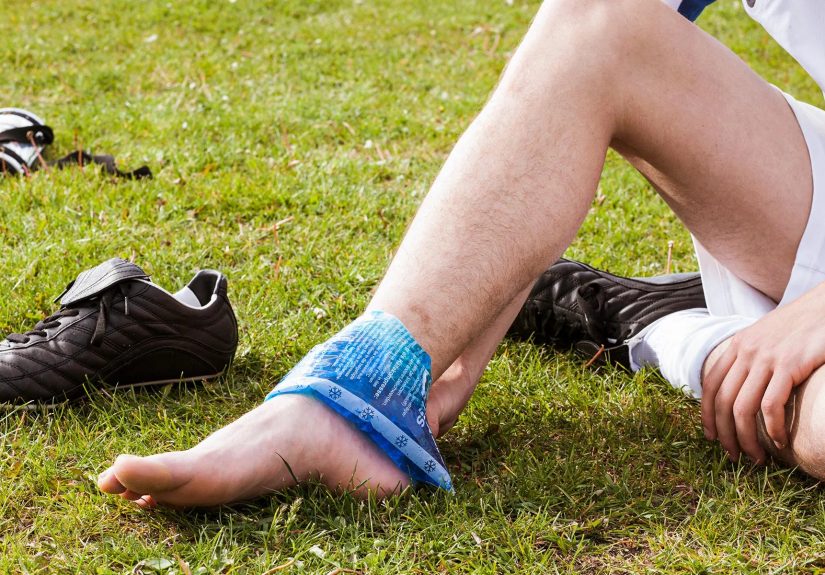
Ice (strategically)
Cold can help with pain and swelling early on. Use a barrier (like a cloth) and limit icing sessions so
you don’t irritate skin. If you have numbness, circulation issues, or conditions that affect sensation,
check with a clinician before icing.
Compression
An elastic bandage wrap or compression sleeve can reduce swelling. It should feel snug, not like your
foot is being vacuum-sealed. If your toes turn pale/blue, get cold, tingle, or throb, loosen the wrap.
Elevation
Raise the ankle above the level of your heart when possibleespecially in the first couple of days.
Gravity is powerful; use it for good.
Pain relief
Over-the-counter pain relievers may help (for example, acetaminophen or NSAIDs like ibuprofen).
If you’re a teen, have asthma, kidney issues, stomach ulcers, take blood thinners, or have other medical
conditions, ask a parent/guardian and a clinician/pharmacist what’s safe for you.
Braces, Boots, and Taping: Do You Need One?
Support can reduce pain and protect healing ligamentsespecially for moderate or severe sprains, or if
you need to be on your feet. Options include:
- Lace-up ankle brace (common for many sprains)
- Stirrup brace / aircast for more stability
- Walking boot if pain is significant or walking is difficult
- Taping (often used in sports; best when applied correctly)
Severe sprains sometimes benefit from a short period of immobilization, followed by a progressive return
to motion and strength.
Rehab Matters: The “Boring” Part That Prevents the Next Sprain
If you only do the early swelling control and skip rehab, your ankle may heal “good enough” but remain
weaker, stiffer, and less aware of where it is in space (proprioception). That’s the recipe for
chronic ankle instability and repeat sprains.
Phase 1: Restore gentle motion
Once a clinician says it’s safe, gentle movement helps prevent stiffness. Common early exercises:
- Ankle pumps (up and down)
- Ankle circles
- Ankle alphabet (trace letters with your toes)
Phase 2: Strengthen supporting muscles
As pain decreases, strengthening builds stability. A physical therapist may use resistance bands and
focus on controlled movements:
- Resistance band eversion/inversion
- Calf raises (double leg, then single leg when ready)
- Tibialis strengthening (front of shin) to improve control
Phase 3: Balance and neuromuscular training
This is the secret sauce for preventing repeat injuries. It trains your ankle and brain to react quickly
to uneven surfaces and sudden movement changes.
- Single-leg balance on a stable surface
- Progress to eyes closed, gentle reaches, or unstable surfaces (only when safe)
- Sport-specific agility work before full return to play
Ankle Sprain Recovery Time: Realistic Timelines
Healing time depends on severity, the type of sprain (high ankle sprains often take longer), your overall
health, and whether you follow a rehab plan. Rough expectations:
Grade 1 (mild)
- Often improves substantially within 1–3 weeks
- You may walk sooner, but pushing too fast can irritate healing tissue
Grade 2 (moderate)
- Commonly takes 3–6 weeks to return to many normal activities
- Rehab and bracing can make a big difference
Grade 3 (severe)
- Often takes 6–12 weeks for significant recovery, and sometimes longer for full return to
high-demand sports - May require a short immobilization period and structured rehabilitation
High ankle sprain (syndesmotic)
- Recovery can be longer than a typical lateral sprain
- Some return in about 6 weeks, but lingering symptoms can last longer in a meaningful
portion of cases
What Can Slow Down Healing?
- Returning to sports too soon (“It felt fine… until it wasn’t.”)
- Skipping balance/strength rehab
- Not using support when needed (brace/boot/crutches)
- Repeated re-injury during the healing window
- Undiagnosed associated injuries (fracture, tendon injury, cartilage injury)
Possible Complications
Most sprains recover well, but complications can happenespecially if pain and function aren’t improving
with time and rehab.
- Chronic ankle instability: repeated “giving way,” frequent sprains
- Persistent pain/swelling beyond expected recovery
- Osteochondral lesion (cartilage/bone injury) after a twist
- Peroneal tendon irritation/injury
- Stiffness from prolonged immobilization without rehab
Preventing Another Sprain
The best prevention plan is not magicit’s boring consistency. (Annoying, but true.)
- Balance training (a few minutes most days can help)
- Strengthening the ankle, calf, and hip muscles
- Proper warmups before sports
- Bracing or taping during high-risk sportsespecially if you’ve sprained that ankle before
- Shoe choices that match your activity and offer stable footing
Frequently Asked Questions
Can I walk on a sprained ankle?
Many mild sprains allow some walking, but walking through sharp pain can worsen swelling and delay
recovery. If you can’t bear weight, get evaluated promptly.
Should I use heat or ice?
Ice is commonly used early for pain and swelling. Heat may feel good later for stiffness, but if swelling
is still significant, heat can sometimes make it worse. When in doubt, ask a clinician or physical therapist.
Do I need physical therapy?
Not everyone needs formal PT, but many people benefitespecially with moderate/severe sprains, athletes,
repeat sprainers, or anyone who wants the best odds of avoiding chronic instability. Rehab exercises matter
whether you do them with a pro or at home.
Real-World Experiences: What People Learn the Hard Way (and Then Tell Their Friends)
People’s experiences with ankle sprains tend to fall into a few familiar storylines. If any of these feel
oddly specific, that’s because ankles are unoriginaland so are we.
Experience #1: “It’s just a twist” (famous last words).
A lot of people assume a sprain is basically a dramatic bruise. They’ll limp for a day, slap on a wrap,
and return to normal life as soon as walking becomes “possible.” The ankle, however, is keeping receipts.
Without rehab, the swelling may linger, the joint stays stiff, and weeks later the person realizes they
still can’t squat, jog, or walk fast without discomfort. The lesson: pain going down is great, but
function matters too. If your ankle still feels wobbly on stairs or uneven pavement, it’s not ready
for victory laps.
Experience #2: The “curb that came out of nowhere.”
One classic sprain happens during something deeply athletic like… stepping off a curb while holding iced
coffee. There’s a sudden roll, a sharp “nope,” and then a rapid mental checklist: “Did anyone see that?”
Swelling appears like it’s trying to win a speed contest. In this situation, people often do best when they
treat the first 24–48 hours seriously: elevate, compress, and protect the ankle so it doesn’t keep getting
re-irritated. The small habit change that helps most? Keeping the foot up whenever you’re sitting. It’s
simple, free, and it worksyet it’s somehow the first thing everyone forgets.
Experience #3: The athlete’s trapreturning when it feels “pretty okay.”
Weekend basketball players, soccer athletes, dancers, runnersmany return as soon as they can jog in a
straight line. But cutting, pivoting, and landing are the real tests. People often describe a pattern:
straight-line movement feels fine, then the first quick lateral move triggers a painful reminder that the
ankle isn’t fully stable. A smarter approach is building up in steps: walking without a limp, then jogging,
then jumping/landing, then controlled side-to-side drills, then sport-specific practice. Bracing during that
ramp-up phase can add confidence and reduce risk while strength and balance catch up.
Experience #4: The “Why is this taking so long?” spiral.
Some sprains truly do take longerespecially severe sprains or high ankle sprains. People often feel
discouraged around week two or three because the ankle looks mostly normal but still aches, feels stiff in
the morning, or swells by the end of the day. A common “aha” moment is realizing that healing is not just
about the ligament fibers knitting back together. You’re also retraining mobility, strength, and the nervous
system’s reflexes. That’s why balance exercises feel strangely challenging at firstand why they’re so
valuable. Progress isn’t always linear; it’s more like a trending-up chart with a few grumpy dips.
Experience #5: The comeback that actually sticks.
The best stories usually include three things: (1) early protection and swelling control, (2) consistent
rehab (especially balance training), and (3) patience before full return to sport. People who do this often
report that the ankle eventually feels “normal” againstrong, stable, and trustworthy on uneven ground.
The underrated win is confidence: when you stop thinking about your ankle with every step, you know you’ve
truly recovered.
If you’re reading this while staring at your ankle like it betrayed you personally: you’re not alone.
Ankles are famous for overreacting. Treat it well, rehab it properly, and you’ll dramatically improve the
odds that your next “surprise curb” encounter ends in a normal step instead of a plot twist.
Conclusion
A sprained ankle can range from a mild ligament stretch to a more serious tear that needs bracing, rehab,
and time. The most reliable path to recovery combines smart early care (protect, compress, elevate), a
gradual return to weight-bearing and movement, and a rehab plan that includes strength and balance work.
If you can’t bear weight, pain is severe, you suspect a high ankle sprain, or symptoms aren’t improving as
expected, get evaluatedsometimes what feels like “just a sprain” needs a different plan.