Table of Contents >> Show >> Hide
- First of All, the Heart of the Ocean Isn’t Just “Nice Jewelry”
- Who Would Legally Own Rose’s Diamond, Anyway?
- The Ending Isn’t About MoneyIt’s About Letting Go
- “But What About Her Grandkids?!”
- How Real History Makes Rose’s Choice Feel More Plausible
- Why We Keep Yelling That Rose Should Have Sold It
- What This Titanic Diamond Argument Teaches Us in Real Life
- Final Thoughts: Let Roseand the DiamondRest
More than 25 years after Titanic hit theaters, the internet still wakes up some mornings and chooses violence against one specific senior citizen:
Old Rose. She climbs over a railing, chucks a legendary blue diamond into the Atlantic, and every few months somebody posts,
“She threw away a $250 million necklace instead of helping her grandkids with student loans.”
Recently, humor site Cracked even did a deep dive explaining why Rose couldn’t realistically have just strolled into a Sotheby’s auction with the “Heart of the Ocean” and
walked out a billionaire. The more you look at the law, the history behind the real-life gem that inspired the movie prop,
and the emotional meaning of that final scene, the clearer it gets:
Rose not selling the diamond isn’t a plot hole. It’s the whole point.
So let’s retire the “Rose should have sold the diamond” take and actually look at what that rock represents, what it might have been worth,
and why hurling it into the sea is a surprisingly grounded choice for a woman who survived one of the most famous shipwrecks in history.
First of All, the Heart of the Ocean Isn’t Just “Nice Jewelry”
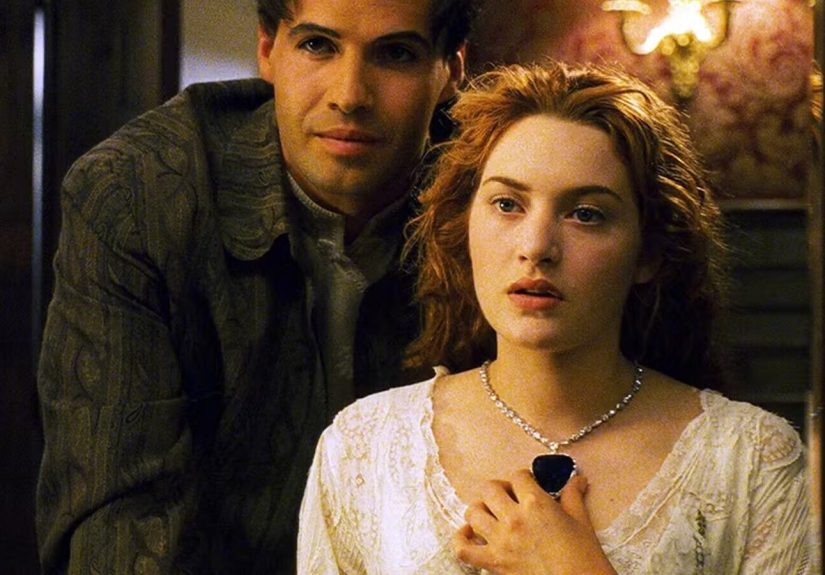
In the movie, the Heart of the Ocean is a massive blue diamond necklace originally owned by a French king, recut and passed down to obscenely rich people
before landing on the neck of Rose DeWitt Bukater. If that sounds familiar, it’s because James Cameron based it loosely on the real-life Hope Diamond,
another deep-blue stone with royal connections and a long, dramatic backstory.
The Hope Diamond weighs 45.52 carats and is often described as the most famous jewel in the world. It lives at the Smithsonian’s National Museum of Natural History
in Washington, D.C., where it attracts millions of visitors and is considered essentially “priceless,” though estimates typically put its value in the
$200–250 million range.
Its cultural value is actually bigger than its price tag: royal history, alleged curses, museum prestigethe whole package.
The Heart of the Ocean is a fictional cousin of that stone. In the world of the film, we’re talking about a gem with:
- Royal history (it’s said to have been worn by Louis XVI).
- Gigantic size and rare color.
- A one-of-a-kind story tied to the Titanic disaster.
Yes, if it were “real,” it would probably be worth hundreds of millions on the high end. But that doesn’t automatically mean
“easy cash-out and a quick Venmo to the grandkids.” The real headache starts when you ask a boring question that ruins a lot of memes:
Who actually owns this thing?
Who Would Legally Own Rose’s Diamond, Anyway?
Internet logic: Cal gave Rose the necklace, therefore it’s hers, therefore she can sell it and buy a yacht made of smaller yachts.
Real-world logic is more complicated.
1. The “gift” came from a guy tied to a massive international disaster
Cal buys the necklace, gives it to Rose as an engagement gift, then tries to frame Jack with it. After the ship sinks, the diamond is presumed lost at sea.
Decades later, a salvage crew (in the movie, Brock Lovett and company) has been painstakingly exploring the wreck, spending millions on expeditions,
assuming the necklace is somewhere down there with the rest of the artifacts.
Real-world Titanic salvage is handled in courts, not Reddit threads. Since 1994, a U.S. federal court in Virginia has recognized a single company,
RMS Titanic, Inc., as the “salvor-in-possession,” giving it exclusive salvage rights but very limited ability to sell artifacts,
especially anything considered historically significant.
Governments on both sides of the Atlantic treat the wreck as a grave and a cultural site, not a sunken jewelry store.
In that kind of legal environment, a survivor randomly showing up decades later with a “long-lost royal diamond from the Titanic” is not a quick appraise-and-sell situation.
It’s a “please hire ten lawyers and clear your schedule for the next few years” situation.
2. Salvage law and ownership would be a mess
Even if we pretend the Heart of the Ocean existed exactly as shown, questions pile up fast:
- Did Cal legally purchase and insure the necklace before the voyage?
- Did any insurance company pay out a claim when the Titanic sank?
- Do Cal’s heirs (and their lawyers) get a say if the necklace reappears?
- Does the Titanic’s owner, or its insurers, have any claim under maritime law?
- Would the necklace now be classed as a Titanic artifact that “belongs” in a museum collection?
When real Titanic artifacts are recovered, courts supervise what can be done with themoften requiring they be conserved as a single collection for public display,
not auctioned off piece by piece for profit.
A unique diamond with royal provenance and front-page news value wouldn’t quietly slip past that system. The minute Rose tried to sell it,
she’d be inviting international litigation, press coverage, and government interest.
3. The tax man would show up with a calculator and a big smile
Let’s say, somehow, she cleared all the ownership hurdles and managed to sell the diamond for, say, Hope Diamond–level money.
A windfall in the hundreds of millions instantly triggers:
- Capital gains and other taxes.
- Estate and inheritance issues for her family.
- Questions from regulators and journalists: “Where has this been?”
Rose has built an entirely new life under a different name, far away from the trauma and class expectations of her youth.
Turning that diamond into a financial event would also turn herself into a public event. For someone who spent decades hiding that necklace in a dresser drawer,
that’s a nightmare, not a retirement plan.
The Ending Isn’t About MoneyIt’s About Letting Go
People get hung up on the “wasted wealth” of the Heart of the Ocean, but the movie spends three hours telling you what that gemstone actually represents:
control, ownership, and the version of Rose that nearly died on that ship.
- To Cal, the necklace is a status symbol and a leash.
- To young Rose, it’s a glittering piece of her gilded cage.
- To old Rose, it’s the last physical link to the worst night of her life and the person she loved and lost.
When she climbs to the rail and drops it into the ocean, she’s not absent-mindedly tossing away “college tuition for everyone.”
She’s returning the thing that symbolized her imprisonmentand her survivalto the place where her old life ended.
The choice is emotional, not financial. It’s about finally closing a chapter she’s kept open for nearly a century.
The movie also quietly tells us that Rose did not live a life of deprivation. Her photos show her riding horses on the beach,
flying in a biplane, and standing in front of roller coasters and planes and landmarks she promised Jack she’d experience.
She built a full, adventurous, decades-long life without cashing in the diamond. That’s not an accident; it’s the thesis.
“But What About Her Grandkids?!”
One of the most common complaints is that Rose is selfish for not selling the diamond to help her granddaughter and other descendants.
But look closely at how the film frames that relationship.
Lizzy (her granddaughter) is curious and warm. She’s on a research vessel in the middle of the Atlantic with a salvage team,
living a life that’s clearly not scraping by on the edge of disaster. She isn’t hinting that Nana should have pawned some jewelry.
She’s fascinated by the story, by who Rose was before she became “Grandma.”
Could hundreds of millions of dollars have made their lives more comfortable? Absolutely. But the film isn’t a financial planning tutorial;
it’s a meditation on memory, trauma, and identity. Rose has already spent a lifetime investing in something money can’t buy:
the freedom to be who she really is, outside of the rigid class system that almost killed her.
More importantly, her family doesn’t even know the diamond exists. To them, there’s no “lost inheritance” to be angry about.
All they see is an elderly woman finally ready to tell the truth about one night in 1912and then to let it go.
How Real History Makes Rose’s Choice Feel More Plausible
The real-world Titanic wreck reinforces why the film is so focused on reverence, not profit.
Modern courts and international agreements emphasize the ship as a memorial, not a marketplace,
and heavily regulate what can be removed, sold, or disturbed.
We also know that artifacts from Titanic carry enormous cultural weight.
The idea of one of its passengers secretly holding onto the most famous piece of jewelry associated with the tragedy for decades fits perfectly
with how survivors often handled trauma: quietly, privately, with long silences and carefully guarded memories.
Rose throwing the diamond into the water matches how real-life families sometimes treat powerful heirlooms.
Some things are too heavy to turn into a line item on an auction sheet.
The film literalizes that idea by having her physically release the object back into the sea that claimed so much of her past.
Why We Keep Yelling That Rose Should Have Sold It
So if the emotional, legal, and historical angles all support Rose’s choice, why does this argument refuse to die?
A few very 21st-century reasons:
- We’re obsessed with “wasted” wealth. In a world of student loans and housing crises, the thought of tossing away a fortune feels like a personal attack.
- We like tidy transactional stories. “Sell diamond, solve problems” is simple. “Carry lifelong trauma, slowly make peace with your memories” is not.
- We treat movie props as investment portfolios. We see a giant diamond and instantly start doing Zillow math in our heads.
- We love dunking on characters for not min-maxing their lives. “There was room on the door,” “She should have sold the diamond,” “Why didn’t they just…”
is part of how internet culture rewatches everything.
But Titanic is melodrama, not a TikTok side-hustle tutorial.
The ending asks you to think about love, memory, and who gets to define your life storynot your hypothetical net worth on a spreadsheet.
What This Titanic Diamond Argument Teaches Us in Real Life
Strip away the memes, and the “Rose and the diamond” debate hits close to home because most of us have our own version of that blue necklace:
an object, opportunity, or choice that could theoretically turn into money, security, or statusbut only at the cost of something we can’t easily measure.
Maybe it’s the house you grew up in that your family could sell for a small fortune, but that also holds generations of memories.
Maybe it’s a business you could hyper-scale and flip, but only by turning it into something you never wanted it to be.
Maybe it’s a career path you were expected to take that would have impressed everyone…except you.
Watching Rose keep that diamond for decades and then quietly drop it into the ocean is weirdly relatable if you’ve ever chosen:
- Therapy over overtime.
- Time with your kids over a promotion.
- Leaving a toxic but well-paying job with no “next step” lined up.
There’s always someone nearby ready to say, “I would have done it differently. I would have cashed in.”
That’s exactly the energy behind “Rose should have sold that diamond.” It’s not really about Rose; it’s about us imagining what we’d do
if a once-in-a-lifetime windfall fell into our laps, and about how scary it is to think that someone might choose closure over cash.
Picture a modern version of this story. A survivor of some huge historical event reveals, at 100 years old, that she’s been quietly keeping an artifact
worth hundreds of millions in a box under her bed. She looks straight into a documentary camera and says,
“I could have sold it, but it meant something else to me. And now I’m letting it go.”
Social media would absolutely melt down. There would be think pieces, hot takes, long threads about intergenerational wealth, class, ethics, and trauma.
Yet if you talk to people who’ve actually lived through major disasters or wars, you’ll often hear about objects they chose to burn, bury, or throw away:
letters, uniforms, symbols of regimes or relationships they refused to carry one day longer. To an outsider, that can look like waste.
To the person who lived it, it’s an act of reclaiming their story.
The Titanic ending taps directly into that reality. The diamond isn’t a retirement account; it’s a physical token of a night that defined Rose’s life.
Keeping it let her decide when and how to say goodbye. Throwing it into the sea let her do something most of us never fully get to do:
close a door on the past on her own terms, with nobody watchingexcept, of course, the audience.
Next time someone insists Rose “should have sold that diamond,” you can absolutely joke about it
but you can also point out that the woman went from a suffocating, arranged engagement on a luxury liner to
a century of self-chosen adventures. She didn’t need to liquidate a trauma artifact to have a rich life.
The film’s final message isn’t “don’t monetize your assets”; it’s “you’re allowed to value peace over profit.”
Final Thoughts: Let Roseand the DiamondRest
When you line everything upthe real history of blue diamonds, the legal nightmare of Titanic artifacts, the emotional arc of Rose’s life,
and the way courts now treat the ship as a memorialthe “she should have sold it” argument starts to feel very small.
Rose doesn’t throw away a fortune; she lays a burden to rest. The ocean at the end of Titanic isn’t just where Jack died,
it’s where that version of Rose died too. Tossing the Heart of the Ocean into the water is her final, private ritual:
a last promise kept, a secret finally given back to the deep, and a reminder that some things were never meant to be cashed in.
We don’t have to agree with her choice. But if we’re going to keep arguing about it, we should at least admit:
the ending makes sense on its own emotional and legal terms. Rose isn’t a failed financial advisor.
She’s a survivor making one last, very human decision about what matters most at the end of a very long life.
SEO JSON