Table of Contents >> Show >> Hide
- Why Make Stovetop Popcorn With Olive Oil?
- Best Olive Oil for Popcorn
- Ingredients for the Best Stovetop Popcorn With Olive Oil Recipe
- Equipment You Need
- How to Make Popcorn on the Stove With Olive Oil
- Full Recipe at a Glance
- Tips for Perfect Homemade Popcorn on the Stove
- Easy Flavor Variations
- Common Mistakes to Avoid
- Is Olive Oil Popcorn a Better Snack Choice?
- How to Store Leftover Popcorn
- Conclusion
- Experiences Related to Stovetop Popcorn With Olive Oil Recipe
If microwave popcorn is the sweatpants of snacking, stovetop popcorn is the crisp button-down that still knows how to have fun. It is fast, wildly affordable, and far more delicious than the bagged stuff that always seems either too salty, too fake-buttery, or one scorched second away from tasting like regret. When you make stovetop popcorn with olive oil, you get big crunch, better flavor, and full control over the salt, toppings, and texture.
This recipe is for anyone who wants popcorn that tastes fresh, feels a little more grown-up, and does not require a chemistry degree to decode the ingredient list. Better yet, it uses pantry basics and comes together in minutes. Once you learn how to make popcorn on the stove, you may never look at a microwave bag the same way again.
Why Make Stovetop Popcorn With Olive Oil?
There are three very good reasons. First, flavor. Olive oil adds a rounded, savory note that makes the popcorn taste richer without becoming heavy. Second, texture. A pot on the stove gives you more control, which means more crisp kernels and fewer sad, leathery pieces. Third, flexibility. You can keep it simple with salt, go fancy with Parmesan and herbs, or lean sweet-and-salty if movie night starts feeling dramatic.
There is also the simple joy factor. Hearing the first few kernels rattle around in the pot is one of life’s tiny kitchen thrillers. It is low stakes, high reward, and somehow makes your home smell like a place where good decisions are made.
Best Olive Oil for Popcorn
Here is the key detail many recipes dance around: not all olive oil behaves the same way over heat. For the smoothest results, use light, pure, or refined olive oil for popping. These tend to have a milder flavor and handle heat more comfortably than a bold extra-virgin olive oil.
Can you use extra-virgin olive oil? Yes, but with a little common sense. Keep the heat at medium to medium-high instead of blasting the burner like you are launching a rocket. Extra-virgin olive oil can add excellent flavor, but if the heat is too aggressive, the oil may taste harsh and the popcorn can head toward burnt territory.
A good compromise is this: pop the kernels in light olive oil, then drizzle a small amount of extra-virgin olive oil over the finished popcorn for flavor. That gives you the best of both worldssteady stovetop performance and that unmistakable olive-oil finish.
Ingredients for the Best Stovetop Popcorn With Olive Oil Recipe
- 1/3 cup popcorn kernels
- 2 1/2 to 3 tablespoons light, pure, or refined olive oil
- 1/2 teaspoon fine sea salt or kosher salt, plus more to taste
- Optional: 1 to 2 teaspoons extra-virgin olive oil for finishing
Optional Topping Ideas
- Freshly grated Parmesan
- Black pepper
- Garlic powder
- Smoked paprika
- Nutritional yeast
- Lemon zest
- Chili flakes
- Dried rosemary or thyme
Equipment You Need
You do not need a popcorn machine, a fancy gadget, or a nostalgic cart that looks like it belongs in a minor league ballpark. You need:
- A large heavy-bottomed pot or Dutch oven
- A lid that fits well
- A big bowl for serving
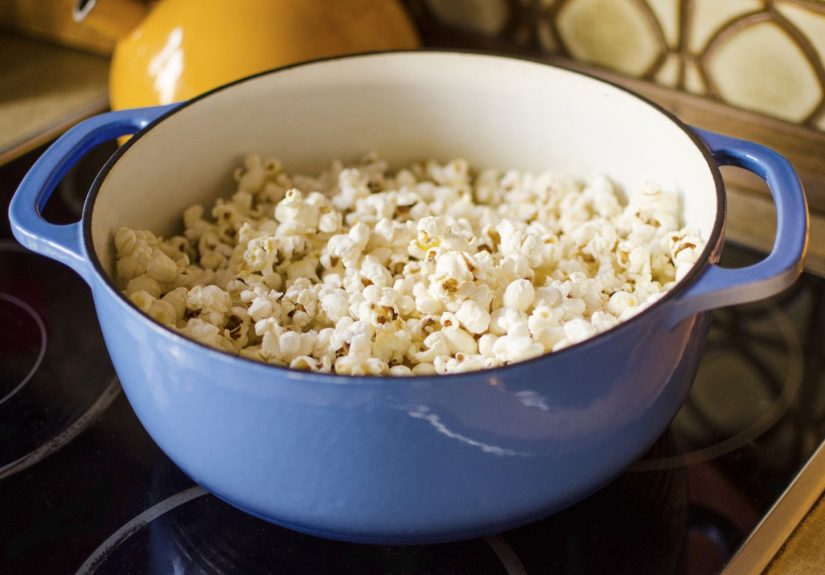
A heavy pot matters because it distributes heat more evenly. Thin pans can create hot spots, and hot spots are where popcorn dreams go to die.
How to Make Popcorn on the Stove With Olive Oil
Step 1: Heat the Pot and Test the Oil
Place the pot over medium heat. Add the olive oil and 2 or 3 popcorn kernels. Cover the pot with the lid.
Wait for the test kernels to pop. This is your signal that the oil is hot enough for the rest of the batch. It is a simple trick, but it keeps you from dumping all the kernels into oil that is not ready yet.
Step 2: Add the Remaining Kernels
Once the test kernels pop, remove the pot from the heat for about 30 seconds. Add the remaining popcorn kernels in an even layer, cover the pot again, and return it to the burner.
This brief pause helps the kernels warm more evenly, which can lead to better popping and fewer unpopped stragglers at the bottom.
Step 3: Shake the Pot as It Pops
As the popcorn begins to pop, gently shake the pot back and forth over the burner every few seconds. You are not trying to choreograph a Broadway number herejust enough movement to keep the kernels from sitting still and scorching.
Soon the popping will intensify. That is normal. That is exciting. That is your cue to keep the lid on and continue shaking occasionally.
Step 4: Vent Steam for Crisp Popcorn
When the popping is in full swing, crack the lid just slightly so steam can escape. Not wide openjust enough to let moisture out. Too much trapped steam can make popcorn chewy instead of crisp.
Step 5: Remove From Heat at the Right Time
Once the popping slows to about 2 seconds between pops, remove the pot from the heat. Do not wait for absolute silence. Silence often arrives one beat after burning.
Step 6: Season While Hot
Transfer the popcorn to a large bowl right away. Sprinkle with salt and toss. If you want more olive-oil flavor, drizzle on 1 to 2 teaspoons of extra-virgin olive oil and toss again. Add any extra seasonings while the popcorn is hot so they stick better.
Full Recipe at a Glance
Yield: About 8 cups
Prep time: 2 minutes
Cook time: 5 to 7 minutes
Total time: About 10 minutes
Tips for Perfect Homemade Popcorn on the Stove
1. Do Not Crowd the Pot
The kernels should sit in a mostly even layer. If the pot is too small or too full, the popcorn can pop unevenly and steam itself into mediocrity.
2. Watch the Heat
If the oil starts smoking, the heat is too high. Reduce it slightly. Popcorn likes confidence, not chaos.
3. Salt at the End
Some cooks add salt early, but seasoning after popping gives you better control and helps prevent overly salty bites. Fine salt tends to cling best.
4. Use Fresh Kernels
Old kernels can dry out and leave you with more unpopped pieces. If your popcorn has been hiding in the pantry since the previous presidential administration, it may be time for a replacement.
5. Finish With Flavor, Not Grease
A small drizzle of extra-virgin olive oil after popping goes a long way. You want a glossy finish, not popcorn that feels like it took a swim.
Easy Flavor Variations
Classic Sea Salt and Olive Oil
Keep it simple with salt and a light finishing drizzle of extra-virgin olive oil. This is the popcorn equivalent of a white T-shirt that fits perfectly.
Parmesan Black Pepper Popcorn
Add grated Parmesan, black pepper, and a tiny pinch of garlic powder. This version feels a little fancy without requiring effort that might ruin the snack mood.
Lemon Herb Popcorn
Toss with lemon zest, dried thyme, and a little extra olive oil. Bright, savory, and excellent for people who like their snacks with personality.
Spicy Olive Oil Popcorn
Add chili flakes, smoked paprika, and a pinch of salt. It is warm, smoky, and suspiciously easy to eat by the handful.
Nutritional Yeast Popcorn
For a cheesy, savory flavor without actual cheese, sprinkle on nutritional yeast. It works especially well with olive oil because the seasoning sticks nicely.
Common Mistakes to Avoid
- Using heat that is too high: This can burn the oil or the kernels before the batch is done.
- Leaving the lid sealed shut the whole time: A little venting helps keep the popcorn crisp.
- Walking away: Popcorn moves fast. It is not the time to answer an email, fold laundry, or suddenly reorganize a spice drawer.
- Adding too much oil after popping: A light hand keeps the texture airy and crisp.
- Waiting too long to season: Hot popcorn grabs flavor better than cooled popcorn.
Is Olive Oil Popcorn a Better Snack Choice?
Popcorn is a whole grain, which already gives it a nice start in the snack department. Making it at home lets you control how much salt and added fat goes into the bowl. Olive oil also brings a more balanced flavor than the heavy butter taste many packaged popcorns lean on.
That does not mean you need to pretend popcorn is kale in disguise. It is still a snack, and that is part of its charm. But homemade olive oil popcorn can absolutely be a smarter, fresher option than heavily flavored microwave varieties, especially when you keep the toppings simple.
How to Store Leftover Popcorn
If you somehow have leftovers, let the popcorn cool completely and store it in an airtight container at room temperature. It is best the day it is made, but it can still be good for a day or two if kept dry.
If it softens, spread it on a baking sheet and warm it in a low oven for a few minutes to crisp it up again. Popcorn has a surprisingly decent comeback story.
Conclusion
This stovetop popcorn with olive oil recipe is proof that the simplest snacks often deliver the biggest payoff. A pot, a lid, a little olive oil, and a handful of kernels can turn into something deeply crunchy, aromatic, and far more satisfying than the store-bought alternatives crowding your pantry.
The beauty of homemade popcorn on the stove is that it feels casual but tastes intentional. You can keep it classic, push it savory, or dress it up for movie night, game night, or a random Tuesday when dinner is still an hour away and your stomach has started negotiating. Once you get the timing down, this becomes one of those back-pocket recipes that saves the day over and over again.
And honestly, there is something comforting about making popcorn the old-fashioned way. It is noisy, fragrant, a little dramatic, and very hard not to love. In other words, it is exactly the kind of recipe worth keeping close.
Experiences Related to Stovetop Popcorn With Olive Oil Recipe
Making stovetop popcorn with olive oil feels different from opening a microwave bag, and not just because you have to participate like an actual human. The whole experience is more hands-on in the best way. You pour the kernels into the pot, hear them click against the metal, and then wait for those first pops like they are the opening act for the main event. It is one of those kitchen moments that turns a simple snack into a mini ritual.
For a lot of people, the biggest surprise is the smell. Olive oil and popcorn together create an aroma that is warm, toasty, and a little savory before you even add a single topping. It fills the kitchen quickly, and suddenly everybody in the house becomes very interested in what you are doing. People who were previously “not hungry” will begin drifting in with suspiciously casual questions like, “What’s that smell?” and “Are you making enough for everyone?”
There is also a satisfying rhythm to the process. You add the test kernels, listen for the signal pop, then commit to the full batch. Once the popcorn takes off, you shake the pot, adjust the lid, and pay attention for just a few minutes. That tiny bit of involvement makes the snack feel more rewarding. You did not press a button and hope for the best. You made something. Very quickly, yes, but stillthere is a little pride in it.
Another real-life perk is how customizable the experience becomes over time. Some people discover they love a simple olive oil and sea salt version and never look back. Others turn it into a weekly experiment: lemon and black pepper one night, Parmesan and herbs the next, maybe chili flakes if they are feeling bold. The recipe becomes less of a strict formula and more of a dependable base that can match your mood.
Stovetop popcorn also has a social quality that microwave popcorn rarely manages. It invites sharing. It is easy to make a big bowl for movie night, family game night, or a last-minute gathering when you need something snackable without much fuss. Because it tastes fresh and a little special, people notice the difference immediately. Even better, it feels homemade without demanding the effort of a layer cake or a simmering pot of anything.
And then there is the texture. When you get the method right, the popcorn is crisp, warm, and light, with just enough olive oil to carry the salt and seasonings. That first bite has real crunch and none of the waxy coating that can happen with packaged versions. It tastes cleaner, fresher, and somehow more like popcorn is supposed to taste.
Over time, this recipe often becomes one of those small household habits that quietly sticks. You buy kernels on purpose. You keep olive oil nearby. You know which pot works best. What starts as a recipe turns into a routine, and routines like that are often the most useful kind of cooking knowledge. They make home feel a little more comfortable, one bowl at a time.