Table of Contents >> Show >> Hide
- Why Field Trips Still Matter
- Start With Clear Learning Objectives
- Prepare Students Before the Trip
- Give Students a Mission, Not Just a Destination
- Use Inquiry-Based Activities
- Design Field Trip Worksheets That Students Will Actually Use
- Train Chaperones Before the Big Day
- Build a Realistic Timeline
- Connect the Field Trip to the Curriculum
- Make Field Trips More Inclusive
- Use Technology Without Letting It Take Over
- Include Hands-On and Interactive Learning
- Plan for Behavior Without Killing the Joy
- Use Post-Trip Reflection to Make Learning Stick
- Evaluate and Improve Every Field Trip
- Field Trip Experiences: Lessons From Real Classrooms
- Conclusion: Better Field Trips Begin Before the Bus Moves
Field trips are the rare school activity that can make students cheer, teachers sweat, parents check their calendars twice, and permission slips mysteriously disappear inside backpacks. Done well, a field trip turns abstract lessons into real-world learning. Done poorly, it becomes a long bus ride with snacks, bathroom emergencies, and one student asking, “Are we still learning?” every seven minutes.
The good news is that field trips do not need to feel chaotic, random, or academically “extra.” With smart planning, clear learning goals, student-centered activities, strong safety routines, and meaningful reflection afterward, educational field trips can become one of the most powerful learning experiences of the school year. Whether the destination is a museum, zoo, science center, historic site, theater, national park, local business, college campus, nature trail, or even a virtual field trip, the best results come from intentional design.
This guide explores practical, classroom-tested strategies to improve field trips so they are more engaging, organized, inclusive, and connected to curriculum. Because yes, students can have fun and learn something. Revolutionary, we know.
Why Field Trips Still Matter
In a world full of screens, digital assignments, and increasingly packed academic calendars, field trips offer something students cannot always get from a textbook: direct experience. A science lesson on ecosystems feels different when students are standing near a wetland. A history unit becomes more vivid when students walk through a preserved site. An art discussion becomes richer when students can look closely at original work instead of a tiny classroom projection.
Field trips support experiential learning, which means students learn by observing, questioning, touching, listening, moving, and connecting ideas to the world around them. They also build background knowledge, vocabulary, curiosity, and social skills. For many students, especially those with limited access to museums, cultural institutions, nature spaces, or career environments, a school field trip may open a door they did not know existed.
Start With Clear Learning Objectives
The first strategy to improve field trips is simple but often skipped: know exactly why you are going. “Because it sounds fun” is not a learning objective, although it is a respectable mood. A strong field trip begins with specific goals tied to curriculum standards, classroom units, or student interests.
Before booking anything, ask: What should students understand, practice, observe, or create because of this experience? A fourth-grade class visiting a nature center may focus on animal adaptations. A high school government class touring a courthouse may examine civic processes. A middle school art class visiting a gallery may analyze how artists use symbolism, color, and perspective.
Clear objectives help teachers choose the right destination, design better activities, communicate expectations to chaperones, and measure whether the trip was successful. They also help students understand that the trip is not a day off from learning. It is learning with better scenery.
Example Learning Objectives
For a science museum visit, students might identify three examples of energy transfer and explain how each one works. For a history museum, students might compare primary sources with textbook descriptions. For a theater performance, students might analyze how costume, sound, and movement contribute to character development. These objectives make the field trip focused without turning it into a clipboard marathon.
Prepare Students Before the Trip
One of the best ways to improve field trips is to treat preparation as part of the experience, not as a boring announcement five minutes before dismissal. Pre-trip lessons help students build background knowledge, understand vocabulary, ask better questions, and behave more confidently once they arrive.
Preparation can include short videos, maps, images of the destination, mini-lessons, guest speakers, reading passages, vocabulary previews, or class discussions. Teachers can also introduce essential questions such as, “How do museums tell stories?” or “What can a park teach us about environmental change?” These questions give students a mental hook to carry with them.
Students should also know the schedule, behavior expectations, lunch plan, restroom rules, group assignments, and what to bring. The more predictable the day feels, the less time teachers spend answering questions like, “Do I need my jacket?” while holding three clipboards and a bag of emergency granola bars.
Give Students a Mission, Not Just a Destination
A field trip becomes more memorable when students have an active role. Instead of saying, “Walk around and look at things,” give students a mission. Missions turn passive visitors into investigators, curators, journalists, scientists, historians, designers, or problem-solvers.
For example, students visiting a museum can become “exhibit curators” who choose three objects that best represent a theme. Students visiting a zoo can become “habitat detectives” who observe how enclosures meet animal needs. Students touring a local business can become “career reporters” who interview workers about skills, tools, and daily responsibilities.
These roles make students more alert and accountable. They also reduce the classic field trip problem of students drifting past exhibits at the speed of light, pausing only to ask where the gift shop is.
Use Inquiry-Based Activities
Inquiry-based learning encourages students to ask questions, gather evidence, and develop explanations. This approach works beautifully on field trips because students are surrounded by real objects, environments, people, and problems.
Instead of giving students a worksheet with only fact-hunting questions, invite them to think deeper. Ask them to notice patterns, compare examples, make predictions, sketch observations, or explain why something matters. A good field trip activity should guide attention without trapping students in paperwork.
Better Questions for Field Trip Learning
Instead of asking, “What year was this building constructed?” ask, “What clues tell us how people used this building?” Instead of “Name three animals you saw,” ask, “How do three animals use different body features to survive?” Instead of “Find the painting with a boat,” ask, “How does the artist make your eye move through the scene?”
These questions support critical thinking, close observation, and discussion. They also make the trip feel less like a scavenger hunt for random facts and more like an authentic learning adventure.
Design Field Trip Worksheets That Students Will Actually Use
Field trip worksheets have a reputation. Sometimes they are helpful. Sometimes they are four pages of tiny boxes that students complete on the bus five minutes before returning to school. To improve field trips, use simple, flexible tools that support attention rather than distract from the experience.
A strong field trip handout might include a map, two essential questions, a place for sketches, a short observation chart, and a reflection prompt. Younger students may benefit from picture-based tasks. Older students can handle research logs, interview notes, comparison charts, or evidence-based responses.
The goal is not to document every second. The goal is to help students slow down, look closely, and connect what they see to what they know.
Train Chaperones Before the Big Day
Chaperones can make or break a field trip. A well-prepared chaperone keeps students safe, engaged, and on schedule. An unprepared chaperone may accidentally lead a group to the cafeteria during the planetarium show. Nobody wins.
Give chaperones a short guide before the trip. Include the schedule, group list, emergency contact information, student expectations, restroom procedures, lunch details, and learning goals. Most importantly, explain that chaperoning is active. Adults should help students ask questions, stay together, participate respectfully, and notice important details.
It also helps to give chaperones sample prompts: “What do you notice?” “Why do you think that happened?” “How does this connect to what you studied?” With a little coaching, chaperones become learning partners, not just walking attendance counters.
Build a Realistic Timeline
Another key strategy to improve field trips is time management. Field trips often collapse not because the learning plan was weak, but because the schedule was too optimistic. Travel takes longer than expected. Restrooms take longer than expected. Lunch takes longer than expected. Getting 60 students to move in the same direction takes approximately the patience of a saint and the coordination of an airport control tower.
Build a timeline backward from the trip date. Include deadlines for reservations, transportation, permission slips, payments, accessibility needs, chaperone confirmations, lunch orders, pre-trip lessons, and reminder notices. On the day itself, add buffer time between activities. A schedule that looks perfect on paper may need room for traffic, weather, late arrivals, or the world’s slowest backpack zipper.
Connect the Field Trip to the Curriculum
Students learn more when the field trip is not treated as a stand-alone event. The experience should fit naturally into a larger unit of study. Before the trip, students learn key concepts. During the trip, they collect evidence and make observations. After the trip, they analyze, create, discuss, write, present, or solve a problem using what they learned.
For example, a field trip to a botanical garden can support a unit on plant life cycles, ecosystems, climate, or food systems. A visit to a local newspaper office can connect to media literacy, writing, interviewing, and civic communication. A tour of a historic neighborhood can support lessons in architecture, migration, economics, and local history.
When field trips are connected to curriculum, administrators, families, and students can see their academic value clearly. The trip becomes instruction, not interruption.
Make Field Trips More Inclusive
A great field trip works for all students, not just the ones who can move quickly, read small signs, afford extra fees, or stay calm in noisy spaces. Inclusion should be part of the planning process from the beginning.
Consider transportation, cost, meals, language access, mobility needs, sensory sensitivities, medical needs, and behavior supports. Ask the destination about accessibility features, quiet spaces, elevators, ramps, captioning, translation options, and adapted materials. Give students clear expectations in advance, and provide visual schedules or social stories when helpful.
Schools should also think carefully about cost. Fundraising, scholarships, grants, community partnerships, and free local destinations can help ensure that every student can participate. A field trip should expand opportunity, not create embarrassment for families.
Use Technology Without Letting It Take Over
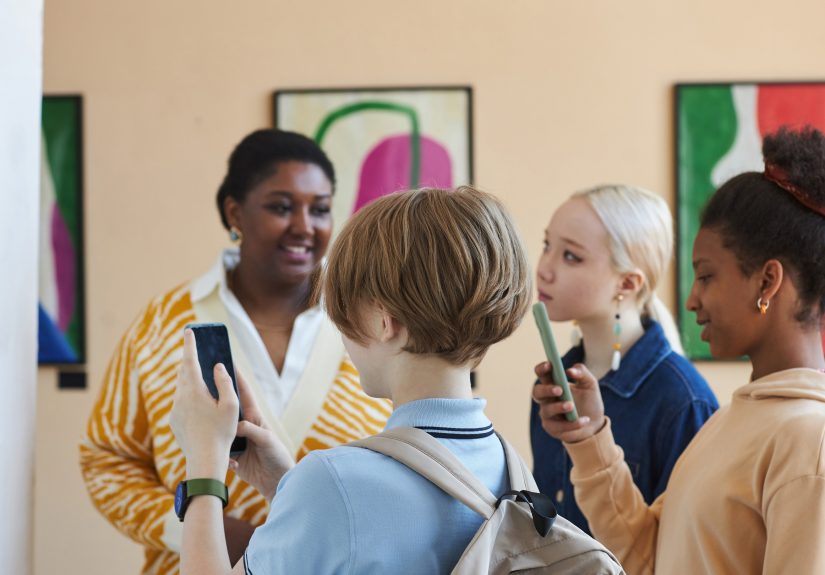
Technology can improve field trips when used wisely. Students can take photos for later analysis, record audio reflections, scan QR codes, use digital maps, or collect data in shared documents. Virtual field trips can also bring museums, parks, cultural sites, and experts into classrooms when travel is not possible.
However, technology should support observation, not replace it. If students spend the whole trip staring at screens, they may miss the actual experience. Set clear expectations: take photos only when allowed, use devices for learning tasks, and put them away during live demonstrations or discussions.
Include Hands-On and Interactive Learning
The best field trips invite students to do something. Hands-on learning might include experiments, object handling, sketching, mapping, measuring, interviewing, building, role-playing, or participating in workshops. Interactive experiences help students remember ideas because they connect learning to movement, emotion, and problem-solving.
When possible, choose destinations that offer guided programs, demonstrations, or workshops. A museum educator, park ranger, scientist, artist, farmer, historian, or community expert can provide insights that go far beyond a self-guided walk. Before the trip, ask the venue if activities can be adapted to your grade level and learning goals. Teachers know their students best, and good institutions appreciate that partnership.
Plan for Behavior Without Killing the Joy
Behavior expectations matter, but field trips should not feel like a military operation with juice boxes. Students need structure and freedom. Explain expectations clearly: stay with your group, respect the space, use indoor voices when needed, ask thoughtful questions, keep hands to yourself unless touching is allowed, and represent the school well.
Use positive framing. Instead of only listing what students cannot do, explain what successful participation looks like. Practice routines before the trip, especially for younger students. Review how to board the bus, line up, respond to signals, ask for help, and move through public spaces.
When students know what to expect, they are more likely to relax and engage. Also, snacks help. This is not peer-reviewed wisdom, but every teacher knows it is true.
Use Post-Trip Reflection to Make Learning Stick
The learning should not end when the bus pulls back into the parking lot. Post-trip reflection helps students process what they saw, heard, felt, and wondered. Without reflection, even a great field trip can become a blur of “that was fun” and “someone dropped their sandwich.”
Reflection can take many forms: class discussion, journals, exit tickets, photo essays, presentations, debates, thank-you letters, concept maps, creative writing, artwork, lab reports, or student-made exhibits. Ask students to connect the trip to the unit’s big ideas. What surprised them? What evidence did they collect? What questions do they still have? How did the experience change their thinking?
Reflection turns the field trip from a memory into meaningful learning.
Evaluate and Improve Every Field Trip
After the trip, take time to evaluate what worked and what needs improvement. Teachers can gather feedback from students, chaperones, staff, and venue partners. Did the activities match the learning objectives? Was the schedule realistic? Were students engaged? Were there accessibility or safety concerns? Did the trip deepen understanding?
Keep notes for next year. Save contact information, timelines, permission forms, bus details, costs, lesson materials, and reflection prompts. Future you will be grateful. Future you may even say, “Wow, past me was surprisingly organized.” A beautiful moment.
Field Trip Experiences: Lessons From Real Classrooms
The most successful field trips often share one thing in common: they feel purposeful without feeling stiff. Imagine a fifth-grade class visiting a science center during a unit on forces and motion. Before the trip, students build simple ramps in class and test how surface texture changes speed. At the museum, they are not just wandering from station to station. Each group has a mission: find one exhibit that shows gravity, one that shows friction, and one that shows energy transfer. Chaperones ask guiding questions, students sketch examples, and the teacher saves the deeper discussion for the next day. Back in class, students design their own mini-exhibits using cardboard, marbles, rubber bands, and a heroic amount of tape. The trip works because it is not isolated. It is part of a learning arc.
Or picture a middle school social studies class visiting a historic neighborhood. Instead of giving students a long list of dates to copy, the teacher asks them to become “history detectives.” Students observe building materials, street names, monuments, business signs, and public spaces. They look for clues about immigration, work, transportation, and community change. Some students notice architectural details. Others notice whose stories are missing from public markers. Afterward, the class creates a digital walking tour that includes both official history and student-researched community stories. The trip improves because students are allowed to question, interpret, and contribute.
A high school biology field trip to a local stream can be equally powerful. Students test water quality, identify macroinvertebrates, measure temperature, and compare human impact at different points along the waterway. The experience is not fancy, but it is authentic. Students see that biology is not just vocabulary in a textbook; it is alive, muddy, and occasionally smells like wet socks. With good preparation and safety routines, even a nearby outdoor location can become a memorable lab.
Virtual field trips can also create meaningful experiences when designed with care. A class might connect with a museum educator through video, examine high-resolution images of artifacts, ask questions in real time, and complete a follow-up project. This approach is especially useful when distance, cost, weather, or accessibility makes travel difficult. The key is to avoid treating a virtual trip like passive screen time. Students still need a purpose, interaction, and reflection.
Some of the best field trip experiences happen when students have ownership. Let them help develop questions, research the destination, plan respectful interview prompts, or choose which exhibit deserves closer attention. Student agency increases motivation because learners feel like participants rather than passengers. When students know their observations will become part of a project, presentation, article, or class display, they pay attention differently.
Teachers also learn from experience. One trip may reveal that the worksheet was too long. Another may show that lunch needs more time, chaperones need clearer maps, or students need a stronger pre-trip vocabulary lesson. Improvement is not about creating a perfect trip; it is about refining the system. Every bus ride, museum hall, nature trail, and reflection discussion provides data. Sometimes the data says, “Next time, bring extra pencils.” Sometimes it says, “Never schedule the gift shop before the educational program.” Both are valuable findings.
Conclusion: Better Field Trips Begin Before the Bus Moves
Improving field trips is not about making them complicated. It is about making them intentional. Strong educational field trips begin with clear learning objectives, thoughtful preparation, active student roles, trained chaperones, inclusive planning, realistic timelines, and meaningful follow-up. When these pieces work together, students do more than visit a place. They investigate it, question it, connect with it, and remember it.
The best field trips blend curiosity with structure. They give students room to explore while keeping learning goals in sight. They invite students to observe closely, ask better questions, and see the real-world value of classroom knowledge. And, yes, they may still involve lost pencils, noisy buses, and someone forgetting their lunch. That is part of the adventure.
With the right strategies, field trips can become more than a break from routine. They can become the moment a lesson finally clicks.
Note: This article was created as a fresh, web-ready synthesis based on real educational field trip practices from reputable U.S. education, museum, science, public media, and public agency resources. External source links were intentionally not included in the article body.