Table of Contents >> Show >> Hide
- Why Strength Training Makes Walking Feel Easier (and Better)
- The Best Strength Exercises for Walking
- 1) Sit-to-Stand (Chair Squat)
- 2) Step-Ups
- 3) Reverse Lunges (or Split Squats)
- 4) Glute Bridges
- 5) Calf Raises
- 6) Toe Raises (Shin Strength)
- 7) Lateral Band Walks
- 8) Single-Leg Stand (with Options)
- 9) Hip Hinge (Good Morning or Romanian Deadlift Pattern)
- 10) Side Plank (Core + Hip Stability)
- 11) Rows (Band or Dumbbell)
- 12) Farmer Carry (Posture + Core Endurance)
- How Often Should You Strength Train if You Walk a Lot?
- Two Walking-Strength Workouts You Can Copy Today
- How to Combine Strength Training With Your Walking Schedule
- Form and Safety Tips (So Your Walking Gets Better, Not Weirder)
- Troubleshooting: If Walking Is Bugging Your Knees, Hips, or Shins
- Real-World Experiences: What Walkers Notice When They Add Strength Training (About )
- Conclusion: Build Strength, Then Enjoy Your Walks Even More
Walking is the world’s most underrated superpower. It’s free, it’s low-impact, it fits in your schedule, and it doesn’t require matching outfits
(unless you want it to). But here’s the twist: as amazing as walking is for your heart, lungs, mood, and overall “I’m doing something good for myself”
energy, it doesn’t automatically make you strong everywhere you need to be strong.
That’s where strength exercises for walking come in. Strength training helps your legs push off with more power, your hips stay steady (especially on hills
and uneven sidewalks), and your core keeps you upright instead of slowly turning your posture into a question mark. In other words: strength work makes
walking feel smoother, faster, safer, and a whole lot more funwhether you’re strolling for stress relief, power-walking for fitness, training for a hike,
or building consistency after a long break.
Why Strength Training Makes Walking Feel Easier (and Better)
Walking looks simple, but your body is doing a lot. Each step is a mini single-leg balance test. Your stance leg has to stabilize your pelvis, your glutes
and hamstrings help drive you forward, your calves act like springs, and your core keeps your torso from wobbling like a shopping cart with one bad wheel.
Over time, weak links show up as fatigue, slower pace, achy knees, shin discomfort, or that “my hips feel tight and cranky” vibe after longer walks.
The “walking strength” muscle groups that matter most
- Glutes (especially glute max): propulsion, hill power, and protecting your knees by controlling thigh alignment.
- Hip stabilizers (especially glute med): keeping the pelvis level with each step and improving stability on uneven ground.
- Quads: shock absorption and control when you step down, go downhill, or descend stairs.
- Hamstrings: stride support and helping you maintain pace without overloading your lower back.
- Calves: push-off power and enduranceespecially for brisk walking.
- Anterior shin (tibialis anterior): controlling foot lift and reducing that “shin splint” feeling for some walkers.
- Core: posture, balance, and efficient arm swing (yes, your core is the behind-the-scenes director of your stride).
- Upper back: keeping your chest open, shoulders relaxed, and breathing easier on longer walks.
The goal isn’t to “bulk up” to become a walking tank. It’s to build functional strength: the kind that helps you walk longer, climb hills
without bargaining with your lungs, and feel stable and confident.
The Best Strength Exercises for Walking
These moves focus on the muscles and movement patterns that transfer directly to walking. You can do them at home with bodyweight, then level up with
dumbbells or resistance bands when you’re ready.
1) Sit-to-Stand (Chair Squat)
Why it helps: Builds quads and glutes for step control, hills, and everyday “getting up like your knees love you” strength.
- Sit on a sturdy chair, feet hip-width, toes forward.
- Lean slightly forward, brace your core, and stand up without using your hands if possible.
- Lower back down slowlycontrol matters more than speed.
Make it harder: Hold a backpack at your chest. Make it easier: Use a higher chair or lightly touch a counter.
2) Step-Ups
Why it helps: A direct upgrade for walking hills and stairs. Great for glutes, quads, and balance.
- Use a sturdy step (bottom stair works).
- Place your whole foot on the step, push through the heel/midfoot, and stand tall.
- Step down with control. Repeat, then switch legs.
Common mistake: Pushing off the back leg too muchlet the stepping leg do the work.
3) Reverse Lunges (or Split Squats)
Why it helps: Strengthens quads and glutes while training single-leg controlwalking’s secret requirement.
- Stand tall, step one foot back.
- Bend both knees, keep front knee roughly over the ankle.
- Push through the front foot to return to standing.
Friendly swap: If balance is tricky, do a split squat while holding a wall or chair.
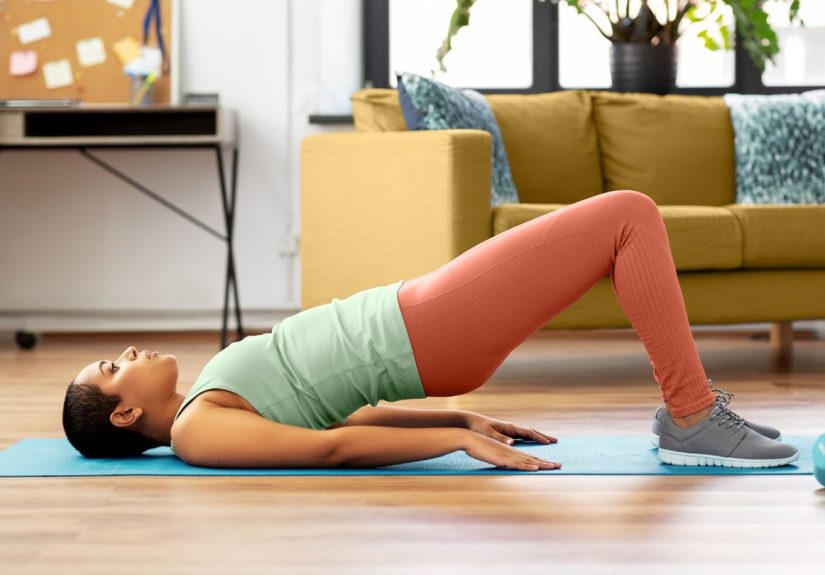
4) Glute Bridges
Why it helps: Builds glute strength for stride power and helps support the hips and lower back.
- Lie on your back, knees bent, feet flat.
- Squeeze your glutes and lift hips until your body forms a straight line from shoulders to knees.
- Pause briefly, then lower slowly.
Make it harder: Single-leg bridge or add a band above knees. Make it easier: Reduce range of motion.
5) Calf Raises
Why it helps: Calves drive push-off and help you maintain a brisk pace without your legs feeling like wet noodles.
- Stand holding a wall lightly.
- Rise onto the balls of your feet.
- Lower slowlydon’t drop like you’re stepping off a curb you didn’t see.
Upgrade: Do single-leg calf raises or use a step for a deeper range.
6) Toe Raises (Shin Strength)
Why it helps: Strengthens the front of the lower leg to support foot control and reduce fatigue for some walkers.
- Stand with your back against a wall, heels a few inches forward.
- Lift toes toward your shins.
- Lower slowly. Repeat.
7) Lateral Band Walks
Why it helps: Targets the outer hips (glute med), which helps keep the pelvis stable step-to-step.
- Place a mini band above knees or at ankles (harder at ankles).
- Soft bend in knees, hips back slightly like a mini squat.
- Step sideways with controlno bouncing or twisting.
8) Single-Leg Stand (with Options)
Why it helps: Walking is basically repeated single-leg stands. Train it on purpose and your body gets calmer on uneven terrain.
- Beginner: Stand on one leg for 20–30 seconds, fingertips near a wall.
- Intermediate: Turn your head side-to-side slowly while balancing.
- Advanced: Add a small reach forward/side with the free foot (a mini “airplane landing”).
9) Hip Hinge (Good Morning or Romanian Deadlift Pattern)
Why it helps: Strengthens hamstrings and glutes, supports posture, and helps you maintain stride efficiency without overusing your back.
- Stand tall, slight bend in knees.
- Push hips back like you’re closing a car door with your butt (yes, that’s a real coaching cue).
- Keep spine long, then squeeze glutes to stand.
Tip: Start with bodyweight. Add dumbbells only after the pattern feels smooth.
10) Side Plank (Core + Hip Stability)
Why it helps: Trains the core and lateral hip support that keeps your trunk steady during longer walks.
- Modified: Side plank from knees.
- Standard: Side plank from feet.
- Level up: Top-leg lift (only if your form stays solid).
11) Rows (Band or Dumbbell)
Why it helps: Improves upper-back strength so you don’t end every walk with shoulders creeping toward your ears.
- With a band or dumbbells, pull elbows back as if you’re trying to tuck them into your back pockets.
- Pause, then return slowly.
12) Farmer Carry (Posture + Core Endurance)
Why it helps: Builds grip, core stability, and upright posturegreat for walkers who want to feel strong and steady.
- Hold two weights (or grocery bags) at your sides.
- Stand tall, ribs stacked over hips.
- Walk slowly for 30–60 seconds without leaning.
How Often Should You Strength Train if You Walk a Lot?
A smart baseline for most people is 2 non-consecutive strength sessions per week, plus your regular walking. That schedule supports muscle
recovery while still building progress. If you’re older or working specifically on stability, sprinkling in extra short balance practice sessions can help.
(Think: 3–5 minutes here and there, not a dramatic 45-minute balance saga.)
The “doable forever” approach
- 2 days/week strength: enough to build and maintain walking-specific strength.
- 3 days/week (optional): if you’re training for hills/hiking or want faster improvements.
- Balance practice: short sessions several times a week can be powerful, especially for confidence and stability.
Two Walking-Strength Workouts You Can Copy Today
Choose one based on your current level. Keep it simple, keep it consistent, and remember: your muscles learn quickly when you show up regularly.
Beginner Routine (2x/week, ~25 minutes)
- Warm-up: 5 minutes easy walking + ankle circles + gentle leg swings
- Sit-to-Stand: 2–3 sets of 8–12
- Step-Ups: 2 sets of 8–10 each leg
- Glute Bridges: 2 sets of 10–15
- Calf Raises: 2 sets of 12–15
- Single-Leg Stand: 2 rounds of 20–30 seconds each side
- Cool-down: easy walk 2 minutes + light hip stretch
Intermediate Routine (2–3x/week, ~35 minutes)
- Warm-up: 5–7 minutes brisk walk + hip hinge practice
- Reverse Lunges or Split Squats: 3 sets of 8–10 each leg
- Step-Ups (add weight if ready): 3 sets of 8 each leg
- Romanian Deadlift Pattern (dumbbells optional): 3 sets of 8–12
- Lateral Band Walks: 2–3 sets of 10–15 steps each direction
- Side Plank: 2 sets of 20–40 seconds each side
- Farmer Carry: 2 rounds of 30–60 seconds
Progress rule: When you can do the top end of the rep range with excellent form, increase difficulty slightlymore reps, slower tempo,
more range of motion, or a small amount of load.
How to Combine Strength Training With Your Walking Schedule
You don’t need to “choose” between walking and strength. They’re best friends. The key is not doing the hardest versions of both on the same day when
your legs are still negotiating their life choices.
Simple weekly example
- Mon: Walk (easy/moderate)
- Tue: Strength workout
- Wed: Walk (brisk intervals or hills)
- Thu: Rest or short easy walk + balance practice
- Fri: Strength workout
- Sat: Longer walk
- Sun: Rest or gentle walk
If you love daily walking, keep itbut make at least two of those walks genuinely easy so your strength training can “stick.”
Form and Safety Tips (So Your Walking Gets Better, Not Weirder)
- Start lighter than your ego requests. Your joints will thank you for being boring at first.
- Pain is a stop sign, not a motivational quote. Muscle effort is okay; sharp pain is not.
- Control the lowering phase. Slow lowers build strength that transfers to downhill walking and step control.
- Use support when needed. A wall, chair, or countertop is not “cheating”it’s smart training.
- If you have medical conditions or prior injuries, consider guidance from a clinician or qualified trainer.
Troubleshooting: If Walking Is Bugging Your Knees, Hips, or Shins
If knees complain on hills or stairs
Focus on glutes and quads: step-ups, sit-to-stand, bridges, and controlled lunges. Keep knees tracking in line with toes (not collapsing inward).
Shorten stride slightly on steep hills and increase cadence instead.
If hips feel tight or unstable
Add lateral hip work (band walks), single-leg balance, and bridges. Many walkers notice hip comfort improves when the outer hips get stronger and the
pelvis stays steadier.
If shins get cranky
Try toe raises, manage walking volume increases gradually, and check footwear wear-and-tear. Strength plus gradual progression usually beats “just push
through it.”
Real-World Experiences: What Walkers Notice When They Add Strength Training (About )
When people first start doing strength exercises for walking, the earliest “wins” are often subtle. It’s not always a dramatic “I am now a human rocket.”
It’s more like: “Huh… that hill didn’t feel as rude today.” Many walkers report that after two to four weeks of consistent training, their legs feel more
reliableespecially on stairs, hills, and longer routes. Step-ups and sit-to-stands tend to be the quickest to translate because the movement is so similar
to real life: stepping up, stepping down, getting up, sitting down. Suddenly, everyday walking feels less like a grind and more like a choice.
Another common experience is improved stability. Walkers who add lateral band walks and single-leg balance practice often notice they feel less wobbly
on uneven sidewalks, gravel paths, or crowded places where you have to stop-and-go. Instead of overcorrecting with the ankle (which can fatigue quickly),
the hips start doing their jobkeeping the pelvis level and the stride cleaner. People also mention feeling more confident when stepping off curbs or
walking downhill because their legs can “brake” better, thanks to stronger quads and better control.
Posture changes show up too, sometimes in a surprisingly practical way: breathing feels easier. If your upper back and core are stronger, you’re less
likely to collapse forward when you get tired. Walkers who add rows and carries often describe feeling “taller” and more open through the chestlike their
body is making room for their lungs to do their thing. And because posture affects stride mechanics, this can also reduce neck and shoulder tension that
sneaks in during longer walks (especially if you’re a “phone-checker” mid-walkno judgment, just facts).
Many walkers also experience better pacing. With stronger calves and glutes, it becomes easier to hold a brisk pace without feeling like your lower legs
are doing all the work. Some people notice their cadence naturally increases (more steps per minute), which can make walking feel smoother and reduce
heavy heel striking. Over time, that can mean less overall fatigue and fewer “I need a bench immediately” moments.
Then there’s the “comfort dividend.” While walking is low-impact, repeating the same motion can irritate weak links. When strength training fills those
gapsglutes supporting knees, hips stabilizing the pelvis, core helping posturewalkers often report fewer minor aches after activity. Not everyone’s
experience is identical, and pain should always be evaluated if it’s persistent, but it’s very common for people to say: “My body feels more supported.”
That’s the quiet magic of strength training: it doesn’t just help you walk farther; it helps you feel better while you do it.
Conclusion: Build Strength, Then Enjoy Your Walks Even More
Walking is an excellent foundation, but strength training is what turns that foundation into a sturdy houseone that doesn’t creak every time you hit a
hill, a staircase, or a long day. Focus on glutes, hips, quads, calves, and core. Keep it consistent with two strength sessions per week, progress
gradually, and prioritize good form. Your future self will thank youprobably somewhere halfway up a hill, while you’re still breathing normally.