Table of Contents >> Show >> Hide
- How to Choose a Small Espresso Machine
- The 8 Best Small Espresso Machines in 2024
- 1. Breville Bambino Plus – Best Overall Small Espresso Machine
- 2. De’Longhi Dedica – Slimmest Semi-Automatic
- 3. De’Longhi Stilosa – Best Budget Small Espresso Machine
- 4. Nespresso Essenza Mini – Smallest Capsule Powerhouse
- 5. Breville Nespresso Pixie – Smallest Footprint Capsule Machine
- 6. Jura ENA 4 – Best Compact Superautomatic
- 7. Wacaco Minipresso – Best Portable Small Espresso Maker
- 8. Gaggia Classic Evo Pro – Best Compact Enthusiast Upgrade
- Small Espresso Machine Comparison at a Glance
- How to Get Café-Quality Drinks from a Small Machine
- Real-World Experiences With Small Espresso Machines (Extra Tips & Stories)
- Conclusion
Tiny kitchen, big caffeine dreams? You’re not alone. Between apartment galley kitchens, dorms, RVs, and already crowded countertops, a full-size espresso machine can feel about as realistic as putting a Ferrari in your living room. The good news: today’s best small espresso machines pack real barista power into seriously compact footprints.
After digging through hands-on testing and expert recommendations from coffee pros and product reviewers across outlets like Serious Eats, Food & Wine, Popular Mechanics, Whole Latte Love, Tom’s Guide, Seattle Coffee Gear, Coffeeness, and more, this guide rounds up eight of the best compact espresso machines for 2024.
Whether you want one-touch capsule convenience, a small but mighty semi-automatic, a space-saving superautomatic, or a throw-in-your-backpack travel brewer, there’s a petite machine here that can earn permanent counter space.
How to Choose a Small Espresso Machine
1. Decide what kind of espresso drinker you are
Before you fall in love with a cute stainless-steel cube, be brutally honest about how you actually drink coffee:
- “Just give me caffeine” people – You want speed, consistency, and zero mess. Capsule machines like the Nespresso Essenza Mini or Pixie are perfect here.
- Latte and cappuccino lovers – You’ll want a powerful steam wand. Compact semi-automatic machines like the Breville Bambino Plus or De’Longhi Dedica give you real milk-frothing control.
- Bean-to-cup convenience fans – Hate tamping and dialing in grind size? A compact superautomatic like the Jura ENA 4 grinds, doses, and pulls the shot for you.
- Travelers and minimalists – If you just want a small espresso maker for road trips, camping, or micro-kitchens, a portable manual brewer like the Wacaco Minipresso keeps things tiny and unplugged.
2. Look at footprint, not just “small” in the name
“Small” is marketing; measurements are reality. Check width, depth, and height:
- Ultra-compact width: Models like the De’Longhi Dedica are under 6 inches wide, so they can tuck between appliances or next to the sink.
- Height vs. cabinets: Some compact machines are tall, which makes refilling top-mounted water tanks annoying under low cabinets.
- Depth and drip tray space: Slim machines can still be quite deep, so make sure they don’t hog your entire counter or block drawers.
3. Don’t ignore the “hidden” gear
Espresso is a system, not just a machine. Many reviewers point out that compact machines like the Breville Bambino Plus or Gaggia Classic-level machines really shine only when paired with a good burr grinder and fresh beans.
- Grinder: If your machine doesn’t have a built-in grinder, budget for a separate burr grinder.
- Water: Hard water trashes boilers and flavor. Consider a simple pitcher filter or in-tank filter if you live in a hard-water area.
- Cleaning: Smaller drip trays and water tanks mean more frequent emptying and rinsinggreat for freshness, less great if you hate chores.
The 8 Best Small Espresso Machines in 2024
1. Breville Bambino Plus – Best Overall Small Espresso Machine
If you want a “real” espresso machine that still fits in a tiny kitchen, the Breville Bambino Plus is the go-to pick in many editorial tests. Food & Wine, Serious Eats, and multiple coffee-specialty sites consistently highlight it as the best compact option, and Whole Latte Love has it on their small-machine short list.
At about 7.7 inches wide and just over a foot deep, it’s genuinely small but still packs serious features: a 54 mm portafilter, precise PID temperature control, Breville’s ThermoJet system that heats in about three seconds, 9-bar extraction, and an automatic steam wand that can texture milk for latte art.
- Best for: Beginners who want café-level espresso and milk drinks without moving to a bigger kitchen.
- Why it stands out: Extremely fast heat-up, compact footprint, and shockingly good milk foam for such a small machine.
- Watch out for: You’ll still need a good grinder, and the drip tray is smallheavy latte drinkers will empty it often.
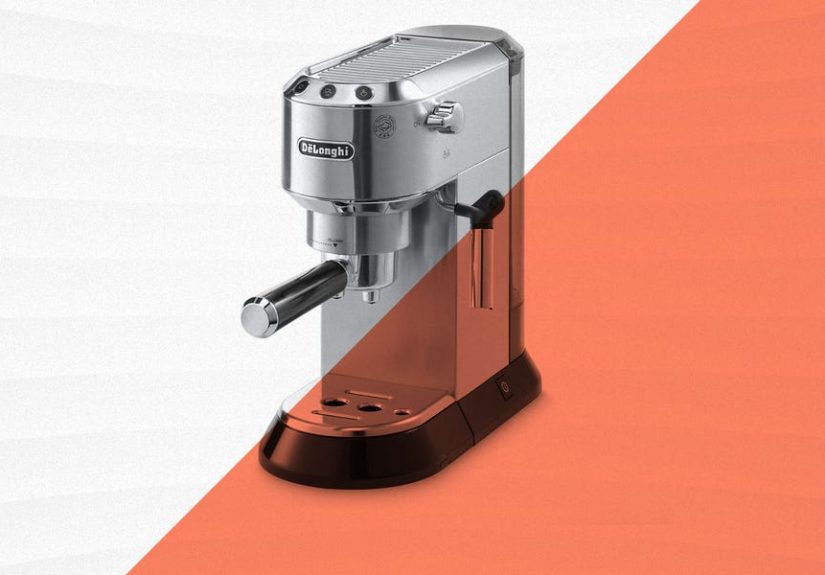
2. De’Longhi Dedica – Slimmest Semi-Automatic
The De’Longhi Dedica is basically the “no space, still espresso” machine. Whole Latte Love notes that it’s under 6 inches wide and only about a foot tall, making it one of the smallest traditional pump espresso machines on the market.
Popular Mechanics and other reviewers call it a strong value pick for small kitchens: it offers single and double shots, a basic steam wand for cappuccinos, and even hot-water functionality for Americanos.
- Best for: Apartment dwellers who want the ritual of tamping and steaming without sacrificing counter space.
- Why it stands out: Super narrow footprint, simple controls, and good enough performance for daily use.
- Watch out for: Pressurized baskets limit advanced shot tweaking, and steaming power is decent but not “microfoam magic.”
3. De’Longhi Stilosa – Best Budget Small Espresso Machine
If your budget is closer to “store-brand beans” than “specialty micro-lot,” the De’Longhi Stilosa is a surprisingly capable small machine that often sells at a fraction of the price of higher-end gear. Popular Mechanics highlights it as one of the best budget small espresso machines, noting its compact design and basic but functional milk wand.
You won’t get fancy temperature control or café-level steaming, but for a compact, starter machine that fits in a tight corner, it pulls solid shots once paired with a decent grinder.
- Best for: Students, first apartments, or casual drinkers who want espresso but not an expensive hobby.
- Why it stands out: Low price, small size, and a decent espresso for the money.
- Watch out for: Lightweight build, modest steam power, and less consistency than premium machines.
4. Nespresso Essenza Mini – Smallest Capsule Powerhouse
When “small” means truly tiny, the Nespresso Essenza Mini is hard to beat. Compact espresso roundups point out that this little box can pump out 19-bar capsule shots in under 30 seconds, with a footprint small enough for even the most crowded countertops.
You won’t be dialing in grind size or changing brew ratios, but you will be pressing one button and getting very consistent espresso-style shots, especially if you pair it with Nespresso’s better OriginalLine capsules.
- Best for: People who value speed, consistency, and convenience over tinkering.
- Why it stands out: Ultra-slim body, fast heat-up, and simple one-touch operation.
- Watch out for: Ongoing pod costs and aluminum capsule waste unless you recycle through Nespresso’s program.
5. Breville Nespresso Pixie – Smallest Footprint Capsule Machine
The Breville Nespresso Pixie hits a sweet spot between tiny footprint and premium feel. Popular Mechanics names it the “smallest footprint” small espresso machine in their lineup, thanks to a compact body but heavyweight metal side panels and a quick-heating 19-bar system.
If you like the idea of a design-forward capsule machine that still disappears at the back of the counter, the Pixie is a stylish option with slightly more heft and durability than the Essenza Mini.
- Best for: Design-conscious capsule users and super-tight kitchens.
- Why it stands out: Very small footprint, sturdy build, and fast, consistent shots.
- Watch out for: As with any pod system, you’re locked into Nespresso capsules and limited shot customization.
6. Jura ENA 4 – Best Compact Superautomatic
Want freshly ground espresso with zero tamping, dosing, or mess? The Jura ENA 4 is a compact superautomatic machine that grinds, tamps, and pulls espresso or “coffee” at the touch of a button. Specialty coffee reviewers highlight its small footprint, quiet Aroma G3 grinder, and simple interface, noting that it’s ideal for people who value convenience above customization.
It is espresso-onlyno built-in milk systemso it’s perfect for straight espresso or for pairing with a separate milk frother if you want lattes without managing a steam wand.
- Best for: Busy households or home offices that want great espresso with minimal effort.
- Why it stands out: Compact superautomatic design, very consistent shots, and an excellent built-in grinder.
- Watch out for: High price relative to features and no integrated milk drinks.
7. Wacaco Minipresso – Best Portable Small Espresso Maker
For travel, van life, camping, or absolutely tiny spaces, the Wacaco Minipresso is a clever handheld brewer that uses manual pumping to generate espresso pressure. Popular Mechanics and coffee blogs call it one of the best “portable” or “travel” espresso options, thanks to its extremely small size and lightweight body.
You add hot water, your grounds (or capsules, depending on the specific Minipresso model), and then use a hand pump to build pressure and pull a small shot into the integrated cup.
- Best for: Travelers, campers, or anyone who literally has no counter space at all.
- Why it stands out: No electricity needed, fits in a backpack or desk drawer, and delivers surprisingly good espresso.
- Watch out for: Completely manual, single-shot at a time, and you still need a way to heat water.
8. Gaggia Classic Evo Pro – Best Compact Enthusiast Upgrade
Once you’ve fallen down the espresso rabbit hole, you may want more control without jumping to a gigantic prosumer machine. Whole Latte Love calls the Gaggia Classic Evo Pro a legendary compact machine, with a width of around 8 inches and a height just over a footstill manageable in a small kitchen while offering commercial-style components.
It’s built like a tank, uses a standard commercial-style portafilter, and runs at a true 9-bar extraction, which espresso geeks tend to prefer. It’s also highly mod-friendly if you want to add a PID or upgrade parts later.
- Best for: Enthusiasts who want to grow their skills without outgrowing their counter.
- Why it stands out: Compact but upgradeable, with shot quality that can rival much larger machines.
- Watch out for: Steeper learning curve than Bambino-level machines and no fancy automation.
Small Espresso Machine Comparison at a Glance
Here’s a quick way to match your kitchen and coffee style to a machine:
- Best overall small espresso machine: Breville Bambino Plus
- Smallest traditional pump machine: De’Longhi Dedica
- Best budget pick: De’Longhi Stilosa
- Smallest capsule machines: Nespresso Essenza Mini, Nespresso Pixie
- Compact bean-to-cup: Jura ENA 4
- Portable travel brewer: Wacaco Minipresso
- Best compact “enthusiast” upgrade: Gaggia Classic Evo Pro
How to Get Café-Quality Drinks from a Small Machine
Dial in your grind and dose
A small espresso machine can only do so much if the coffee going into it is poorly ground. Many expert reviews emphasize that machines like the Bambino Plus and Gaggia Classic only hit their stride when paired with a good burr grinder and fresh beans.
- Use a burr grinder, not a blade grinder.
- Start with about 18 grams in a double shot basket and adjust finer/coarser until you get ~25–30 seconds of extraction.
- For capsule and superautomatic machines, your “grind” step becomes choosing better capsules or adjusting built-in grinder settings.
Respect milk and water as much as the machine
Compact machines often have smaller boilers or thermoblock heaters, so they’re more sensitive to technique:
- Milk frothing: With smaller steam wands, focus on stretching the milk only for a few seconds, then submerge the tip a bit to build a whirlpool. Tiny machines can still produce silky microfoam when used patiently.
- Water quality: Many coffee pros recommend filtered or soft water to protect and improve performance in any espresso machine, and that’s even more crucial when your boiler is small.
Make cleaning part of your ritual
Smaller drip trays, spent-pod containers, and water tanks fill up faster, which is annoyingbut it also forces you to keep things fresher. Quick daily habits go a long way:
- Flush the group head or brew outlet before and after shots.
- Rinse portafilters or empty capsule bins daily.
- Wipe the steam wand immediately after use and purge a burst of steam.
- Descale as often as the manufacturer recommends (more often in hard-water areas).
Real-World Experiences With Small Espresso Machines (Extra Tips & Stories)
Spec sheets are nice, but living with a small espresso machine day after day tells you things that no box label ever will. Here are some practical, experience-based insights that people often discover only after a few months with a compact coffee setup.
First, the location of the machine matters almost as much as the size. Many small machines draw water from a rear tank, which sounds fine until you park it underneath low cabinets. With something like the Bambino Plus or Gaggia Classic, you’ll want to leave a little buffer so you can slide the machine forward to refill the tank without scraping the underside of your cupboards. It’s a small detail that can turn a “perfect” setup into a daily annoyance.
Second, workflow beats raw power. A compact machine might not have the same steam power as a café behemoth, but a smart workflow makes up for it. Let the machine fully heat, purge the steam wand, stretch the milk gently, then focus on timing your shot and milk so they finish together. After a week or two, even a tiny machine starts to feel like an efficient little production line instead of a toy.
Third, expect a bit of personality from each machine. Capsule machines are wonderfully predictable: same capsule, same shot, day after day. Semi-automatic machines, especially compact ones with smaller boilers, can be a little moody. One day you’ll nail a syrupy, tiger-striped shot; the next day, a slightly different grind or tamp produces something lighter. Treat it like learning a musical instrumentyour technique improves, and the machine “rewards” you with better and more consistent results.
Fourth, many people underestimate how much noise matters in a small space. Superautomatic and pump machines like the Jura ENA 4 or Bambino Plus are not exactly silent, but users often report that modern compact grinders and pumps are quieter than older designs. If you live with roommates or have a baby sleeping one wall away, paying attention to noise reports in reviews is surprisingly important.
Fifth, there is the question of ritual vs. convenience. With a truly tiny machine like the Essenza Mini or Pixie, your morning routine becomes: press a button, wait a few seconds, drink coffee. It’s brilliant for hectic mornings and multitasking. With semi-automatic machines, the routine includes grinding, tamping, and frothing milk. Some people find that extra ritual relaxing and rewardinga few focused minutes before diving into emails and notifications. Others realize they prefer an easier, pod-based workflow on weekdays and break out the more involved gear only on weekends.
Finally, small machines can quietly encourage better coffee habits. Because your water tank and bean hopper (if you have one) are smaller, you naturally refill more often. That means fresher water and beans, less stale coffee sitting around, and fewer forgotten cleaning cycles. A compact superautomatic like the ENA 4 or a small semi-automatic with a modest tank practically nags you into keeping it cleanand your taste buds will thank you.
Put simply: a small espresso machine doesn’t mean a small coffee experience. With a bit of attention to placement, workflow, and maintenance, even the tiniest brewer can become the best part of your morning, turning a few square inches of counter space into a full-fledged home café.
Conclusion
You don’t need a giant, café-style rig to pull seriously good shots at home. The best small espresso machines in 2024 prove that you can have fast heat-up times, proper extraction, and real milk texturing in compact footprints that actually fit your life. From capsule machines that live in a corner to slim semi-automatics and compact superautomatics, there’s an option for every budget, skill level, and kitchen layout.
Choose the style that matches your personalityritual-driven semi-automatic, push-button pod, or low-effort bean-to-cupand pair it with fresh beans, a good grinder (if needed), and a little practice. Your reward: café-level espresso without leaving your home, all from a machine that takes up less space than your toaster.