Table of Contents >> Show >> Hide
The U.S. Army loves mobility right now. Fast mobility. Lightweight mobility. Air-droppable, sling-loadable, squeeze-through-the-trees mobility. On paper, that makes perfect sense for an era when commanders worry about drones, long-range fires, and the giant “shoot me first” sign that comes with heavy, noisy, road-bound formations.
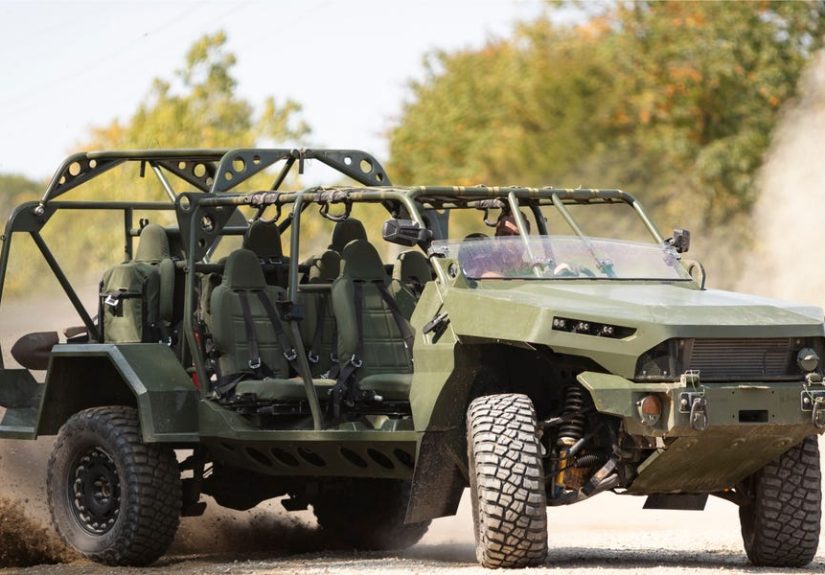
That logic helps explain the Army’s push toward the Infantry Squad Vehicle, or ISV, a light tactical truck based heavily on the Chevrolet Colorado ZR2. It is designed to carry a nine-soldier squad and its gear across rough terrain, get lifted by helicopter, and move infantry farther with less exhaustion. The Army has described it as a “better boot,” which is a memorable phrase and a pretty clever bit of branding. It also reveals the catch: boots are useful, but nobody mistakes them for body armor.
That tradeoff sits at the heart of the debate over the Army’s new unarmored trucks. Supporters say these vehicles make infantry units faster, harder to predict, and less dependent on the bulky logistics habits of the Iraq and Afghanistan era. Critics say the Army may be solving yesterday’s mobility problem by creating tomorrow’s survivability problem. In a battlefield crowded with drones, sensors, ambush threats, loitering munitions, artillery, and small arms, an open, thin-skinned truck can look less like innovation and more like optimism on wheels.
What the Army Wants These Trucks to Do
The Infantry Squad Vehicle was built to give light infantry formations something they have historically lacked: rapid tactical transport without the weight and footprint of a fully armored combat vehicle. The Army’s official pitch is straightforward. The ISV can carry a full squad, handle rough ground, travel by CH-47 Chinook and UH-60 Black Hawk, and get soldiers to the objective less tired and more ready to fight.
That matters because fatigue is not some minor inconvenience. It is a combat variable. Soldiers who arrive smoked after hauling themselves and their gear for miles are slower, less alert, and less effective. A vehicle that cuts that burden can improve tempo, expand operating range, and make airborne or air assault units more flexible.
The Army has also been testing new organizational ideas around these light vehicles, especially in so-called mobile brigade concepts. In that vision, infantry formations move faster, spread out more easily, rely more on small drones and digital command tools, and carry less of the giant mobile office furniture that military headquarters sometimes seem emotionally attached to. The ISV fits that idea nicely. It is lighter, simpler, and easier to move than heavier armored platforms.
Why commanders like them
There are real advantages here. A lighter truck generally means lower weight, fewer transport headaches, and better access to restrictive terrain. That is especially useful in jungles, forests, mountains, and other places where paved roads are less “highway” and more “ambush suggestion.” Army leaders have argued that mobility itself can be a form of protection by helping units avoid predictable routes and move faster through danger zones.
This is not fantasy. In training and testing, soldiers have praised the ISV for being agile, quiet, and capable off-road. Army officials have also highlighted the platform’s ability to support more dispersed, lower-signature operations. In other words, instead of building a rolling bunker, the Army is trying to build a fast-moving, hard-to-pin-down transport system for light infantry.
Why Experts Are Worried
The trouble starts when mobility is treated like a magic shield. It is not. Speed helps. Agility helps. Lower signature helps. But none of those things stop bullets, fragments, mines, or an ambush at close range.
The most serious warning came from the Pentagon’s own testing office. In its operational testing, the ISV was judged effective as a troop carrier in permissive environments and useful for air assault missions. But the same evaluation concluded that it was not operationally effective for combat and deterrence missions against a near-peer threat. That is the bureaucratic way of saying: handy truck, dangerous battlefield.
The reasons were not subtle. Testers found that the vehicle lacked force protection, did not have reliable mounted communications, and made it difficult for soldiers to access weapons quickly on the move. Units equipped with ISVs were unable to avoid enemy detection, ambushes, and engagements during a majority of missions in the test scenario. When the trucks had to slow down in rough or wooded terrain, the whole “we’ll just move too fast to be hit” idea started looking shaky.
Thin skin on a thick-threat battlefield
The biggest concern is obvious: the truck is unarmored. No ballistic armor. No mine-resistant hull. No meaningful built-in protection against the kind of kinetic threats that modern armies actually plan for. The Army’s own testing documents acknowledge that reality. If these vehicles enter non-secure landing zones or move in areas where the enemy can observe and engage them, the people inside are exposed.
That matters even more in an age of persistent surveillance. Drones can spot movement. Loitering munitions can strike quickly. Artillery can punish concentrations. Small teams can ambush routes that were supposed to be “less predictable.” The battlefield is no longer forgiving to anything that relies too heavily on not being noticed.
Critics of the Army’s new truck strategy argue that this creates a dangerous mismatch: light infantry may gain mobility, but only by surrendering the protection that past wars taught troops to value the hard way. Iraq and Afghanistan turned the Humvee armor debate into a national argument for a reason. Soldiers do not forget what thin-skinned vehicles feel like when the shooting starts.
The logistics problem did not disappear
Another issue is sustainment. Pentagon testing found that the ISV struggled to carry the full set of supplies, equipment, and water needed for a 72-hour mission without tradeoffs. That means commanders may have to reshuffle loads, add more vehicles, or accept reduced endurance. None of those options is free.
This is where the concept starts to wobble. A light truck works best when you keep loads light. Real combat, however, loves adding things: ammunition, water, radios, batteries, anti-tank weapons, spare parts, medical gear, camouflage, and all the other objects that make military packing lists read like someone is moving apartments in the rain. The Army is already discussing different ISV variants for command and control, mortars, anti-tank teams, and flatbed logistics. Useful? Absolutely. Also a clue that the base vehicle alone may not solve the larger problem.
What the Army Says in Response
To be fair, Army leaders are not pretending the ISV is a Bradley or a mine-resistant ambush protected vehicle. Their response is more doctrinal than mechanical: the truck is not supposed to fight through contact. It is supposed to help soldiers avoid contact, dismount before contact, or disengage if contact occurs.
That is an important distinction. Army officials have said the ISV has no formal protection requirement because it is intended as a transport platform, not a protected fighting vehicle. Some commanders now describe its survivability not as armor-based but as a blend of fieldcraft, concealment, reconnaissance, and tempo. In jungle-focused formations, for example, leaders argue that troops should use terrain, vegetation, and drones to see threats first and stay out of trouble.
There is logic there. The Army learned in the Iraq era that slapping more armor onto everything eventually creates slower, heavier vehicles that get tied to roads and become easier to target. Heavier protection also brings maintenance, transport, and fuel penalties. As RAND and other defense analysts have noted, there is always a tradeoff between wheeled mobility, cost, fatigue, survivability, and the ability to fight through contact.
Still, saying “just dismount before contact” sounds a lot better in a PowerPoint briefing than in a real ambush. Battlefields rarely send polite calendar invites before the first burst of fire.
The Bigger Strategic Question
The real issue is not whether the ISV is good or bad in isolation. It is whether the Army is using it in the right role and at the right scale.
If the truck is used as a rapid transport system in permissive or semi-permissive terrain, supported by strong reconnaissance, smart route selection, good communications, and quick dismount drills, it may be a very useful tool. It can help airborne, air assault, and light infantry units move faster and arrive fresher. It can reduce dependency on old, heavy habits. It can support more distributed operations.
But if commanders start treating these unarmored trucks like a convenient all-purpose replacement for protected mobility, the risks rise fast. A near-peer battlefield is exactly where assumptions break, signatures get spotted, routes get watched, and light vehicles pay a brutal price for being caught in the wrong place at the wrong time.
That concern also fits a broader pattern in Army modernization. The service is trying to get leaner, more agile, and less burdened by outdated procurement habits. It has talked openly about divesting older vehicle buys and shifting brigade combat teams toward newer concepts. That is a reasonable goal. The danger lies in swinging so hard toward mobility and simplicity that the Army rediscovers, once again, why protection became important in the first place.
Could These Trucks Be Improved?
Possibly, but every fix creates a new compromise. Add armor and the vehicle gets heavier, slower, and harder to airlift. Add more communications gear and power systems and you eat into space and payload. Add more cargo solutions and the “simple light truck” becomes a more specialized, more expensive platform. This is basically military design in one sentence: every answer is followed by three arguments and a new invoice.
The Army appears to understand this, which is why it has explored variants rather than a single magic configuration. Command-and-control versions, anti-tank layouts, mortar carriers, and flatbed cargo models all suggest the service knows different missions need different compromises. That is smart. But it also reinforces the core warning from critics: the base vehicle is not a universal solution, and it should never be mistaken for protected transport in a hostile engagement zone.
Experiences From Testing, Training, and Recent Army Practice
The most useful way to judge the Army’s new unarmored trucks is to look at how they have actually performed in testing and training. The pattern is remarkably consistent. Soldiers tend to like the vehicle when the mission emphasizes movement, access, and speed. Concerns grow when the mission edges closer to direct enemy contact.
At Yuma Proving Ground, the vehicle was put through desert testing to verify safety, cooling performance, slope mobility, and durability. Army officials emphasized that troops who ride to the mission rather than walk to it arrive less fatigued and more prepared. That is a genuine advantage, and no serious critic denies it. In light infantry operations, conserving soldier energy can translate into better reaction time, sharper decisions, and more combat power once the squad finally dismounts.
In air assault and airborne settings, the truck’s mobility story gets even stronger. The ISV can be sling-loaded under helicopters, packed inside larger aircraft, and rapidly pushed into austere locations. That makes it attractive for formations like the 82nd Airborne and the 101st Airborne, where getting troops and gear off a landing zone quickly can matter almost as much as the fight that follows. Army reporting from Joint Readiness Training Center rotations has shown the vehicle supporting large-scale, long-range air assault concepts, where speed of movement after insertion is a major selling point.
But the Pentagon’s operational testing also exposed the ugly side of the equation. Soldiers had trouble with communications on the move. Weapons were not always easy to grab quickly. Supply loads for 72-hour operations strained the platform. And once enemy action entered the picture, the open, unarmored design became a liability rather than a virtue. In those scenarios, units could not reliably avoid detection or ambush, and the vehicle’s lack of protection increased risk to troops.
Recent Army experimentation in mobile brigades has tried to answer that problem with tactics instead of armor. Commanders have talked about using drones, reconnaissance, jungle concealment, dispersed movement, and rapid dismount drills to keep soldiers from ever taking fire in the truck. That may work in some environments, especially where terrain helps hide movement. But it also assumes reconnaissance is timely, communications stay reliable, and the enemy does not get a vote. History suggests the enemy usually insists on voting.
There is also a practical maintenance lesson emerging from the Army’s own logistics discussions. One reason leaders like the ISV is that it uses many commercial components and is easier to sustain than heavier protected vehicles. That matters in future wars where contractor support may be limited and fixed bases may be too vulnerable. Yet easy maintenance does not erase battlefield exposure. A truck that is simpler to repair is still a truck full of exposed troops if caught in the open.
In short, lived experience so far suggests the ISV is highly useful as a mobility tool and much less convincing as a survivability answer. It shines when moving light infantry quickly across difficult ground. It looks far less reassuring when planners assume speed can substitute for protection. That is why experts remain uneasy. The vehicle may be excellent at getting soldiers near the fight. The unresolved question is whether it is too easy for it to get them into danger first.
Conclusion
The Army’s new unarmored trucks are not a ridiculous idea. They solve real problems. They can move light infantry faster, reduce fatigue, improve air assault flexibility, and support more mobile, lower-signature operations. In the right role, that is valuable.
But experts are right to worry when these trucks are discussed as if mobility alone can protect soldiers on a modern battlefield. The Army’s own testing shows the limits clearly. In permissive environments, the ISV works. In tougher combat conditions against a capable enemy, the risks rise sharply. That does not make the vehicle useless. It makes its mission boundaries extremely important.
The best argument against overconfidence is simple: light trucks are great at many things, but they are still light trucks. If the Army remembers that, the ISV can be a smart addition to the force. If it forgets, troops may end up paying for that memory refresh the hard way.