Table of Contents >> Show >> Hide
- What is a Colorimeter and How Does It Work?
- Why Use a Colorimeter for Paint Matching?
- Advantages of Using a Colorimeter for Paint Matching
- How to Use a Colorimeter for Paint Matching
- Real-World Examples of Colorimeter Use
- Limitations of Colorimeters
- Conclusion
- Experiences with Colorimeters in Paint Matching
Have you ever found yourself standing in front of a wall, gazing at a paint swatch, wondering if the color is just right for your space? We’ve all been there, questioning whether the shade we chose will really look as good on the walls as it does on the tiny sample. Enter the colorimetera tool that has revolutionized the way we match paint colors, ensuring that you get the exact hue you’re looking for every time.
What is a Colorimeter and How Does It Work?
A colorimeter is a sophisticated yet easy-to-use device that scans a sample of paint and provides an exact color match. Unlike traditional methods where you rely on your eye to choose a color or match swatches, the colorimeter uses scientific principles to measure light absorption and reflection to pinpoint a color. This technology analyzes the light wavelengths reflected by the paint surface, creating a precise digital reading of the color.
The result? A near-perfect match with minimal guesswork, which can be particularly valuable for home renovations, DIY projects, or even commercial applications where accuracy is crucial. The colorimeter works by comparing the sample to an extensive database of paint colors and delivering a reading that matches with a particular shade in that database.
Why Use a Colorimeter for Paint Matching?
Paint matching has always been an integral part of home improvement and interior design. However, achieving a perfect color match can be tricky. The issue lies in the way light interacts with different surfaces, the type of finish you use, and even the lighting conditions in the room where the paint is applied. Traditional paint matching methods might leave you with colors that seem close but aren’t quite right, leading to frustration.
With a colorimeter, you eliminate much of the guesswork. Whether you’re trying to replicate a color from a piece of furniture, match an existing wall color, or find a complementary shade for a room, the colorimeter can ensure consistency. By providing a numeric value for the color, it allows you to access thousands of exact color options, ensuring that you get the precise shade you envision for your space.
Advantages of Using a Colorimeter for Paint Matching
1. Precision and Accuracy
One of the greatest advantages of a colorimeter is its ability to provide precise, consistent results. The device’s sensitivity to light and color ensures that the reading it produces is far more accurate than the human eye. A colorimeter measures the color in a three-dimensional space, considering not only hue but also saturation and brightness, allowing it to provide a precise color match even under varied lighting conditions.
2. Time-Saving
Traditionally, matching paint colors required you to apply multiple coats of different shades to determine the best one. This can be a time-consuming and sometimes frustrating process. With a colorimeter, you can skip this lengthy trial-and-error phase and immediately know which color will match. This is particularly helpful for professionals working under time constraints or anyone who wants to streamline their home renovation process.
3. Avoids Common Mistakes
Many common mistakes when painting arise from subtle variations in color. Factors like lighting, wall texture, and surrounding decor can all affect how a color appears once applied. The colorimeter accounts for these variations by considering factors beyond just the paint color itself, helping to reduce the likelihood of mismatched or off-putting results.
4. Great for Custom Paint Jobs
Sometimes, you may want to create a completely unique colorperhaps a custom shade that perfectly complements a piece of art, furniture, or the overall theme of your room. With a colorimeter, it’s easy to scan an existing color and match it to a new, custom-made formula. Whether it’s a unique blend of hues or a very specific tone, the colorimeter can help ensure that your custom color is just what you want.
How to Use a Colorimeter for Paint Matching
Using a colorimeter is fairly simple, even for those who may not consider themselves tech-savvy. Here’s a quick guide on how to use one:
- Prepare Your Paint Sample: Make sure that the surface you are scanning is clean and dry. This will ensure that the color reading is not affected by dirt, dust, or moisture.
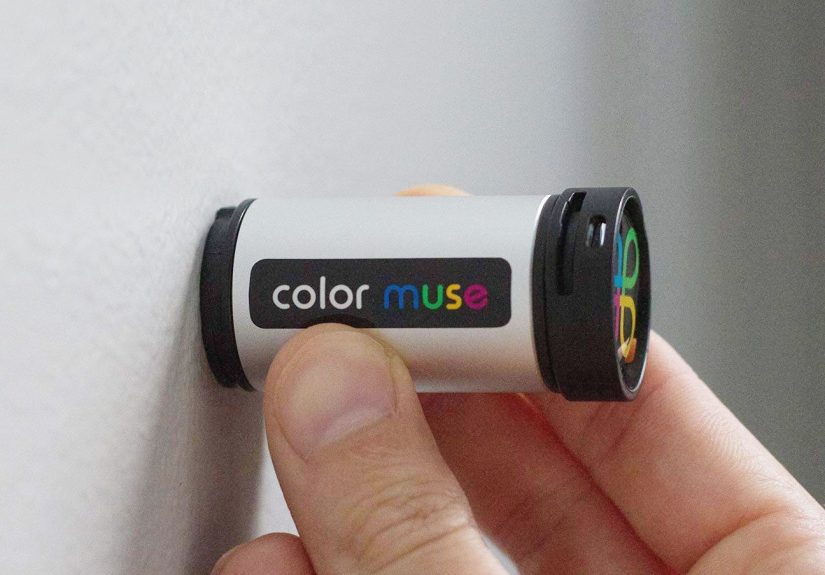
- Scan the Sample: Place the colorimeter directly on the paint sample and activate the device. The colorimeter will emit light and measure the reflected light that bounces back from the paint surface.
- Review the Results: After scanning, the colorimeter will provide a color code, which can be cross-referenced with a database to find an exact match or suggest a close alternative.
- Apply the Paint: Once you’ve found your perfect match, you can purchase the exact color or get the paint mixed in the desired shade.
Real-World Examples of Colorimeter Use
Colorimeters are used widely in industries such as interior design, furniture manufacturing, and even automotive paint shops. For example, a designer working on a restaurant renovation might use a colorimeter to match the exact color of the restaurant’s signature logo. Similarly, automotive shops use colorimeters to ensure that they can perfectly replicate a car’s original paint job, whether for touch-ups or full repaints.
Even in smaller DIY projects, colorimeters are valuable tools. For instance, if you have an old piece of furniture that you want to repaint, you can easily scan the existing color and get a match. The colorimeter can ensure the new paint blends seamlessly with the existing finish, eliminating the worry of mismatched colors.
Limitations of Colorimeters
While the colorimeter is an incredible tool, it does have some limitations. For instance, it might not be as effective on very textured surfaces or surfaces that have a lot of irregularities. The accuracy of the color match can also be influenced by the ambient lighting in the room, especially if the room has artificial lighting that affects how colors are perceived.
Additionally, while the colorimeter can provide a color match, it’s important to remember that the type of finish (matte, satin, gloss, etc.) can also influence how the final color looks once applied. Always test the color on a small, inconspicuous area before committing to painting the entire wall or surface.
Conclusion
In conclusion, the colorimeter is a game-changing tool that can save you time, money, and frustration when it comes to paint matching. By providing an exact color match with unparalleled accuracy, the colorimeter takes the guesswork out of selecting the right shade for your home or project. Whether you’re a DIY enthusiast or a professional decorator, the colorimeter will ensure that your colors are always on point.
Experiences with Colorimeters in Paint Matching
Having used colorimeters on various projects, I can attest to the value these devices bring to the painting process. One of the most significant challenges in home improvement is achieving the perfect color matchespecially if you’re attempting to match a color that’s already on a wall or a piece of furniture. I recently had the task of repainting a wall that had a particular shade of beige that I couldn’t seem to replicate, despite numerous attempts with different paint samples.
After using a colorimeter, the difference was night and day. The device provided an exact match, saving me the hassle of applying multiple coats of paint or making returns to the hardware store. I could scan a small section of the wall, and within moments, the colorimeter gave me a precise code that I could take to the store to have mixed. The process was quick, easy, and most importantly, stress-free.
Another instance was when I worked with a client who wanted to replicate a custom shade used in a painting for their living room walls. Without a colorimeter, this would have been an arduous task, but the device made the job straightforward. It provided a perfect match, and the end result was a seamless integration of the artwork into the room’s overall aesthetic.
Ultimately, the colorimeter has proven to be an invaluable tool that saves both time and effort while ensuring accuracy. Whether you’re repainting a room, matching a vintage car’s paint, or working on a custom project, this device simplifies the process and guarantees a perfect match every time.