Table of Contents >> Show >> Hide
- What “The Eleven Percent” Really Means
- Meet Samira Kraziem
- From Front Desk to Field Leadership
- The Real Work of a Construction Project Manager
- Why Her Story Lands So Hard in a Male-Dominated Industry
- Technology, Mentorship, and the Modern Jobsite
- Suffolk, Rebuild the Ratio, and the Business Case for Change
- What Aspiring Project Managers Can Learn from Samira Kraziem
- Additional Perspective: The Experiences Behind a Career Like This
- Conclusion
Construction has a branding problem. To a lot of people, it still looks like a world made of steel-toe boots, sunburn, spreadsheets, and men named Mike yelling across a slab. But the industry is changing, even if the pace sometimes feels like wet concrete curing in January. Women now make up a little more than one-tenth of the U.S. construction workforce, and that small slice of the pie is exactly what gives this story its title: The Eleven Percent.
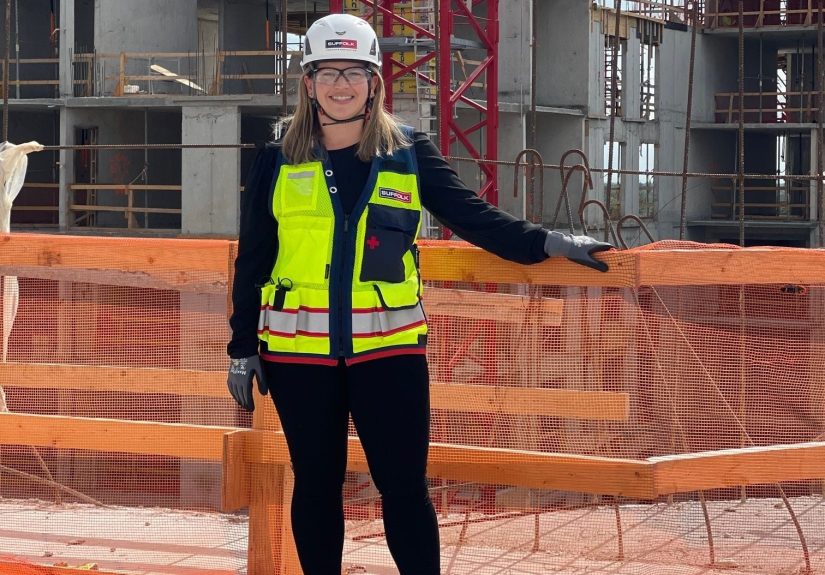
Inside that eleven percent are professionals reshaping the industry from the trailer to the jobsite to the boardroom. One of them is Samira Kraziem, a construction leader whose career path did not begin with a childhood toolbox or a lifelong plan to manage complex builds. It began, instead, with a detour. And like many of the best careers, it started by accident, then turned into purpose.
Kraziem’s story stands out because it feels real. It is not polished into one of those too-perfect business biographies where someone is born with a hard hat and a five-year strategic vision. She studied psychology, headed toward a graduate path in speech pathology, took a receptionist job for a general contractor, and discovered that construction was the field that actually lit her up. That kind of pivot matters because it shows aspiring professionals something refreshing: you do not need to arrive through a single door to build a serious career in construction management.
What “The Eleven Percent” Really Means
The title is more than a catchy phrase. It points to a stubborn reality. Women remain underrepresented in construction, even as the industry keeps talking about innovation, talent shortages, and the future of work. That gap matters because construction is not a niche corner of the economy. It is one of the sectors that physically shapes everyday life, from schools and hospitals to apartments, airports, and entertainment districts.
So when women are missing from construction, they are missing from decisions about how communities are built, how teams are managed, and how new technology is used in the field. Representation is not just a fairness issue. It is a business issue, a leadership issue, and a workforce issue. Companies need more skilled people. Projects are getting more complicated. Deadlines are not getting any gentler. In that environment, overlooking half the population is not strategy. It is self-sabotage wearing a reflective vest.
That is why Samira Kraziem’s career resonates beyond her own résumé. Her rise is both personal and symbolic. It shows what happens when talent finds an opening and then refuses to stay small.
Meet Samira Kraziem
Born and raised in Miami, Samira Kraziem earned a bachelor’s degree in psychology from Florida International University. On paper, her early academic path pointed in a different direction. She was studying toward a master’s degree in speech pathology when a receptionist job at a general contractor changed everything. She discovered that construction was not just interesting from a distance. It was the kind of work she wanted to be inside.
That shift says a lot about the industry’s hidden appeal. Construction management pulls together problem-solving, communication, logistics, budgeting, leadership, and adaptability. For people who like variety and visible results, it can be addictive in the best way. Kraziem has described the business as exciting because every day brings new challenges and a sense of constant change. That idea tracks with the job itself. A construction project manager is not sitting in one lane all day. The role stretches across planning, coordination, budgets, schedules, subcontractors, safety, technical communication, and daily troubleshooting.
Kraziem joined Suffolk in 2015 in an administrative role on a mixed-use project in Miami. From there, she kept moving. Step by step, she progressed through the business and eventually became a senior project manager in Tampa. That career arc matters because it reflects something often overlooked in construction: leadership is frequently built in the trenches. You learn the language, then the process, then the pressure, then the people. Over time, you stop being the person who is learning the system and become the person the system relies on.
From Front Desk to Field Leadership
There is a reason Kraziem’s story has been featured in interviews and local reporting. It breaks the tired myth that construction careers only belong to people who start with technical expertise. In reality, many outstanding leaders enter the field from adjacent backgrounds, then grow through exposure, mentorship, curiosity, and relentless repetition.
Family Handyman’s profile of Kraziem framed her rise as a journey from having virtually no technical construction knowledge to helping lead large teams on major projects. That detail matters because it turns her career into something more useful than inspiration. It becomes evidence. She did not wait to be “perfectly qualified” in the abstract. She got in, learned, adapted, and kept climbing.
That climb also reveals what good construction management really demands. Yes, you need operational knowledge. Yes, you need to understand sequencing, trade coordination, schedules, and budgets. But you also need people skills that do not always get enough credit. You have to communicate clearly when stress is high. You have to organize moving parts without losing the big picture. You have to read a room, handle conflict, and keep teams aligned when conditions change. A psychology background, frankly, is not a strange preparation at all. On some jobsites, it may feel like an advanced survival tool.
The Real Work of a Construction Project Manager
It is easy to romanticize the title and miss the grind behind it. Construction managers plan, coordinate, budget, and supervise projects from start to finish. That means building schedules, reviewing cost estimates, selecting and coordinating subcontractors, interpreting technical information, monitoring progress, and solving problems when delays or surprises hit. And surprises do hit. Regularly. Construction is one long conversation between ambition and reality.
That is part of what makes Kraziem’s role compelling. She works in a profession where the work is visible, measurable, and stubbornly unforgiving. You cannot bluff a timeline. You cannot sweet-talk concrete into curing faster. And when a project has dozens of stakeholders and hundreds of moving pieces, leadership becomes a daily performance, not a line on a LinkedIn page.
The career outlook helps explain why stories like hers matter right now. Construction management is projected to grow faster than the average for all occupations, with tens of thousands of openings expected each year. Median pay is strong, and the work touches every major market, from residential and hospitality to infrastructure, health care, and commercial development. In plain English: this is not a side alley career. It is a major lane with real opportunity.
Why Her Story Lands So Hard in a Male-Dominated Industry
Kraziem’s success is impressive on its own. It becomes even more meaningful when viewed against the broader culture of construction. Women are still significantly underrepresented, especially in field and trade roles. Research from organizations focused on construction workforce development continues to show the same themes: women often face stereotypes, inconsistent access to advancement, a shortage of mentors, and workplaces that still have not fully caught up to the inclusive language many companies like to use in brochures.
That gap between branding and reality is one reason stories like this matter. When women see someone who started in an entry-level role, learned the business, and moved into senior leadership, the industry becomes more legible. It starts to look less like a closed club and more like a difficult but possible path.
Visibility matters. So does proof. Samira Kraziem is not being highlighted as a mascot for diversity theater. She is being noticed because she represents a kind of leadership the industry genuinely needs: practical, adaptive, team-driven, and fluent in both field realities and modern project demands.
Technology, Mentorship, and the Modern Jobsite
One of the most interesting details in Kraziem’s career story is her connection to mentorship across generations. Earlier in her Suffolk career, local coverage highlighted a two-way mentoring dynamic between Kraziem and veteran superintendent Jeff Riley. He taught her field lessons that do not always show up neatly in manuals, including the details behind concrete pours and site operations. She, in turn, helped bring technology into the workflow, making digital tools more useful on the jobsite.
That exchange captures something bigger about modern construction. The industry no longer belongs to one style of expertise. It belongs to teams that can combine experience with digital fluency, old-school judgment with new-school tools. The best project managers are not just schedule wranglers. They are translators between generations, disciplines, and systems.
Mentorship is also a recurring theme in research about retaining women in construction. Organizations across the sector have found that women are more likely to stay and advance when employers create visible growth paths, build supportive networks, invest in safety and proper equipment, and treat inclusion as an operational issue instead of a public-relations accessory. In that context, Kraziem’s journey is not just a feel-good profile. It is a case study in what happens when opportunity meets support and performance meets trust.
Suffolk, Rebuild the Ratio, and the Business Case for Change
Kraziem’s employer, Suffolk, has publicly emphasized efforts to recruit and advance more women in construction through initiatives such as Rebuild the Ratio. The company has discussed goals around increasing women’s representation and intentionally building teams with stronger female participation. That matters because industry change rarely happens through motivational posters alone. It happens when firms decide that better representation is tied to better outcomes, better recruiting, and better leadership depth.
This is where the phrase The Eleven Percent stops sounding like a statistic and starts sounding like a challenge. If the industry knows it needs talent, knows it needs retention, and knows its projects benefit from diverse thinking, then the only logical move is to widen the pipeline and improve the culture. Samira Kraziem’s career shows the upside of doing exactly that.
And let’s be honest: construction firms do not have the luxury of pretending the labor question will solve itself. Workforce pressure is real. Experienced workers retire. Projects remain complex. Apprenticeship and management pipelines need fresh energy. Women entering and staying in construction is not a side conversation anymore. It is part of the labor strategy.
What Aspiring Project Managers Can Learn from Samira Kraziem
1. Your first role does not have to define your ceiling
Kraziem did not enter construction through a glamorous title. She got in where she could, learned fast, and used that entry point as a launchpad. That is a useful lesson in an age when many people think the first line of the résumé predicts the whole story.
2. Curiosity is a career accelerant
Construction rewards people who ask questions, absorb field knowledge, and stay open to learning. Kraziem’s path makes that clear. She did not just change industries. She committed to understanding it.
3. Communication is not a soft skill here; it is core infrastructure
Project managers spend their days aligning owners, architects, engineers, superintendents, trades, and internal teams. Clear communication keeps mistakes from becoming disasters and tension from becoming chaos.
4. Leadership is built in motion
You do not become a strong construction leader by memorizing abstract concepts alone. You become one by showing up, solving problems, building trust, and learning how to stay steady when the project tries to throw a wrench, a crane, and three revised drawings at you before lunch.
Additional Perspective: The Experiences Behind a Career Like This
A title like “senior project manager” can sound polished and tidy, but careers like Samira Kraziem’s are made in messy, demanding, highly human moments. They are made in the 6 a.m. coordination meetings when coffee is doing half the leadership. They are made when a subcontractor misses a milestone, when weather shifts the sequence, when a budget line tightens, when an owner wants a revision that arrives after the team thought the issue was settled. They are made in the constant movement between field urgency and office precision.
That is one reason her story feels especially useful for readers who are curious about construction management. This profession is not just about buildings. It is about decisions under pressure. On one side, you have drawings, schedules, contracts, and software platforms. On the other side, you have personalities, trade coordination, labor realities, and the daily unpredictability of physical work. A project manager lives in the middle of those worlds and tries to keep all of them talking to each other.
Experiences like Kraziem’s also reveal how much confidence in construction is earned rather than granted. Someone may enter the industry from outside the traditional path, but credibility grows through repetition: showing up prepared, asking smart questions, understanding sequencing, catching problems early, and proving that you can handle both technical details and people dynamics. Over time, the room changes. At first you are the newcomer. Then you are the person others check with before making a move. That transition does not happen through slogans. It happens through consistency.
There is also the emotional side of the job, which rarely gets enough airtime. Construction managers carry pressure from every direction. Owners want results. Trade partners need decisions. Internal teams need updates. Schedules slip. Costs move. Site conditions change. The strongest leaders are often the ones who can absorb noise without spreading panic. They know how to stay direct without becoming rigid and how to stay calm without becoming passive. That emotional steadiness is part of what separates capable managers from people who only look good in org charts.
For women, those experiences can come with an extra layer. In many environments, being one of the few women in the room still means being more visible, more scrutinized, and sometimes underestimated before the work even starts. That is why representation matters so much. When professionals like Samira Kraziem rise through the ranks, they do more than manage projects. They widen the mental picture of who belongs on a jobsite, who can lead a team, and who gets to shape the built environment.
And that may be the most important takeaway of all. Careers like hers do not just inspire because they are unusual. They matter because they should become less unusual over time. The real win is not one exceptional woman succeeding in a difficult industry. The real win is an industry evolving enough that her path becomes normal, visible, and repeatable for the women coming next.
Conclusion
Samira Kraziem’s career is compelling because it captures where construction is now and where it still needs to go. She did not follow a straight line into the industry. She found the work, committed to learning it, and rose into leadership in a field that still does not make space easily. That is exactly why her story matters.
The Eleven Percent is not just about underrepresentation. It is about momentum. It is about what happens when women enter construction, stay in construction, and lead in construction. Samira Kraziem represents that momentum in a concrete, professional, no-nonsense way. Her story reminds us that construction management is not only a career with real demand and real pay. It is also a career where determination, adaptability, communication, and curiosity can build something much bigger than a résumé.
And maybe that is the best part. Buildings rise one layer at a time. So do careers. Samira Kraziem’s rise shows what is possible when someone steps onto the site, learns the work, and keeps going until the title catches up with the talent.