Table of Contents >> Show >> Hide
- The Hope Diamond: A Quick Reality Check (Yes, It’s That Famous)
- Diamonds Don’t Grow on the Seafloor… So Where Do They Form?
- The Chemistry of Blue: Boron, the Ocean’s Favorite Stowaway
- The Deep-Earth Conveyor Belt: How Ocean Plates Become Jewelry
- What Scientists Actually Know About the Hope Diamond (Not the “Curse,” the Lab Stuff)
- So… Did the Hope Diamond Form at the Bottom of the Ocean?
- Why This Ocean-to-Mantle Story Matters (Even If You’re Not Buying a Diamond)
- FAQ: The Questions People Ask Right After “Can I Touch It?”
- Conclusion: The Ocean Didn’t Make the Diamond… But It Might’ve Supplied the “Blue”
- Experiences & Adventures: How to Feel the “Ocean-Bottom Hope Diamond” Story in Real Life (Without a Submersible)
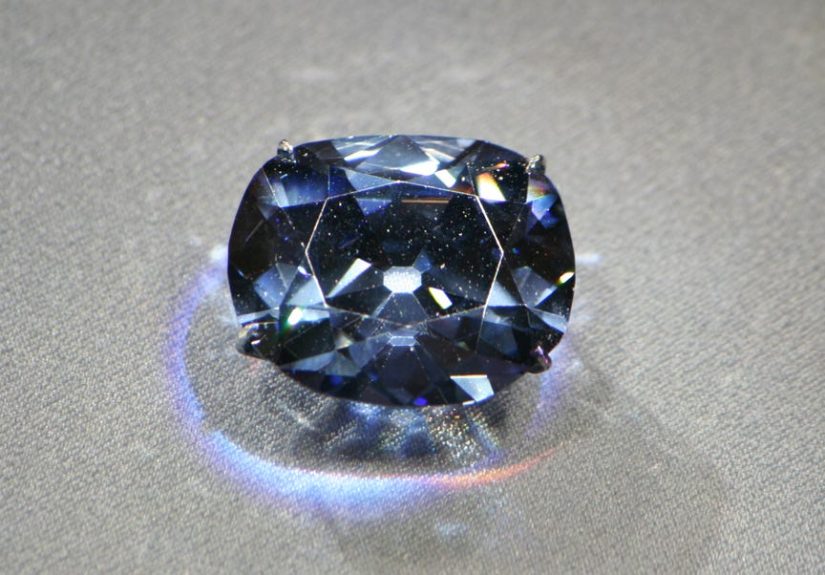
The Hope Diamond is the kind of celebrity that doesn’t need a publicist. It’s 45.52 carats of deep blue attitude,
it lives in Washington, D.C., and it has a party trick: hit it with UV light and it can glow red afterward like a tiny,
extremely expensive campfire story.
But here’s the twist: the title of this article sounds like the Hope Diamond was forged on the seafloor, somewhere between
a hydrothermal vent and a grumpy octopus. Is that actually true? Not in the “diamond was chilling next to coral reefs” way.
Yet… the ocean may still deserve credit. Because the best modern explanation for why some diamonds are blue points back to
ocean chemistryspecifically, seawater delivering a stowaway element (boron) into Earth’s deep interior through subduction.
So if you came for a myth, congratulations: you’re getting science that’s even weirder. Let’s take the scenic route from
the ocean floor to the lower mantle to a museum display casewithout dropping your phone into a trench.
The Hope Diamond: A Quick Reality Check (Yes, It’s That Famous)
A few baseline facts keep us honest. The Hope Diamond is classified as a Type IIb diamond, a rare category
known for its blue color and semiconductive behavior (meaning it can conduct electricity better
than most diamonds). Its color comes from trace boron in the crystal lattice. And it’s famous for a
red phosphorescent afterglow after UV exposure, a property that has helped scientists “fingerprint” blue diamonds.
In other words: it’s not just pretty. It’s a geology lab wearing formalwear.
Diamonds Don’t Grow on the Seafloor… So Where Do They Form?
Most natural diamonds form deep in Earth’s mantle, not in the crust where we do all our living, working,
and forgetting passwords. The classic “diamond factory” is roughly 150–200 kilometers down, and some diamonds
form much deeperhundreds of kilometers into the mantle.
Getting a diamond from that depth to the surface requires a ride so dramatic it should come with a seatbelt:
kimberlite eruptions. These are rare, fast, and violent volcanic events that act like Earth’s express elevator,
launching mantle material upward and sometimes delivering diamonds as “passengers.” (Diamonds: the original carry-on luggage.)
So why bring the ocean into this?
Because the Hope Diamond’s blue color isn’t just “blue.” It’s boron blue. And boron is the clue that points toward
a surprising origin storyone that starts at or near the ocean floor, then gets dragged to hell-and-back depths by plate tectonics.
The Chemistry of Blue: Boron, the Ocean’s Favorite Stowaway
If you want a diamond to be blue, you need boron in the diamond’s structure. That’s the headline. The footnote is the fun part:
boron is much more common in Earth’s crust (and in seawater-altered rocks) than in the mantle.
Yet diamonds form in the mantle. So how does boron get invited to the mantle party?
Research on boron-bearing (Type IIb) blue diamonds supports a model where boron can originate from
seawater-altered oceanic lithospherethink oceanic plates and mantle rocks that have interacted with seawater,
becoming “serpentinized” and chemically modified. When that oceanic lithosphere is subducted (forced down into the mantle),
boron can hitch a ride deep into Earth and later be released by fluids that help diamonds grow.
Translation for normal humans
- The ocean chemically “seasons” certain rocks with boron.
- Plate tectonics drags those rocks downward at subduction zones.
- Deep fluids mobilize that boron and help carbon crystallize into diamonds.
- Some of those diamonds come out bluebecause boron is now inside the lattice.
If you were hoping for mermaids manufacturing gemstones on the seabed, sorry. But you did get a real ocean-to-mantle supply chain,
which is arguably the more impressive logistics achievement.
The Deep-Earth Conveyor Belt: How Ocean Plates Become Jewelry
Earth is not a static rock. It’s an active recycler. Oceanic plates form at mid-ocean ridges, travel across basins,
then dive into trenches at subduction zones. This is one of the main pathways for moving surface materials into the deep mantle,
including carbon (as carbonates and other forms) and, potentially, the boron that helps create blue diamonds.
The “deep carbon cycle” describes how carbon can be transported into Earth’s interior and later returned through volcanic processes.
Subduction is a key input mechanismocean plates can deliver carbon-bearing sediments and altered crust into the mantle.
Where does diamond growth fit into this?
Diamonds don’t just pop out because pressure is high. You generally need carbon available in a fluid or melt and chemical conditions
that allow carbon to crystallize as diamond rather than becoming CO2 or carbonate. Mantle fluids moving through rocks can provide
the right environment for diamond growth.
For some boron-bearing blue diamonds, evidence points to formation at extraordinary depthspotentially involving recycled oceanic material
carried down and transformed under extreme pressure. That’s why you’ll sometimes see the phrase “ocean-derived” attached to explanations
of blue diamond chemistry: not because the diamond formed in seawater, but because part of its chemical signature likely began there.
What Scientists Actually Know About the Hope Diamond (Not the “Curse,” the Lab Stuff)
The Smithsonian describes the Hope Diamond as Type IIb, with its blue color attributed to trace boron, and notes its striking
red phosphorescence after short-wave UV exposure.
Separately, gemological research has examined Type IIb blue diamonds in detail (including famous stones), documenting characteristics
like boron-related absorption features, conductivity behavior, and optical responses that help distinguish natural blue diamonds from treated
or synthetic look-alikes.
The red afterglow: spooky, useful, and very real
The Hope Diamond’s “glow-in-the-dark” reputation isn’t just good gossipit’s a measurable property. Reports from Smithsonian-related research
and science outlets have described a red-orange afterglow lasting from seconds to minutes under UV, and noted that phosphorescence patterns can
help identify blue diamonds and detect fakes.
So while people argue about curses, scientists are over here using the Hope Diamond like a forensic flashlight test.
So… Did the Hope Diamond Form at the Bottom of the Ocean?
If we’re being literal: no. Diamonds form at mantle depths under crushing pressure and high temperature, not in shallow Earth
environments like the seafloor. The Hope Diamond, like other natural diamonds, ultimately grew deep underground and was later transported upward
through volcanic processes.
If we’re being scientifically playful: the ocean has a strong case as a co-author.
Modern research on boron-bearing blue diamonds supports the idea that boron can be introduced into deep mantle regions through subducted,
seawater-altered oceanic lithosphere, with fluids enabling diamond growth at great depth. In that sense, the “bottom of the ocean” is where the
ingredient list may have startedeven if the cooking happened far below.
A better headline (but less dramatic)
“The Hope Diamond’s Blue Color May Trace Back to Subducted Ocean Materials.”
Yes, it’s less clicky. But it’s also the kind of sentence that makes geologists nod slowly, the way movie critics nod when someone says
“the director’s cut is the real film.”
Why This Ocean-to-Mantle Story Matters (Even If You’re Not Buying a Diamond)
The Hope Diamond is a museum icon, but the processes behind it are part of something enormous:
Earth’s recycling system for carbon and other elements.
When researchers argue that oceanic plates can deliver key ingredients deep into the mantle, they’re helping explain how Earth’s interior evolves
over geologic timehow materials move, mix, melt, and return. Blue diamonds, because they require boron and can form very deep, act like rare “data capsules”
from parts of Earth we can’t visit.
In other words, your favorite jewel can also be a tiny time machine and a chemistry report from the deep Earth. Honestly, it’s showing off.
FAQ: The Questions People Ask Right After “Can I Touch It?”
Is the Hope Diamond definitely from India?
Its historical trail is widely associated with India and later European ownership before arriving in the United States and the Smithsonian.
The museum’s materials focus on its documented modern history and scientific properties, while gem historians debate older details.
What’s not debated is that it’s now in the Smithsonian’s National Museum of Natural History.
What makes Type IIb diamonds special?
Type IIb diamonds contain boron, which causes their blue color and can make them semiconductive. They are rare compared with other diamond types,
and their optical behavior (including phosphorescence in some stones) is a big reason they’re studied so intensely.
Do all blue diamonds glow red like the Hope?
Not all. Some blue diamonds show strong phosphorescence; others show little to none. But the Hope Diamond is famous for a particularly notable red afterglow,
which has been discussed in Smithsonian-related research and reporting.
Conclusion: The Ocean Didn’t Make the Diamond… But It Might’ve Supplied the “Blue”
The Hope Diamond wasn’t formed on the ocean floor like a pearl with better branding. It formed deep in Earth, in conditions no human can casually stroll into.
But the science behind boron-bearing blue diamonds suggests something wonderfully poetic: parts of the oceanic worldseawater-altered rocks, subducted plates,
deep fluidsmay help explain how boron gets into the mantle and into diamonds.
So yes, you can say “The Hope Diamond formed at the bottom of the ocean” if you mean it the way geochemistry means it:
the ocean wrote the first chapter, plate tectonics did the plot twist, and the mantle delivered the final edit in blue ink.
Experiences & Adventures: How to Feel the “Ocean-Bottom Hope Diamond” Story in Real Life (Without a Submersible)
You don’t need a billion-dollar research budget or a deep-sea robot named something adorable like Snacks to experience this story.
The Hope Diamond’s “bottom of the ocean” origin is really a tale of systemsoceans, plates, trenches, deep Earthand you can
engage with it in surprisingly hands-on ways.
1) Visit the Hope Diamond like a scientist (not just a tourist)
If you ever find yourself in Washington, D.C., seeing the Hope Diamond in person is a different experience than seeing it online.
Photographs tend to crank up sparkle and saturation; real life gives you something moodieran inky, stormy blue that changes with the light.
The fun move is to stand there and imagine the timescales involved: ocean plates sliding, subducting, releasing fluids, diamond growth, violent volcanic transport,
and theneventuallysomebody in a museum gallery quietly saying, “Wow.”
Make it interactive: bring a small notebook (or your phone notes) and write down what you notice about color, brightness, and how your eyes interpret “blue”
depending on the viewing angle. You’re basically doing informal optics research, minus the peer review.
2) Try a “UV afterglow” demoresponsibly
You probably won’t get to blast the Hope Diamond with UV light on demand (museums tend to frown on surprise light shows),
but you can still explore the concept. Some jewelers, gem shows, and museums have educational displays about fluorescence and phosphorescence.
A simple UV flashlight can reveal surprising behavior in minerals and some gemstones.
Practical tip: don’t expect Hollywood results. Many materials fluoresce; fewer phosphoresce; and “red afterglow” is a special party trick.
The point isn’t to recreate the Hope Diamondit’s to understand how light interacts with defects and trace elements in crystal lattices.
Once you see that even a cheap mineral sample can behave weirdly under UV, the Hope Diamond’s glow stops being “magic” and starts being “physics with flair.”
3) Go find subduction-zone vibes on land
The phrase “formed at the bottom of the ocean” really means “connected to subduction.” If you live on or visit the U.S. West Coast,
you can experience landscapes shaped by the same plate tectonic engine that drags oceanic crust downward.
Coastal mountain ranges, volcanic arcs, and earthquake country are the surface-level hints of deep processes.
You’re not looking at a diamond factory, exactlybut you are looking at the conveyor belt that makes the story plausible.
For an experience that sticks, pick one tectonic feature (a trench, a volcanic chain, a major fault system) and read about how it works.
Then stand in the landscape and try to picture motion: plates creeping centimeters per year, accumulating stress, releasing it, recycling material.
It’s like watching a slow-motion action movie where the explosion takes 10 million years to load.
4) Make your own “ocean-to-mantle” mental movie
Here’s a quick imagination exercise that’s oddly satisfying:
- Picture seawater soaking into cracks in oceanic rocks, altering minerals and adding chemical ingredients.
- Now picture that rock being shoved downward at a trenchlike an elevator that only goes down.
- At depth, fluids squeeze out and move through mantle rocks, carrying elements (including boron) along the way.
- Carbon crystallizes into diamond in the right conditions, and trace boron slides into the lattice, tinting it blue.
- Much later, a kimberlite eruption rockets pieces of that deep world upward.
- Humans find the diamonds, cut them, argue about them, and put them in settings that cost more than your car.
This “movie” is the experience: a way to connect a museum object to a planetary system. Once you do it, the phrase “ocean-bottom diamond” becomes less of a slogan
and more of a mental shortcut for deep-time recycling.
5) Tell the story at a party (and become insufferably interesting)
Try this line: “The Hope Diamond didn’t form in the ocean, but the ocean might have supplied the boron that makes it blue.”
Watch as people blink twicethen ask follow-up questions. If the room is the right kind of nerdy, you can keep going:
“Subducted seawater-altered lithosphere, deep fluids, mantle chemistry, kimberlite eruption.” You will either become the most popular person there
or be gently guided toward the snack table. Both outcomes are valid.
The real win is that the Hope Diamond becomes more than a pretty rock with a dramatic backstory. It becomes a doorway into how Earth works:
oceans and plates and chemistry, all collaborating over insane amounts of time to produce one blue, glowing, museum-grade mic drop.