Table of Contents >> Show >> Hide
- Why Video Game Character Deaths Hit So Hard
- Aerith Gainsborough – Final Fantasy VII
- Sarah – The Last of Us
- Arthur Morgan & John Marston – Red Dead Redemption 2 and Red Dead Redemption
- Lee Everett – Telltale’s The Walking Dead
- Dominic “Dom” Santiago – Gears of War 3
- Mordin Solus – Mass Effect 3
- Ghost and Roach – Call of Duty: Modern Warfare 2
- Aunt May – Marvel’s Spider-Man
- Joel Miller – The Last of Us Part II
- Why These Memorable Deaths Matter
- How Developers Make a Character Death Unforgettable
- Player Experiences: Grieving Pixels and Polygons
- Conclusion: Why We Keep Playing Through the Pain
Some video game moments stay with you long after the credits roll: the boss fights you barely survived, the plot twists you didn’t see coming, and, above all, the character deaths that punched you right in the feelings.
Memorable video game character deaths aren’t just about shock value. They’re the emotional glue that holds a story together, the scenes players debate on forums for years, and often the moments that push games into “modern classic” status.
Before we dive in, a quick warning: this article is basically one giant spoiler minefield.
We’ll be discussing major character deaths from games like Final Fantasy VII, The Last of Us, Red Dead Redemption, Mass Effect, and more.
If you see a game you haven’t finished yet, consider skipping that section and coming back laterafter the heartbreak.
Why Video Game Character Deaths Hit So Hard
Movies and TV shows can absolutely devastate you, but games have a unique advantage: you’re not just watching the story, you’re participating in it.
You control the character, choose the dialogue options, grind the levels, loot the gear, and fail the quick-time events. By the time a character dies, you haven’t just seen their journeyyou’ve helped build it.
A memorable in-game death often combines several elements:
- Time investment: Dozens of hours spent adventuring alongside the character.
- Agency (or lack of it): The moment you realize you can’t save them, no matter what you do.
- Story payoff: The death actually means something for the narrative and themes.
- Presentation: Music, camera work, pacing, and even gameplay restrictions that lock you into watching the scene unfold.
When all of those elements align, you get the kinds of deaths that show up in “saddest video game moments” lists again and againand in late-night group chats where everyone compares which scene made them tear up first.
Aerith Gainsborough – Final Fantasy VII
If there’s a Mount Rushmore of memorable video game character deaths, Aerith is carved right in the middle of it.
In Final Fantasy VII, you spend hours traveling with this kind-hearted flower girl, gradually realizing she’s much more important to the world than she lets on. Then, just when you think you’re gearing up for another epic battle, Sephiroth drops inliterallyand everything changes.
Aerith’s death works for a few reasons:
- It happens in the middle of the story, not the end, so the emotional fallout lingers over the rest of the game.
- There’s no revive spell, no secret save, no “gotcha” twistshe’s simply gone.
- The quiet, almost peaceful scene clashes with how brutal the act actually is, making it feel even more surreal.
The moment is seared into gaming history: the soft piano of “Aerith’s Theme,” Cloud holding her in the water, the realization that this isn’t a fake-out.
It taught a whole generation of players that RPGs could be just as emotionally devastating as any movie.
Sarah – The Last of Us
Most games don’t kill off a major character before the title card even appears. The Last of Us does exactly that.
You start the game as Sarah, a regular kid who just wants to give her dad his birthday present and watch some late-night TV. Minutes later, you’re running through a collapsing world, and then a soldier’s bullet does what the infected couldn’t.
Sarah’s death accomplishes two huge things:
- It establishes the brutal tone of the game: no one is safe, and the world doesn’t care how “good” you are.
- It explains Joel’s emotional armor and his often cold, ruthless decisions later on.
The scene is short, but it’s paced like a slow-motion car crash. You can’t prevent it, you can’t fight back, and you can’t look away.
For many players, it was the moment they realized this game wasn’t here to just entertain themit was here to hurt them in a very specific, narrative-driven way.
Arthur Morgan & John Marston – Red Dead Redemption 2 and Red Dead Redemption
Rockstar’s Red Dead series doesn’t just give you cowboys and gunfights; it gives you tragic Western epics that would make classic film directors proud.
Arthur Morgan in Red Dead Redemption 2 and John Marston in the original Red Dead Redemption both deliver unforgettable exits.
Arthur Morgan – The Inevitable Goodbye
Arthur starts as a hardened outlaw, but as the game progresses and his tuberculosis worsens, the story quietly shifts into a meditation on redemption.
Depending on your honor, his final moments change in detail, but the outcome never does: Arthur is dying, and he knows it.
Whether he goes out peacefully watching the sunrise or in a final struggle with Micah, his death feels like the only ending that truly fits his journey.
Players spend dozens of hours with Arthur, listening to his journal entries, watching him grow weary of Dutch’s spiraling plans, and slowly trying to do right by the people he’s hurt.
By the time he dies, it’s not just a character fading outit feels like losing a complicated friend.
John Marston – The Man Who Couldn’t Escape His Past
In the first Red Dead Redemption, John’s last stand at the barn is one of the most iconic scenes in gaming.
After doing everything the government asked, he’s still betrayed. John sends his family to safety, steps outside, and faces a firing line he has no chance of surviving.
The player can technically fire back, but the outcome is fixed. That tiny sliver of control makes the scene even more cruel: you mash the trigger not to save John, but to resist the inevitable for a few desperate seconds.
Lee Everett – Telltale’s The Walking Dead
Telltale’s The Walking Dead isn’t just known for its tough choices; it’s known for the one choice that hurts no matter what you pick.
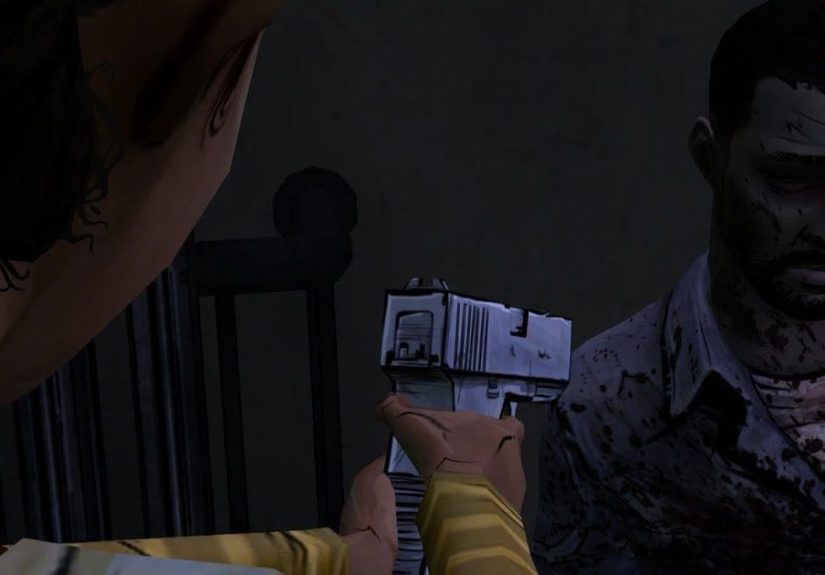
After spending an entire season protecting Clementine, Lee is bitten. There’s no magic cure, no secret “good ending” where he walks away. The only decision left is how Clementine says goodbye.
You can have her shoot Lee to prevent him from turning, or leave him behind in chains. Both options feel awfuland that’s the point.
The scene forces the player to accept that sometimes there isn’t a clean, heroic solution. There’s only the least painful version of tragedy.
Many players still remember pausing the game for long stretches at that moment, controller in hand, trying to convince themselves there had to be a hidden third path.
There isn’t. And that’s what makes it one of the most memorable deaths in gaming history.
Dominic “Dom” Santiago – Gears of War 3
The Gears of War series is famous for chainsaw bayonets and bombastic action, but Dom’s story brings a level of emotional weight you don’t always expect in a macho sci-fi shooter.
After losing his wife Maria in an earlier game, Dom spirals through grief and guilt. By the time Gears of War 3 rolls around, his arc is heading toward a tragic, almost inevitable conclusion.
During a desperate mission, Dom drives a truck loaded with explosives into a fuel depot, sacrificing himself to wipe out a swarm of enemies and save his squad.
As “Mad World” echoes in the backgroundcalling back to the series’ original haunting trailerthe scene lands as a gut punch, especially for players who’d followed his journey since the first game.
Mordin Solus – Mass Effect 3
The Mass Effect trilogy is full of high-stakes decisions, but few pay off like Mordin’s final mission in Mass Effect 3.
A fast-talking scientist responsible for maintaining the genophage that crippled Krogan births, Mordin eventually chooses to sacrifice himself to help cure itif you let him.
His final ascent up the tower, humming “I am the very model of a scientist salarian” as everything collapses around him, is both oddly cheerful and deeply heartbreaking.
It’s a rare case where a character not only acknowledges their past sins, but insists on paying the full price to correct them.
The fact that players can, in some runs, prevent his death by doubling down on morally murky choices only adds to the conversation.
For many, the “best” ending for the galaxy is the one where Mordin doesn’t walk away.
Ghost and Roach – Call of Duty: Modern Warfare 2
Military shooters don’t always prioritize character development, but Call of Duty: Modern Warfare 2 pulled it off with Ghost and Roachonly to take them away in brutal fashion.
After a successful mission, the pair are betrayed by General Shepherd, shot, and burned in a shallow ditch.
It’s shocking not just because of the violence, but because the game had conditioned players to see these characters as safe.
They were the cool squadmates, the ones who survived the impossible missions. Watching Ghost’s iconic skull mask disappear in the flames sent a clear signal: in this story, no one is untouchable.
Aunt May – Marvel’s Spider-Man
Superhero stories often tease high stakes, then quickly undo them with time travel, clones, or “actually they survived” twists.
Marvel’s Spider-Man for PS4 takes a different route by letting Aunt May dieand forcing Peter to choose between her and the rest of the city.
When Peter realizes the antidote for the deadly virus could either save countless lives or be used to save May alone, he doesn’t hesitate to do the heroic thing.
The game doesn’t turn away from the consequences. You sit with Peter in the hospital as he removes the mask, and May quietly lets him know she’s known all along.
It’s a rare superhero game that fully commits to loss, and the scene stands out as one of the most grounded, human moments in a genre full of cosmic threats and multiverse chaos.
Joel Miller – The Last of Us Part II
If Sarah’s death sets the tone for the first game, Joel’s death defines the second.
Early in The Last of Us Part II, he’s brutally killed by Abby in front of Elliea scene that sparked massive controversy, impassioned defenses, and endless online debates.
Joel’s death isn’t designed to be “satisfying” in a traditional narrative sense; it’s designed to be upsetting, messy, and unresolved.
By removing the original protagonist so early and then putting players in control of his killer for large portions of the game, the story forces you to sit with uncomfortable questions about revenge, empathy, and the cycle of violence.
Whether players loved or hated the decision, hardly anyone forgot it. In terms of memorability, Joel’s final scene is easily one of the most talked-about character deaths of the last decade.
Why These Memorable Deaths Matter
It’s easy to dismiss video game deaths as shock tactics, but the best examples do much more than make players gasp.
They reframe the story, deepen the themes, and sometimes change how you think about the medium itself.
These deaths:
- Show that player agency has limitsand that powerlessness can be a powerful storytelling tool.
- Use long-term character development so the loss feels genuinely earned.
- Underline themes like sacrifice, guilt, redemption, and the cost of violence.
- Stick with players so strongly that they fuel fan art, essays, YouTube retrospectives, and heated group chats years later.
In other words, memorable video game character deaths prove that games can handle emotional complexity just as well as books or films.
Sometimes better, because you’ve been there the whole time, pressing the buttons that led to that moment.
How Developers Make a Character Death Unforgettable
There’s no single formula for a legendary video game death, but certain design tricks show up over and over again in the most talked-about scenes:
1. Building Trust, Then Pulling the Rug
Many of the most memorable deaths involve characters players assume are “safe.”
You don’t expect a beloved party member like Aerith to die halfway through an RPG, or a seemingly central character like Joel to exit just a few hours into a sequel.
That sense of broken narrative “rules” makes the moment feel dangerous and unpredictable.
2. Limiting Player Control at the Worst Possible Time
Developers often use limited movement, slow walk sequences, or forced camera angles to lock players into the moment.
You can’t look away during Lee’s final conversation with Clementine, and you can’t sprint in and save Sarah.
That feeling of being trapped in a scene you would normally try to “win” adds to the emotional impact.
3. Using Music and Sound Like a Scalpel
From “Aerith’s Theme” to the haunting tracks used in Red Dead Redemption and The Last of Us, music is doing heavy lifting in these scenes.
A well-timed swell of strings or a quiet, stripped-back piano line can turn a sad moment into a legendary one.
4. Letting the Aftermath Breathe
The death itself is only half the equation; the aftermath is where the emotional damage really lands.
Great games let the world and characters react: NPCs mention the loss, the protagonist’s behavior shifts, side quests change tone, and previously safe spaces suddenly feel emptier.
Player Experiences: Grieving Pixels and Polygons
For many players, the most memorable video game character deaths feel strangely personal.
You’re not just mourning a fictional personyou’re mourning the hours you spent with them, the choices you made together, and the version of the story that can never exist now that they’re gone.
After a big in-game death, players often share a remarkably similar set of experiences:
Sitting in Silence After the Cutscene
A common reaction is simply putting the controller down and staring at the screen.
After Arthur’s final ride or Mordin’s last mission, many players let the end credits or post-scene silence roll for several minutes.
It’s not because the game tells them toit’s because the moment feels like it needs a real-world pause.
Hunting for “What If” Paths Online
Emotional denial is a powerful force.
After Lee’s death, it’s very common for players to immediately search whether there’s a hidden route where he survives, or a secret dialogue tree that unlocks a miracle fix.
The same goes for other key deaths: people comb through forums, guides, and wikis, hoping they missed something.
Finding out the answer is “no, there’s no way to save them” can paradoxically make the death more meaningful.
It’s not a failure of skill; it’s a deliberate narrative choice, and you were meant to feel that loss.
Bonding Through Shared Heartbreak
Some of the strongest gaming communities form not just around hype and victory, but around mutual suffering.
Threads about “the saddest video game deaths” fill up with players telling the same stories: the first time they saw Aerith fall, the night they stayed up way too late to finish The Walking Dead, the way they still can’t listen to a certain soundtrack without tearing up.
These shared experiences turn solitary playthroughs into collective memory.
Even if you played a game alone years ago, someone else out there felt the same gut punchand that connection helps explain why these deaths stay culturally relevant.
Replaying… or Never Replaying
Interestingly, unforgettable character deaths push players in opposite directions.
Some people replay specifically to re-experience the emotional arc, or to pick different choices and see new reactions.
Others swear they’ll never replay because they don’t want to go through “that scene” again.
Both reactions are signs that the story did its job. If a fictional character’s death can change how you approach an entire game, that’s powerful storytelling.
Learning to Appreciate Games as Storytelling, Not Just Challenges
For a lot of players, the first big character death they experienced was a turning point in how they saw video games.
Instead of viewing them purely as skill tests or time-killers, they started to see them as narrative experiences capable of dealing with grief, sacrifice, and moral ambiguity.
When you’ve watched Arthur Morgan struggle to redeem himself, helped Clementine say goodbye to Lee, or seen Ellie’s entire world shatter over Joel, it becomes hard to argue that games are “just toys.”
Those scenes stick with you precisely because they blur the line between entertainment and emotional investment.
Conclusion: Why We Keep Playing Through the Pain
The most memorable video game character deaths hurtbut they’re also part of what makes the medium special.
They remind us that stakes matter, that actions have consequences, and that sometimes you can’t save everyone, no matter how good your reflexes or how detailed your strategy guide.
From Aerith’s quiet fall in a forgotten city to Arthur Morgan’s final sunrise, these deaths linger because they’re about more than shock value.
They’re about love, loyalty, guilt, and the fragile hope that even when a character’s story ends, the impact they hadon their world and on the playerlives on.
And if you’ve ever paused a game to wipe your eyes, taken a deep breath, and pressed “continue” anyway, you already know the truth:
sometimes the most painful gaming moments are also the ones that make us appreciate the storytelling power of the medium the most.