Table of Contents >> Show >> Hide
- How the Internet Fridge Became a Legend (and a Punchline)
- Why “Internet Fridge” Became Tech’s Favorite Running Gag
- Smart Fridges Today: Less “Jetsons,” More “Family Admin”
- The Real Value of a Connected Refrigerator (Hint: It’s Not Email)
- What Keeps the Myth Alive: Privacy, Ads, and the “Pay Twice” Feeling
- How to Buy a Smart Fridge Without Becoming the Joke
- Real-World Experiences: Living With “The Never-Ending Myth” (About )
Every few years, it crawls out of the tech swamp like a movie monster that refuses to stay dead: the internet fridge.
Not “a refrigerator with better shelves” (too practical). Not “a fridge that keeps your lettuce crisp” (too mature).
I mean the mythical, meme-famous appliance that supposedly needs Wi-Fi so it can… what, send you a push notification that you’re out of pickles?
And yetagainst all odds, common sense, and the human desire to not reboot a kitchen appliancethe smart fridge keeps coming back.
New screens. New “AI.” New promises that this time, it’s not just a tablet glued to a compressor. The joke won’t die because, inconveniently,
the joke is only half a joke.
This article is a guided tour of the internet fridge myth: where it started, why it became tech’s favorite punchline,
what connected refrigerators actually do today, and why the real debate isn’t “Should my fridge tweet?” but
“Who’s collecting data about my midnight cheese decisions?”
How the Internet Fridge Became a Legend (and a Punchline)
1998: The first “connected fridge” wasn’t trying to be your life coach
The earliest internet-fridge storylines weren’t about grocery ordering or streaming playlists while you chop onions.
One widely cited early example of a connected refrigerator was basically a glorified counter: it recorded when the door opened,
then broadcast the data. That’s it. No recipes, no influencer ads, no “Your fridge has generated a mood board.”
Just door open: yes/no. A humble start for an idea that would later behave like it invented electricity.
2000: The commercial dream arrivesalong with a large price tag
Around the early 2000s, major manufacturers started experimenting with the “smart kitchen” vision: screens on appliances, networks in homes,
and the promise that connectivity would make everyday life frictionless. “Your fridge will manage your groceries” sounded futuristicuntil
you pictured yourself teaching a refrigerator what a cucumber is.
The problem wasn’t the ambition. It was the mismatch between how long a fridge lasts and how fast software gets old.
A refrigerator is a 10+ year commitment. A screen-based operating system is… a seasonal relationship, at best.
And thus, the internet fridge began its long tradition of showing up at trade shows like a celebrity who keeps announcing a comeback tour.
Why “Internet Fridge” Became Tech’s Favorite Running Gag
1) The feature-to-problem ratio was upside down
A fridge has one core job: preserve food safely, efficiently, and consistently. When “smart” features show up, people ask a brutal (and fair) question:
Does this help the main job? If the answer is “It can display your calendar,” consumers mentally file it under “neat, but… my phone exists.”
That’s how the internet fridge became shorthand for “technology added where nobody asked for it.”
2) The software half-life problem: appliances age slowly, apps age like fruit
A lot of connected appliances are built on a truth nobody puts on the box: software support can end long before the appliance is physically done.
When updates slow down, features break. Apps disappear. Logins change. And suddenly the “smart” part isn’t smartit’s a museum exhibit that glows.
The fridge still cools, but the expensive screen can end up doing the digital equivalent of staring out the window.
3) Security fears turned the joke into a nightmare headline
The internet fridge didn’t just become a meme because it was silly. It became a meme because it was plausibly risky.
Security researchers have repeatedly warned that poorly secured IoT devicesespecially those with weak authentication or outdated softwarecan be abused.
The phrase “my fridge got hacked” sounds like a sitcom line until you remember your fridge is now a computer that lives inside your home network.
And yes, there have been real-world incidents and reporting that popularized the idea of internet-connected devices being used in malicious campaigns
including narratives involving appliances. Whether it was a fridge specifically or the broader class of “things,” the takeaway stuck:
everything connected becomes part of the attack surface. The myth lives because the risk isn’t imaginary.
Smart Fridges Today: Less “Jetsons,” More “Family Admin”
Here’s the twist: modern smart fridges actually do some useful thingsjust not always the flashy things.
The best current vision is not “your fridge replaces your phone.” It’s “your fridge quietly reduces household friction.”
And the industry has learned (sometimes painfully) that people want convenience, not homework.
The Family Hub era: screens, cameras, and the rise of “kitchen command center”
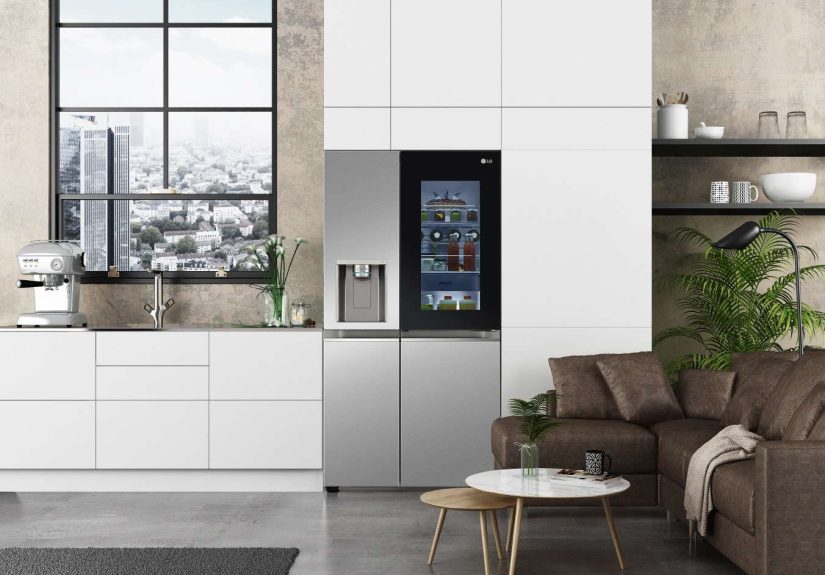
The modern connected refrigerator playbook often includes a large door screen, shared family tools (calendar, notes),
and internal cameras that can snapshot what’s inside. The pitch is simple:
check the fridge contents from your phone at the store, and buy what you actually needwithout performing the ancient ritual of texting,
“Do we have eggs?” and receiving the sacred response, “I don’t know, look.”
In practice, the “camera fridge” works best for households that already live on shared lists and calendars:
families, roommates, or anyone juggling schedules. It’s less “internet refrigerator” and more “big shared bulletin board that also happens to chill food.”
AI enters the kitchen: food recognition and shopping integrations
More recent models lean into AI food recognitiontrying to identify certain items automatically and help maintain an inventory.
Some ecosystems connect that inventory to meal planning and grocery delivery, offering suggestions when items run low.
The dream is not “your fridge orders kale without consent,” but “your fridge notices you’re out of milk and saves you a trip.”
These features can genuinely help reduce food waste if they’re reliable, low-effort, and respectful of reality
(for example: not pretending it can flawlessly identify every leftover container with foil on top).
And the most interesting improvements often happen off the fridge itselfinside companion apps and services that can evolve faster than hardware.
The smart fridge that finally sounds… reasonable
The newest trend worth watching is a quiet rebellion against the “giant tablet” approach:
smaller, more restrained displays paired with practical assistancefilter reminders, maintenance guidance, modest inventory tools,
and integrations that solve real problems instead of showcasing tech for tech’s sake. When the screen gets smaller and the usefulness gets bigger,
you can almost hear the myth losing its grip.
The Real Value of a Connected Refrigerator (Hint: It’s Not Email)
Status and alerts: the “don’t let my groceries die” use case
The most defensible reason for a connected refrigerator is status monitoring:
temperature alerts, door-left-open warnings, filter replacement reminders, and diagnostic signals that help catch problems early.
Nobody wants a fridge that streams social media. People want a fridge that warns them before a freezer failure turns into a thawed-food tragedy.
Household coordination: shared lists, calendars, and fewer “who used the last…” arguments
A large screen in a central location can actually be usefulbecause kitchens are where households naturally converge.
Notes, schedules, grocery lists, and reminders make sense here in a way they don’t on a living-room TV or a phone locked behind notifications.
The fridge becomes a passive, always-there tool, not a device you must remember to open.
Energy and efficiency: a quiet, underrated benefit
Smart platforms increasingly talk about energy usage and optimization. In the best case, this helps you understand costs,
spot inefficient behavior, and manage appliances in a broader smart home ecosystem. This isn’t as flashy as a recipe app,
but it’s far closer to “real value” than most early internet-fridge gimmicks.
What Keeps the Myth Alive: Privacy, Ads, and the “Pay Twice” Feeling
Smart appliances can be data-hungry by design
The uncomfortable truth of many IoT appliances: connectivity often exists to create an ongoing relationship between the product and the manufacturer.
Sometimes that relationship is helpful (security updates, diagnostics). Sometimes it’s unclear (analytics, usage patterns, integration dependencies).
Consumers are increasingly aware that “smart” can mean “collects data,” even when the appliance is just sitting there… being a fridge.
Ads on premium appliances: the fastest way to turn delight into rage
Nothing revives the internet fridge myth faster than this scenario: you buy a high-end refrigerator, and later a software update adds advertising.
That’s when people feel like they paid for the privilege of being marketed toinside their own kitchen.
It’s a uniquely intimate kind of annoyance. A billboard is outside. A phone ad is expected. A fridge ad feels like your pantry joined an affiliate program.
The broader issue isn’t just adsit’s the precedent: if a manufacturer can change the experience after purchase, what else can change?
Features can be rearranged. Services can become subscriptions. Apps can be removed. The internet fridge myth survives because it keeps being re-fueled
by real moments where software choices clash with consumer expectations of ownership.
Security and support: the “zombie device” problem
A connected fridge is only as safe as its update policy. If security patches stop while the appliance still lives on your network,
you’ve got a “zombie” smart device: physically fine, digitally questionable. Consumer advocates have pushed for more transparency in how long
manufacturers will support connected features, because appliances don’t match the upgrade cycle of phones or laptops.
How to Buy a Smart Fridge Without Becoming the Joke
Ask one question first: do you want a fridge, or a screen with a cooling hobby?
Start with the fundamentals: temperature control, reliability, capacity, noise, energy use, warranty terms, and repair options.
Then evaluate the smart features as a bonusnot the core reason. If you buy it for the screen, you may someday own the world’s most expensive digital photo frame.
Look for transparency: updates, privacy controls, and offline usefulness
Before you fall in love with the “AI Vision” demo, check what happens if Wi-Fi is off.
Can you still use basic controls easily? Can you disable features you don’t want? Is there any public commitment on software support?
A smart fridge should degrade gracefully: the cooling must remain excellent even if the cloud service someday changes its mind.
Secure it like a computerbecause it is one
If you connect a refrigerator to your network, treat it like any other internet-connected device:
update firmware, use strong authentication where possible, and consider a guest network or segmented Wi-Fi for IoT devices.
The goal is not paranoia. It’s basic household cyber hygienebecause a home network is only as strong as its weakest connected thing.
Real-World Experiences: Living With “The Never-Ending Myth” (About )
Talk to people who actually live with a smart refrigerator, and you’ll hear a pattern that’s more nuanced than the meme.
The first week is the “show-and-tell” phase. Visitors walk into the kitchen and someone inevitably says,
“Waityour fridge has a screen?” Someone taps it. Someone scrolls. Someone makes a joke about ordering pizza from the crisper drawer.
Then life resumes, and the fridge either becomes genuinely helpful… or quietly fades into the background.
In households with kids, the screen often turns into a low-friction family bulletin board. The calendar is visible without unlocking a phone.
Notes get slapped onto the display like digital sticky notes. Some families use it as a rotating photo frame, which sounds trivial until you realize
it’s a rare screen everyone sees without choosing to doomscroll. The “internet fridge” stops being a gadget and starts being a shared surface.
Grocery features tend to split into two camps: “surprisingly useful” and “I tried once.” Camera snapshots can help with shoppingespecially when
people use the fridge the way refrigerators want to be used: organized, labeled, predictable. But real kitchens are chaotic.
Leftovers go into mystery containers. Produce hides behind sauces like it owes money. That’s where some owners revert to a simple shared list app
because it’s faster than wrestling the fridge UI. If the smart feature adds work, people abandon it. Ruthlessly.
The most appreciated “smart” moments are often the least glamorous: a door-left-open alert before the ice cream softens,
a filter reminder that prevents that “why does the water taste like… emotions?” moment, or a diagnostic note that helps schedule a repair.
These are the features that don’t demand attentiononly show up when something is wrong.
Ironically, the best internet fridge experience is the one you barely notice.
The frustration stories are also consistent. Owners describe software updates that change layouts, remove apps, or add clutter.
Nothing triggers regret faster than a premium appliance feeling like it’s borrowing the worst habits of smartphones.
And the mere idea of ads on a fridgethe possibility that the kitchen could become just another monetized screenhits a nerve.
People don’t want to “manage content” while reaching for orange juice. They want the fridge to be a fridge, not a subscription platform with shelves.
The most satisfied owners tend to be the ones who bought smart features for a specific, practical reason:
coordinating a busy household, keeping an eye on inventory, or integrating with a broader smart home setup.
The least satisfied owners often bought the dreamthen discovered that the dream requires logins, settings menus, and the occasional reboot.
The myth survives because both groups are right: the internet fridge can be useful, and it can be ridiculous, sometimes in the same afternoon.
So, Is the Internet Fridge Still a Myth?
The “internet fridge” as a symbol of pointless tech? That myth earns its immortality every time a refrigerator tries to become your entertainment system,
your ad screen, or your part-time IT project. But the internet fridge as a quietly connected appliance that improves reliability,
reduces waste, and smooths household logistics? That’s not mythit’s a design challenge the industry is finally learning to respect.
The future of the smart kitchen won’t be won by the biggest screen. It’ll be won by the smallest amount of effort required from you.
Because the only thing worse than a fridge that can go online is a fridge that needs you to babysit it.