Table of Contents >> Show >> Hide
- Quick Refresher: What Is The Plot Against America About?
- How It’s Rated: Where It Lands With Critics and Viewers
- My Ranking Method: How These Lists Were Built
- Ranking the Episodes: From “Great” to “I Need a Walk After This”
- Ranking the Characters by Impact: Who Shapes the Story the Most?
- Ranking the Big Ideas: The Themes That Hit Hardest
- Opinions That Keep Coming Up: A Critic-and-Audience “Greatest Hits”
- If You Loved (or Survived) This: What to Watch Next
- Appendix: 500+ Words of “Experience” How It Feels to Read/Watch, and How to Get More Out of It
- Final Take: My Overall Opinion
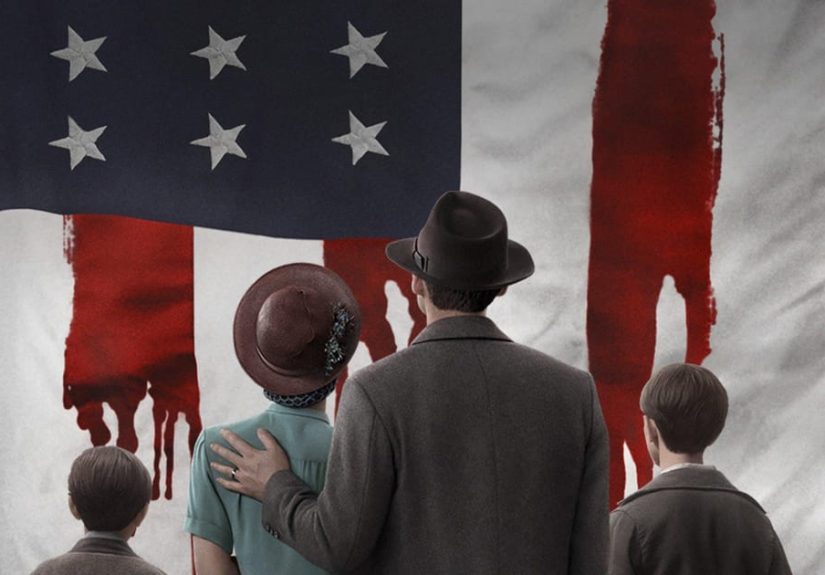
Alternate history is usually a fun little “what if?” snack. The Plot Against America is not a snack. It’s a full, slow-cooked meal that sits heavy on your chestin the best, most “please keep making TV like this” way. Based on Philip Roth’s 2004 novel and adapted as a six-episode HBO limited series, the story imagines a United States where celebrity aviator Charles Lindbergh wins the 1940 election and the country drifts, step by step, toward authoritarianism and normalized antisemitismseen through the eyes of a working-class Jewish family in Newark, New Jersey.
This article gives you rankings (episodes, characters, themes) and opinions (what critics and audiences tend to praise or nitpick), plus a “how it feels” reading-and-watching appendix for anyone who likes their prestige drama with a side of emotional cardio.
Spoiler note: Mild-to-moderate spoilers are included in the rankings section because you can’t rank a slow-burn political nightmare without talking about the moments when the burn becomes a bonfire.
Quick Refresher: What Is The Plot Against America About?
Philip Roth’s novel (2004) is an alternate-history coming-of-age story narrated by a young boy (also named Philip in the book) watching his family’s daily life warp under national upheaval. The HBO adaptation (2020), co-created by David Simon and Ed Burns, keeps the core ideahistory goes sideways and ordinary people pay the billbut reshapes characters and story beats for television. On-screen, the family is the Levins, and the show leans into how political shifts seep into relationships, jobs, schools, neighborhoods, and the “friendly” civic programs that suddenly don’t feel so friendly.
Instead of relying on flashy dystopia aesthetics, the series stays grounded: period details, tense dinner-table debates, and the creeping realization that the rules are changing while half the country insists everything is fine. It’s less “giant banners everywhere” and more “the paperwork is different, and so is the way your neighbors look at you.”
How It’s Rated: Where It Lands With Critics and Viewers
If you’re the type who likes a scoreboard before you commit six hours of your life: The Plot Against America is widely treated as a critical success. Reviewers often highlight its craftsmanshipperformances, atmosphere, and the careful way it shows escalation through ordinary life. Audience response tends to be positive too, though a little more divided (which is common for heavy, politically charged dramas).
What People Usually Praise
- Performances that feel lived-in: The cast plays fear, denial, hope, and anger with a realism that makes the story hit harder than a speech ever could.
- “Slow boil” tension: The show’s power is how it builds dread through small shiftsnew policies, new rhetoric, new “suggestions” from authorities that start sounding like orders.
- Family-level storytelling: Instead of treating politics as an abstract debate, it shows how ideology moves into your home: who you trust, who you fear, and what you’re willing to excuse.
What People Most Often Critique
- Pacing: If you want constant plot fireworks, you may feel impatient. This is more pressure-cooker than rollercoaster.
- Ending choices: Some viewers love the adaptation’s sharper dramatic turns; others prefer the novel’s texture and ambiguity.
- Emotional heaviness: It’s not “cozy HBO.” It’s “stare at the wall after the credits HBO.”
My Ranking Method: How These Lists Were Built
Because “best” is slippery, I used a simple set of criteriaweighted toward what the series is trying to do, not what a different show might do:
- Impact: Does it change the emotional or political temperature?
- Craft: Writing, direction, acting, and tension-building.
- Character consequences: Does it force a choice, a rupture, or a revelation?
- Rewatch value: Do scenes gain meaning once you know where the story goes?
- Theme clarity: Does it sharpen the show’s big ideas without turning into a lecture?
Ranking the Episodes: From “Great” to “I Need a Walk After This”
(Reminder: mild-to-moderate spoilers ahead.)
-
#1 Part 6 (Finale): The reckoning
The finale is where simmer turns to scorch. It delivers some of the show’s most memorable confrontations and makes the personal stakes feel enormous. Even viewers who prefer quieter episodes often admit the ending is a gut-punchbecause by this point, you’re attached to the family and terrified for them.
-
#2 Part 5: The pressure peaks
The penultimate episode thrives on dread. Choices feel narrower, alliances feel shakier, and the story’s moral questions stop being theoretical. If you like episodes where every conversation has a fuse burning underneath it, this one is for you (and also, sorry).
-
#3 Part 3: The “normal” starts breaking
This is where the show’s central trickmaking the political personalreally clicks. The cracks are no longer hairline. You can feel the family’s competing instincts: resist, adapt, bargain, deny. Nobody gets to stay comfortable.
-
#4 Part 1: The hook that doesn’t shout
The premiere is confident and controlled: it invites you into a richly textured world and plants unease without blinking neon warning signs. It’s an “if you know, you know” openingquiet enough to feel real, tense enough to keep you watching.
-
#5 Part 4: The fallout gets specific
Part 4 deepens the consequencesless about what’s happening “out there” and more about what it costs inside the family. Some viewers rank it higher for emotional detail; others place it here because it’s a bridge between escalation and explosion.
-
#6 Part 2: The first real turn
Part 2 is essential groundworkrelationships shift, political winds pick up, and the story’s broader design becomes clearer. It can feel less “standalone iconic” than later episodes, but it’s the episode that makes later devastation possible. (So… thanks?)
Ranking the Characters by Impact: Who Shapes the Story the Most?
-
#1 Bess Levin: The emotional compass
Bess is the series’ beating heart. Her arc captures the horror of watching the world change while still needing to keep a family functioningmeals, school, relatives, worklike normal is a shield. Her choices feel like the show’s clearest answer to “What does courage look like when you’re not holding a microphone?”
-
#2 Herman Levin: The resistant realist
Herman is stubborn, principled, and sometimes painfully certainyet the show treats him as a full human, not a slogan. He sees the danger early and refuses to shrink, which makes him heroic and, at times, tragically vulnerable.
-
#3 Evelyn Finkel: The assimilation trap
Evelyn embodies a deeply uncomfortable truth: people don’t always collaborate because they’re cartoon villains. Sometimes they want safety, status, belonging, love, or simply relief from fear. Her storyline is one of the show’s sharpest knives.
-
#4 Rabbi Bengelsdorf: Respectability as a weapon
Few characters illustrate “a polite face can sell a dangerous idea” as effectively. He is persuasion in human formusing legitimacy and proximity to power as proof that everything is fine.
-
#5 Alvin Levin: The rage of the betrayed
Alvin’s storyline carries the fury of disillusionmentwhen “my country” stops feeling like yours. He’s volatile, but he’s also a warning: when institutions fail, people look for other ways to fight back, and those ways aren’t always clean.
-
#6 Philip Levin: The child’s-eye view
Philip’s perspective keeps the show intimate. It’s one thing to understand a political shift; it’s another to see it through a kid trying to make sense of adult fear, contradictions, and secrets.
Ranking the Big Ideas: The Themes That Hit Hardest
-
#1 “It can happen here” (Democracy is not self-cleaning)
The show’s core theme isn’t that evil arrives with a cape. It’s that democratic erosion can look like paperwork, programs, speeches, and neighbors “just going along.”
-
#2 Assimilation vs. identity
How much do you change to fit in? What do you trade away for acceptance? The story treats these questions as lived dilemmas, not abstract debates.
-
#3 Fear as a civic force
Fear changes behavior: people self-censor, pick smaller dreams, avoid conflict, and accept “temporary” restrictions that never quite leave.
-
#4 The family as a political battleground
Politics doesn’t just divide nations; it divides living rooms. The show captures how love, loyalty, and ideology collide inside one household.
-
#5 Charisma and the myth of the “good strong leader”
The story shows how hero worship and national pride can become shortcutsways to ignore warning signs because the messenger looks trustworthy.
Opinions That Keep Coming Up: A Critic-and-Audience “Greatest Hits”
Opinion #1: It’s disturbingly believable
Many reviewers emphasize how the show avoids exaggeration. The scariest scenes often aren’t riots or raidsthey’re meetings, policies, and smiling assurances that you’re overreacting.
Opinion #2: The craft is elite “prestige TV”
Even critics who debate specific adaptation choices tend to agree the series is meticulously made: performances are controlled but emotional, the period setting feels authentic, and the tension is earned rather than shouted.
Opinion #3: It’s emotionally tough (and that’s the point)
Some viewers call it essential; others call it exhausting. Both reactions can be true. This is the kind of show that makes you feel the cost of politics in a way that headlines can’t.
Opinion #4: It’s more about family than “alternate history trivia”
If you came for a sprawling reimagined America, you might be surprised by how intimate it stays. The series doesn’t try to map every geopolitical outcomeit focuses on what happens to one family when the ground shifts under their feet.
If You Loved (or Survived) This: What to Watch Next
- Limited series with historical dread: Look for shows that treat history as lived experience rather than pageantry.
- Political allegories grounded in ordinary life: Stories that ask how “normal people” end up normalizing the abnormal.
- Alternate history with moral realism: Not just “what if?”but “what would that do to families, neighbors, and identities?”
Appendix: 500+ Words of “Experience” How It Feels to Read/Watch, and How to Get More Out of It
Experience #1: The slow-boil anxiety is the main character. Watching The Plot Against America can feel like standing in a room where the thermostat keeps creeping upward while everyone insists it’s still sweater weather. The show rarely gives you the relief of a single villain twirling a mustache. Instead, it hands you polite conversations, civic programs, and small compromisesthen asks you to notice how quickly those “little” changes redraw the boundaries of safety. The first-time viewing experience is often less “Whoa, plot twist!” and more “Oh no, that actually makes sense,” which is somehow worse.
Experience #2: You’ll probably argue with the charactersand that’s intentional. People watching in groups (or even chatting online afterward) tend to split into camps: “Herman is right to resist,” “Bess is right to protect the kids,” “Evelyn is making practical choices,” “Evelyn is playing with fire,” and “Why is everyone being so calm?!” The series is designed to make you feel those tensions because real families experience them. When fear rises, even love starts negotiating: Do we keep peace at the table or speak hard truths? Do we prioritize safety now or principles long-term? The show doesn’t offer easy moral trophies. It offers consequences.
Experience #3: It rewards a second lookespecially for the “ordinary” scenes. On rewatch, the scenes that hit hardest often aren’t the big confrontations. It’s the casual remarks that reveal changing norms, the moments when a character laughs off something alarming, or the times a “helpful” program is framed as a gift rather than a warning. The series is built from social cues: who gets listened to, who gets dismissed, who gets asked to prove loyalty. On a second pass, you notice how early the story tells you what’s comingquietly, like a neighbor closing blinds.
Experience #4: Pair it with a little real-world context (without turning it into homework). You don’t need a history degree to follow the story, but a small amount of context can deepen the experience: who Lindbergh was in real life, what isolationism meant in the pre-war U.S., and how propaganda and public messaging can shape what “feels true.” The show’s genius is that it doesn’t demand you memorize datesit asks you to recognize patterns: celebrity politics, scapegoating, “unity” rhetoric that excludes certain people, and the temptation to accept unfairness as long as it happens to someone else.
Experience #5: Build your own “discussion ranking” after you finish. If you want a fun (and slightly nerdy) way to process the heaviness, try ranking the show with friends using categories like: “Most chilling scene,” “Most human moment,” “Most painful betrayal,” “Best performance,” and “Scene that made me pause and stare into the distance.” It sounds sillyuntil you realize it’s a healthy way to translate emotion into insight. This series lands because it makes big political questions feel personal. Talking about it afterward helps you exhale.
Experience #6: Know your pacing limits. Some people binge it; others do one episode at a time. There’s no prize for speed. If you’re watching and you feel that familiar “my jaw has been clenched for 45 minutes” sensation, take a break. Watch something light. Eat a cookie. Text a friend something normal like “Do you think penguins have best friends?” (They probably do. Let’s not research that right now.) Then come back when you’re ready.
Final Take: My Overall Opinion
The Plot Against America is one of the most effective alternate-history dramas because it treats authoritarianism as a social process, not a special effect. If you want tidy optimism, this may not be your show. If you want a deeply acted, meticulously crafted series that explores how fear and persuasion can reshape a societystarting with one family’s everyday lifethis is essential viewing.