Table of Contents >> Show >> Hide
- Why a Food Processor Still Earns Counter Space
- What Makes Magimix Different (and Why People Get Weirdly Loyal)
- Meet the Lineup: Which Magimix Is the “Ultimate Assistant” for You?
- What It Does Best: Real Tasks, Real Results
- The Attachments That Actually Matter
- How to Get the Best Results (Without Fighting Your Food Processor)
- Cleaning and Care: The Part Nobody Posts on Instagram
- Is It Worth the Price?
- Who Should Buy a Magimix Food Processor?
- Real Kitchen Experiences: of What Life Looks Like with a Magimix
Some kitchen tools are like that friend who says, “I can help!” and then immediately disappears when it’s time to move the couch.
A good food processor is the opposite: it shows up, does the heavy lifting, and doesn’t complain when you ask it to shred a mountain of
carrots like it’s training for a vegetable marathon.
If you’ve been eyeing a Magimix food processor, you’re probably in one of two moods:
(1) “I cook a lot and I’m done chopping onions like a Victorian orphan,” or
(2) “I want to buy one appliance that can keep up with my weekend projects and won’t tap out halfway through pizza dough.”
Magimix tends to appeal to people who want power, durability, and a design that’s more “no-nonsense workhorse” than “plastic spaceship.”
Why a Food Processor Still Earns Counter Space
Food processors aren’t trendy in the way air fryers are trendy (air fryers get a lot of PR).
But they are wildly practical. In product testing across major cooking and review sites, the same wins come up again and again:
faster prep, more consistent cuts, and the ability to handle tasks you’d rather not do by handlike shredding cheese for a crowd,
making hummus that’s actually smooth, or turning a pile of herbs into pesto before the basil wilts into sadness.
The “secret” is that a food processor is less about fancy features and more about repeatable results:
steady slicing, clean shredding, reliable emulsions, and enough torque to power through thick mixtures without sounding like a lawnmower
auditioning for a heavy-metal band.
What Makes Magimix Different (and Why People Get Weirdly Loyal)
1) The simple controls you’ll actually use
One reason Magimix gets love from testers is that it doesn’t overcomplicate the basics. Many models lean into straightforward controls
(commonly a small set of buttons like auto, pulse, and stop). That means less “Which of these nine speeds is the one for salsa?”
and more “Push button, receive chopped onions.”
2) A multi-bowl system that feels like a cheat code
A signature Magimix perk is the nested bowl setuptypically a main work bowl plus smaller bowls for mini tasks.
In real kitchens, that translates to fewer awkward workarounds when you want to chop a handful of garlic right after shredding cabbage.
It also makes switching jobs easier without washing one gigantic bowl between every small step.
3) Power + quiet that doesn’t ruin the vibe
Magimix is often described by reviewers as powerful but comparatively quiet for the categoryespecially when dealing with demanding tasks
like kneading dough or powering through dense ingredients. Several reviews call out the pleasant surprise of lower noise than expected for
the strength on tap.
4) The warranty energy: “buy it once”
Magimix’s long motor warranty is one of its loudest flexes. Depending on the model and retailer, you’ll commonly see a 30-year motor warranty
mentioned, which is… honestly a commitment. That’s the kind of warranty that says, “We expect you to still be making pie crust in the same machine
when your spice cabinet has been reorganized seventeen times.”
Meet the Lineup: Which Magimix Is the “Ultimate Assistant” for You?
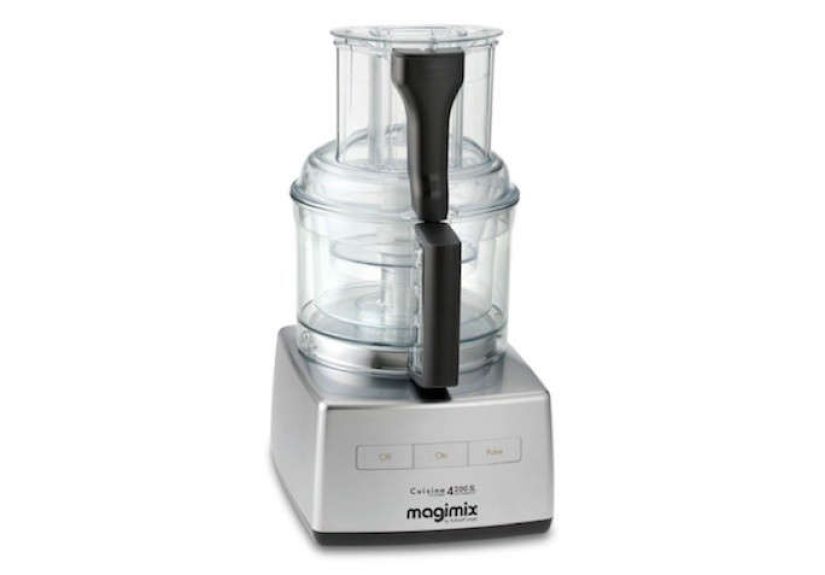
In the U.S., you’ll most often see Magimix models like the 4200XL (around a 14-cup class) and the 5200XL (around a 16-cup class).
Think of the choice like choosing a backpack: both carry your stuff, but one is better if you’re packing for a weekend, and one is better if you’re
packing for a family road trip plus snacks for everyone you’ve ever met.
Magimix 4200XL: the “serious home cook” sweet spot
The 4200XL tends to hit the Goldilocks zone for many kitchens: large enough for meal prep and baking projects, but not so huge that you feel like
you need to file a zoning permit for it. Retail listings commonly describe a multi-bowl setup with a main bowl plus smaller bowls, along with
a solid motor (often listed around 950W in certain configurations).
Magimix 5200XL: the “big batch, big plans” machine
If you routinely cook for crowds, double recipes, or do big prep sessions (slaw for a party, shredded cheese for freezer meals, cookie dough for
“just a few” cookies that turns into 48), the 5200XL is the go-to. Reviews frequently highlight its strong motor (often described around 1100W) and
its ability to handle large quantities while staying relatively calm and stable.
What It Does Best: Real Tasks, Real Results
Slicing and shredding that looks “store-bought,” but in a good way
When reviewers talk about loving a food processor, they’re usually talking about slicing and shredding.
Magimix models are often praised for steady slicing and efficient gratingespecially when you’re processing firm vegetables or piles of cheese.
The wide feed tube design that shows up in multiple reviews also helps reduce pre-cutting and makes bulk prep less annoying.
Dough: the underrated flex
Some food processors claim they can knead dough; some can actually knead dough without sounding like they’re negotiating their final will.
In performance testing, Magimix models have been repeatedly noted for handling doughpizza dough in particularwithout bogging down.
That matters if you make bread or pizza often and want a machine that doesn’t treat gluten development like a personal attack.
Emulsions and sauces: mayonnaise, aioli, pesto, hummus
A good processor turns sauce-making into a fast, repeatable routine. Add aromatics, stream in oil, and you get thick, glossy emulsions.
In test kitchens, Magimix models are often described as strong performers for mixing and emulsifying tasksuseful for everything from
weeknight Caesar dressing to party hummus.
Chopping and mincing: fast, but not always magic
Here’s the truth reviewers will tell you (and your cutting board already knows): food processors are fast, but they can be imperfect.
Some testing notes mention uneven cuts or food getting trapped in certain situationsespecially if you’re chasing ultra-precise dice.
That’s not a deal-breaker, just a reminder that technique matters (and that “pulse” is your friend).
The Attachments That Actually Matter
Magimix models are often bundled with a generous set of attachments, and the exact lineup depends on the package.
But in general, here’s what tends to be most useful in real kitchens:
- Metal blade (S-blade): your daily driver for chopping, mixing, and pureeing.
- Slicing and grating discs: the reason you stop buying pre-shredded cheese and bagged slaw.
- Dough blade: for pizza dough, pastry dough, and certain bread doughs.
- Whisk attachment: handy for lighter tasks, though some reviews note it can be finicky depending on the recipe.
- Mini bowl + mini blade: small batches like garlic, herbs, nuts, and quick sauces.
A practical note: lots of attachments are greatuntil you need to store them. Some reviewers applaud the included storage solutions,
while others point out you’ll want a plan (bin, cabinet space, or a dedicated “attachment zone” that doesn’t become a junk drawer).
How to Get the Best Results (Without Fighting Your Food Processor)
Use pulse like a volume knob
If you hold “on” too long, you can go from “chunky salsa” to “tomato smoothie” in a blink. Pulsing helps control texture and keeps you from
turning onions into onion mist.
Load smart for slicing
For cleaner slices, pack the feed tube so ingredients don’t tip and tumble. If you want neat cucumber rounds, keep them aligned and snug.
If you toss in random chunks, you’ll get “abstract art” slices. Still edible, just less photogenic.
Chill dough ingredients for pastry
For flaky crusts, cold fat matters. A processor can nail pastry dough quickly, but only if you keep butter cold and stop mixing as soon as
the dough comes together. Overmixing warms the fat, which can reduce flakiness.
Accept that “perfect dice” is a special skill
Many processors excel at slices and shreds. A precise dice can be harder without a dedicated dicing kit (and even then, results vary by food type).
If you need perfect cubes for a restaurant-style brunoise moment, that may be a knife jobor at least a “practice and adjust expectations” job.
Cleaning and Care: The Part Nobody Posts on Instagram
The best food processor is the one you’ll actually clean without sulking.
Many Magimix components are described as dishwasher-safe (always double-check your manual and retailer guidance), and reviewers frequently note
that cleanup is manageable given the number of parts. The sharp blades are the only real drama: wash carefully, store safely, and don’t do that
thing where you reach into soapy water like you’re trying to win a surprise ER visit.
Also: let parts dry fully before stacking and storing. It helps prevent lingering odors and keeps bowls clearer over time.
Is It Worth the Price?
Magimix is typically priced as a premium appliance. Multiple reviews describe it as expensive compared to mainstream favorites, but justify the cost with
performance, build quality, and that headline-making long motor warranty. If you cook oftenespecially if you meal prep, bake, or entertain
the cost-per-use can start to look a lot better.
On the flip side, if you only need a processor a few times a month for salsa and the occasional pie crust, you might be happier with a more affordable
model that still performs well. Plenty of testing roundups point out that strong mid-priced processors exist, and the “best” choice depends on how you cook.
Who Should Buy a Magimix Food Processor?
You’ll love it if…
- You cook frequently and want faster prep without sacrificing quality.
- You make dough, sauces, shredded salads, or batch meals on a regular basis.
- You value long-term durability and warranty coverage.
- You like straightforward controls over gadget overload.
You might skip it if…
- Your kitchen storage is already in a hostage situation.
- You mostly cook small batches and don’t want a larger footprint.
- Your budget is tight and you’d rather spend on knives, pans, or ingredients.
Real Kitchen Experiences: of What Life Looks Like with a Magimix
Imagine it’s Sunday afternoon and you’re doing the kind of meal prep that makes your future self feel personally cared for.
A Magimix-style multi-bowl setup shines in this exact moment: you shred carrots in the big bowl for a slaw base, swap to the smaller bowl to blitz garlic
and ginger for a quick dressing, then go back to slicing cucumbers without feeling like you’ve started a dishwashing side quest.
Reviews often describe this “switch tasks quickly” rhythm as one of the most satisfying parts of the systemless friction, more momentum.
Or take the classic hosting scenario: you need cheese for tacos, onions for pico, cabbage for a crunchy topping, and maybe a quick crema.
With a strong slicing/shredding processor, you can blow through the tedious stuff in minutes. People who love these machines talk about the oddly calming
feeling of consistencyyour shreds are uniform, your slices look intentional, and your cutting board isn’t buried under a chaotic pile of half-chopped produce.
It’s not just speed; it’s that you finish prep with enough energy left to actually enjoy cooking.
Dough night is where a powerful processor earns its keep. The common story goes like this: someone tries pizza dough by hand, gets sticky dough on everything
including their confidence, and then discovers that a capable food processor can bring the dough together fast and clean.
Testers frequently mention that Magimix models handle dough without stalling, which matters when you’re working with thicker mixtures.
The experience is less “wrestling match” and more “two-minute setup, then let the machine do the hard part.”
You still get to do the fun partstretching, topping, bakingwithout feeling like you already ran a marathon.
Weeknight cooking is another place the “assistant” idea feels real. You come home tired, you want dinner that tastes like effort but isn’t effort,
and suddenly the processor is doing the grunt work: onions and carrots chopped for a quick soffritto, chickpeas turned into hummus while the oven preheats,
or cauliflower pulsed into “rice” for a fast bowl situation. You’re not trying to become a different person; you’re just removing the steps that make you
order takeout when you don’t really want to.
Even cleanup becomes part of the lived experience. Owners often describe the mental shift: if the parts are manageable to wash and the results are worth it,
you reach for the machine more often. The key is building tiny habitsrinsing immediately, loading dishwasher-safe parts right away, and storing blades safely.
Once the processor becomes “normal,” it stops feeling like a special-occasion gadget and starts feeling like a dependable helper that just happens to be made
of bowls, blades, and a motor that’s built for the long haul.