Table of Contents >> Show >> Hide
- The Record Was Real, and the Numbers Were Wild
- Why This Matters More Than a Flashy EV Stunt
- The Fine Print: Yes, There’s a Catch, and Yes, It Still Counts
- Kia’s Bigger Play: This Is Not Just a Van, It’s a Platform
- What This Means for the EV Van Market
- What 430 Miles in an EV Van Could Actually Feel Like
- Final Thoughts
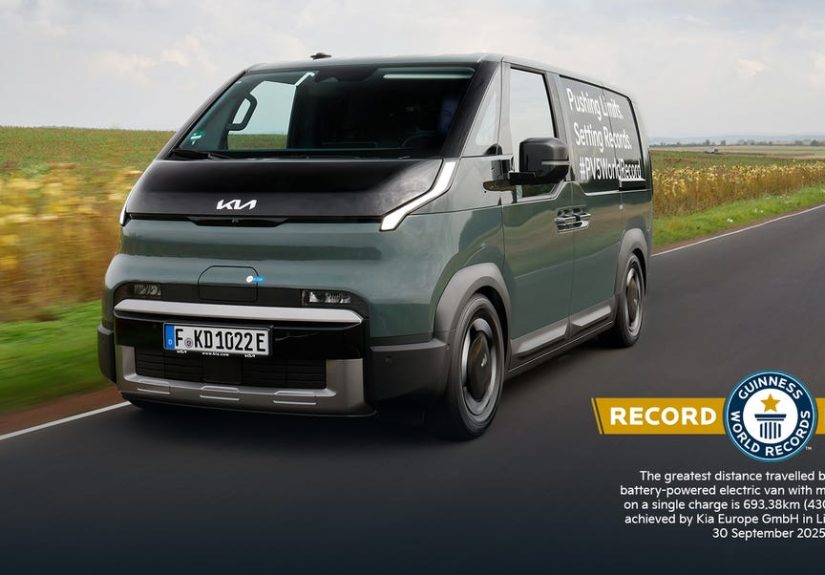
Electric vans usually live in a world of practical expectations. They carry tools, packages, ladders, pastries, plumbing parts, and the occasional mystery box that rattles when no one touches it. What they are not usually known for is heroic, headline-grabbing range. That is why the Kia PV5 Cargo’s record-setting 430.84-mile run on a single charge landed with the force of a dropped socket wrench in a quiet garage.
On paper, the feat sounds almost suspiciously tidy: one electric van, one charge, one official Guinness World Record. But what makes this story genuinely interesting is that the van was not empty, was not performing some glossy lab demo, and was not coasting down a mountain with a prayer and a tailwind. It was carrying its maximum authorized payload during a monitored real-world drive. In other words, this was not an electric-vehicle fairy tale. It was a very nerdy, very deliberate flex.
And it matters. Commercial EVs do not win buyers with zero-to-60 times or dramatic drift videos. They win with reliability, efficiency, usable cargo space, charging convenience, and the ability to survive a workday without becoming a very expensive paperweight. Kia’s achievement does not automatically mean every electric van is suddenly a coast-to-coast legend. But it does suggest the electric van conversation is changing fast, and maybe faster than a lot of skeptics expected.
The Record Was Real, and the Numbers Were Wild
The star of the show was the Kia PV5 Cargo Long Range, a version of Kia’s new electric van built on the company’s modular Platform Beyond Vehicle architecture. For the record attempt, the van used a 71.2-kWh battery and carried its maximum authorized payload. Then it proceeded to travel 430.84 miles on one charge.
That figure is eyebrow-raising for any EV. For a working van, it is the kind of number that makes fleet managers pause mid-spreadsheet and ask someone to read it again. Kia’s run reportedly took place on public roads north of Frankfurt, Germany, under monitored conditions, with the cargo area and charging port sealed before departure. The drive lasted 22 hours and 30 minutes, which is a long time to spend proving a point, but it certainly made the point.
Here is where things get even more interesting: the PV5’s official range in normal marketing materials sits much closer to the neighborhood of about 250 miles, depending on version and test cycle. So the record run did not merely nudge past the number on the brochure. It bulldozed it. That is why the result caught so much attention across the EV and commercial-vehicle world. A van doing significantly better than its rated figure is unusual enough. A van doing it while carrying weight is what turned this from “nice PR” into “wait, hang on.”
Of course, records always need context. More on that in a minute. But even before we get to the caveats, the simple headline remains impressive: a production-based electric cargo van just went farther on one charge than many people drive in a week.
Why This Matters More Than a Flashy EV Stunt
The easy reaction is to file this under “cool, but who cares?” That would be a mistake. In the commercial-vehicle business, range is not just a bragging right. It is scheduling freedom. It is route flexibility. It is one less mid-shift charging stop, one less operational headache, and one less reason for an old-school fleet buyer to mumble, “Let’s just keep the diesel another year.”
The current electric-van market is full of capable machines, but most are designed around practical urban or regional use, not epic single-charge mileage. Ford’s E-Transit, for example, is marketed with up to 159 miles of range. Ram’s ProMaster EV is rated up to 164 miles while loaded with 50% of payload. Rivian’s commercial van sits around 161 miles in its standard published configuration, and Mercedes-Benz’s eSprinter reaches up to 206 miles in U.S. materials. Those numbers are useful, especially for predictable delivery routes, but they are not exactly road-trip poetry.
That is why the PV5 record lands differently. It does not just say electric vans can work. Most serious people already knew that. It says electric vans may have more headroom than many buyers assumed, especially when a vehicle is engineered efficiently and used in the kind of stop-and-go environments where regenerative braking can shine.
There is also a psychological effect here. Fleet transitions are often slowed by fear rather than data. Managers worry about range, downtime, resale value, charging infrastructure, driver acceptance, and the general possibility of getting yelled at in a warehouse parking lot. A headline like this chips away at the biggest fear of all: running out of juice before the work is done.
The Fine Print: Yes, There’s a Catch, and Yes, It Still Counts
Now for the adult section of the conversation. No, the Kia PV5 did not average interstate speed for 430 miles. The reported average speed worked out to roughly 19 mph. That sounds slow until you remember what many commercial vans actually do all day: urban deliveries, traffic lights, roundabouts, congestion, curbside stops, and repeat. This was not a cross-country cannonball run. It was a demonstration tailored to real delivery-style use.
That distinction matters because EV range can swing wildly based on speed, weather, load, terrain, tire choice, HVAC use, and whether the driver treats the accelerator like a violin bow or a drum solo. Electric vehicles are often more efficient at lower speeds than at sustained highway blasts, and city driving can reward them with energy recovery through regenerative braking.
So no, this does not mean every PV5 owner should expect 430 miles on every route. That would be like reading a marathon world record and deciding your next jog to the mailbox will be inspirational cinema. It does mean the vehicle’s efficiency ceiling appears much higher than many people would have guessed.
In fact, the caveat is part of what makes the result useful rather than gimmicky. Kia did not chase the number with a stripped-out science project. It chose a route that mimicked the life of a delivery van. That makes the record less universal, but more relevant. For commercial EVs, relevance beats theater every time.
Kia’s Bigger Play: This Is Not Just a Van, It’s a Platform
The PV5 is more than a one-off curiosity. It is the first production model in Kia’s PBV strategy, short for Platform Beyond Vehicle. The concept is simple and smart: build a flexible electric foundation that can support multiple business cases without reinventing the machine each time. Passenger van? Cargo hauler? Chassis cab? Wheelchair-accessible model? Camper-ish lifestyle variant? The platform is designed to stretch into all of those roles.
That modularity is a big deal because commercial customers hate waste. They want one architecture that can be adapted for different missions, serviced predictably, and integrated into fleet operations without chaos. Kia has also pushed the software-defined angle, framing the PV5 as something that can work inside connected fleet systems for delivery, navigation, utilization, and maintenance planning. In other words, it is not trying to be just a van. It is trying to be a rolling business tool.
Technically, the PV5 also brings solid fundamentals. Depending on version, Kia has discussed battery options including 51.5-kWh and 71.2-kWh packs, a single front motor, and DC fast charging from 10% to 80% in around 30 minutes. Cargo capacity is competitive, and Kia has highlighted practical touches like a flat floor and flexible packaging. Some reports have also noted that the PV5 undercuts the Volkswagen ID. Buzz in Europe, which gives it a helpful angle in a market where charm alone does not close fleet deals.
As for the United States, the situation remains intriguing but unresolved. Kia has not confirmed the PV5 for the U.S. market, even though the van has been spotted testing in Michigan. That keeps the American future of the PV5 in the “interesting maybe” category. Still, with electric commercial vehicles becoming a more serious battlefield, it would be surprising if Kia were not at least studying the opportunity very closely.
What This Means for the EV Van Market
The electric van space is getting crowded, but it is still maturing. Ford has scale. Rivian has strong delivery-van credibility. Mercedes-Benz has premium brand pull. GM’s BrightDrop effort has shown that making a good electric van and selling lots of electric vans are, unfortunately, two very different hobbies. Ram is trying to build practical appeal. Everyone seems to agree that commercial EVs are useful. The fight is over who can make them easiest to buy, easiest to charge, easiest to service, and easiest to trust.
That is where Kia’s record could have outsized value. It gives the company credibility before it has massive market share. It tells buyers that Kia is not entering the van business with a polite handshake and a brochure full of vibes. It is arriving with an official record, a modular strategy, and a product that appears engineered around actual work rather than marketing cosplay.
Will one record run transform the category overnight? Of course not. Fleet buyers are famously hard to impress, and rightly so. They care about total cost of ownership, dealer support, charging access, parts availability, and whether the thing survives years of abuse from people who consider cupholders an optional ideology. But records shape perception, and perception shapes willingness to take the next sales meeting.
At the very least, the PV5 has forced the industry to update one lazy assumption: electric vans are no longer just short-hop urban specialists. Some still are, by design. But the ceiling is moving, and moving fast.
What 430 Miles in an EV Van Could Actually Feel Like
Imagine you are a bakery owner who starts before sunrise and runs a delivery route across a metro area, nearby suburbs, and a few wholesale accounts farther out than your accountant would prefer. In a typical electric van with a modest range figure, you plan the day around the battery. You keep one eye on customers and the other on the state of charge like it owes you money. But with a van that has real energy depth, the whole day feels less like battery management and more like, well, work.
You leave the shop before dawn, the cargo area smelling faintly of bread and cardboard, and you are not already doing charger math in your head. The first set of stops is downtown: tight streets, endless lights, delivery windows that somehow all overlap, and the sort of parking situations that can make a saint mutter creatively. In that environment, an efficient electric van starts to make sense in a deeply satisfying way. Regenerative braking helps in traffic. The quiet cabin lowers fatigue. You are not idling a diesel outside a hotel while unloading ten trays of pastries and apologizing to the planet.
Or picture a mobile technician: plumber, telecom installer, HVAC specialist, locksmith, take your pick. The van is not just transportation; it is the office, the parts room, the lunch bench, and occasionally the place where you sit for five minutes questioning your life choices after discovering a “small leak” is actually a homegrown indoor water feature. Range changes your posture. With enough of it, you can take the extra job on the far side of town without feeling like you are gambling with the afternoon. You can power tools, move between sites, and still finish the day without hunting for a charger in an industrial park with the emotional ambiance of a forgotten spreadsheet.
There is also the driver’s experience. Electric work vans tend to be smoother, quieter, and easier in stop-and-go traffic than combustion vans. That may sound like a luxury detail until you multiply it by hundreds of route days per year. Less vibration. Less noise. Fewer trips to the pump. Fewer maintenance headaches. The glamour level remains “commercial appliance,” sure, but a really competent appliance can feel almost heroic when your calendar is on fire.
For fleet operators, the big emotional shift is confidence. A long-range electric van does not just change what the vehicle can do. It changes what managers feel safe assigning it to do. That matters. A van with deeper reserve can absorb detours, missed turns, traffic, weather, extra stops, and the universal commercial-vehicle law that every day eventually becomes “one more thing.”
And even for private buyers or adventure-minded users, there is something appealing about a boxy EV that does not panic at distance. A long-range van can be a family shuttle, weekend gear hauler, dog taxi, mobile studio, or tiny rolling escape pod. It is still a van, so no one will write sonnets about its silhouette. But usefulness has its own charisma. Sometimes the coolest vehicle in the parking lot is the one that quietly solves a dozen problems before lunch.
That is why the 430-mile record resonates beyond the Guinness certificate. It hints at a future where electric vans are not compromise machines, not eco side projects, and not urban-only specialists. They can be durable, flexible, confidence-building tools. And if that future arrives with a little style and a little swagger, nobody is going to complain.
Final Thoughts
The Kia PV5 Cargo’s 430.84-mile record does not magically erase every limitation of commercial EVs. Charging infrastructure still matters. Cold weather still matters. Real-world routes still matter. But this achievement does something more important than winning a headline: it expands the believable range of what an electric van can be.
For years, the electric-van pitch has been mostly about efficiency, emissions, and urban practicality. All true. But a record like this adds a new ingredient to the story: ambition. Kia is not merely asking businesses to accept an electric van. It is asking them to rethink what the category can deliver when the engineering is right.
And that is why this story sticks. Not because a van went far. Because a working EV went far, under load, in conditions that actually resemble a job. That is not just a nice statistic. That is a signal. The electric van era is growing up, and it just arrived wearing a record badge.