Table of Contents >> Show >> Hide
- Meet the Artist Behind the “Wait… That’s Not Wood?” Moment
- Why Your Brain Swears It’s Wood: The Science of “Looks Real Enough”
- How He Makes Ceramic Look Like Wood (Without Actual Wood Doing Any Work)
- Specific Examples That Prove the Point (and Break Your Trust in Your Eyes)
- What the “Wood Lie” Is Actually Saying
- How to Look at Trompe l’Oeil Ceramics Without Spoiling the Fun
- Why This Kind of Work Hits So Hard Right Now
- Conclusion: The Best Kind of Mind Game
- The Mind-Bend Experience: 5 Real-World Moments This Art Brings to Life (Extra)
You know that moment when your brain confidently announces, “That’s wood,” and your eyes nod along like
a loyal internonly to discover your brain has been absolutely bamboozled? Welcome to the world of
trompe l’oeil ceramic sculpture, where “looks like wood” is a lie told beautifully, in high definition.
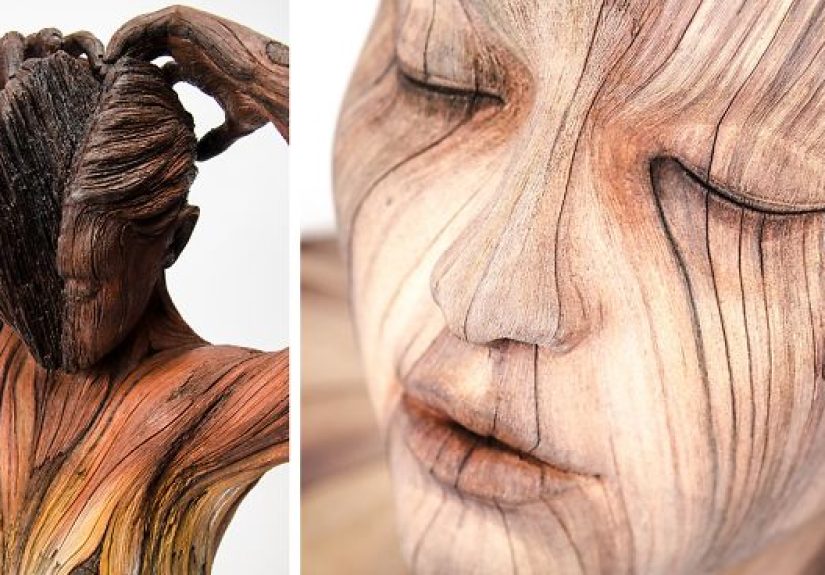
In the hands of Richmond-based sculptor Christopher David White, humble clay transforms into
convincingly weathered bark, splintered branches, and rotting logs that seem like they were pulled from a forest floor.
But here’s the twist: these pieces aren’t carved from timber. They’re ceramic sculptures that look like wood
a visual prank with a serious artistic backbone.
If you’re into hyperrealism, optical illusions, contemporary ceramics, or simply enjoy being wrong in an aesthetically
pleasing way, this is your kind of art. Let’s break down how White pulls off the illusion, why it’s so effective, and
what his “fake wood” is really trying to say about nature, humanity, and the stories we tell ourselves.
Meet the Artist Behind the “Wait… That’s Not Wood?” Moment
Christopher David White is an American sculptor known for making clay behave like other materialsespecially
wood in various states of decay. He’s not just replicating a surface; he’s recreating the entire experience of
encountering an object that looks tough, fibrous, and organic… while quietly being fragile, fired, and ceramic.
A quick background (because context makes the magic better)
White studied ceramics formallyearning a BFA in Ceramics from Indiana University and later an
MFA in Craft/Material Studies from Virginia Commonwealth University. That combination matters:
it’s where rigorous technique meets conceptual investigation, and it’s all over his work. His sculptures often explore
human connection to natureespecially the tension between admiration and exploitation.
He’s also been featured by contemporary art and craft outlets and represented by galleries that emphasize high-level
material skill. Translation: the art world has watched him do the “wood illusion” thing for a while nowand it still
makes people do a double-take.
Why Your Brain Swears It’s Wood: The Science of “Looks Real Enough”
The secret sauce is perception. Your brain doesn’t fully “see” the world like a camera; it makes fast predictions
based on patterns it recognizes. Wood has some of the most recognizable patterns on Earth:
grain lines, knots, splintering, rings, cracks, and those fibrous torn edges that scream “tree.”
Wood is basically a cheat code for recognition
Because we encounter wood constantlyfurniture, floors, pencils, doors, tree trunksour brains build a strong
shortcut: “If it has grain + knots + bark texture, it’s wood.” White weaponizes that shortcut (politely) by delivering
all the right cues with clay.
He also leans into trompe l’oeilFrench for “deceive the eye”a tradition that goes back centuries in
painting and sculpture. The point isn’t just realism; it’s the moment of realization when you understand you were
fooled. That mental stutter is part of the artwork.
How He Makes Ceramic Look Like Wood (Without Actual Wood Doing Any Work)
Calling these pieces “ceramics” can feel almost unfair, because most people picture a smooth mug or a shiny vase.
White’s surfaces are the opposite: frayed, torn, layered, and textured like bark that’s been through seasons of rain,
sun, and time.
Step 1: Build the form like a sculptor, not a carpenter
Instead of carving wood, he hand-builds with clay, shaping it into branch-like curves, split ends, and
hollowed cavities. Many works resemble decayed logs or bark fragments; others merge natural textures with human
anatomyfaces, hands, or torsos emerging from grain lines.
Step 2: Texture, texture, texture (then add more texture)
The illusion depends on microscopic believability. The grooves of wood grain aren’t uniform; they swell, tighten,
swirl around knots, and fracture at the edges. Achieving that in clay means careful carving, layering, and toolingoften
with sculpting tools that can create repeated striations and irregular, splintered transitions.
Some descriptions of his process highlight how methodical the surface-building isrepeating marks, adding layers,
and shaping the “torn” look that real wood gets when it breaks against the grain. In other words, the “randomness”
is deeply planned.
Step 3: Fire it (and then make it look like it was never fired)
Once fired, clay becomes ceramichard, durable, and (importantly) no longer flexible. That’s part of the conceptual
tension: a material associated with brittleness becomes an imitation of a tough, fibrous substance.
Step 4: The paint job that seals the illusion
Color is where many hyperrealistic sculptures either soar or suddenly look like a stage prop. White often finishes
his fired pieces with subtle, layered colorationthink of the way real wood shifts from honey tones to gray, or how
rot creates dark patches and faded edges. The goal isn’t “pretty brown.” It’s “this looks like it’s been outside.”
When the color work is restrainedmore stain than glossit helps the surface read like aged timber instead of
“painted ceramic.” That’s why people keep leaning in, squinting, and whispering, “No way.”
Specific Examples That Prove the Point (and Break Your Trust in Your Eyes)
If you browse White’s body of work, you’ll notice he doesn’t stick to one trick pony like “log #47.” Instead, he uses
the wood illusion as a foundation, then builds narratives and metaphors on top.
1) Decaying wood forms that look like they were found, not made
Many pieces resemble rotted branches, hollowed trunks, and split barksometimes with mossy or fungal-looking
details. The decay is key: it creates complex edges, cavities, and textures that allow him to show off technical skill
while hinting at impermanence.
2) Human forms merged with wood grain
Some of White’s most memorable sculptures incorporate human anatomyfaces, hands, torsosflowing into
wood-like striations. The effect is uncanny: you’re looking at a person, but also a tree, and also an object that
shouldn’t exist. That’s where the work shifts from “impressive craftsmanship” to “hold on, what does this mean?”
3) Functional objects that look like they belong in a forest (but behave like art)
White has also created ceramic objects that read as functionalvessels, sets, or forms that resemble usable items
while still wearing the disguise of bark and timber. That crossover is important: it blurs the line between craft and
sculpture, between “thing” and “idea.”
What the “Wood Lie” Is Actually Saying
It’s tempting to treat this as pure optical illusion: “Wow, he made clay look like wood. Neat.” But the strongest
descriptions of White’s work consistently point to something deeper: the illusion is a tool for talking about the
relationship between humans and nature.
Growth and decay as a visual language
Decaying wood is nature’s reminder that nothing stays “new.” Trees grow, break, rot, and feed the next cycle.
By choosing wood-in-decay as a recurring subject, White anchors his work in impermanence. It’s not glossy lumber
from a showroom; it’s the kind of wood that tells the truth about time.
The illusion mirrors the way we separate ourselves from nature
White has written and been quoted in ways that emphasize human connection to natureoften comparing bodies
and ecosystems through shared patterns (think: skin and bark, veins and roots). The work suggests that the biggest
illusion isn’t the fake wood. It’s the story that humans are separate from the natural world.
That’s why the trick matters: when you realize the “wood” is ceramic, you’re forced to question your first assumption.
And once you’re in that mindsetquestioning what you thought you knewthe art can slide its bigger idea into the room.
How to Look at Trompe l’Oeil Ceramics Without Spoiling the Fun
If you ever see hyperrealistic ceramic art in a gallery or museum, here’s how to enjoy it at full volume.
1) Give yourself permission to be fooled
The point is not to “catch the artist.” The point is to experience the shift from certainty to curiosity. Let your brain
do its shortcut thing. Then let the artwork interrupt it.
2) Look for transitions
Illusions often reveal themselves at the edges: where a “splinter” turns, where a knot meets a grain line, where a
surface shifts from matte to slightly reflective. These are the spots that show how the piece is constructed.
3) Don’t touch (I know, I know)
Your fingers will want to confirm what your eyes can’t. Resist. Ceramic is tougher than it looks, but detailed edges
can be delicate, and galleries get understandably grumpy about fingerprints. Consider it part of the drama: the art
denies you the easiest way to solve the mystery.
4) Ask the best question: “Why wood?”
Hyperrealism is never just about showing off. White’s material choicesclay pretending to be timber, fragility pretending
to be strengthcreate a built-in contradiction. That contradiction is where meaning lives.
Why This Kind of Work Hits So Hard Right Now
We live in an era of “looks real” everything: filters, AI images, deepfakes, ads dressed up as advice, and perfectly staged
“candid” photos. Trompe l’oeil sculpture feels timely because it admits the trick up front. It doesn’t pretend to be truth.
It invites you to notice how easily you can be convinced.
And then it does something generous: it uses that realization to point you back toward real questionsabout the environment,
consumption, the fragility of living systems, and the stories we tell about our place in the world.
Conclusion: The Best Kind of Mind Game
Christopher David White’s work is the rare combination of “jaw-dropping craftsmanship” and “actually has something to say.”
Yes, the sculptures will mess with your head. They’ll also slow you down, make you look closer, and remind you that the most
convincing illusions aren’t always found in art galleriessometimes they’re the assumptions you walk around with every day.
So the next time you see a “wood” sculpture that seems too perfect, do yourself a favor: lean in, look twice, and enjoy the
moment your brain realizes it’s been politely outplayed by a chunk of clay.
The Mind-Bend Experience: 5 Real-World Moments This Art Brings to Life (Extra)
Seeing ceramic sculptures that look like wood in photos is impressive. Seeing them in person is a whole different
sportlike watching a magic trick after you already know there’s no such thing as magic…and still being shocked anyway.
Here are a few “experience moments” people commonly have around work like Christopher David White’s, and why those reactions
are part of what makes the art memorable.
1) The confident walk-up. You approach the piece with the swagger of someone who has seen wood before (which, to be fair,
you probably have). Your brain runs its recognition algorithm: grain? check. knots? check. broken fibers? check. Your internal narrator
says, “Nice carved wood.” This is the moment the sculpture is setting the hookbecause your certainty is exactly what it’s about to flip.
2) The sudden slowdown. Then something feels…off. Not because it looks fake, but because it looks too convincing.
The “rotted” edge has a crispness that seems impossible. The color shifts look natural, not painted. You start scanning for tool marks,
like a detective who forgot they came to an art show to relax. This is where the work does its best trick: it turns you from a casual viewer
into a careful observer.
3) The whispered debate. If you’re with someone, you’ll likely do the low-volume argument:
“It’s wood.” “No, it’s ceramic.” “No way.” “Yes way.” This tiny debate is weirdly joyful because it’s collaborative. The sculpture becomes
a social objectsomething that makes strangers and friends talk, guess, and laugh. In a world where people rush past everything, art that
causes a two-minute conversation is basically a public service.
4) The forbidden touch impulse. Your hand might float upward before your manners kick in. Texture is the easiest truth test,
and this work blocks you from it. That “don’t touch” tension adds to the illusion: if you could just tap it, the mystery would collapse.
Instead, you’re stuck using your eyesand your eyes, famously, are the very things being fooled. It’s like trying to fact-check a rumor by
asking the rumor if it’s true.
5) The meaning lands after the trick. Once you know it’s ceramic, the piece changes. It’s no longer “a chunk of wood.”
It becomes a contradiction: fragile material masquerading as tough material; manufactured object masquerading as natural object; permanence
(fired ceramic) impersonating impermanence (rotting wood). That’s when the bigger ideasabout the environment, consumption, and our relationship
to the natural worldstart to feel less like “an art statement” and more like something you’re physically witnessing.
The best part is that the experience sticks. Later, you’ll see a real piece of driftwood and notice details you previously ignoredgrain direction,
layered fibers, the way time “draws” on a surface. That’s one of the sneakiest outcomes of trompe l’oeil ceramics: it doesn’t just change how you
look at the sculpture. It changes how you look at actual wood.