Table of Contents >> Show >> Hide
- What Are Tili Wiru Pendants?
- The Story Behind the Weave: Why These Pendants Feel Alive
- Design DNA: What Makes a Tili Wiru Pendant Instantly Recognizable
- Why Pendant Lighting Works (and Why Most Rooms Need More Than One Type of Light)
- Where Tili Wiru Pendants Shine Best
- Planning the Hang: Height, Spacing, and Proportions Without the Head Bonks
- Bulbs, Brightness, and Color: Make the Weave Glow, Not Glare
- Safety and Practicalities (Because Fire Isn’t a Design Style)
- Styling Ideas: How to Make Tili Wiru Pendants Look Like They Belong (Even in a Minimalist Home)
- Care and Cleaning: Keep the Weave Lovely Without Stressing It Out
- Sustainability and Social Impact: Buying With Your Values (Not Just Your Eyes)
- Experiences With Tili Wiru Pendants: What Living With One Tends to Feel Like (500+ Words)
- Conclusion
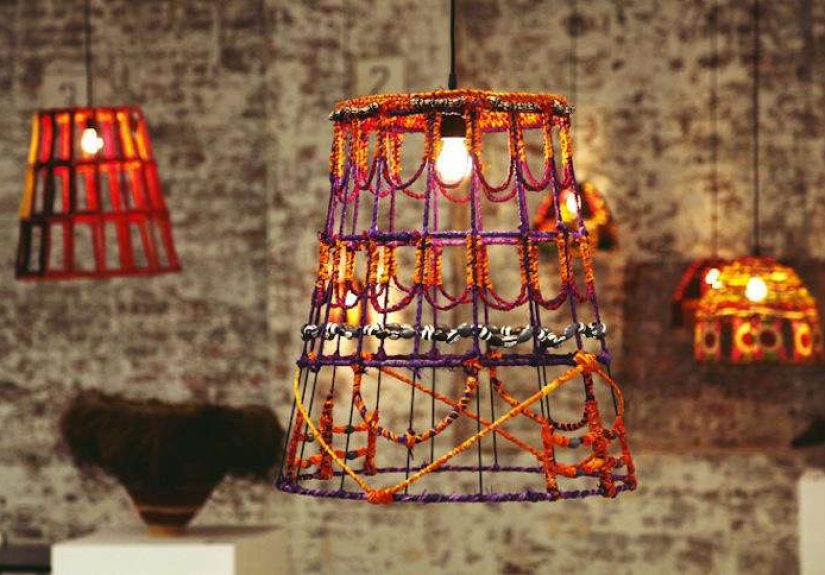
Some pendant lights are “nice fixtures.” Tili Wiru pendants are conversation starters that also happen to light your soup. These colorful, handwoven pendant shades are best known as a collaboration between Australian design studio Koskela and the artists of Tjanpi Desert Weaverseach shade made by hand, each one different, each one with the kind of texture you usually only get from a really good vacation photo.
If you’ve ever stared at a room and thought, “This space needs more joy,” you’re already emotionally prepared for a Tili Wiru pendant. This guide explains what they are, why they’re special, and how to plan, hang, style, and care for themwithout turning your ceiling into a regret museum.
What Are Tili Wiru Pendants?
“Tili Wiru” is often translated as “beautiful light,” and the name fits: these are woven pendant light shades designed to glow warmly while showing off bright color, beads, and playful detail. They’re typically formed around a frame, then wrapped and embellished with natural fibersso the finished piece reads as both lighting and fiber art.
Not jewelry pendantsceiling pendants
Quick clarification, because English likes to prank us: in this context, “pendants” means pendant lights (ceiling-hung fixtures), not necklace pendants. If you were hoping for something to wear, the good news is you can still accessorizejust with lighting.
The Story Behind the Weave: Why These Pendants Feel Alive
Mass-produced lighting tends to look perfect in the way that a stock photo family looks perfecttechnically flawless, emotionally suspicious. Tili Wiru pendants are the opposite. Each one is handmade, and you can feel it: the slight irregularities, the bold creative choices, the “I did not come here to be beige” energy.
That handmade quality matters in design because it changes how a room behaves. Instead of the light fixture disappearing into the ceiling (like a polite introvert), it becomes a focal point that sets the tone. The pendant doesn’t just illuminate a space; it gives it a pulse.
Design DNA: What Makes a Tili Wiru Pendant Instantly Recognizable
1) Texture you can practically hear
Woven natural fibers create layered textureopen enough to feel light, dense enough to feel grounded. When the bulb turns on, that texture creates soft shadowing and a gentle, diffused glow rather than harsh downlight that makes your kitchen island look like an interrogation room.
2) Color as a strategy, not a sprinkle
With many pendant lights, color is an accent. With Tili Wiru, color is the point. These pieces tend to use bold, celebratory palettes that work especially well when the rest of the room is calmerthink warm wood, white walls, matte black hardware, or a neutral stone countertop. In other words: let the pendant be the party, and let the room be the excellent host.
3) Scale that reads as “art,” even when the lights are off
A pendant light shouldn’t only look good when powered on. Tili Wiru shades typically hold their own as sculptural objects in daylight, which is exactly what you want if the fixture hangs above a dining table, entryway, or island where it’s visible 24/7.
Why Pendant Lighting Works (and Why Most Rooms Need More Than One Type of Light)
Great lighting design isn’t about “one big light in the middle.” It’s about layering: ambient light (overall glow), task light (see what you’re chopping), and accent light (make things look intentional). Pendant lights can pull double dutyespecially when they’re paired with under-cabinet lights, wall sconces, or lamps.
A Tili Wiru pendant is especially strong in the “accent + ambient” role: it adds visual interest while contributing to a comfortable, human-scale glow. If you place it thoughtfully, it can anchor a zonelike the dining table or kitchen islandwithout needing walls.
Where Tili Wiru Pendants Shine Best
Over a dining table: the classic move
Over a dining table, a pendant becomes part of the social experience. The goal is simple: light the food and faces, not your guests’ foreheads. A widely used guideline is to hang a pendant so the bottom of the fixture sits roughly 30–36 inches above the table surface. That keeps sightlines open while keeping light where you need it.
Sizing matters too. A common rule of thumb is to choose a fixture that’s roughly 1/2 to 2/3 the width of the table. For long tables, multiple pendants or a linear configuration can look more balanced than one oversized pieceunless you’re going for “modern chandelier energy,” which is also valid.
Over a kitchen island: functional and dramatic
Kitchen islands need task lighting, but they also deserve style points. Most designers aim for about 30–36 inches between the bottom of the pendant and the countertop. If you’re using multiple pendants, spacing often lands around 2–3 feet apart (center to center), depending on fixture size and island length.
Tili Wiru pendants are great here because they add softness and texture to a room full of hard surfaces (stone, tile, metal). They can be the “warmth layer” your kitchen didn’t know it needed.
Entryways and stairwells: instant personality
If you want maximum impact with minimal effort, hang one where it’s visible the moment you walk in. In taller spaces, the pendant can act as a visual connector between ceiling height and human scale. Translation: your foyer stops feeling like a polite echo chamber.
Bedrooms: unexpected, cozy, and hotel-level intentional
Pendant lighting in bedrooms can replace bedside lamps or add a sculptural centerpiece. If you go this route, consider a dimmer and a warm color temperature so your room still reads “sleep sanctuary,” not “airport lounge.”
Planning the Hang: Height, Spacing, and Proportions Without the Head Bonks
Start with the “30–36 inch” baseline, then adjust
- Standard ceiling (around 8 feet): 30–36 inches above table/counter is a solid starting point.
- Higher ceilings: consider raising the fixture slightly to keep proportions balanced and to preserve sightlines.
- Very tall household members: the “duck test” matters more than design rules. Comfort wins.
Multiple pendants: your room wants symmetry (even if you claim you don’t)
If you’re hanging two or three pendants over an island, keep spacing consistent and avoid pushing fixtures too close to the ends. Many designers leave breathing room near the island edges and distribute the pendants evenly for a clean look.
With a highly expressive shade like Tili Wiru, don’t overcrowd. One statement pendant can be stunning; two can feel like a curated gallery; three can be perfect if the island is long and the pendants are appropriately sized. Four is… a choice. Proceed only if you are powered by confidence and measurements.
Bulbs, Brightness, and Color: Make the Weave Glow, Not Glare
Think lumens, not watts
Modern lighting is best chosen by lumens (brightness) rather than watts (energy use). If you’re replacing an old incandescent feel, many guides place the “60-watt vibe” around ~800 lumensbut your room size, shade density, and ceiling height will influence what feels right.
Pick a color temperature your home actually likes living with
Color temperature is measured in Kelvin (K). For most indoor living spaces and task areas, many energy-efficiency guides recommend a range roughly around 2700–3600K, which tends to read warm and comfortable. Cooler temperatures can feel crisp, but can also make cozy rooms feel emotionally distant. (Nobody wants their dinner table to feel like a dentist’s office.)
Dimmers: the cheat code for “expensive-looking” lighting
A dimmer lets you shift from bright task lighting to soft evening glow. It’s especially useful with artisan pendant lighting because it lets you highlight texture and color without turning the pendant into the sun. Bonus: dimming can also reduce energy use and extend bulb life, depending on your setup and compatible bulbs.
Safety and Practicalities (Because Fire Isn’t a Design Style)
Woven shades are beautiful, but they should be treated like the artisanal objects they are: installed correctly, used with the right bulb type, and kept away from excess heat. A few practical rules:
- Choose listed/certified fixtures where possible and follow the manufacturer’s installation instructions.
- Never exceed the maximum bulb wattage marked on the fixture/socket.
- Ensure the shade doesn’t touch the bulb and allow airflow around the lamp.
- If you’re unsure about wiring, use a qualified electricianespecially in older homes.
LED bulbs generally run cooler than old-school incandescents, which makes them a smart match for many pendant shades. Still, “cooler” is not the same as “cold,” so treat the fixture ratings like the law. Because they kind of are.
Styling Ideas: How to Make Tili Wiru Pendants Look Like They Belong (Even in a Minimalist Home)
Minimal room, maximal pendant
If your home leans modern or minimalist, a Tili Wiru pendant can be the single bold object that makes the room feel curated rather than sterile. Keep everything else quietsimple stools, calm backsplash, consistent hardwareand let the pendant be the expressive accent.
Boho and eclectic spaces: match energy, not color
In eclectic rooms, you don’t need a perfect palette match. Instead, echo the pendant’s energy with other tactile elements: woven baskets, vintage textiles, handmade ceramics. The goal is cohesion through texture and craft, not identical shades of teal.
Coastal or natural palettes: let texture do the heavy lifting
In coastal or nature-inspired interiors, woven pendant lighting feels right at home. Pair it with wood tones, linen, jute rugs, and warm whites. The pendant becomes a bridge between “beachy calm” and “artful personality.”
Care and Cleaning: Keep the Weave Lovely Without Stressing It Out
Cleaning a woven pendant shade is mostly about gentle dust removal rather than scrubbing. A few reliable approaches:
- Regular dusting: microfiber duster, a soft brush, or a blast of cool air (no heat) to lift dust from texture.
- Vacuum carefully: use a soft brush attachment on low suction to avoid snagging fibers or dislodging details.
- Spot attention: for small marks, test any method in an inconspicuous area first and keep moisture minimal.
Also: unplug or switch off power before cleaning. This is not just safety adviceit’s also how you avoid the extremely humbling experience of vacuuming directly into a lit bulb.
Sustainability and Social Impact: Buying With Your Values (Not Just Your Eyes)
Handcrafted pendant lighting often sits at the intersection of design and livelihood. When a product is made by artisans, the purchase can support skills, income opportunities, and cultural continuityespecially when the supply chain is transparent and the makers are credited and compensated appropriately.
If ethical sourcing matters to you, look for clear information about who made the piece, how materials are gathered, how artists benefit, and whether the seller supports fair, respectful partnerships. “Handmade” should mean more than “someone somewhere had a rough day so you could have a cute light.”
Experiences With Tili Wiru Pendants: What Living With One Tends to Feel Like (500+ Words)
People who bring a Tili Wiru pendant into their home often describe the first experience the same way: the room changes before the light even turns on. In daylight, the pendant behaves like a sculptural objecttexture, color, and little details becoming the thing your eyes naturally land on. It’s the design equivalent of walking into a party and immediately spotting the person wearing the best jacket.
Once it’s lit, the experience becomes less about “brightness” and more about mood. Because woven shades tend to diffuse light, the glow can feel softer and more welcoming than a clear-glass pendant that beams light straight down. Over a dining table, this often translates into a subtle upgrade in how meals feel: less cafeteria, more “we should definitely make this a weekly thing.” In a kitchen, it can make even a quick snack feel more intentionallike you meant to eat that cheese standing up. (No judgment. That’s a lifestyle.)
Another common experience: compliments from people who don’t normally notice design. You know the typefriends who think “mid-century” is a band and “finish” is what you do when the Wi-Fi loads. A Tili Wiru pendant tends to cut through that. Visitors will ask where it’s from, how it’s made, and whether it’s “custom.” The correct answer is essentially: “It’s handmade, and yesevery one is different,” which is the most satisfying sentence you can say about anything you bought for your house.
Over time, owners often find the pendant becomes a kind of anchor. In open-plan spaces, it helps define zones: the dining area feels like a destination, the island feels like the center of gravity, the entry feels like it has a point of view. Designers sometimes call this “visual zoning,” but you might simply think of it as the moment your home stops feeling like a collection of furniture and starts feeling like a place with personality.
There’s also a practical side to the experience. Woven shades can collect dust in their texture (because texture is basically a dust magnet with good PR). Most people develop a quick routine: a soft duster pass during weekly cleaning, or a gentle vacuum-with-brush moment when the shade starts looking a little… matte. The good news is that the texture also hides tiny imperfections better than smooth surfaces, so you’re not in a constant battle against fingerprints like you might be with glossy metal.
Finally, there’s the emotional experienceespecially for people who care about craft and story. Living with a handmade pendant can feel different from living with something mass-produced because it carries visible evidence of human making: choices, variations, and small surprises. That doesn’t mean it’s chaotic; it means it’s alive. And in a world full of identical items delivered in identical boxes, a light that looks like it was made by a real person is, oddly enough, a little bit grounding.
In short: a Tili Wiru pendant tends to deliver three experiences at oncelight you can live with, texture you can feel, and a daily reminder that “functional” doesn’t have to mean “forgettable.”
Conclusion
Tili Wiru pendants sit in a sweet spot: they’re practical enough to use every day, expressive enough to transform a room, and crafted enough to feel like you collected something meaningful rather than just “bought a light.” If you plan the height, choose the right bulb, add a dimmer, and keep the weave gently dusted, you’ll get a fixture that does what great design always does: it makes life feel a little better without demanding attentionexcept, of course, when someone walks in and immediately says, “Okay, where did you get THAT?”