Table of Contents >> Show >> Hide
- The Budget Cabinet Trick Everyone Should Know
- Why Cabinets Work So Well in a Basement
- Before You Start: Fix the Basement, Then Fancy It Up
- Best Places to Use This Basement Cabinet Idea
- How to Make Cheap Cabinets Look Custom
- Budget-Friendly Materials That Actually Make Sense
- Design Tips That Make the Basement Feel Bigger and Brighter
- Mistakes to Avoid With a Basement Cabinet Makeover
- A Sample Low-Cost Basement Cabinet Plan
- Final Thoughts
- Real-Life Experiences With This Basement Cabinet Upgrade
- SEO Tags
If your basement currently looks like a place where old paint cans go to reflect on their life choices, you are not alone. Many lower levels become the home’s unofficial “we’ll deal with it later” zone. The good news is that a full basement remodel is not the only way to make the space feel polished, practical, and surprisingly stylish. One budget cabinet trick can change the entire room: use affordable stock cabinets, then dress them up with trim, paint, fillers, and a countertop so they look custom-built.
It is the kind of move that makes guests say, “Wait, this is your basement?” while you pretend you always had a vision and definitely did not spend three evenings comparing cabinet depths online. Best of all, this approach works for storage walls, laundry zones, dry bars, homework stations, craft corners, and media nooks. It gives your basement instant structure, hidden storage, and a more finished look without dragging your budget into a dark corner.
In this guide, we will break down why this basement cabinet idea works so well, how to do it smartly, what mistakes to avoid, and how to make a budget-friendly setup look far more expensive than it really is.
The Budget Cabinet Trick Everyone Should Know
The trick is simple: start with basic stock cabinets instead of custom cabinetry, then customize the installation around them. In practical terms, that means buying ready-made cabinets from a home center or flat-pack line, arranging them to fit your basement layout, and using affordable finishing touches to create a built-in effect.
Those finishing touches are where the magic happens. Add a continuous countertop across the top. Fill awkward side gaps with trim or filler strips. Extend the cabinetry visually with molding, wall paint, or floating shelves above. Swap out basic hardware for something more current. Suddenly, those humble cabinets stop looking like random boxes and start looking like a deliberate design choice.
This is one of the easiest ways to upgrade a basement on a budget because cabinetry does three jobs at once. It organizes clutter, defines the function of the space, and adds visual weight so the room feels intentional instead of accidental. A basement with a cabinet wall feels like a usable extension of the home. A basement with piles of mismatched bins feels like a place where Christmas decorations go to disappear until December.
Why Cabinets Work So Well in a Basement
They hide the mess fast
Basements collect everything: sports gear, wrapping paper, board games, tools, extra paper towels, old files, mystery cords, and at least one lamp nobody remembers buying. Closed cabinets hide visual clutter in seconds, which instantly makes the room feel calmer and cleaner.
They create zones without building walls
A run of cabinets can turn one side of the basement into a laundry center, home office, snack station, or family storage hub. That is a big win in open-plan basements where you want different functions without breaking up the room too much.
They use vertical space efficiently
Basements often have awkward footprints, low ceilings, or areas under stairs. Cabinets paired with shelves, uppers, or wall-mounted storage make the room more useful without eating up the whole floor.
They look more polished than open shelving alone
Open shelves can be pretty, but they also ask you to maintain a level of neatness that many real households cannot promise on a Wednesday. Cabinets are more forgiving. Shut the doors, walk away, and enjoy your newly upgraded basement in peace.
Before You Start: Fix the Basement, Then Fancy It Up
Here is the unglamorous but important part: do not install new cabinetry in a damp basement and hope for the best. Moisture is the party crasher of basement renovations. If water is getting in, humidity is high, or the room smells musty, solve that first.
Look for warning signs such as condensation, peeling paint, damp walls, water stains, warped materials, or a persistent basement odor. Check near foundation walls, around windows, by the laundry area, and anywhere plumbing runs through the space. If needed, use a dehumidifier, improve ventilation, seal minor problem spots, and address drainage issues outside the home. A basement upgrade should not become a very expensive science experiment in mold.
Once the space is dry and stable, your cabinet project has a much better chance of staying beautiful. This also helps protect everything you plan to store inside.
Best Places to Use This Basement Cabinet Idea
1. Laundry wall
A row of base cabinets with a countertop above the washer and dryer is the sort of practical luxury that makes folding socks feel slightly less tragic. Add wall cabinets overhead for detergent, stain removers, and backup supplies, and the entire area instantly looks cleaner.
2. Basement bar or beverage station
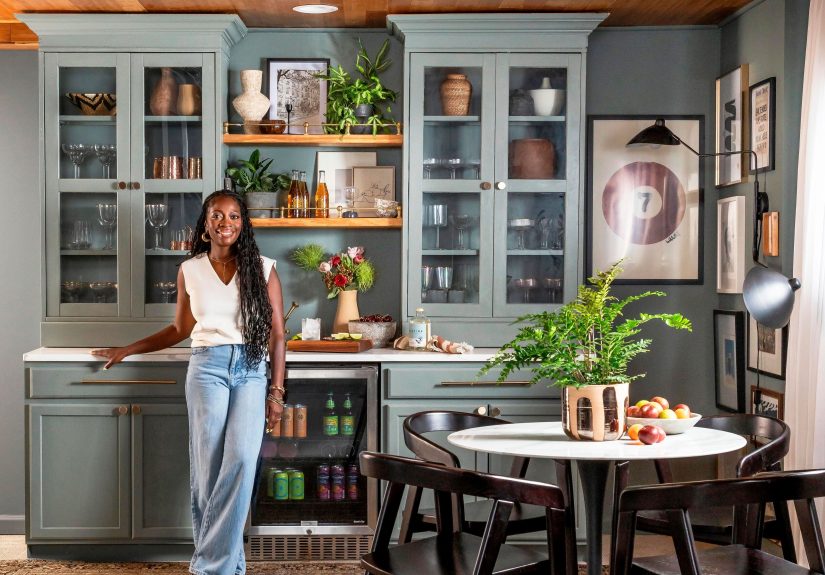
You do not need a full wet bar to get the vibe. A few stock cabinets, a durable countertop, open shelves for glasses, and maybe a small beverage cooler can create a stylish entertaining zone without the cost of a custom build.
3. Family storage command center
If your basement acts as overflow storage for the whole house, cabinets can help each family member claim a section. Use labeled bins inside for seasonal clothes, hobby supplies, or school materials. Closed doors keep the room from looking like a yard sale in progress.
4. Craft or hobby corner
Basements make great hobby spaces because they are tucked away from the main living area. Cabinets give you concealed storage for paint, fabric, wrapping supplies, game accessories, or DIY tools, while the countertop gives you an actual work surface instead of the classic “I guess I’ll use the floor again” solution.
5. TV and media wall
Base cabinets under a television, with bookshelves or floating shelves around them, create a built-in entertainment look for less. This is one of the easiest ways to make a basement family room feel finished and expensive.
How to Make Cheap Cabinets Look Custom
Use filler strips for a seamless fit
Off-the-shelf cabinets rarely fit wall-to-wall perfectly. That is normal. Filler strips on the sides or between cabinets help close awkward gaps and make the installation feel tailored to the space.
Add trim and molding
Trim is the secret handshake of built-ins. Even simple flat trim can make a low-cost cabinet run feel much more intentional. If the ceiling height allows, a little molding above tall cabinets can create a truly finished look.
Install one long countertop
A continuous top visually unites separate cabinet boxes. This makes the whole setup read as one custom installation instead of a lineup of individual pieces. Laminate, butcher block, and some prefab countertop options can all work on a budget.
Paint for consistency
If you mix cabinet types or brands, a single paint color helps everything look cohesive. White is classic, but soft green, charcoal, greige, navy, or muted black can add far more personality to a basement that needs a little confidence.
Upgrade the hardware
New pulls and knobs are the jewelry of a cabinet project. They do not need to be expensive, but they should be consistent. A sleek matte black pull, warm brass knob, or simple brushed nickel handle can completely change the tone.
Mix closed storage with display space
Too many cabinets can feel heavy, especially in a basement with limited natural light. Break things up with a few open shelves, framed art, baskets, or decorative storage jars. You want the room to feel useful, not like a hallway in a filing cabinet factory.
Budget-Friendly Materials That Actually Make Sense
If you are watching costs, spend money where it changes the experience most. Cabinets matter. So does the top surface. Fancy extras can wait.
- Stock cabinets: Choose standard sizes and avoid too many custom modifications.
- Laminate countertops: Low-maintenance, affordable, and much better-looking than many people remember.
- Butcher block: Warm, stylish, and often more affordable than stone, though it needs proper sealing.
- Quartz remnants: Great for smaller bars or cabinet runs if you want a polished upgrade without a full slab price.
- Plywood trim panels: Helpful for covering exposed cabinet sides and creating a more built-in feel.
- Clear labeled bins inside cabinets: The hidden heroes of long-term organization.
For what goes inside the cabinets, plastic bins with secure lids are smarter than cardboard in most basements. They hold up better, stack better, and are less likely to surrender dramatically to humidity.
Design Tips That Make the Basement Feel Bigger and Brighter
Go lighter if the room is dark
Light-colored cabinets bounce illumination around the room and make the basement feel less cave-adjacent. If you love dark cabinetry, balance it with warm lighting and a lighter wall or countertop.
Use reflective finishes carefully
A glossy tile backsplash, glass cabinet inserts, or a mirror above a beverage area can make the space feel more open. Just do not overdo it or your basement starts auditioning to be a nightclub.
Layer your lighting
Good cabinets deserve good lighting. Overhead recessed lights are useful, but under-cabinet lighting, sconces, or a pendant over a bar or folding counter make the space feel far more finished.
Leave breathing room
Do not line every wall with storage unless the room truly needs it. One well-designed cabinet run often has more impact than a basement packed edge to edge with cabinetry. You are creating function, not trying to win a storage marathon.
Mistakes to Avoid With a Basement Cabinet Makeover
Ignoring moisture
This is the biggest mistake. Even pretty cabinets cannot out-style a damp basement.
Buying before measuring
Measure width, height, depth, doors, soffits, window trim, and any utility access. Then measure again. A basement always has at least one surprise waiting behind a pipe or under a beam.
Forgetting access to utilities
Do not block shutoff valves, electrical panels, sump systems, or cleanouts behind an immovable wall of cabinetry. Future-you will not enjoy that plot twist.
Using flimsy organization inside premium-looking cabinets
The outside can look stunning, but the inside still needs structure. Adjustable shelves, labeled bins, baskets, and simple dividers keep the system working over time.
Choosing style over durability
Basements are hardworking spaces. Select finishes, paint, and countertops that can handle daily use, occasional damp shoes, laundry chaos, and the random sports bottle that leaks for no reason at all.
A Sample Low-Cost Basement Cabinet Plan
Let’s say you have one blank basement wall and a modest budget. Here is a realistic approach:
- Install three stock base cabinets across one wall.
- Add one inexpensive countertop across the full run.
- Paint cabinets and wall the same or complementary colors.
- Add simple hardware and trim panels at exposed ends.
- Mount two shelves above for decor and daily-use items.
- Use matching bins inside cabinets for categories like laundry, games, tools, or entertaining supplies.
That single wall can become a basement bar, a folding station, a game cabinet, a homework desk zone, or an all-purpose storage hub. It is flexible, attractive, and much cheaper than a full custom installation.
Final Thoughts
The smartest basement upgrades are not always the flashiest. Often, they are the ones that make the room easier to use every single day. That is exactly why this budget cabinet trick works so well. Stock cabinets give you the structure. Paint, trim, and a countertop give you the style. Better organization gives you the sanity.
If your basement has been stuck somewhere between “unfinished project” and “mildly haunted storage cave,” this is a practical way to move it forward. Start with one wall, one corner, or one function. Keep the design simple, solve moisture problems first, and focus on making the room work for your actual life. The result can look custom, feel intentional, and cost a whole lot less than you might expect.
In other words, your basement does not need a miracle. It just needs cabinets, a plan, and maybe a little less cardboard.
Real-Life Experiences With This Basement Cabinet Upgrade
One of the most interesting things about this budget cabinet trick is how often homeowners say the same thing after finishing it: they wish they had done it sooner. Not because it turns the basement into a luxury showroom overnight, but because it solves several annoying problems at once. The room looks neater, the storage gets easier to use, and the basement finally feels connected to the rest of the home instead of being treated like a forgotten utility bunker.
A common experience is starting with one small goal, like creating a better laundry area, and then realizing the cabinet wall changes the whole mood of the room. Homeowners often notice that once the detergent, cleaning supplies, and random loose items disappear behind cabinet doors, the basement immediately feels less stressful. It is not just about appearances. It is about removing visual noise. Even a basic row of cabinets can make the space feel calmer and easier to manage.
Another frequent reaction is surprise at how “custom” stock cabinets can look when they are installed carefully. People often assume ready-made cabinets will always look cheap, but that usually comes down to the finishing details. Once the gaps are trimmed out, the cabinets are painted, and one continuous countertop ties everything together, the result feels more deliberate. Friends or neighbors may assume the setup was built specifically for the home, which is always a nice ego boost when you know you pulled it off on a sensible budget.
Families also tend to appreciate how flexible the system becomes over time. A cabinet run that starts as a basement bar can later become a homework station, craft area, or snack zone for movie nights. A laundry counter can double as gift-wrap headquarters in December and a folding station the rest of the year. This kind of adaptability matters in basements because the space often evolves as kids grow, hobbies change, or storage needs increase.
There is also a practical lesson many homeowners mention after the project is done: the inside organization matters almost as much as the cabinets themselves. Without bins, labels, or shelf planning, the cabinets can quickly become elegant clutter caves. But when categories are clear and everything has a place, the setup actually works. That is when the basement becomes easier to maintain, not just nicer to photograph.
Perhaps the biggest takeaway from real experiences is that this project feels achievable. It does not require a massive remodel, a luxury budget, or a six-week disruption. It usually begins with one wall and one purpose. That makes it less intimidating and more realistic for ordinary homeowners who want a visible upgrade without completely rebuilding the basement. And once that first section is finished, it often inspires the rest of the lower level to step up its game too.