Table of Contents >> Show >> Hide
- Why This Headline Keeps Coming Back
- What the Ukrainian Battlefield Actually Punishes
- Which American Drones Drew Frustration?
- But Ukraine Does Not Hate Every American Drone
- Why Ukraine Turned to Cheap Domestic and Commercial Options
- What America Should Learn From Ukraine’s Drone Frustration
- Experiences From the Battlefield, the Workshop, and the Procurement Desk
- Conclusion
That headline has enough spice to set off a smoke alarm, but it points to a real problem. Ukraine does not “hate” American drones in the broad, flag-waving sense. What Ukrainian operators and officials have repeatedly hated is something much more specific: drones that look impressive in a brochure, arrive with patriotic fanfare, and then go wobbling into the electronic-warfare blender that is the modern Ukrainian battlefield.
In other words, this is not a story about anti-American sentiment. It is a story about battlefield fit. In Ukraine, a drone is not judged by its branding, investor deck, or how many times someone in Washington calls it “innovative.” It is judged by a simpler standard: Can it survive jamming, keep its video link, stay on course, hit something useful, and be replaced fast when it gets blown out of the sky? If the answer is no, the drone is not a miracle. It is just expensive litter.
That hard lesson has surfaced more than once. It was visible back in 2016, when donated American Raven drones disappointed Ukrainian users. It showed up again in more recent reporting about some U.S. small-drone systems struggling under intense Russian electronic warfare. And it helps explain why Ukraine has leaned so heavily into cheap FPV drones, local production, rapid battlefield feedback, and software-heavy upgrades instead of waiting for shiny Western systems to become perfect.
The result is a bigger and more important point than the headline alone suggests. Ukraine’s frustration with some donated American drones is really a warning to the Pentagon, American drone startups, and defense planners everywhere: modern drone warfare rewards adaptability, mass, and anti-jamming resilience more than elegant design, procurement prestige, or slow-moving certification culture. The battlefield, rude as ever, has no respect for PowerPoint.
Why This Headline Keeps Coming Back
The first warning shot came years ago
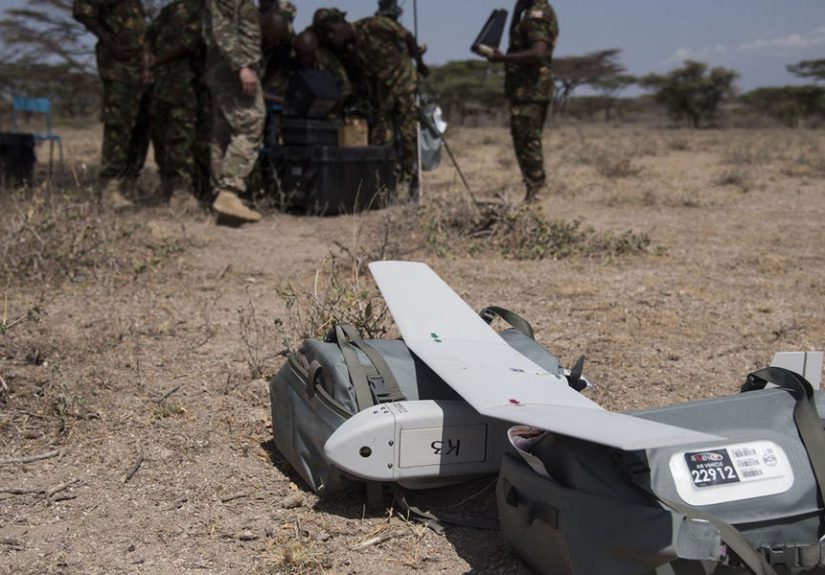
The phrase “Ukraine hates its new donated American drones” traces back to a very real early disappointment. In 2016, Ukrainian officials complained that U.S.-supplied RQ-11B Raven mini-drones were poorly suited for the fight in eastern Ukraine. Their biggest weakness was painfully obvious: they were vulnerable to jamming and interception. Ukrainian officials also complained about short battery life and limited usefulness near the front.
That episode mattered because it exposed a mismatch between what the United States had provided and what Ukraine actually needed. The Ravens were not useless in every context. They simply were not ideal for a war where Russian-backed forces brought stronger electronic-warfare capabilities than the kinds of insurgent enemies American systems had often been built to face in Iraq or Afghanistan. In Ukraine, analog-era vulnerabilities were not quaint. They were deadly.
The 2024 complaints sounded different, but the theme was the same
Fast forward, and the complaints became more modern but not fundamentally different. Reporting in 2024 described how some American small drones from startup manufacturers struggled to make a real impact in Ukraine. Some flew off course under jamming. Some were too expensive for a battlefield where drones are consumed in shocking numbers. Some were difficult to repair quickly. Some could not adapt fast enough to the pace of battlefield change.
That was a brutal reality check because American defense culture often celebrates high-end performance, polished engineering, and compliance-heavy development. Ukraine’s front line has demanded something else entirely: cheap, rugged, replaceable flying tools that can be modified in near-real time as Russian countermeasures evolve. A drone that performs beautifully in a demo but fails after meeting a jammer the size of a backpack is not a battlefield success story. It is a cautionary tale with propellers.
What the Ukrainian Battlefield Actually Punishes
Electronic warfare eats assumptions for breakfast
The defining feature of drone warfare in Ukraine is not just the drone. It is the drone plus the invisible contest around it: jamming, spoofing, interception, signal disruption, and GPS denial. This environment does not merely inconvenience operators. It can break the logic of the system itself. If a drone depends too heavily on uninterrupted radio links or clean GPS, it is walking into a knife fight wearing a tuxedo.
Ukraine’s experience has reinforced a broader pattern seen in the war. Russian jamming has not only affected drones. It has also degraded the performance of other Western systems that rely on satellite guidance or stable communications. That matters because it shows the problem is bigger than any one manufacturer or any one drone family. The issue is that a sophisticated, high-intensity battlefield can humble “smart” systems that were designed with more permissive assumptions.
This is why anti-jam navigation, onboard autonomy, better radios, frequency agility, and terminal guidance that does not rely on a clean signal are no longer “nice-to-have” features. They are basic survival traits. A drone without them may still have value, but that value shrinks fast the closer it gets to the front.
Cheap beats exquisite when attrition is savage
Another reason some donated American drones disappointed is brutally practical: cost. Ukraine has had to use drones at a scale that makes traditional Western procurement logic look almost theatrical. Small FPV drones can be assembled for a tiny fraction of the price of more sophisticated Western systems. They are expendable by design. That matters in a war where units can lose large numbers of drones in a very short time.
On this battlefield, a drone is not a treasured heirloom. It is closer to ammunition. If a $500 or $1,500 system can damage or destroy a target worth hundreds of thousands or millions, the exchange ratio is attractive. If a far more expensive drone cannot reliably survive jamming or cannot be replenished quickly, its theoretical advantages start to look suspiciously academic.
That does not mean cheap is always better. It means cheap and good enough can beat advanced and scarce. In a prolonged war, scale and replacement speed become strategic facts, not accounting details.
Repairability and upgrade speed matter almost as much as flight performance
Ukraine has learned to iterate drone tactics and technology with astonishing speed. Software gets updated. Components get swapped. Antennas change. Control methods evolve. New workarounds appear. Old ones die. What matters is not just whether a drone works today, but whether it can be adapted by next week after the enemy responds.
This dynamic has often favored systems that are easier to modify, easier to source, and easier to patch in the field. It has also favored a procurement culture that listens quickly to operators. If a drone maker needs a long approval cycle to fix a software issue or redesign a component, the battlefield may have moved on before the fix arrives. Ukraine’s war has made one thing painfully clear: innovation delayed is innovation denied.
Which American Drones Drew Frustration?
RQ-11B Raven became an early symbol of the mismatch
The Raven became the first famous case because it captured the core complaint in a single package. It was donated with good intentions. It had recognizable military pedigree. And yet Ukrainian officials saw it as poorly matched to an environment saturated with advanced electronic warfare. Its analog controls and vulnerable data links made it easier to disrupt. That was not just disappointing. It undermined confidence in whether Washington truly understood the battlefield Kyiv was dealing with.
Some newer U.S. startup drones ran into the same wall
The more recent frustrations involved a newer generation of American drones, particularly small platforms from startups that hoped Ukraine would become the ultimate proving ground. In some cases, the proving ground proved a little too ground-like. Systems reportedly drifted off course, got lost under jamming, cost too much for the mission profile, or could not be repaired and replaced at the speed the front demanded.
That does not mean every American startup drone failed, or that every Ukrainian unit had the same experience. It means the broader category of “American high-tech small drone” did not automatically translate into battlefield dominance. In fact, the war has shown that a drone’s nationality tells you much less than its survivability, cost, autonomy, and support loop.
The deeper problem was design philosophy
Many U.S. systems were developed for an American way of war shaped by air superiority, stronger logistics, and different adversaries. Ukraine has been fighting under constant observation, under artillery threat, under drone threat, and under electronic pressure. It is a battlefield where almost everything emits, everything can be spotted, and anything predictable gets punished.
That means Ukraine did not just need “better drones.” It needed drones built around uglier truths: links will drop, GPS may fail, operators are under stress, repairs must be improvised, components may come from mixed supply chains, and large quantities matter more than boutique excellence. Some American systems entered that environment with the wrong assumptions baked in.
But Ukraine Does Not Hate Every American Drone
Switchblade and Phoenix Ghost are part of a more complicated picture
The “Ukraine hates American drones” narrative becomes misleading when it turns absolute. The United States has supplied large numbers of unmanned systems, including Switchblade and Phoenix Ghost platforms. Official U.S. fact sheets have listed hundreds of Switchblades and more than a hundred Phoenix Ghost systems in assistance packages, and U.S. support has continued across multiple packages and years.
Not every U.S. manufacturer accepted the broader critique, either. AeroVironment publicly pushed back on being lumped into sweeping claims that American drones had broadly failed in Ukraine, arguing that thousands of its systems, including Switchblades, were being used successfully under difficult electronic-warfare conditions. That response matters because it reminds us that the category is mixed. Some systems have been criticized. Some have defenders. Some are evolving.
So the smart interpretation is not “Ukraine rejects American drones.” It is “Ukraine rejects drones that do not work well enough for this war.” That is a much sharper lesson, and a more useful one.
The United States is learning from Ukraine in real time
If there is an irony here, it is that Ukraine’s complaints may end up improving American drone development. U.S. and allied firms have worked on anti-jam radios, autonomy kits, terminal guidance improvements, and systems better able to function when communications are disrupted. More recent anti-drone and autonomous concepts have been marketed specifically around their ability to operate in exactly the kind of hostile electromagnetic environment Ukraine helped define for the modern era.
Meanwhile, the relationship has been moving toward co-production and joint drone development. That shift says a lot. The lesson Washington seems to be absorbing is that Ukraine is no longer merely a recipient of drone technology. It is one of the world’s most important laboratories for drone warfare, drone defense, and fast-cycle battlefield adaptation.
Why Ukraine Turned to Cheap Domestic and Commercial Options
Ukraine’s reliance on FPV drones, locally assembled systems, and commercial components did not happen because those options looked glamorous. It happened because they solved real problems. They were available faster. They were easier to modify. They could be sourced in large numbers. They could be repaired with less ceremony. And if one got knocked out of the sky, the replacement bill was painful, but not catastrophic.
This logic helps explain why Chinese-made DJI drones and Ukrainian systems built with foreign commercial components became so influential. They were not always perfect, and they were certainly not politically uncomplicated. But in a war of mass attrition, “available now” often beats “ideal later.” That is especially true when units are trying to build layered capabilities from reconnaissance to artillery spotting to FPV strike missions to long-range attack.
Ukraine’s own drone industry surged for the same reason. The country pushed contracting reforms, encouraged private-sector production, and aimed for enormous output of FPV drones. As the war evolved, Ukraine also leaned harder into AI-assisted and increasingly autonomous systems designed to function better under jamming. The strategic message was unmistakable: if the air above the battlefield is crowded and hostile, your drone ecosystem has to be fast, local, and relentlessly iterative.
What America Should Learn From Ukraine’s Drone Frustration
Build for jamming first
The first lesson is simple. Stop treating anti-jam resilience as a premium feature. In a peer conflict, it is table stakes. Any small-drone program that assumes clean links, dependable GPS, or leisurely operating conditions is already flirting with disappointment.
Design for mass, not just excellence
The second lesson is that scale is not the enemy of sophistication. In this war, quantity has often created its own tactical quality. A force that can field large volumes of good-enough drones, supported by rapid software updates and field repairs, can outperform a smaller fleet of exquisite systems that are too precious to lose and too slow to improve.
Shorten the feedback loop between operator and engineer
The third lesson is organizational. Drone programs should be judged partly by how quickly frontline feedback changes the product. If soldiers discover a weakness on Monday, the design team should be thinking about a fix before the week is over, not waiting for a committee to schedule a slideshow about “future requirements.” The enemy will not pause for compliance theater.
Think in ecosystems, not individual airframes
Finally, success in drone warfare is no longer about a single hero platform. It is about the system around it: software, mapping, training, autonomy, radios, logistics, repair, data flows, and counter-drone layers. Ukraine’s complaints about donated American drones make the most sense when seen in that wider frame. A drone can be technically impressive and still fail if the broader ecosystem does not fit the fight.
Experiences From the Battlefield, the Workshop, and the Procurement Desk
Across years of reporting on Ukraine’s drone war, the lived experience behind this topic feels remarkably consistent. The operator’s experience is the first and most unforgiving. A drone may arrive with a reputation, a polished case, and the faint aroma of strategic optimism. Then it gets launched near the line, the signal starts to wobble, the video feed flickers, the controls feel uncertain, and suddenly a machine that looked advanced in training starts behaving like a confused bird with a software problem. On a quiet range, that is annoying. On an active front, it can get people killed.
The technician’s experience is just as revealing. In Ukraine, maintainers and improvisers do not live in the fantasy world where equipment stays in factory condition and every spare part arrives on time. They live in the world of soldering irons, mixed components, modified antennas, software workarounds, scavenged parts, and the eternal battlefield question: “Can we make this thing useful by tomorrow?” That pressure favors systems that can be opened, understood, patched, and returned to service quickly. When a donated drone is too closed, too proprietary, too delicate, or too dependent on a slow support chain, frustration rises fast. War is a terrible place to discover your product hates field repair.
Then there is the procurement experience, which may be the least cinematic but possibly the most important. Ukrainian decision-makers have had to think in ruthless arithmetic. If a drone costs a lot, takes too long to arrive, and still may not survive jamming, the value proposition collapses. If another option is cheaper, available in bulk, easier to fix, and “good enough” to do the job, that option wins more often than Western defense marketing departments would like. The procurement desk, unlike the trade show, is not easily charmed.
The startup experience is its own category of hard education. For many American and European drone firms, Ukraine became the battlefield equivalent of a final exam graded in explosions. Some companies discovered that what looked like cutting-edge autonomy or resilient communications in development was not resilient enough when exposed to a determined, adaptive enemy. Others found that price alone could knock them out of the competition. A company may build a clever drone, but if Ukraine can buy multiple alternative systems for the same money, cleverness has competition. The war has forced startups to reckon with an uncomfortable truth: battlefield validation is not a branding opportunity unless the battlefield actually validates you.
And yet the experience has not been purely negative. It has also accelerated learning. American firms have improved radios, navigation, and autonomy. Ukrainian units have refined doctrine and manufacturing. The broader defense world has started to absorb the idea that drones should be thought of less like prestige platforms and more like dynamic, adaptable tools inside a wider combat network. So the experience behind the headline is not just frustration. It is evolution under pressure. Ukraine’s anger at underperforming donated drones has been one of the sharpest feedback mechanisms in modern defense technology. Painful, yes. Useful, absolutely.
Conclusion
So, does Ukraine hate its new donated American drones? Not exactly. The headline lands because it captures real exasperation, but it oversimplifies the verdict. Ukraine has shown intense impatience with drones that are too easy to jam, too costly to lose, too slow to improve, or too detached from battlefield reality. That criticism has hit some American systems hard, from the old Raven problem to more recent frustrations with certain startup-made drones.
But the deeper story is not about national origin. It is about adaptation. Ukraine’s war has exposed the rules of modern drone combat with remarkable clarity: resilience beats reputation, volume beats vanity, software matters as much as hardware, and a drone that cannot evolve quickly is already aging in public. In that sense, Ukraine’s frustration is not a rejection of U.S. technology. It is a demand that U.S. technology grow up fast.
And if American defense planners are wise, they will hear that message for what it really is: not an insult, but a brutally useful field report from the world’s most unforgiving drone test lab.