Table of Contents >> Show >> Hide
- Why Episode #100 Hits Different
- Jason Lemkin in One Paragraph (Because You’re Busy)
- The Big Theme: Entrepreneurship Isn’t One SkillIt’s a Stack
- Lesson 1: There Are (At Least) Two Founder ArchetypesAnd Both Can Win
- Lesson 2: Product-Market Fit Is a Feeling… and a Scoreboard
- Lesson 3: The Early Game Is Unscalable on Purpose
- Lesson 4: Scaling Is a Series of “Stage Changes,” Not a Smooth Ramp
- Lesson 5: Hiring Execs Is Where Optimism Goes to Get Stress-Tested
- Lesson 6: Venture Capital Isn’t “Easy Mode”It’s a Different Difficulty Setting
- Lesson 7: Community Is a Growth Lever That Compounds
- Lesson 8: The Real Work Is Emotional Endurance (With a Business Hat On)
- A Practical “Episode #100” Action Checklist
- FAQ: Quick Answers Founders Actually Ask
- Experiences Related to Uncharted Podcast #100 (Composite Founder Stories)
- Conclusion
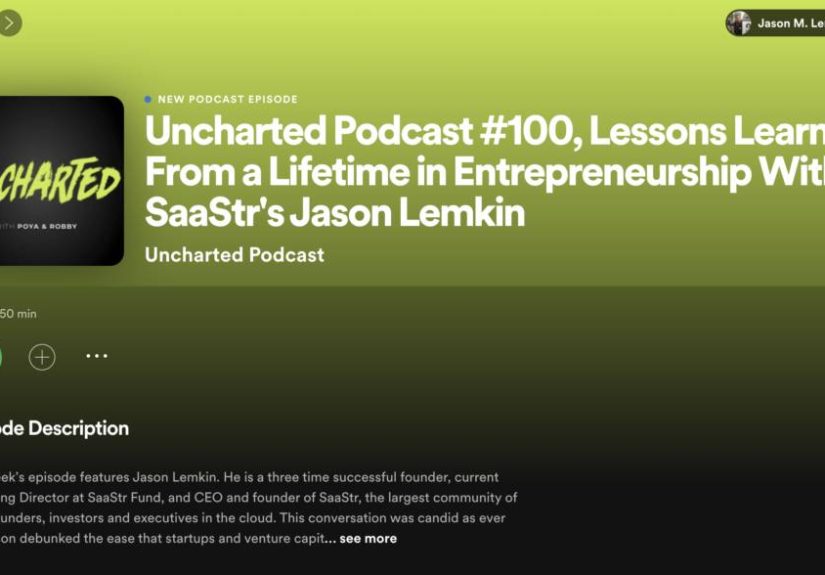
Episode #100 of Uncharted is the kind of milestone conversation that feels like a founder’s version of opening a dusty attic trunk:
it’s full of hard-won lessons, a few “why did I do that?” moments, and at least one metaphorical receipt you wish you could return.
The guest is SaaStr’s Jason Lemkinserial SaaS founder, investor, and community-builderjoining host Poya Osgouei for a candid
look at what entrepreneurship actually feels like when you remove the glossy social-media filter.
If you’ve ever wondered why startups can look like “overnight successes” right up until they don’tor why venture capital can seem like a cheat code
until you realize the boss battle is still the same sizethis episode is a useful reality check. Not a doom-and-gloom one, either.
More like: “Yes, this is hard. Also yes, you can get good at hard.”
Why Episode #100 Hits Different
Many business podcasts do “lessons learned” episodes, but #100 has extra weight because it’s a milestone and a mirror.
It’s not just tacticsit’s reflection: how founders evolve, what they stop believing, and what stays stubbornly true no matter how many times
the market changes its mind.
The show’s premise is built around “diving into the unknowns,” and that theme shows up repeatedly here: the unknowns in product decisions,
in hiring, in fundraising, in your own stamina, and in the awkward moment you realize your early hustle no longer scalesyet you still need it anyway.
Jason Lemkin in One Paragraph (Because You’re Busy)
Jason Lemkin is best known for building and leading in the SaaS worldfounding and scaling companies, then building SaaStr into a major hub
for B2B and SaaS founders through content, events, and community. His perspective tends to land somewhere between “operator truth” and
“investor pattern recognition,” which is a fancy way of saying: he’s seen enough to be optimistic, but not naïve.
The Big Theme: Entrepreneurship Isn’t One SkillIt’s a Stack
A helpful way to understand this episode is as a tour of the “entrepreneurship skill stack.” Founders don’t win because they’re best at one thing.
They win because they become competent at a lot of things faster than their constraints close in.
In that stack, a few components show up over and over:
clarity (what are we building?), courage (will we commit?), craft (can we ship it?), commerce (can we sell it?), and composure (can we keep going?).
Lesson 1: There Are (At Least) Two Founder ArchetypesAnd Both Can Win
One of the most memorable ideas associated with this episode is the contrast between founders who plan strategically from day one and founders who
stumble into an opportunity through iteration. In plain English:
some founders start with a blueprint; others start with a flashlight and a willingness to walk into the cave.
Strategic founders
These founders often have deep domain context and a clear thesis. They might build around a research breakthrough, an open-source foundation,
or an obvious market gap. Their advantage is focus: fewer random detours, more deliberate choices.
“Stumble” founders (a.k.a. iterators)
These founders discover the winning product by building, learning, and narrowing. Their advantage is adaptability:
they get good at listening, testing, and turning “almost” into “yes.”
The punchline: neither approach is morally superior. The market doesn’t hand out trophies for “most elegant origin story.”
It rewards solutions that solve painful problems and keep delivering value.
Lesson 2: Product-Market Fit Is a Feeling… and a Scoreboard
Product-market fit (PMF) is often described like it’s a magical cliff you fall off: one day you don’t have PMF, the next day you do,
and suddenly your Slack is 90% “inbound lead” notifications and 10% confused celebratory emojis.
In reality, PMF is both qualitative and quantitative:
- Qualitative: customers sound relieved you exist, not merely polite about your demo.
- Quantitative: retention improves, referrals appear, sales cycles shorten, and growth stops requiring heroics.
The practical takeaway: treat PMF like a feedback loop, not a finish line. Even after you “get it,” you can lose itthrough complacency,
shifting buyer behavior, or a competitor that makes switching too easy.
Lesson 3: The Early Game Is Unscalable on Purpose
Early-stage founders often want scalable channels before they’ve earned them. But the early game is usually
founder-led selling, manual onboarding, and painfully direct customer conversations. It’s not glamorous.
It’s also how you find out what customers actually mean when they say, “This is interesting.”
If you’re pre-PMF, the goal isn’t to look big. The goal is to learn fast. That usually means doing things that don’t scale:
writing the personal follow-up, hopping on the call, rewriting the landing page for the 12th time, and watching someone use your product
while you quietly rethink your life choices.
A simple founder-led sales checkpoint
- Can you clearly explain the problem in the customer’s language?
- Can you show value fast (minutes, not weeks)?
- Can you close a “real” customer without discounts that feel like ransom negotiations?
Lesson 4: Scaling Is a Series of “Stage Changes,” Not a Smooth Ramp
Founders get in trouble when they assume growth is linear and their role is stable. In SaaS especially, the company can feel like a different organism
at different sizes. What worked at $20K MRR can break at $200K. What worked at $2M ARR can fail loudly at $20M.
Stage 1: Survival (0 to early traction)
Your job is truth-seeking. Find a narrow wedge. Serve a specific buyer. Get retention and references.
Your “team” might be a small group of relentless generalists and one person who knows where the receipts are.
Stage 2: Repeatability (traction to predictable growth)
Your job is system-building. Turn founder intuition into a playbook: onboarding, pricing logic, pipeline stages, customer success motions,
and product priorities based on real usage.
Stage 3: Scale (predictable growth to expansion)
Your job is leadership architecture. The company now runs through other peoplemanagers, functional owners, cross-functional decisions.
Your biggest risk becomes “communication debt” and “decision latency.”
Lesson 5: Hiring Execs Is Where Optimism Goes to Get Stress-Tested
Hiring a senior leaderespecially in go-to-market rolescan accelerate growth or cost you quarters you’ll never get back.
The tricky part is that a great resume can hide a mismatched stage fit.
Stage-fit questions that save real pain
- Have they succeeded at your current stage? “Big-company scaling” is not the same as “early-stage chaos.”
- Can they build from scratch? Or do they only optimize systems someone else already built?
- Do they align with founder expectations? Especially around pace, accountability, and process.
A practical example: the first sales hire (or first sales leader) is often a transition from founder-led selling to a repeatable revenue engine.
Get it wrong, and you don’t just lose timeyou lose confidence and clarity, which makes the next hire harder.
Lesson 6: Venture Capital Isn’t “Easy Mode”It’s a Different Difficulty Setting
One of the most useful subtexts of the episode is debunking the myth that startups and venture capital are easy if you’re “in the right circles.”
Capital can amplify what works, but it also amplifies what’s brokenbecause now you’re growing faster into your own constraints.
Founders commonly underestimate these second-order effects:
- Expectations compound: each round can raise the bar on growth, hiring, and narrative discipline.
- Speed exposes weak links: process, product quality, support, and hiring mistakes show up sooner.
- “Optionality” shrinks: after certain milestones, your choices are shaped by the path you’ve funded.
Lesson 7: Community Is a Growth Lever That Compounds
SaaStr is often discussed as content and events, but the deeper idea is community as infrastructure:
a place where founders trade patterns, compare notes, and borrow playbooks they didn’t have time to learn the hard way.
For founders, community works like a “time machine”:
it doesn’t remove hard problems, but it helps you recognize them earlier and make fewer expensive mistakes.
And in a world where tools and tactics change constantly, trusted peer signal becomes a strategic advantage.
Lesson 8: The Real Work Is Emotional Endurance (With a Business Hat On)
A founder’s calendar might be meetings and metrics, but the hidden workload is emotional:
uncertainty, responsibility, conflict, and the constant need to act before you feel “ready.”
The founders who last aren’t the ones who never struggle. They’re the ones who build routines that make struggle survivable:
sharper prioritization, honest reflection, better delegation, and the humility to learn in public without melting down in public.
A Practical “Episode #100” Action Checklist
If you want to turn the episode’s themes into action, here’s a founder-friendly checklist you can revisit quarterly:
- Write your current thesis in one sentence: “We help X do Y so they get Z.”
- Identify your founder archetype: strategic planner, iterative discoverer, or a hybridand lean into your strength.
- Audit PMF signals: retention, expansion, referrals, deal velocity, and customer language.
- Pick one unscalable learning move: 10 customer calls, 5 onboarding shadow sessions, or 3 lost-deal postmortems.
- Map your stage: survival, repeatability, or scaleand stop using advice from the wrong stage.
- Stress-test your next exec hire: stage fit, build-from-scratch ability, and expectation alignment.
- Define “what winning looks like” for the next 90 days: one metric, one initiative, one constraint to remove.
- Protect focus: fewer priorities, clearer ownership, and shorter decision loops.
FAQ: Quick Answers Founders Actually Ask
Do I need a “big idea” to start?
Not necessarily. Some founders start with a strategic thesis; others start with a small wedge and discover the big thing through iteration.
The key is learning velocity and customer truth, not the cinematic origin story.
When should I stop doing founder-led sales?
When you can describe a repeatable process that others can runand when you can recruit someone who fits your stage.
Founder-led selling is a feature early on. Staying stuck there forever can become a bottleneck later.
What’s the biggest scaling mistake?
Assuming the company is still the same game it was six months ago. Stages change; leadership has to change with them.
Experiences Related to Uncharted Podcast #100 (Composite Founder Stories)
The episode’s themes land hardest when you translate them into real life. I can’t share personal lived experiences, but I can share
three composite storiesblended from common founder scenariosthat mirror the kinds of moments Jason Lemkin and many SaaS operators
talk about when they describe “the lifetime lesson” part of entrepreneurship.
1) The “Strategic vs. Stumble” Moment: When Your Plan Meets Your Customers
A founder starts with a crisp thesis: “We’re building the workflow platform for mid-market finance teams.” The deck is beautiful. The category is hot.
The problem? Every customer call ends with, “This is interesting… but we already have something.” After 30 calls, the founder notices a pattern:
the only people truly excited are teams struggling with approvals and document chasingpain that’s constant, visible, and time-sensitive.
The founder feels a tiny identity crisis: “But that’s not the platform vision.”
Then comes the uncomfortable, liberating pivot: narrowing to a specific approval workflow that solves a daily headache.
Suddenly the demos get easier. The sales cycles get shorter. Customers start using the product without a 45-minute training session.
The founder realizes the lesson: strategy matters, but discovery is not failureit’s the job. The “stumble” wasn’t random; it was
the market teaching the founder what the real wedge should be.
2) The “Doing Things That Don’t Scale” Week: Your Calendar Becomes a Lab
Another founder is convinced growth will come from marketing polish: new website, better tagline, nicer brand colors (because obviously ARR is stored in hex codes).
But churn won’t budge. So they do the thing that feels unscalable and slightly terrifying: they personally onboard every new customer for a month.
Not “a welcome email.” Real calls. Screenshares. Watching users hesitate, get confused, and create workaround spreadsheets that silently insult the product.
The founder discovers three painfully specific issues: the setup flow has one missing step, reporting is confusing at exactly the moment users need proof of value,
and the pricing page triggers fear because it’s unclear what happens after the trial. Fixing those doesn’t require “growth hacks.”
It requires humility and product craft. Conversion improves. Retention improves. Referrals appear.
The founder learns the episode’s underlying truth: early-stage success often comes from manual learning loops, not scalable theatrics.
3) The “Hiring Reality Check”: When a Great Resume Doesn’t Mean a Great Fit
A team hits traction and hires a senior go-to-market leader with an impressive background: big logos, big numbers, big confidence.
For two months, everything sounds greatstrategy decks, pipeline definitions, dashboards. But deals don’t move.
The new leader is used to an environment where brand does half the work and SDR teams feed qualified meetings like a well-oiled machine.
This startup, however, needs someone who can build the machine while also turning the crank.
The founder feels stuck: “If I fire them, I’m admitting I made a mistake.” Meanwhile the rest of the team feels the stall.
Eventually the founder has a hard, honest conversation and resets expectations: stage-fit matters more than prestige.
They replace the role with a leader who’s been in the trenches at earlier stagessomeone who can write the first playbook, coach messy calls,
and keep the team focused on the fundamentals. The lesson is not “never hire experienced people.”
It’s “hire for the stage you’re in, not the stage you wish you were in.”
Put together, these composite experiences echo what makes Uncharted #100 so valuable: it’s less about a single silver bullet
and more about the repeated pattern of entrepreneurshiplearn fast, adapt honestly, build systems, and keep your head while the game keeps changing.
Conclusion
Uncharted Podcast #100 works because it treats entrepreneurship like a real craft: equal parts strategy and improvisation, metrics and mindset,
community and accountability. The lasting “lifetime lesson” isn’t that founders should be fearless. It’s that founders should be trained
trained to learn, trained to decide, trained to rebuild, and trained to keep going when the easy narrative collapses.
If you take one thing from this episode, take this: you don’t need to be perfect to winbut you do need to be honest about what stage you’re in,
what your customers are telling you, and what your company needs next. Everything else is commentary… and maybe a few Slack emojis.