Table of Contents >> Show >> Hide
- Why USS Zumwalt Suddenly Matters Again
- What the Hypersonic Upgrade Actually Involves
- Why the Navy Needs a Cold-Gas Launch
- The Timeline: From 2025 Hype to a More Realistic Window
- Why the Navy Wants Hypersonics on a Stealth Destroyer
- What This Means for the Zumwalt-Class as a Whole
- The Strengths and the Cautions
- So, Will USS Zumwalt Fire a Hypersonic Missile?
- Experiences Related to the USS Zumwalt Hypersonic Story
- Conclusion
- SEO Tags
Note: This article reflects publicly available official and defense-industry reporting current as of April 2026. The headline is future-facing on purpose: USS Zumwalt has been rebuilt to fire the Navy’s Conventional Prompt Strike weapon, but the most current public timeline points to shipboard testing in 2027 or 2028 rather than the older 2025 expectation.
For years, USS Zumwalt looked like the Navy’s most expensive “wait, what exactly is this ship for?” conversation starter. It had stealthy lines, electric-drive wizardry, a futuristic silhouette, and enough ambition to make a Pentagon PowerPoint blush. It also had a major problem: the original mission around its Advanced Gun System never quite delivered the way the Navy hoped. So now the U.S. Navy is doing something both practical and dramatic with its stealth destroyer: turning it into a hypersonic strike platform.
That shift is not a cosmetic upgrade. It is a full-on career change. USS Zumwalt is being transformed from a troubled symbol of overreach into what could become the nation’s first sea-based hypersonic strike ship. The plan centers on the Navy’s Conventional Prompt Strike, or CPS, a boost-glide weapon designed to travel at hypersonic speed, maneuver in flight, and hit high-value, time-sensitive targets. In a world where long-range precision and survivability matter more than ever, that gives Zumwalt a second act that is a lot more dangerous than its first one.
And honestly, second acts do not usually come with four massive missile tubes.
Why USS Zumwalt Suddenly Matters Again
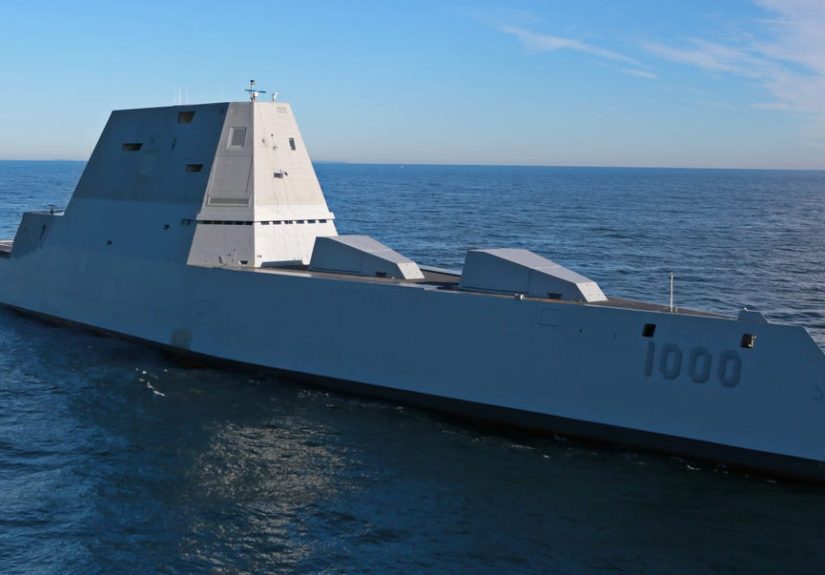
The Zumwalt-class destroyer was always unusual. The ship’s angular hull and deckhouse were designed to reduce its radar signature. Its integrated power system was built to send electrical power where the ship needed it, whether that meant propulsion, combat systems, or future high-energy weapons. On paper, it looked like the bridge between the Navy of the present and the Navy of the future.
Then reality showed up with invoices.
The class was once supposed to be much larger, but the program was cut down to just three ships. That smaller buy made every hull more expensive and undercut the economies of scale that might have made the class easier to sustain. Worse, the 155 mm Advanced Gun System ended up without a practical ammunition path after the specialized Long Range Land Attack Projectile became far too expensive. So the ship that was supposed to be a precision land-attack standout wound up with a giant technological centerpiece and no comfortable way to use it at scale.
That is where hypersonics enter the picture. Instead of treating Zumwalt like a beautiful naval science project with commitment issues, the Navy is repurposing it for a mission that fits the ship’s stealth, power, and size. The result is far more relevant to modern great-power competition. Long-range conventional strike from a stealthy surface combatant is not just flashy. It is strategically useful.
What the Hypersonic Upgrade Actually Involves
The heart of the overhaul is the Conventional Prompt Strike weapon system. CPS is a conventional boost-glide hypersonic weapon. In plain English, that means a large booster rocket throws a glide body on a high-speed trajectory, and that glide body then races toward its target at hypersonic speed while maneuvering in ways that make interception much harder than it would be for a more predictable ballistic path.
The weapon is built around a common all-up round developed with the Army, which is pursuing a related land-based version under the Long-Range Hypersonic Weapon program, also known as Dark Eagle. That shared architecture matters because it helps spread development effort, manufacturing work, and test data across services. In an era when defense programs can become allergic to efficiency, this is one of the few places where the Pentagon is at least trying to share its homework.
For Zumwalt, the upgrade meant major surgery. The Navy removed the original 155 mm gun systems and reworked internal spaces to accommodate four large-diameter missile tubes. Each tube can hold three CPS rounds, giving the ship a potential loadout of up to 12 hypersonic missiles. That is a substantial punch for a surface combatant, especially one wrapped in a stealthy design that was already meant to complicate an enemy’s targeting picture.
This is not a simple “swap old launcher, add new launcher, call it innovation” kind of job. The work involved structural changes, combat-system integration, launcher installation, and the adaptation of shipboard spaces that were originally designed around a very different mission set. The ship arrived at Ingalls Shipbuilding in Pascagoula, Mississippi, in 2023 for the modernization period, was undocked in late 2024, and completed builder’s sea trials in early 2026. In other words, the conversion has moved well beyond rumor and renderings. The metal has been cut, the tubes are in, and the ship is back underway.
Why the Navy Needs a Cold-Gas Launch
One of the most interesting parts of the CPS story is how the missile will leave the ship. Because the all-up round is so large, the Navy is using a cold-gas launch approach. Instead of igniting the rocket motor inside the ship, the system ejects the missile upward and away from the platform first. Only after it is at a safe distance does the first stage ignite.
That approach reduces risk to the ship and reflects just how physically large and energetic this weapon is. The Navy publicly highlighted a successful 2025 end-to-end flight test using the cold-gas launch method, calling it a major step toward sea-based fielding. Translation: the physics are hard, the engineering is harder, and the service is trying to make sure its futuristic missile does not become a very expensive lesson in why you should not light giant rockets inside a destroyer.
The launch architecture also helps explain why the timeline has shifted. This is not just a missile strapped onto an existing vertical launch system cell. CPS requires new hardware, new test work, new integration, and new confidence in how the entire sequence behaves from ejection to ignition to flight. The missile, payload adapter, and eject system all have to behave perfectly enough that Navy officials can trust them at sea, not just on a test range.
The Timeline: From 2025 Hype to a More Realistic Window
A few years ago, public reporting around Zumwalt and hypersonics often centered on 2025. That made for great headlines. It also turned out to be optimistic.
As of early 2026, the most current public picture is more measured. Navy officials said in late 2024 that shipboard testing aboard USS Zumwalt was expected in 2027 or 2028, with continued land-based weapons testing still underway. That revised timeline is important because it separates the ship’s physical readiness from the weapon system’s full testing and integration schedule. In other words, the ship may be increasingly ready, but the missile program still has to earn its sea legs.
That does not mean the effort is stalled. Far from it. The Navy has continued to demonstrate progress, including the 2025 cold-gas launch milestone and ongoing production and integration work. In fact, public reporting in April 2026 indicated that Lockheed Martin received a new $1.36 billion contract modification for continued CPS work, including engineering, systems integration, testing, long-lead material, and support for missile and launching-platform production. That is not the kind of money you spend on a science fair volcano. It is the kind you spend when the Pentagon still sees the program as strategically important.
Why the Navy Wants Hypersonics on a Stealth Destroyer
The strategic logic is fairly straightforward. A stealthy surface ship carrying long-range conventional hypersonic weapons can threaten high-value targets in heavily defended environments. That matters in a Pacific scenario, where distance is tyranny, targets are spread out, and survivability is everything.
Zumwalt is not invisible, of course. No warship is. But reduced observability, combined with long-range strike, makes it more useful than a standard “see ship, shoot ship” model would suggest. Add in the class’s integrated power system and overall growth margin, and the platform starts to look less like a mistake and more like a risky investment that finally found the correct market.
The Navy has also described the ship as a kind of pathfinder for future warfighting concepts. That is a fancy way of saying the three Zumwalts are not just operational assets. They are also test beds for how the fleet may fight later. If CPS works aboard Zumwalt, the class becomes more than a niche curiosity. It becomes proof that surface combatants can carry prompt, survivable, non-nuclear hypersonic strike weapons in a way that changes planning for both the U.S. military and its adversaries.
What This Means for the Zumwalt-Class as a Whole
USS Zumwalt is only one of three ships in the class, but it is the lead ship and the first to receive the full hypersonic refit. USS Lyndon B. Johnson is also undergoing CPS-related work, while USS Michael Monsoor is expected to receive the system in a future availability. The Navy’s long-term plan is to spread this capability across the class and eventually bring related hypersonic capability to Virginia-class submarines as well.
That matters because three ships are not enough to reshape the fleet on their own. They are enough, however, to prove an operational concept, refine tactics, develop maintenance knowledge, and give commanders a new option. In military terms, that is not trivial. Some capabilities begin by transforming the world. Others begin by transforming the planning problem for the other side. The second category is still powerful.
And let’s be fair: the Navy would love for the phrase “Zumwalt-class” to generate a little less eyebrow-raising and a lot more professional concern from potential rivals.
The Strengths and the Cautions
There is a good case for optimism here. The ship is real, the launcher installation is real, sea trials are complete, the missile program continues to receive serious funding, and official Navy statements keep tying Zumwalt directly to the first sea-based hypersonic fielding effort. That is meaningful progress.
But there are still reasons to stay grounded. Hypersonic programs are technically demanding, and both Army and Navy efforts have faced schedule pressure. Testing remains central. Production capacity matters. Integration at sea is unforgiving. And a class of only three ships means every maintenance period, every training event, and every delay carries outsized significance.
There is also the bigger strategic question: does arming three stealth destroyers with hypersonic missiles provide a decisive operational advantage, or is it mostly a useful niche capability? The honest answer is probably somewhere in the middle. It will not rewrite naval warfare overnight. But it may give the Navy a valuable way to hold especially important targets at risk from a platform that is faster to reposition than a land battery and more politically flexible than some other strategic assets.
So, Will USS Zumwalt Fire a Hypersonic Missile?
Everything public points to yes, but not on the original public schedule.
The better way to frame the story in 2026 is this: USS Zumwalt is no longer merely “the stealth destroyer that was supposed to do something futuristic someday.” It has already been physically transformed into a CPS-capable platform. The launch concept has been proven in testing. The ship is back in the water and has completed builder’s trials. The industrial base is still being funded. The testing window has shifted, but the mission has not.
That makes the ship one of the most fascinating naval platforms in the world right now. Not because it is flawless. Not because the program history is pretty. And certainly not because defense acquisition has suddenly become a serene, monk-like exercise in discipline. It matters because the Navy is trying to salvage a controversial class by giving it a role that fits the strategic moment.
If that works, Zumwalt will go from being remembered mainly as a futuristic destroyer with an identity crisis to being remembered as the ship that helped usher sea-based hypersonic strike into operational service.
That is one heck of a glow-up for a warship.
Experiences Related to the USS Zumwalt Hypersonic Story
Following the Zumwalt story over the years has felt a little like watching a brilliant but stubborn student finally choose the right major. At first, the ship inspired awe. It looked unlike anything else in the fleet. The tumblehome hull, the low-profile deckhouse, the electric power system, and the sense that this destroyer had arrived from ten years in the future made it easy to understand why people were captivated by it. Even casual observers who could not explain integrated power architecture knew one thing immediately: this ship was different.
Then came the frustrating phase. The original land-attack vision did not age well, the ammunition story around the gun system became a symbol of procurement excess, and the class shrank so dramatically that every flaw looked bigger. For naval enthusiasts, analysts, and taxpayers alike, the experience became oddly emotional. Zumwalt was too advanced to dismiss, too expensive to ignore, and too unfinished to celebrate. It became the ship people argued about at conferences, in articles, and in online threads that were somehow both technical and deeply personal.
Now the feeling is different. There is still skepticism, but there is also renewed curiosity. Watching the ship emerge from the yard with hypersonic missile tubes installed changes the tone of the conversation. Suddenly, the story is not just about what went wrong. It is about whether the Navy has finally found the mission that matches the platform. That shift gives the Zumwalt narrative something it has lacked for a long time: momentum.
For sailors and shipyard workers, the experience is likely even more intense. Modernization on a one-of-a-kind platform is never simple. Every change affects something else. Every installation step matters. Every delay gets noticed because there are only three ships in the class and everyone understands the visibility of the program. There is a difference between working on a mature class with decades of precedent and working on a ship that still feels like a prototype wearing a fleet uniform. The pressure is real, but so is the pride that comes from helping rewrite the future role of a major warship.
There is also a broader strategic experience tied to Zumwalt. For the Navy, the ship represents a lesson in adaptation. Military institutions do not always get to start over with a blank page. Sometimes they have to take an imperfect asset, rethink the mission, and make the best possible use of what they already built. That is exactly what this hypersonic conversion looks like. It is not a clean-sheet fairy tale. It is a very expensive, very public example of learning in motion.
And for readers, defense watchers, and anyone who enjoys seeing technology and strategy collide in real time, the Zumwalt story remains strangely compelling. It has ambition, setbacks, redesign, industrial complexity, and just enough suspense to keep everyone checking for the next update. One day, if the ship finally fires a CPS missile at sea as planned, the experience of watching this long journey will probably feel less like observing a troubled experiment and more like witnessing a difficult idea finally become operational reality.
Conclusion
USS Zumwalt is no longer just the Navy’s stealth destroyer with a famous silhouette and a messy backstory. It is becoming a real hypersonic platform with real strategic value. The timeline has slipped, yes, but the transformation is tangible, and the mission is serious. If the Navy can finish the integration and prove the weapon at sea, Zumwalt may end up doing something rare in modern defense history: turning a heavily criticized program into a meaningful military capability before the final verdict is written.