Table of Contents >> Show >> Hide
- Why Chambers + Chambers Feels Like a “Weekend House” Even When It’s Your Real House
- The Real Star of Indoor/Outdoor Living: The Threshold
- A Case Study in Calm: A Marin County Home Designed Around Redwoods and a Creek
- The “California Room” Concept: A Third Place at Home
- Passive Design Moves That Make Indoor/Outdoor Living Actually Work
- Materials That Keep the Story Consistent
- Common Indoor/Outdoor Mistakes (And How to Dodge Them Like a Pro)
- A Weekend Reset Checklist: Small Changes, Big Indoor/Outdoor Energy
- Conclusion: Indoor/Outdoor Living Is a Lifestyle, Not a Feature
- Extra Weekend Experiences: What Indoor/Outdoor Living Feels Like
Some weekends are for big plans. Others are for small rebellionslike opening every door in the house, letting the air move through,
and pretending the line between “inside” and “outside” is just a polite suggestion. That’s the promise of true indoor/outdoor living:
a home that doesn’t just look connected to nature, but behaves like it’s part of it.
In the Bay Area, where a sunny patio can be followed by fog that rolls in like it pays rent, seamless indoor/outdoor design is more than
a vibeit’s strategy. And that’s exactly where Chambers + Chambers Architects shines: homes that feel calm, classic,
and quietly luxurious, while still being extremely livable (read: you can host friends without needing a flowchart).
Why Chambers + Chambers Feels Like a “Weekend House” Even When It’s Your Real House
Many firms can do “big glass, big deck.” The difference here is proportion, restraint, and that hard-to-fake sense that everything has
been thought through twiceonce for beauty, and once for real life. Chambers + Chambers is known for homes where architecture, interiors,
and landscape work together, which matters because indoor/outdoor living isn’t one feature; it’s a relationship.
You can feel that philosophy in the details: consistent architectural finishes that let spaces flow; outdoor rooms that aren’t treated like
leftovers; and a classic approach that doesn’t chase trendsbecause trends do not shovel your walkway, repair your deck, or survive your dog.
The Real Star of Indoor/Outdoor Living: The Threshold
If indoor/outdoor living had a resume, “threshold design” would be the bolded line at the top. It’s not just about making openings bigger
it’s about making transitions easier, more comfortable, and more natural. You want to move from kitchen to deck like it’s one continuous scene,
not like you’re stepping into another country with different flooring laws.
Big Openings (With Good Manners)
Large openings work best when they’re purposeful: placed where you naturally gather, aligned with the view, and protected from weather.
The best versions often use:
- Pocketing sliders that disappear into the wall so the opening feels truly wide.
- Corner openings that remove the visual “stop” of a corner post, making the outdoors feel like the next room.
- Operable walls (folding or multi-slide systems) for entertaining days and “just crack it open” evenings.
The point isn’t to turn your living room into a wind tunnel. It’s to control openness the way you control lighting: adjust it depending on
time of day, season, and how many guests are currently asking where the bathroom is.
Flooring, Levels, and the “Trip-Test”
The most underrated luxury in indoor/outdoor design is a transition you don’t notice. When interior and exterior floor heights align, the home
feels larger and calmer. When they don’t, you get a step that quietly says, “You are now leaving the nice part.” (Also: it’s a tripping hazard.)
Smart approaches include matching or complementing materials, keeping threshold profiles slim, and using drainage solutions that don’t require a
visible moat. If you can echo interior tones outdoorswithout pretending exterior materials can live the same life as indoor onesyou get continuity
without delusion.
A Case Study in Calm: A Marin County Home Designed Around Redwoods and a Creek
One reason the Remodelista “Weekend Spotlight” resonated is that it shows indoor/outdoor living as a whole-home attitudenot just a patio
upgrade. The featured home was designed to take advantage of a setting with mature redwoods and a burbling creek, and the architecture
supports that idea in both layout and finishes.
Outside That Sets the Tone (Without Shouting)
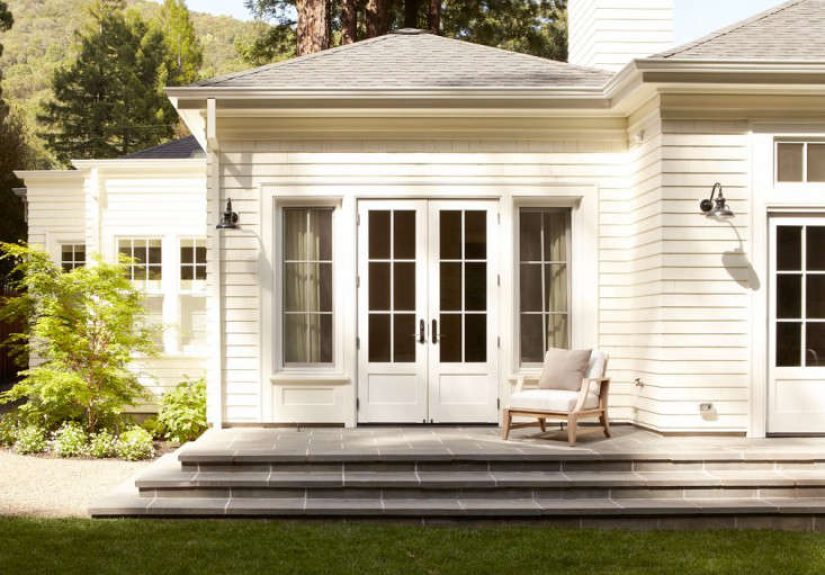
The exterior reads traditional and quietclassic proportions, a bluestone walkway, and paint colors that feel warm rather than stark.
It’s the kind of curb appeal that doesn’t beg for attention; it earns it. Even small choices like a Dutch door can reinforce the theme:
practical, welcoming, and connected to daily life.
Translation: the house isn’t trying to be a resort. It’s trying to be a sanctuaryone you can actually operate while holding groceries.
Plan for Flow: One Story, Many Moments
Indoor/outdoor living becomes dramatically easier when key spaces are on one level. A one-story plan naturally strengthens the relationship between
an open living area and the exterior because you’re not constantly negotiating stairs and split levels. In the Remodelista feature, the floor plan
makes the inside/outside relationship explicit: open living zones connect to outdoor spaces in a way that looks effortless (and feels even better).
Decks and outdoor platforms become “pause points” in the day: a place to read, to talk, to watch the trees move, to pretend you’re not checking
your phone. A deck outside a primary bedroom, overlooking redwoods, isn’t just architectureit’s behavior design. It nudges you toward calm.
Bathrooms That Borrow the Outdoors
Here’s a plot twist: some of the most indoor/outdoor “feel” can happen in a bathroom. In the featured home, the baths focus on light, proportion,
and tactile materialsCalacatta marble, warm paneling, and fixtures that feel timeless. And then there’s the standout move: a Japanese-style soaking
tub inspired by travel, set with river stones. It’s a reminder that indoor/outdoor living isn’t always about doorsit’s about materials and mood.
When spaces are designed to be serene, the outdoors doesn’t have to be physically adjacent to be emotionally present. You can feel nature through
texture, light, sound, and rhythm.
The “California Room” Concept: A Third Place at Home
If your indoor space is “home base” and your yard is “the wilds,” the California room is the friendly border town in between. It’s a covered or
partially enclosed outdoor living area designed for real use: lounging, dining, working, and hosting without being at the mercy of every weather mood swing.
Think of it as the outdoors, but with better lighting and fewer arguments about whether it’s too chilly.
Shade and Shelter: The Comfort Multiplier
A covered patio, pergola, or deep overhang does more than provide shade. It makes the outdoors feel inhabitable for longer stretches of the day and
more months of the year. And once an outdoor area functions like an “outdoor living room,” it stops being optional space and starts being prime space.
The best shade strategies are layered:
- Architectural cover (roof extension, pergola, or canopy) to define the outdoor “ceiling.”
- Adjustable shading (operable sunshades) to respond to sun angle and heat.
- Planting (trees, vines, hedges) to soften glare, create privacy, and cool the space naturally.
Weatherproof Without Feeling “Enclosed”
True indoor/outdoor living is not the same as “we own one outdoor chair and hope for the best.” Comfort is designed. Depending on climate, that can mean:
- Radiant or overhead heating for shoulder seasons.
- Ceiling fans for airflow on warmer days.
- Insect screens that don’t destroy the view (because mosquitoes love dinner parties).
- Lighting layersambient, task, and accentso the space works after sunset.
- Durable, easy-clean materials that don’t panic at rain or mud.
The design goal is simple: the outdoor area should be comfortable enough that you choose it even when you don’t “have to.”
Passive Design Moves That Make Indoor/Outdoor Living Actually Work
A gorgeous opening to the outdoors is greatuntil the house overheats, the glare ruins the vibe, and you realize your furniture cushions have the
lifespan of a banana. The strongest indoor/outdoor homes handle comfort at the architectural level.
Cross Ventilation: The Low-Tech Luxury
When openings are placed to encourage breezes, the house can feel fresher with less mechanical help. A smart plan uses windows and doors on opposite
sides (or across a courtyard) to pull air through. This works especially well when large openings can be adjusted graduallyfully open for gatherings,
partially open for everyday life.
Overhangs and Sun Control: Shade That’s Built In
Overhangs protect walls and openings from sun and rain, and they help outdoor rooms stay usable longer. Pair them with operable shades and you get
flexibility: bright and open when you want it, protected and cool when you need it. When these moves are considered early, they feel inevitable rather
than “added on.”
Materials That Keep the Story Consistent
One of the most memorable quotes from the Remodelista feature is the idea that architectural finishes should stay consistent to enhance flow. That’s
the indoor/outdoor “secret sauce”: if your home reads like one cohesive palette, it feels calmerand the outdoors doesn’t feel like an accessory.
The “Repeat, Don’t Duplicate” Rule
A good palette repeats cues across spaces without copying them exactly. For example:
- Bring a warm wood tone outdoors through soffits or furniture, while keeping exterior materials weather-appropriate.
- Echo an interior metal finish (like a brushed nickel vibe) in outdoor lighting or hardwarewithout forcing everything to match.
- Use stone as a connector: one stone family inside (hearth, backsplash, threshold), and a complementary stone outside (steps, patio, walkway).
The result is subtle: your brain senses continuity, so the boundary feels softer.
Common Indoor/Outdoor Mistakes (And How to Dodge Them Like a Pro)
1) “We’ll Just Put a Sofa Outside”
Outdoor furniture should be comfortable, yesbut it also needs to survive. Choose materials made for weather, and don’t forget storage for cushions.
If your setup requires carrying pillows inside every time the sky looks emotional, you’ll stop using it.
2) No Privacy Plan
If your outdoor room feels like a stage, you won’t relax. Use planting, fencing, screens, or pergolas to create enclosure without blocking light.
Privacy is a comfort feature.
3) Glare and Heat Ignored
Large glass is incredibleuntil the afternoon sun turns your living room into a terrarium. Design for shade, orientation, and operable protection
from the start.
4) Lighting as an Afterthought
A beautiful outdoor room should work at night. Include layered lighting: soft ambient light for mood, targeted light for cooking/dining, and accent
light for steps and edges. This is both a safety move and a magic move.
5) The Outdoor Kitchen Trap
Outdoor kitchens are great, but only when they match how you actually live. If you rarely grill, you may not need the full restaurant setup.
Start with the essentials (prep space, storage, shade, lighting), then expand if your weekend habits prove you deserve it.
A Weekend Reset Checklist: Small Changes, Big Indoor/Outdoor Energy
Not every indoor/outdoor upgrade requires construction. If you want the “Weekend Spotlight” feeling without a full remodel, try this:
Saturday Morning
- Clear the threshold: remove clutter around doors and outdoor access points.
- Unify the palette: add one repeating material or color cue (a woven rug outside, a wood stool inside, matching planters).
- Layer the seating: one lounge seat, one upright seat, one “extra guest” option.
- Add shade: umbrella, sail, or a simple pergola kitanything that makes the outdoors comfortable longer.
- Fix the night vibe: warm outdoor-rated lighting so the space stays inviting after sunset.
Saturday Evening
- Make the outdoors functional: a tray for drinks, a small side table, and a blanket basket.
- Control the bugs: citronella is fine, but screens and fans are better.
- Design one ritual: coffee outside, reading on the deck, or dinner under lightsrepeat it weekly.
Conclusion: Indoor/Outdoor Living Is a Lifestyle, Not a Feature
What Chambers + Chambers Architects demonstratesespecially in that Marin County homeis that indoor/outdoor living is most powerful when it’s woven
into the whole design: the plan, the materials, the light, and the way the house supports everyday calm. Big openings matter, but so do the quiet
decisions: consistent finishes, thoughtful shade, and outdoor rooms that feel as intentional as the interiors.
If your goal is a home that feels like a deep exhale on a Saturday morning, the blueprint is clear: soften the boundary, design for comfort, and let
the outdoors be more than scenery. Let it be a room.
Extra Weekend Experiences: What Indoor/Outdoor Living Feels Like
The funny thing about great indoor/outdoor design is that you notice it most when you stop noticing it. It shows up as little “yes” moments
throughout the weekendmoments that feel easy, unforced, and oddly restorative. Here are the kinds of experiences people describe when the house is
doing the work in the background (instead of you doing the work with your back).
Friday Night: The House Helps You Power Down
You get home, you drop your bag, and instead of turning on every light like you’re prepping for an airport runway, you open a door. The air shifts.
The living room expands without anyone moving furniture. A covered patio glows softly with a lamp or string lights, and suddenly the “end of the week”
feeling arrives faster. The outdoors becomes a buffer between you and the noise of the day. You might eat dinner outside even if it’s simplebecause
the space makes it feel like an event. (Leftovers on a patio are still leftovers, but they’re leftovers with ambiance.)
Saturday Morning: Coffee Becomes a Ritual, Not a Rush
Indoor/outdoor living is basically a cheat code for mornings. When the threshold is effortless, you wander out without thinkingbarefoot, wrapped in
a sweatshirt, holding a mug you should probably not drop on stone. If there’s shade overhead, you can sit longer. If there’s a breeze path through
the house, the interior stays fresh. And if the materials flow from inside to out, your brain registers it as one calm zone. You’re not “going outside.”
You’re just continuing your morning in a slightly better room.
Midday: The Home Hosts Without the Home Feeling Like Work
Friends come over and the layout quietly directs traffic: kitchen to outdoor table, living room to lounge seats, kids (or pets) to the yard without
anyone having to announce, “Please don’t run through the expensive part.” Pocketing doors or wide sliders turn the main living area into a social
space that breathes. Someone helps with food and doesn’t feel stuck inside. Someone else drifts outside and still feels included. The best compliment
you’ll hear is, “This house just…works.”
Late Afternoon: Shade Saves the Day
This is when good design gets real. The sun changes angle. Glare shows up. Heat tries to pick a fight. A smart overhang, pergola, or adjustable shade
steps in like a calm friend who brought water and snacks. The outdoor room stays usable. The interior stays comfortable. The house doesn’t force you to
retreat; it gives you options.
Sunday: Quiet Spaces Feel Bigger
The last day of the weekend is when indoor/outdoor living becomes less about entertaining and more about restoration. You read near an open door and
hear wind in trees. You take a slow shower in a bathroom that feels like a spa because it’s bright, well-proportioned, and made of materials that
actually feel good to touch. You sit outside for “just five minutes” and realize it’s been half an hour. That’s the real payoff: a home that
subtly nudges you toward calm, over and over again.
In other words: the design doesn’t just connect rooms to patios. It connects your week to your weekendand makes the weekend feel like it lasts longer.