Table of Contents >> Show >> Hide
- Why Owls Feel Symbolic in the First Place (Blame Their Design Team)
- What Do Owls Symbolize? The Big Meanings People Return To
- Owl Symbolism in the United States: A Quick Reality Check
- What It Means When You See an Owl: Two Lenses (Practical and Personal)
- Dreams, Tattoos, and “Spirit Animal” Talk (Let’s Keep It Grounded)
- Different Owls, Different Vibes (Species-Style Symbolism Without the Nonsense)
- What to Do When You See One (So the Owl Doesn’t Have to File a Complaint)
- Experiences People Commonly Have When Owls Show Up (About )
- Conclusion
If you’ve ever spotted an owlperched like a grumpy professor in a pine tree, or gliding across a streetlight like a living shadowyou already know why humans keep turning these birds into symbols. Owls don’t just exist; they arrive. Quietly. Dramatically. Like they paid for premium entrance.
But what do owls symbolize, really? Wisdom, yes (the classic answer). Mystery, sure. Change, protection, even deathdepending on the culture, the story, and the vibe of the moment. And then there’s the practical reality: sometimes you saw an owl because it lives there and you happened to have eyes. Both things can be true. Let’s unpack the symbolism without turning your backyard into a supernatural courtroom drama.
Why Owls Feel Symbolic in the First Place (Blame Their Design Team)
Owl symbolism didn’t come from nowhere. Owls have a stack of features that practically beg humans to assign meaningespecially if you’re the kind of creature who looks at toast and sees a celebrity face. (No judgment. We’ve all been there.)
Silent flight: the ultimate “I was here the whole time” energy
A big reason owls feel otherworldly is that they can fly with shockingly little noise. Their wings and feathers are built to reduce the “swoosh” most birds make, which helps them hunt more effectivelyboth by staying stealthy and by not drowning out the tiny sounds prey makes. If you’ve ever had an owl pass overhead and thought, “Wait… how did it get there?”congrats, you experienced the origin story of about a thousand folktales.
They’re basically hearing-and-vision superheroes
Owls are famous for night vision, but their hearing is just as impressive. Many species use a facial disk (the circle/heart-shaped “face” made of feathers) to funnel sound toward their ears. Some also have asymmetrical ear placement to help pinpoint where sound is coming fromlike built-in surround sound, but for catching dinner. Add in head-turning abilities (because their eyes don’t move much in their sockets), and you’ve got an animal that looks like it’s calmly reading your secrets.
Night calls: when the woods start talking back
Owls are vocal for practical reasonsterritory, mates, family communicationespecially because many are most active when other birds are quiet. That’s why owl calls can feel so personal in the dark: your brain hears a lonely sound and immediately starts writing a screenplay. For example, the Barred Owl’s famous call is often remembered as: “Who cooks for you? Who cooks for you-all?” (Honestly, a fair question.)
What Do Owls Symbolize? The Big Meanings People Return To
Owl symbolism is a mix of biology (what owls do), psychology (what humans feel), and culture (the stories we tell). Below are the most common themesthink of them as the “greatest hits,” not the only possible interpretations.
Wisdom and knowledge
In Western traditions, owls are strongly tied to wisdomthanks in large part to Ancient Greek associations with Athena (a goddess linked with wisdom and strategy), whose iconography included an owl. Over time, “wise owl” became the mascot for libraries, schools, graduation cards, and that one teacher who had a ceramic owl collection that stared into your soul.
Seeing what others miss (intuition, insight, truth)
Because owls navigate the night so well, people often use them as a symbol for insightespecially “seeing in the dark,” which turns into metaphor pretty fast: noticing what’s hidden, sensing what’s unspoken, or recognizing patterns you ignored when life was loud. This doesn’t require magic; it requires attention. (Magic is optional, but attention is non-negotiable.)
Mystery, liminality, and the “in-between”
Owls live in transitional spaces: dusk, night, forest edges, quiet neighborhoods, marshy places, old barns. “In-between” settings are where humans tend to project meaningbecause we feel slightly unmoored there. When something with a silent glide and glowing eyes appears in that context, the symbolism practically assembles itself.
Protection and guardianship
In some cultural stories, owls serve as protectors, watchers, or guardiansespecially because they’re alert, territorial, and capable hunters. Even in modern everyday life, an owl can feel like a protective presence simply because it looks confident, composed, and unbothered by your existential questions.
Death, endings, and the uncomfortable truths
In many places around the world, owls have also been linked to death or bad omensoften because their calls are heard at night, their faces can look ghostly in low light, and humans tend to fear what they can’t easily explain. It’s important to handle this topic with care: “death symbolism” in folklore often represents endings more broadlyan era closing, a transition, a warning to pay attentionnot a literal prediction.
Owl Symbolism in the United States: A Quick Reality Check
The U.S. is a crossroads of many traditions, so owl meanings can vary wildlyeven between neighboring communities. Two reminders help keep this respectful and accurate: (1) symbolism is not universal, and (2) “Native American beliefs” are not one single belief system.
Indigenous perspectives: diverse, specific, and not one-size-fits-all
Across Indigenous nations, owls can appear in stories as messengers, warnings, protectors, or beings connected to the spirit worldsometimes viewed positively, sometimes with caution. Meanings can differ by tribe, region, and context (and sometimes by which owl species is involved). If you’re learning about these traditions, seek tribal-specific sources and avoid “pan-Indigenous” summaries that flatten differences.
Folklore in American life: spooky season did not invent this
American folklore and superstition (across different communities) has sometimes treated owl calls as ominousespecially in rural contexts where night sounds are louder than streetlights. Meanwhile, modern conservation and education efforts often emphasize that owls aren’t “bad luck”; they’re wildlife doing wildlife things. Both stories exist in the same country, sometimes in the same family group chat.
What It Means When You See an Owl: Two Lenses (Practical and Personal)
When someone asks, “What does it mean when you see an owl?” they usually want one of two answers: a nature answer (what the owl is doing) or a meaning answer (what the moment is doing to you). Let’s do both.
Lens #1: The bird-nerd explanation (aka “science, but make it friendly”)
- You’re near good habitat. Many owls like mature trees, forest edges, and areas with preyoften near water or open hunting grounds.
- It’s the vocal season. Some owls get more vocal in colder months as they pair up and defend territory.
- The owl is roosting. Seeing an owl in daytime often means it’s resting in a well-chosen hiding spot (you just happened to notice).
- Weather and food shift schedules. Harsh nights or prey behavior can push activity into earlier hours.
- Urban and suburban owls exist. Parks, cemeteries, golf courses, and greenbelts can support owlssometimes right under your nose.
Lens #2: The “okay but what does this moment mean to me?” questions
If you like symbolism, try this approach: don’t treat the owl like a fortune cookie. Treat it like a mirror. Ask:
- What am I avoiding looking at directly?
- Where do I need more patience or clarity?
- What information have I had “in my face” that I’ve ignored?
- What transition am I already in, even if I haven’t named it?
The “meaning” you take from an owl sighting often reflects what your brain and heart are already processing. The owl just shows up like a dramatic punctuation mark.
If you see an owl during the day
Daytime owl sightings can feel extra symbolic because they seem unusual. Practically, it may be roosting, sunning, adjusting feathers, or responding to local conditions. Symbolically, people often interpret a daytime owl as a “notice this now” momentsomething hidden becoming visible, or a reminder to stay alert. Either way, your best move is to admire from a distance and let it rest.
If you hear an owl at night
Hearing an owl (without seeing it) is probably the most common “owl encounter” in America. Often, it’s a territorial call, a mate call, or family communication. Symbolically, night calls tend to land like a thought you can’t un-hearprompting reflection, curiosity, or (let’s be honest) a quick check that the back door is locked.
Dreams, Tattoos, and “Spirit Animal” Talk (Let’s Keep It Grounded)
Owls in dreams
Dream interpretations aren’t a science, but themes repeat because humans repeat. Owls in dreams often show up when someone is processing: uncertainty, learning, secrets, boundaries, or a transition. If an owl dream feels intense, look at what the owl is doing in the dream (watching, guiding, warning, attacking, flying away) and match it to what feels unresolved in waking life.
Owl tattoos
Owl tattoos commonly symbolize wisdom, independence, mystery, or protection. Some people choose specific species for specific vibes: a Barn Owl for “ghostly beauty,” a Great Horned Owl for strength, or a Snowy Owl for resilience and wanderlust. The best tattoo meaning is the one you can explain without needing a 47-slide PowerPoint.
A note on respect
If you’re borrowing symbolism from a culture you’re not part ofespecially Indigenous traditionsbe thoughtful. Learn the specific context, avoid stereotypes, and prioritize respectful understanding over aesthetic “vibes.”
Different Owls, Different Vibes (Species-Style Symbolism Without the Nonsense)
Species aren’t destiny, but humans love patterns. Here’s a playful, reality-based way people often talk about common North American owls:
Barn Owl: the “ghost in the rafters”
Pale face, silent flight, night huntingBarn Owls have earned spooky nicknames in lots of places. Symbolically, they’re often tied to mystery, the unknown, and “things you only notice when you slow down.” Also: they remind us barns are not just rustic wedding venues; they are ecosystems.
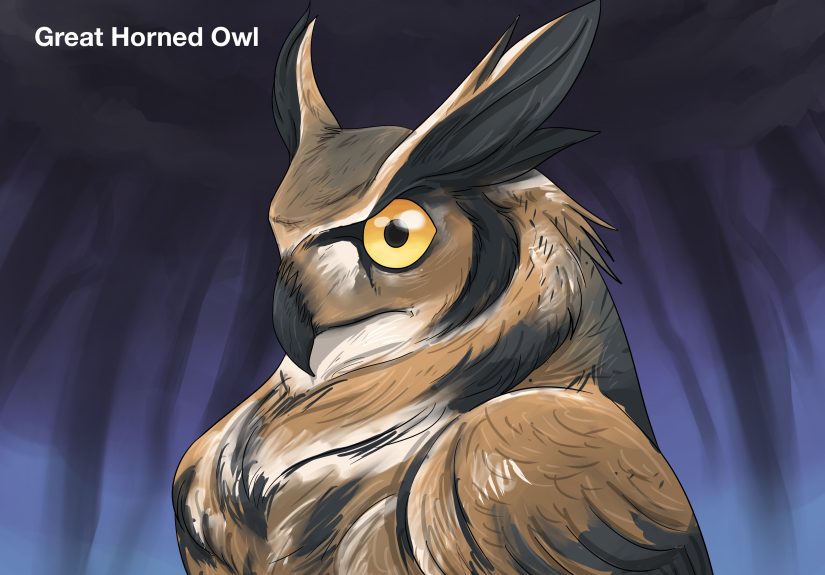
Great Horned Owl: the neighborhood boss
Big, powerful, adaptable, and not easily intimidated. People often read Great Horned Owls as symbols of strength, protection, and “I can handle this.” (Even if you can’t handle this, the owl’s confidence can be aspirational.)
Barred Owl: the storyteller with a catchphrase
Barred Owls are famous for that “Who cooks for you?” call and for being vocal, expressive, and dramatic in the best way. Symbolically, they’re often connected to communication: messages, announcements, and “pay attention, something is happening.”
Snowy Owl: the wanderer
Snowy Owls can capture the public imagination when they show up outside expected areas, and they’re often associated with endurance, rarity, and the idea of being “far from home but still okay.” If you’ve ever felt like you’re improvising your entire life, the Snowy Owl vibe makes sense.
What to Do When You See One (So the Owl Doesn’t Have to File a Complaint)
Observe ethically
- Keep your distance. If it changes posture, stares hard, or shifts away, you’re too close.
- Avoid flash photography at night. You don’t want to disrupt hunting or stress the bird.
- Don’t bait or feed owls. It’s unsafe for wildlife and can create conflict with people and pets.
- Skip call playback. Playing owl calls can stress birds and disrupt territory behavior.
Make your space a little more owl-friendly
If you want to support owls, focus on habitat and safety: protect trees, keep outdoor lighting reasonable, and be cautious with rodent control methods. Some rodenticides can move up the food chain and harm raptors that eat poisoned rodents. Integrated pest management (sealing entry points, securing trash, removing food sources) is often a safer first step.
Experiences People Commonly Have When Owls Show Up (About )
Owl encounters tend to feel “bigger than the moment,” even when nothing supernatural is happening. That’s partly because they’re uncommon for many people, and partly because an owl’s behavior is naturally cinematic: stillness, sudden motion, quiet control. Here are a few real-world experience patterns people often describealong with what those moments can mean emotionally.
The sudden stillness experience: Someone steps outside late at night, hears a call from the trees, and feels the whole neighborhood pause. Cars are gone, the air feels thicker, and the sound seems to come from everywhere at once. In that moment, people often report a heightened awarenesslike their senses got upgraded. The “meaning” they take is usually less about fate and more about attention: I’ve been moving too fast or I forgot the world is larger than my routine. An owl can make ordinary silence feel sacred, simply by being the loudest thing in it.
The “it’s watching me” experience: Someone notices an owl perched on a low branch or a telephone pole, and the owl appears to look directly at them. Objectively, it’s normal: owls watch movement because movement is information. Subjectively, it can feel like being assessed by a wise security guard. People often leave with a message like: be honest with yourself or stop ignoring the obvious. Not because the owl sent a telepathic memobut because being truly seen (even by a bird) can make you see yourself.
The daytime surprise experience: A person spots an owl during the daymaybe tucked against a trunk, maybe dozing on a branchand the encounter feels like finding a secret room in a familiar house. The emotional response is often wonder mixed with concern: Is it okay? In many cases, yes: it’s roosting. The symbolic takeaway people choose is often about “hidden layers”: maybe there’s more going on in a relationship, a project, or even a personal goal than they’ve admitted. A daytime owl can feel like a reminder that not everything important happens on your schedule.
The repeat-encounter experience: Some people notice owls repeatedly over a short periodhearing calls several nights in a row, or seeing the same bird near home. Practically, it could mean there’s stable habitat and prey nearby. Emotionally, repetition tends to trigger pattern-making: people ask what they’re being “told.” A grounded way to interpret this is to connect it to what’s repeating in your lifean unresolved decision, a habit you keep circling, a change you keep postponing. The owl becomes a symbol not because it forced meaning onto you, but because it helped you name a pattern you were already living.
The awe-and-then-action experience: The best owl encounters don’t end with fear or superstitionthey end with curiosity. People read about the species, learn the call, notice habitat, and become more mindful outdoors. In that way, an owl can symbolize a very practical transformation: becoming the kind of person who pays attention. And honestly? That’s a pretty great “message,” even if it came from a bird that was just trying to locate dinner.
Conclusion
Owls symbolize a lot because they do a lotquiet power, sharp senses, night presence, and the kind of stillness that makes humans reflect. If you see an owl, the most accurate interpretation is this: you encountered a remarkable animal in the world it’s adapted to master. From there, you can choose a second layer of meaning: wisdom, insight, change, boundaries, mysterywhatever fits your real life with honesty.
So if an owl shows up near you, take a breath. Look carefully. Respect its space. And if it feels meaningful, let the meaning be something useful: a prompt to pay attention, learn something new, or face what you already know.