Table of Contents >> Show >> Hide
- What Exactly Is a Miyawaki Forest?
- Where Did the Idea Come From?
- How the Miyawaki Method Works
- Why Are Miyawaki Forests So Popular Right Now?
- What Are the Benefits of a Miyawaki Forest?
- What a Miyawaki Forest Is Not
- Do Miyawaki Forests Really Work?
- Examples of Miyawaki Forests in the United States
- Can You Create One in Your Community?
- Conclusion
- Experiences: What It Feels Like to Build and Watch a Miyawaki Forest
Picture a forest squeezed into a space so small you might normally reserve it for a parking lane, a schoolyard corner, or that sad patch of grass next to an office building where nothing thrives except disappointment. Now imagine that tiny plot turning into a layered, buzzing, shady, surprisingly wild pocket of life in just a few years. That, in a nutshell, is the appeal of a Miyawaki forest.
A Miyawaki forest is not just a cluster of random trees planted close together because someone got overexcited at a garden center. It is a deliberate reforestation method that uses many native species, dense planting, soil preparation, and short-term maintenance to jump-start a forest ecosystem on degraded or underused land. In cities especially, where open space is scarce and heat seems to bounce off every sidewalk, the idea has obvious charm. It promises biodiversity, shade, stormwater benefits, habitat, and a little emotional relief in places that badly need all of the above.
But here is the important part: a Miyawaki forest is not magic. It is not a cheat code for instantly replacing ancient woodlands, and it is not automatically the right solution for every empty space. Like many good ideas, it works best when people stop treating it like a slogan and start treating it like ecology.
What Exactly Is a Miyawaki Forest?
A Miyawaki forest is a densely planted, small-scale forest made up of native trees, shrubs, and ground-layer plants chosen to reflect what would naturally grow in that specific region. Instead of planting one or two species in neat, widely spaced rows, the method mixes many local species together in tight quarters. The goal is to mimic the structure of a natural forest, not a tree farm.
That distinction matters. A tree farm is usually designed for efficiency, order, and harvest. A Miyawaki forest is designed for ecological function. It aims to create a living system with multiple layers: taller canopy trees, smaller understory trees, shrubs, and ground cover. Those layers help the space behave more like a true forest, with more shade, more moisture retention, more root activity, and more habitat complexity.
In practical terms, many Miyawaki plantings are surprisingly small. Some are built on school grounds, library lots, medians, edges of parks, former asphalt sites, or compact urban parcels that would never support a sprawling woodland. That is part of the method’s popularity. It does not ask cities to find hundreds of acres. It asks them to stop underestimating what a small patch of land can do.
Where Did the Idea Come From?
The method is named after Akira Miyawaki, the Japanese botanist who developed it. His work centered on the idea of potential natural vegetation, which is essentially the plant community that would likely exist on a site if human disturbance had not rewritten the landscape. Instead of forcing a simplified planting plan onto a place, Miyawaki asked a more ecological question: what belongs here?
That question sounds simple, but it changes everything. It shifts the focus away from decorative landscaping and toward ecological restoration. Rather than planting whatever grows fast, looks tidy, or comes cheapest in bulk, the Miyawaki method starts with local species selection and tries to recreate the layered relationships found in native forests.
Over time, the approach spread well beyond Japan. It gained attention because it combined scientific reasoning with a persuasive visual result: small barren plots could become thick, leafy, high-energy mini-forests much faster than people expected. And in an age of heat waves, flooding, biodiversity decline, and very tired urban residents, that tends to get noticed.
How the Miyawaki Method Works
1. Study the site before planting anything
A real Miyawaki forest starts with research, not shovels. Organizers evaluate soil, drainage, sunlight, climate, and local plant communities. The best projects do not guess at native species; they identify plants that genuinely belong to that region and can coexist in a layered forest structure.
2. Improve the soil if the site is degraded
Many urban sites are compacted, stripped, paved over, or otherwise abused by decades of development. Soil preparation is often essential. Compost, mulch, and other organic materials may be added to help water retention, root penetration, and microbial life. If that sounds less glamorous than a ribbon-cutting ceremony, that is because soil work is the unglamorous part that keeps the glamorous part alive.
3. Plant a lot of species very close together
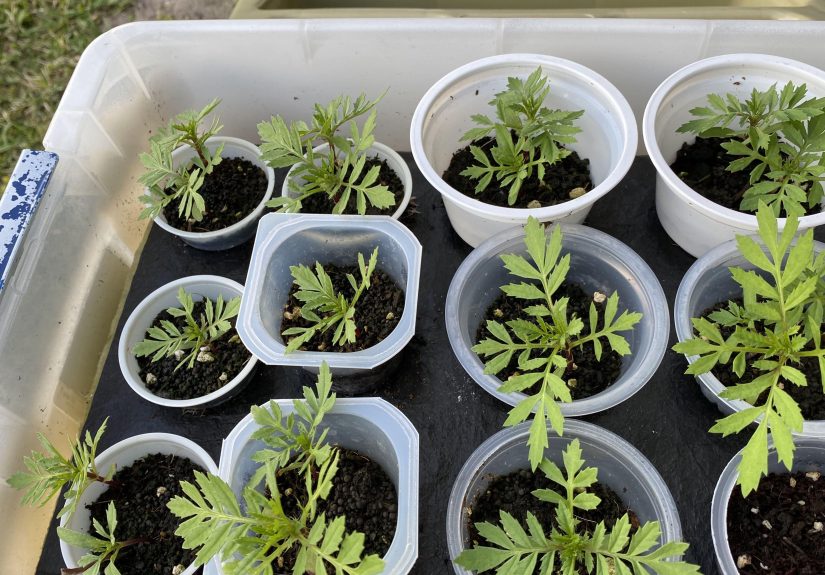
This is the signature move. Miyawaki forests are planted at high density, often around three to four saplings per square meter. Instead of one species repeating in a pattern, many native species are mixed together. The density pushes seedlings to compete upward for light, which can accelerate early growth and help the canopy close sooner.
4. Use layers, not just trees
A Miyawaki forest is not only about tall trees. It is about community structure. Canopy trees, understory trees, shrubs, and ground-level plants all have a role. That layering helps make the planting more resilient and more biologically useful. It also makes the finished result feel like a forest rather than a collection of trunks politely standing apart.
5. Maintain it intensively for the first few years
This is where some online descriptions get a little too dreamy. Miyawaki forests are often described as becoming self-sustaining after roughly two to three years, but that only works if those first years are handled well. Watering, weeding, mulching, and monitoring matter. Young forests are not “no-maintenance” on day one. They are more like toddlers in hiking boots: full of potential, but not ready to be left alone immediately.
Why Are Miyawaki Forests So Popular Right Now?
Because modern cities are full of leftover land and unmet needs. Heat islands are worsening. Flooding is a growing concern. Many neighborhoods have low canopy cover. Residents want greener, healthier places, but large restoration projects can be expensive, slow, and politically complicated. A Miyawaki forest offers a compact, high-visibility intervention that can be built with community volunteers and local partnerships.
There is also a psychological reason for the trend. Big environmental problems often feel abstract and impossible. A mini-forest feels tangible. You can point to it. You can plant it with your neighbors. You can watch it grow. You can hear birds show up and think, “Well, look at that. The city is not entirely made of concrete and bad lunch decisions.”
In the United States, Miyawaki-style plantings have appeared in places ranging from New York City to Tacoma, Massachusetts communities, and projects supported by nonprofits, universities, and civic groups. The method has moved from niche ecological conversation to a broader urban-planning and community-greening tool.
What Are the Benefits of a Miyawaki Forest?
Biodiversity in a small footprint
Because these forests use many native species in layered form, they can provide food, shelter, and nesting opportunities for insects, birds, and other wildlife. In places where lawns and ornamental plantings dominate, that complexity matters. A biodiverse planting does more ecological work than a decorative row of identical trees ever could.
Shade and cooling
Urban heat is not just uncomfortable; it is a public-health issue. Denser canopy cover can help cool localized areas, soften harsh built environments, and make outdoor spaces more bearable. Miyawaki forests are often promoted as one tool, among others, for helping neighborhoods cope with rising temperatures.
Stormwater and soil benefits
When soil is restored and vegetation is layered densely, rainwater has a better chance of soaking in rather than racing across pavement. That can support stormwater management and reduce runoff problems, especially on sites designed with permeability in mind. Healthier soil and roots also improve structure below ground, not just scenery above it.
Air, noise, and neighborhood comfort
Urban forests in general can filter pollutants, buffer noise, and create more pleasant streetscapes. A Miyawaki forest will not single-handedly solve a city’s air-quality problems, but it can contribute to better local environmental conditions while improving the feel of a place.
Community connection
One underrated benefit is social. Many Miyawaki projects involve volunteers, students, schools, neighborhood groups, and local experts. Planting day often becomes part ecology lesson, part block party, part civic optimism. In a time when many people experience nature as something they must drive hours to visit, that matters.
What a Miyawaki Forest Is Not
It is not a substitute for protecting mature forests. Old-growth and naturally evolved ecosystems do things a new mini-forest cannot replicate on demand. A pocket forest is valuable, but it should never be used as an excuse to destroy larger, older, more complex landscapes.
It is not the best choice for every ecosystem. Some places should not be densely forested. Grasslands, wetlands, and other non-forest ecosystems have their own ecological value. Planting trees everywhere simply because trees feel virtuous can create bad outcomes.
It is not automatically maintenance-free. The method depends on good site prep, smart species selection, and serious early stewardship. Oversell those realities, and people end up disappointed when a project struggles.
And it is definitely not just “plant trees close together and hope for the best.” That is not a Miyawaki forest. That is a gamble wearing a sustainability T-shirt.
Do Miyawaki Forests Really Work?
The honest answer is yes, often, but with caveats. Supporters point to fast early growth, strong survival rates in some projects, increased habitat value, and the ability to transform tiny urban spaces quickly. In compact city settings, dense native plantings can make practical sense because land is limited and a small area can be fenced, watered, and monitored more easily.
Critics, however, argue that the method can be oversimplified, oversold, or applied too rigidly. Some ecologists caution that high-density planting is artificial, evidence can be inconsistent, and site conditions matter enormously. Drought, invasive species pressure, poor species selection, or unrealistic expectations can all affect results. In other words, the method is a tool, not a miracle.
That balanced view is the one worth keeping. A well-planned Miyawaki forest can be extremely useful, especially in cities. But it works best when organizers treat it as adaptive ecological restoration rather than a trendy formula.
Examples of Miyawaki Forests in the United States
American interest in the method has moved well beyond theory. In New York City, the Manhattan Healing Forest on Roosevelt Island turned a compact urban site into a dense native planting intended to support resilience, greenery, and stormwater performance. In Tacoma, a university-led micro-forest project has focused on urban heat, canopy gaps, and student involvement. Near Pittsburgh, American Forests highlighted the use of dense planting on a small restoration site. And in Massachusetts, new-generation mini-forest organizers have emphasized community ceremonies, local species knowledge, and hands-on stewardship.
These examples matter because they show the method is not one thing in one place. It can be adapted for schools, campuses, libraries, waterfronts, and neighborhood green infrastructure. The common thread is not aesthetics alone. It is the attempt to create a functioning native ecosystem in places that have lost one.
Can You Create One in Your Community?
Yes, but the best first step is not buying a truckload of saplings. It is finding local ecological expertise. Native plant societies, urban foresters, extension programs, conservation nonprofits, tribal knowledge holders, landscape ecologists, and city parks departments can all help determine whether a Miyawaki forest makes sense for your site.
A good community project usually needs a clear site, a species list rooted in local ecology, access to water during establishment, volunteer coordination, and a maintenance plan for the first two to three years. It also needs patience. Even “fast” forest creation still unfolds season by season. You are not building an instant jungle. You are accelerating a relationship between soil, plants, water, insects, fungi, and time.
Still, that relationship can begin surprisingly quickly. One of the most compelling ideas behind the Miyawaki method is that even tiny neglected spaces can become ecologically meaningful when they are designed with intention. That is a hopeful thought, and unlike many hopeful thoughts, this one comes with roots.
Conclusion
So, what is a Miyawaki forest? It is a dense, layered planting of native species designed to kick-start a real forest ecosystem on a small plot of land. It grows from ecological research, not decorative whim. It can help cities add biodiversity, cooling, habitat, and stormwater value in places where land is scarce. And it has caught on because it turns environmental restoration into something people can literally get their hands dirty doing.
The smartest way to think about a Miyawaki forest is not as a miracle cure for everything wrong with the planet, but as a powerful local tool. Used thoughtfully, it can transform overlooked land into living infrastructure. Used carelessly, it can become another overhyped green gesture. The difference is whether people honor the ecology behind the trend.
In the end, the Miyawaki method is appealing for a very human reason: it takes the overwhelming idea of “restore nature” and shrinks it to a size we can act on. A corner lot. A schoolyard edge. A patch beside a sidewalk. Small enough to plant. Big enough to matter.
Experiences: What It Feels Like to Build and Watch a Miyawaki Forest
One of the most interesting things about Miyawaki forests is that people who build them often talk about the experience before they talk about the science. Yes, the method involves species selection, soil amendments, density, and succession. But on the ground, it often begins with a group of neighbors, students, volunteers, or staff members staring at a patch of land that currently has all the charm of a forgotten loading zone.
Then planting day arrives, and the mood is usually more festive than technical. In several U.S. projects, organizers have described a kind of ceremony around the work. People learn plant names. Kids handle saplings that look absurdly tiny compared with the forest everyone is imagining. Adults who have never discussed understory structure in their lives suddenly care deeply about where a shrub should go. There is often mulch everywhere, someone is definitely underdressed for the mud, and yet the energy is strangely joyful.
That makes sense. A Miyawaki forest gives people a rare chance to see ecological restoration as a shared act rather than a distant policy goal. In Tacoma, the project was tied not only to biodiversity and heat reduction but also to campus life and public space. In Massachusetts projects, planting days have been described almost like community celebrations. In New York City, the contrast between compacted lawn and the springy feel of a newly restored forest floor has already become part of how people talk about the site. Those details matter because they turn “green infrastructure” from an abstract phrase into something you can stand on, touch, and revisit.
The second phase of the experience is less glamorous but maybe more meaningful: maintenance. A new Miyawaki forest asks for care. It needs watering during establishment, especially in hot weather. It needs weeding. It needs people paying attention when one species surges ahead too aggressively or when a dry spell changes the plan. This is where the romance of instant nature gives way to stewardship. But that is not a weakness of the method. It is part of the lesson.
Then comes the rewarding shift. The site stops looking like a project and starts looking like a place. The plants knit together. Shade appears where none existed before. The soil holds moisture better. Insects arrive. Birds inspect the scene as if conducting a surprise opening-night review. People who planted the forest return months later and realize they no longer have to imagine the future version. It is already happening.
That may be the strongest experience a Miyawaki forest offers: visible change. Not perfect change, not instant change, but a pace of transformation fast enough for human beings to notice. In ordinary life, ecological recovery can feel too slow to witness. With a Miyawaki forest, you can see the difference between year one and year three. You can feel it in cooler shade, denser foliage, softer ground, and richer sound. You begin with a patch of stressed urban land and end up with a small ecosystem that seems to have found its confidence.
And maybe that is why the idea resonates so strongly. A Miyawaki forest is not only about growing trees. It is about letting people experience what restoration feels like when it becomes local, tangible, and a little bit thrilling.