Table of Contents >> Show >> Hide
- Quick definition: what the 6MWT measures (in plain English)
- Why COPD clinics love this test
- How the 6-minute walk test is performed
- What gets measured (and why it matters in COPD)
- How doctors interpret results for COPD (without turning you into a spreadsheet)
- How to prepare for your 6MWT
- Common questions about the 6-minute walk test for COPD
- How the 6MWT fits into COPD care
- Real-world experiences: what the 6MWT feels like (about )
- Conclusion
- SEO tags
COPD has a special talent: it can make a “quick trip to the kitchen” feel like a cross-country hike (minus the cute trail mix).
The 6-minute walk test (6MWT) is a simple way clinicians measure how your lungs, heart, muscles, and oxygen levels behave during
something that looks a lot like everyday life: walking.
If you’re living with COPDor caring for someone who isyou’ve probably heard a lot of big words: spirometry, FEV1, diffusion capacity, oxygen titration.
The 6MWT is refreshingly down-to-earth. No treadmill drama. No “please don’t fly off the belt.” Just a hallway, a timer, and a clear question:
How far can you walk in six minutes, and what happens to your body while you do it?
Important note: This article is educational and not medical advice. A trained clinical team should run the test and interpret results in context.
Quick definition: what the 6MWT measures (in plain English)
The 6MWT measures the distance you can walk on a flat, hard surface in six minutes (often called the
6-minute walk distance or 6MWD). It’s considered a submaximal testmeaning it reflects
sustainable effort rather than an all-out sprint. That’s a feature, not a bug: it mirrors the kind of activity you actually do in real life.
For COPD, the test is especially useful because symptoms often show up during movement, not while sitting perfectly still in an exam room chair.
Many clinics also record oxygen saturation (SpO2), heart rate, and
breathlessness/fatigue ratings to capture what “walking” costs your body.
Why COPD clinics love this test
1) It reflects real-life function (not just lung numbers)
Spirometry tells you about airflow limitation. The 6MWT tells you something different: how your whole system performs during activity.
That “whole system” view is a big reason the 6MWT shows up in COPD research and care planning, including pulmonary rehabilitation programs.
2) It can reveal oxygen drops with exertion
Some people with COPD have oxygen levels that look okay at rest, then dip when they move.
Watching SpO2 during a 6MWT helps the clinical team understand whether you’re desaturating with exertion and how severe it is.
This can influence decisions about activity pacing, safety, and (when appropriate) oxygen use during exercise.
3) It helps track progress (and sometimes risk)
The 6MWD is often repeated over timebefore and after pulmonary rehabilitation, medication changes, or other interventionsto see whether functional capacity improves,
stays stable, or declines. It’s also used in risk stratification tools in COPD care, including the well-known BODE index
(which incorporates body mass index, airflow obstruction, dyspnea, and exercise capacity via walk distance).
How the 6-minute walk test is performed
The setup: a hallway, not a fitness influencer’s studio
Standardized testing typically uses a 30-meter (about 100-foot) flat corridor with clear turnaround points.
The course is marked so staff can accurately calculate distance, including partial laps. A shorter hallway can reduce the distance walked because frequent turns slow people down.
Before you start: resting, baseline checks, and instructions
You’ll usually sit and rest first (commonly around 10 minutes) while staff review safety, check baseline vitals, and explain the rules.
Many protocols allow you to use your normal walking aids (cane/walker) and your prescribed oxygen, if applicable.
You’ll also be asked to rate your baseline breathlessness and fatigueoften with a Borg-style scale.
During the walk: “as far as possible,” but not “as dramatic as possible”
The goal is to walk as far as you can in six minutes at your own pace. You can slow down, stop, and rest if needed, then resume walking.
The staff member supervising may give standardized encouragement and time updates (often each minute) to keep the test consistent.
Safety: when the test should stop
Trained staff watch for symptoms that require stopping, such as chest pain, intolerable breathlessness, leg cramps, staggering, heavy sweating, or looking pale/ashen.
Clinics also follow their own oxygen-safety policies and medical judgment, especially if oxygen saturation drops significantly.
After six minutes: record the results (and how it felt)
When time is up, the team records the total distance and typically checks oxygen saturation, heart rate, and symptom ratings again.
You might also be asked what limited you mostshortness of breath, leg fatigue, dizziness, chest tightness, or “my brain said no, thanks.”
What gets measured (and why it matters in COPD)
6-minute walk distance (6MWD): the headline number
The main outcome is the distance you cover in six minutes. On its own, one number doesn’t tell your full storybut it becomes powerful when compared to:
your past tests, your predicted range (based on age/sex/height in some reference equations), and your clinical context (symptoms, exacerbation history, lung function).
Oxygen saturation (SpO2): the “hidden subplot”
Many COPD-focused tests include pulse oximetry during walking. Clinicians look at the lowest SpO2 reached, how quickly it falls,
whether it recovers with rest, and how that lines up with symptoms. Some clinical summaries note that SpO2 values below the high-80s during exertion
can be clinically significant and may prompt a closer look at oxygen needs and safety planningalways individualized and clinician-guided.
Heart rate response and recovery
Heart rate rising with walking is normal. What matters is whether the response seems appropriate for the effort and how quickly it settles afterward.
COPD symptoms can limit walking before the heart is “maxed out,” which is one reason the 6MWT is considered submaximal.
Breathlessness and fatigue ratings (often Borg-based)
Two people can walk the same distance with very different “costs” in breathlessness and fatigue.
Symptom ratings help clinicians understand whether improvements (or declines) are meaningful to daily life, not just to the tape measure.
How doctors interpret results for COPD (without turning you into a spreadsheet)
The most useful interpretation is usually trend-based: how your 6MWD and oxygen response change over time under similar test conditions.
A single test can be influenced by sleep, weather, anxiety, pain, recent illness, course layout, or whether you had to stop because your shoe decided to become a sabotage device.
What counts as a “meaningful” change in distance?
Research has proposed different “minimal important difference” thresholds for COPD, depending on the method and population studied.
Some analyses suggest a change on the order of ~25–35 meters may represent an important difference for many people with moderate-to-severe COPD,
while other estimates have been larger in certain settings. The practical takeaway: clinicians interpret change alongside symptoms, oxygen response,
and whether the test conditions matched (same hallway length, same oxygen flow, same encouragement style).
Red flags clinicians pay attention to
- Big oxygen desaturation with exertion (especially if paired with dizziness, chest symptoms, or severe breathlessness)
- Needing to stop early or being unable to complete the test under usual conditions
- Worsening distance over repeated tests when testing conditions are consistent
- Symptoms out of proportion (for example, extreme breathlessness at very low distances that is new for you)
These signs don’t automatically equal “bad news,” but they do prompt questions: Is there an exacerbation brewing? Is oxygen use optimized?
Is deconditioning playing a role? Are there heart issues, anemia, infection, or medication effects? The 6MWT is great at raising smart questions.
A specific example (numbers made human)
Imagine two COPD patients who both walk about 900 feet (roughly 274 meters) in six minutes.
Patient A finishes with only mild breathlessness and stable oxygen saturation. Patient B finishes with marked breathlessness and an oxygen drop during walking.
Same distance, different clinical meaning. That’s why the “extras” (SpO2, symptoms, recovery) matter.
How to prepare for your 6MWT
- Wear comfortable shoes and clothes you can walk in (this is not the moment for brand-new “fashion confidence” shoes).
- Take your usual medications unless your clinic tells you otherwise.
- Bring your usual walking aid (cane, walker) if you use one.
- Eat lightly if needed; avoid a huge meal right before.
- Avoid vigorous exercise right beforehand so the test measures your typical capacity, not your post-workout exhaustion.
- If you use prescribed oxygen, follow your clinic’s instructions on whether to use it during the test and at what settings.
- Tell staff what you’re feelingchest discomfort, dizziness, unusual leg pain, or anything that feels “off.”
Common questions about the 6-minute walk test for COPD
Is the 6MWT safe?
When performed under clinical supervision with screening for contraindications, it’s generally considered safe and widely used.
The American Thoracic Society guidelines list certain absolute contraindications (for example, very recent unstable angina or recent myocardial infarction),
and clinics may apply additional precautions based on your history.
Can I stop and rest during the test?
Yes. Most protocols allow you to slow down, stop, and rest, then continue as soon as you’re able. That pattern is informative for clinicians
it mirrors what happens when COPD symptoms flare during daily activities.
Can I use oxygen or my inhaler?
Many people use their prescribed oxygen during the test, and clinics often want to see how oxygen saturation behaves with exertion under real-life conditions.
Inhaler timing depends on what your clinician is trying to measure; follow clinic instructions so results are comparable across visits.
Is this the same as a treadmill stress test?
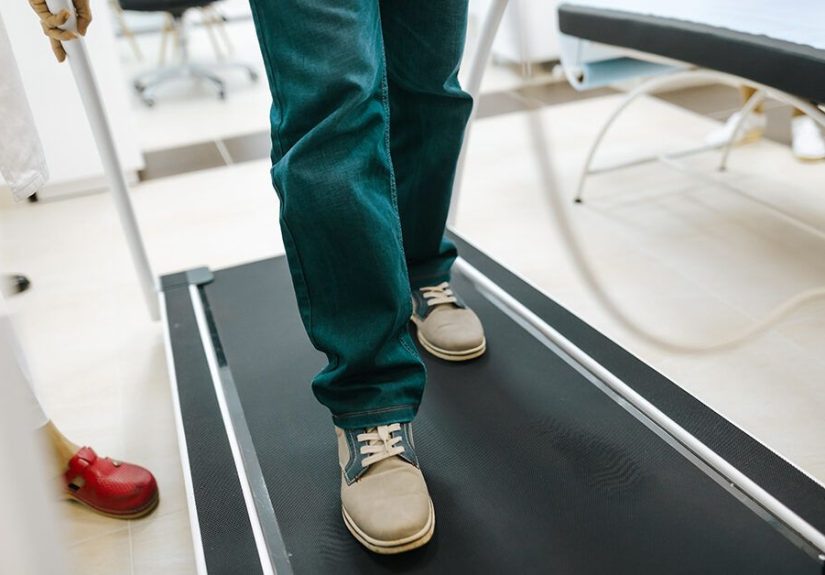
Not really. A treadmill or cardiopulmonary exercise test can push you to higher intensities and measure different things (like gas exchange and maximal capacity).
The 6MWT focuses on functional walking abilitywhat you can do in a steady, real-world effort window.
How the 6MWT fits into COPD care
You might encounter the 6MWT in several moments across the COPD journey:
- Diagnosis workups: alongside spirometry and other assessments, especially if exertional symptoms are prominent.
- Pulmonary rehabilitation: often used at the start and end of rehab to measure functional improvement and guide exercise plans.
- Oxygen planning: to understand how oxygen saturation changes during activity (not just at rest).
- Monitoring over time: repeated tests can help detect decline or improvement.
- Risk stratification: the walk distance can contribute to broader assessments like the BODE index and other clinical decision frameworks.
Real-world experiences: what the 6MWT feels like (about )
If you’ve never done a 6-minute walk test, the description can sound almost suspiciously simplelike someone is about to sell you “oceanfront property” in a desert.
But people with COPD often describe the 6MWT as one of those deceptively basic tasks that quickly becomes meaningful.
Before the test, a lot of folks say the hardest part is the anticipation. Walking in a hallway with someone timing you can feel oddly formal,
like you’re being graded on your ability to exist. Some patients mention worrying they’ll “fail” the test. In reality, the goal isn’t to win; it’s to measure.
The most helpful mindset is: “I’m giving my care team data, not proving my worth.”
During the first minute, many people feel okay and think, “Oh, I’ve got this.” Then the body starts negotiating:
lungs ask for a larger budget, legs file a complaint, and your brain tries to remember whether six minutes has always been longer than it is now.
COPD patients often notice that breathlessness isn’t the only limiterleg fatigue can be a huge factor, especially if activity has been reduced for a while.
That’s one reason pulmonary rehab helps: it trains the whole system, not just the lungs.
At minute three or four, pacing becomes everything. People who try to “go out fast” sometimes hit a wall and need a stop.
Others find a steady rhythmwalk, turn, walk, turnlike a calm metronome. If oxygen saturation is being monitored,
some patients say the finger probe becomes a tiny narrator: “Your oxygen is fine… still fine… okay, it dipped a bit… let’s slow down.”
When staff encourages you with standardized phrases, it can feel surprisingly supportive, like someone gently spotting you at the gymexcept the gym is a hallway and the weights are time.
If you need to stop, many patients report a mix of frustration and relief. Frustration because stopping can feel like a setback;
relief because resting is allowed and the team expects it. Clinicians don’t interpret a pause as a moral failing. They interpret it as physiology.
In COPD, those pauses can point to exertional hypoxemia, airflow limitation, deconditioning, or a mismatch between effort and oxygen delivery.
That’s useful information, especially when planning rehab exercises or discussing oxygen during activity.
After the test, it’s common to feel “worked” but not wrecked. Many people like that the test matches real life:
it resembles walking through a store, across a parking lot, or around the house on a busy day. Patients who repeat the 6MWT after pulmonary rehab
often describe the second test as empoweringnot because the number is magic, but because the experience changes.
They might walk farther with less breathlessness, recover faster, or feel more confident pacing themselves.
One practical tip patients share: treat the test like a communication tool. Tell the staff what you’re feeling (breathlessness, dizziness, chest tightness, leg fatigue),
and mention anything unusual about that day (poor sleep, flare symptoms, missed meds). The more context you provide, the more accurately the results can be interpreted.
The 6MWT isn’t just “six minutes of walking”it’s six minutes of honest data that can help you and your clinician build a safer, more workable plan for daily life.
Conclusion
The 6-minute walk test for COPD is simple on purpose. It captures what COPD often affects most:
how you function during everyday activity. By measuring walk distance and observing oxygen saturation, heart rate, and symptoms,
clinicians can track changes over time, tailor pulmonary rehabilitation, and make more informed decisions about activity guidance and safety.
If you’re scheduled for a 6MWT, come as you arecomfortable shoes, usual aids, honest effort. The goal isn’t perfection; it’s a clearer picture.