Table of Contents >> Show >> Hide
- First, Decide: Is This a Choking Emergency Right Now?
- If Your Child Swallowed a Battery (Especially a Button Battery)
- If Your Child Swallowed Magnets
- If Your Child Swallowed a Toy Part, Coin, or Other Small Object
- How Doctors Decide What to Do
- Smart Parent Moves (a Prevention Checklist)
- Quick FAQ
- Realistic Scenarios (Because Parenting Is a Contact Sport)
- Conclusion
- Experiences & Field-Tested Tips (500-word Bonus)
Short answer: Don’t panic, act fast, and follow the steps below. Some objects are “watch and wait,” but button batteries and magnets are true emergencies. Here’s the no-nonsense guide every parent needsserved with a side of calm.
First, Decide: Is This a Choking Emergency Right Now?
If your child is coughing, gagging, turning blue, can’t breathe or speak, treat it as a choking emergency. Call your local emergency number immediately (in the U.S., 911). If trained, use age-appropriate first aid:
- Children (over 1 year): Alternate 5 back blows with 5 abdominal thrusts until the object comes out or the child becomes unresponsive.
- Infants (under 1 year): Give 5 back slaps followed by 5 chest thrusts. Never give abdominal thrusts to an infant.
- If the child becomes unresponsive, begin CPR and follow dispatcher instructions until help arrives.
If your child is breathing and calm (no signs of choking), you’re dealing with an ingestionstill serious, but the next steps depend on what they swallowed.
If Your Child Swallowed a Battery (Especially a Button Battery)
This is an emergencyeven if they seem fine. Button batteries can burn through tissue in minutes. Here’s exactly what to do:
- Head to the nearest emergency department now.
- Call Poison Control en route: 1-800-222-1222 (U.S.). Mention “button battery ingestion.”
- For children 12 months and older only: If the battery was swallowed within the last 12 hours and your child can swallow, you may give 2 teaspoons (10 mL) of honey every 10 minutes, up to 6 doses, while you’re heading to the ER. Do not delay transport to get honey.
- Do NOT induce vomiting or give food or drink (other than the honey rule above). Do not give honey to infants under 1 year.
Why the hurry? Lodged button batteries create an electrical current that causes caustic injuryleading to burns, perforation, even life-threatening bleeding. Even “regular” cylindrical batteries need urgent evaluation for leakage, obstruction, or aspiration risk.
What to expect at the hospital
- Immediate X-rays (neck to pelvis) to locate the battery.
- Emergent endoscopic removal if the battery is in the esophagus. Stomach/intestinal batteries are managed based on size, symptoms, and time since ingestion.
Pro tip for prevention: Keep devices with coin cells out of reach, secure battery compartments, and store spares high and locked. Newer “bitter-coated” and color-alert designs helpbut vigilance beats tech every time.
If Your Child Swallowed Magnets
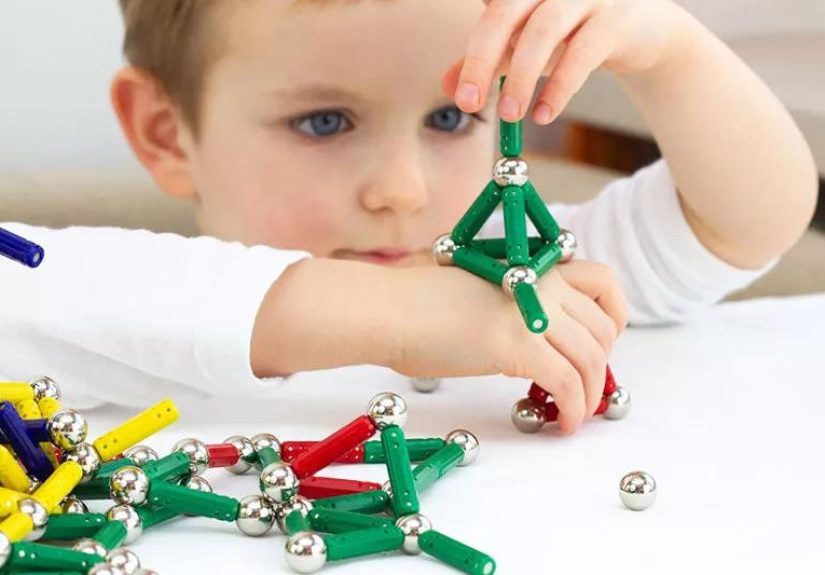
High-powered rare-earth magnets (those tiny shiny desk toys) are deceptively dangerous. Two magnetsor a magnet plus any metal piececan clamp bowel walls together and cause tissue death or perforation.
- Go to the emergency department now.
- Call Poison Control (1-800-222-1222) on the way and say “magnet ingestion.”
- Do NOT induce vomiting or give laxatives. Avoid food and drink until doctors advise.
Hospital playbook
- X-rays to find number and location of magnets.
- Endoscopic removal is often recommended if magnets are in the esophagus or stomach and within reach.
- Beyond the stomach, multiple magnets frequently require urgent removal due to the risk of bowel injury.
Prevention: Avoid “adult desk” magnet sets in homes with kids, inspect toys for loose magnets, and be skeptical of any unlabeled magnetic beads sold online.
If Your Child Swallowed a Toy Part, Coin, or Other Small Object
For smooth, small items (think a plastic bead or coin) and a symptom-free child:
- Call your pediatrician or Poison Control for guidance.
- Most small, blunt objects pass on their own within a few days. You may be advised to monitor stools and your child’s symptoms.
- Return for care immediately if you notice drooling, refusal to eat, chest/abdominal pain, persistent vomiting, fever, or blood in stool.
Sharp objects (pins, glass), super-absorbent polymers (water beads), and long items (toothpicks, skewers) require prompt medical evaluation. When in doubt, call Poison Control.
How Doctors Decide What to Do
Management depends on the object, location, time since ingestion, symptoms, and your child’s age. Here’s the general logic:
- Button battery in the esophagus: Emergency endoscopy for immediate removal.
- Button battery beyond the esophagus: Decisions vary by size, time since ingestion, and symptoms; close monitoring and repeat imaging are common. Sucralfate may be used in clinical settings; honey is a pre-hospital bridge only for eligible kids.
- Magnets: If reachable, remove endoscopically as early as possible; multiple magnets or magnet + metal usually means urgent intervention to prevent bowel damage.
- Coins/blunt objects: Watchful waiting if in the stomach and child is well; removal if stuck in the esophagus, symptomatic, or not progressing.
Expect X-rays first, sometimes repeated. Endoscopy is preferred over surgery when feasible. Surgery is reserved for complications like obstruction or perforation.
Smart Parent Moves (a Prevention Checklist)
- Audit your home: Get at child-eye level and hunt for loose button batteries, magnets, and detachable toy parts.
- Secure all battery compartments: Many products now require tool-open compartments (thanks to regulation), but older items may not.
- Ban high-powered magnet sets from any home with kids. If it looks like desk candy, it’s likely a hazard.
- Teach older siblings that tiny parts stay off the floor and away from baby mouths.
- Keep the numbers handy: Poison Control 1-800-222-1222; National Battery Ingestion Hotline 1-800-498-8666.
Quick FAQ
Should I make my child vomit?
No. Inducing vomiting can worsen injury or lead to aspiration. Follow medical guidance.
Can I give food or drink?
Not until a clinician says soexcept the specific honey protocol for button batteries in children 12 months and older, within 12 hours of swallowing, and only while heading to the ER.
What if I’m not sure what they swallowed?
Treat unknowns as potentially dangerous. Head to the ER and call Poison Control. X-rays often distinguish batteries (which have a “double-ring” sign) from coins.
What if the child seems totally fine?
Symptoms can be delayed, especially with button batteries and magnets. Don’t rely on appearancesact based on what was swallowed.
Realistic Scenarios (Because Parenting Is a Contact Sport)
Scenario 1 – “It looked like a shiny coin” (button battery): Toddler pops a “coin” from the TV remote into their mouth. You see the missing coin cell. You head straight to the ER, call Poison Control, andbecause your child is 2 years old and it just happenedgive honey every 10 minutes on the way. At the hospital, X-ray shows a battery in the esophagus; GI removes it immediately. Minimal injury, quick recovery. Prevention win: remote now has a screw-secured battery door.
Scenario 2 – “Just one magnet… I think”: Your 8-year-old admits swallowing “one” desk magnet bead yesterday. They feel fine. In the ER, imaging reveals two beads stuck on opposite bowel walls. Urgent removal prevents a perforation. Prevention win: those beads are now banned from your home (and your office desk).
Scenario 3 – “The Lego snack” (small toy part): Your 4-year-old swallows a smooth, pea-sized Lego knob, but breathes and speaks normally. Poison Control advises watchful waiting, stool checks, and return if pain, vomiting, or fever occurs. Two days latervictory in the diaper. No drama, just laundry.
Conclusion
Most swallowed toy bits are more scary than dangerous. But button batteries and magnets are medical emergencies that need action now. Save Poison Control’s number, audit your home today, and remember: calm parents make clear decisions.
SEO Goodies
sapo: When kids swallow the wrong thing, seconds matter. This guide shows you how to spot a choking emergency, what to do for button batteries and magnets (hint: go now), what’s usually safe to watch at home, and how doctors decide on X-rays, endoscopy, or observationplus prevention that actually works.
Experiences & Field-Tested Tips (500-word Bonus)
From the triage desk: The most composed parents we see have one quirky habitthey practice scenarios. They’ve stored Poison Control in their phone, know where the nearest children’s hospital is, and have a small “uh-oh kit” (flashlight, tweezers for splinters, a spare pacifier, and yes, a honey packet if they have toddlers over 1). None of this replaces medical care, but it shortens the time between “uh-oh” and “on our way.”
When a sibling tattles: Believe them. Many serious cases start with “my brother ate a bead.” If you can’t account for a button battery or a magnet set, assume ingestion and go get imaging. Kids don’t always tell the whole story at firstembarrassment and fear are powerful silencers.
The quiet kid paradox: Parents often wait because their child looks fine. With batteries and magnets, that quiet period is the danger zone. Damage can be happening silently. The families who fare best act on the object, not the symptoms.
Honey logistics: For eligible kids (≥12 months) after suspected button battery ingestion, honey buys time. People overthink the brand or whether it’s “raw.” Don’t. If it’s plain household honey and your child can swallow, give 2 teaspoons every 10 minutes up to six doses on the way. Do not hunt for honeystart driving first. If your child starts coughing or vomiting, stop giving oral anything.
Coins vs. batteriesknow the “tell”: On X-ray, batteries show a faint double-ring or “halo.” At home, the tell is the device: missing battery from a remote, flameless candle, musical card, scale, thermometer, car key fob. Coins typically come from laundry, purses, or countertops. If you’re not sure, treat as a battery until proven otherwise.
Magnets multiply: Kids may say “one,” but those bead kits are hundreds deep. Bring the packaging or a photo of the product to the ER. If you find another bead in the car seat or couch, tell the teamone more bead can change management from watchful waiting to urgent removal.
Aftercare matters: Even when removal is quick, battery injuries can evolve. Expect follow-up to check for late complications (strictures, bleeding). Stick to activity and diet guidance strictly; the esophagus needs time to heal.
Upgrade your prevention: Do a “crawl test” monthlyget on the floor and scan like your toddler. Replace devices with screw-closed battery doors. Retire old toys with loose magnets (especially magnetic building sets with missing pieces). Consider a small lockbox for spare batteries, magnets, and super-absorbent “water beads.”
Coach your village: Grandparents’ homes and babysitters’ bags are hotspots for hazards: hearing aid batteries in pill organizers, remotes with cracked battery doors, or desk magnets near the computer. Share your house rules, no apologies needed.
Mindset for the win: The goal isn’t perfectionit’s speed and clarity. If the object is a battery or magnet, you’re already in “go” mode. Everything elsechildcare for siblings, insurance cards, even shoescan catch up.
Bottom line from countless real-world cases: parents who decide early, move quickly, and lean on experts (Poison Control and pediatric ER teams) turn a scary day into a safe outcome. You’ve got this.