Table of Contents >> Show >> Hide
- What’s Really Going On: Racism, Microaggressions, and the “Nice” Mask
- Why Storming Out Isn’t “Disrespect”It’s Self-Protection
- The “Disrespectful” Accusation: A Classic Control Move
- Your Partner’s Role: Love Means Backup, Not Silence
- How to Respond After the Blow-Up: A Practical Roadmap
- What a Real Apology Looks Like (and What It Doesn’t)
- Scripts You Can Use (Because Words Are Hard When You’re Furious)
- When Boundaries Need Consequences: The Contact Ladder
- “But She’s Family”: Why That Argument Doesn’t Work Here
- What If You’re the White Partner Reading This?
- So… Should She Ever Go Back?
- Conclusion: Protect Your Peace, Demand Real Repair
- Common Real-World Experiences (and What Helps) of “Yep, That Happens”
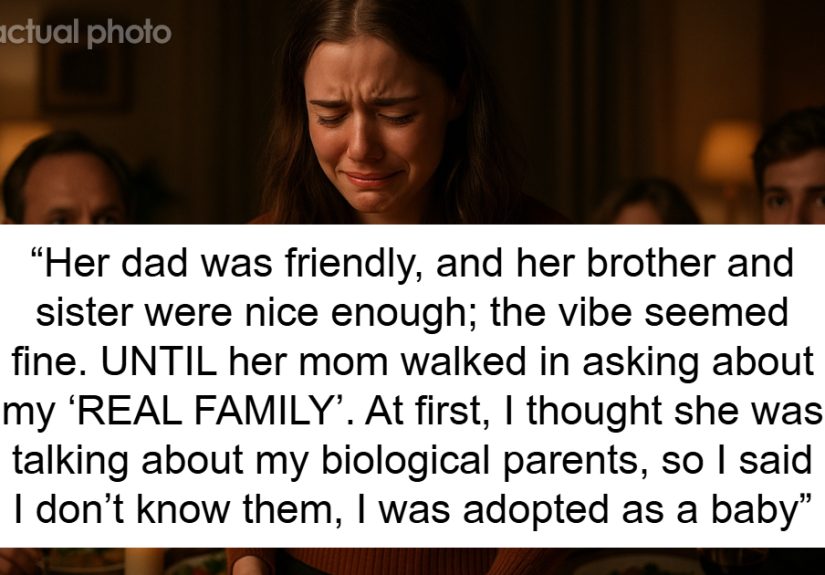
Picture it: you’re 21, you show up to meet your partner’s mom, you’ve got your “polite smile” warmed up like it’s leg day, and thenbamshe starts making racist comments about your Black parents. You do the only thing your nervous system can agree on in that moment: you stand up, you leave, and you try not to teleport into the nearest safe dimension.
Later, the same mom calls you “disrespectful” for storming out. Which is a bit like someone stepping on your foot and then accusing you of “overreacting” because you said “Ow.”
This isn’t just an awkward family moment. It’s a collision of racism, entitlement, and the classic “How dare you have boundaries in my presence?” energy. Let’s break down what’s actually happening, why walking out can be the healthiest choice, and what it takes to repair (or redraw) the relationship lines afterwardwithout turning your life into a never-ending group project called Teach Someone Not To Be Racist.
What’s Really Going On: Racism, Microaggressions, and the “Nice” Mask
When people hear “racist comments,” they often imagine obviously hateful language. But racism also shows up as everyday slights, stereotypes, “jokes,” and assumptionswhat psychologists commonly describe as racial microaggressions. These can be subtle, casual, and delivered with a smile… which is part of what makes them so destabilizing.
Examples of what this can sound like (without quoting harm)
- Making negative assumptions about your parents’ intelligence, finances, neighborhood, or “background.”
- Acting “surprised” that your parents are educated, successful, or “well-spoken.”
- Reducing Black families to stereotypes about parenting, safety, culture, or “attitude.”
- Framing racism as your “sensitivity,” instead of her behavior.
A person can absolutely believe they’re “not racist” and still say racist things. That’s not a free passit’s a clue that they haven’t examined their biases, and they’re used to people accommodating them so they don’t have to feel uncomfortable.
Why Storming Out Isn’t “Disrespect”It’s Self-Protection
Let’s talk about the walkout. Some people treat leaving as “dramatic,” but in reality it’s often the most rational response to an irrational situationespecially when someone is insulting your family and your identity.
Walking out can be the healthiest move because:
- It ends the harm in real time. You don’t have to sit there and absorb it like a human sponge.
- It prevents escalation. Staying can push you into arguing, crying, freezing, or fawningnone of which you owe anyone.
- It sets a boundary without debate. “I’m leaving” is a complete sentence.
- It protects your dignity. Your parents deserve respect, and so do you.
Storming out is often what happens when your body recognizes dangersocial, emotional, psychologicaleven if there’s no physical threat. Racism isn’t “just words.” It’s a stressor with real mental and physical effects, especially when it’s interpersonal and inescapable.
The “Disrespectful” Accusation: A Classic Control Move
When a mom says, “You were disrespectful for leaving,” what she may actually mean is:
- “You didn’t tolerate my behavior.”
- “You didn’t prioritize my comfort.”
- “You didn’t let me be the authority in the room.”
- “You made me face consequences.”
In families where hierarchy matters more than humanity, “respect” can become code for obedience. But here’s the truth: you can’t demand respect while disrespecting someone’s family.
Your Partner’s Role: Love Means Backup, Not Silence
If your partner is in the middle of this, their response matters a lot. In interracial relationships, one of the biggest stressors isn’t “difference”it’s whether the non-impacted partner (often the white partner, in scenarios like this) will actively protect the relationship from racism coming from relatives.
What support should look like
- Immediate validation: “That was racist. You didn’t deserve that.”
- Accountability with their family: “Mom, you crossed a line.”
- Action, not promises: Real consequences, boundaries, and follow-through.
- Repair with you first: Your safety before “keeping the peace.”
Silence in the moment is rarely neutral. It’s often experienced as agreementor abandonment. And no one wants to date someone who turns into a decorative houseplant when racism enters the room.
How to Respond After the Blow-Up: A Practical Roadmap
Once the dust settles, you’ve got choices. You can try to repair, you can renegotiate contact, or you can decide this relationship isn’t a safe place for you. What you shouldn’t do is carry the whole emotional load alone.
Step 1: Name what happened (clearly)
Use plain language. Not “a misunderstanding.” Not “a tense moment.” Try: “Your comments about my parents were racist and disrespectful.”
Step 2: Make the boundary concrete
- “I will not be around anyone who insults my family.”
- “If this happens again, I will leave immediately.”
- “I need an apology that includes accountability and changed behavior.”
Step 3: Decide what repair would require
Repair is not just “Say sorry and move on.” It’s a process. In relationship research, repair attempts work best when they reduce defensiveness, acknowledge harm, and restart the conversation with emotional safety.
Step 4: Don’t negotiate with denial
If she responds with “I didn’t mean it like that” or “You’re too sensitive,” you’re not in a repair conversationyou’re in a Protect My Self-Image At All Costs conversation. And those tend to go exactly nowhere, but with better cardio (because your heart rate will be up).
What a Real Apology Looks Like (and What It Doesn’t)
Let’s keep it simple: if an apology contains the word “but,” it’s usually not an apology. It’s a rebuttal in a trench coat.
A repair-focused apology includes:
- Ownership: “I made racist comments about your parents.”
- Impact: “I hurt you and disrespected your family.”
- No defensiveness: No “I was joking,” no “You misunderstood.”
- Commitment: “I’m learning. I will not do that again.”
- Specific next steps: Reading, training, therapy, accountability partnersomething real.
What doesn’t count
- “I’m sorry you feel that way.”
- “I’m not racist; I have Black coworkers.”
- “You embarrassed me by leaving.”
- “Can we just move on?” (translation: “Can you absorb this quietly?”)
Scripts You Can Use (Because Words Are Hard When You’re Furious)
To the mom (if you choose to engage)
“I left because your comments about my parents were racist and unacceptable. I’m willing to talk again if you can acknowledge what you said, apologize without excuses, and commit to not repeating it.”
To your partner
“I need you to be clear that what happened was racismnot ‘tension.’ I need you to address it with your mom and set consequences. I’m not going to keep showing up to be harmed.”
To both of them (in a boundary-setting moment)
“If any conversation about my parents includes stereotypes, insults, or ‘jokes,’ I will leave. This isn’t negotiable.”
When Boundaries Need Consequences: The Contact Ladder
Boundaries without consequences are just wishes wearing a blazer. If racist comments continue, you may need to adjust contact.
A simple “contact ladder”
- Supervised contact: Only meet in public or with supportive people present.
- Time-limited visits: Short, structured meetups with an exit plan.
- Low contact: Fewer interactions, minimal personal sharing.
- No contact: If harm continues, distance is self-respect in action.
You’re not “punishing” someone by limiting contact. You’re choosing emotional safety.
“But She’s Family”: Why That Argument Doesn’t Work Here
Family is not a license to harm. If someone wants family access, they have to meet basic standards: respect, accountability, and willingness to change. Otherwise, “family” becomes a loophole where bad behavior hides from consequences.
What If You’re the White Partner Reading This?
If this is your family, your job isn’t to play referee. It’s to be an ally in your own home team. That means:
- Call it what it is: racism.
- Don’t ask your partner to “educate” your parent while they’re wounded.
- Set boundaries with your family before gatherings.
- Step in immediately when comments happen.
- Follow through with consequences.
Your partner shouldn’t have to wonder whether love will show up when racism does.
So… Should She Ever Go Back?
That depends on one thing: change. Not tears. Not “I didn’t mean it.” Not “I’m from a different generation.” Change looks like consistent respectful behavior over time, plus a willingness to learn and repair.
If the mom can’t do that, your “relationship” with her becomes a recurring injury. And you don’t keep running on a broken ankle just because someone says, “Wow, you’re really dramatic about bones.”
Conclusion: Protect Your Peace, Demand Real Repair
When a white mom insults a 21-year-old’s Black parents and then calls the young woman “disrespectful” for leaving, the issue isn’t etiquette. It’s racismand an expectation that the harmed person should stay quiet to preserve someone else’s comfort.
Storming out can be a healthy boundary. Repair is possible only with accountability, changed behavior, and a partner who steps up. If those pieces aren’t present, choosing distance isn’t pettyit’s protective.
You don’t owe anyone access to your life at the cost of your dignity. Not even someone’s mom. Especially not someone’s mom.
Common Real-World Experiences (and What Helps) of “Yep, That Happens”
People who navigate interracial relationships often describe a specific kind of whiplash: the moment you realize a family gathering is less “dinner” and more “live commentary on your identity.” It might start smallsomeone mispronouncing your name repeatedly after you’ve corrected them, or making jokes that rely on stereotypes and then insisting they’re “just teasing.” Then it escalates: a relative asks invasive questions about your parents, makes assumptions about money or education, or frames your family as an “exception” to whatever biased story they’ve carried around for years.
One of the most common experiences is the “compliment” that’s actually a dig: surprise that your parents are articulate, employed, or “nice.” Another is the “curiosity” that turns into interrogationquestions that wouldn’t be asked of white families but suddenly feel fair game for Black families. People also describe the exhausting emotional math of deciding whether to speak up: “If I challenge this, will I be labeled angry? If I stay quiet, am I betraying myself? If I leave, will they call me dramatic?” That internal tug-of-war is stress, and it builds over time.
Many also talk about the loneliness of watching their partner freeze. Not because the partner agrees, necessarily, but because they’re afraid of conflict, conditioned to keep the peace, or simply unpracticed at calling out family members. In those moments, the harmed partner often feels they are carrying two burdens: the racism itself and the relationship uncertainty (“Are you going to protect us?”). The most healing shift people describe is when their partner becomes proactivesetting expectations before visits, interrupting comments in real time, and creating consequences without outsourcing the emotional labor.
What helps in the real world tends to be practical, not poetic. Having an exit plan (“If X happens, we leave.”). Agreeing on a signal phrase (“I’m getting flooded” or “We’re done here.”). Debriefing afterward with validation, not debate. Limiting contact until trust is rebuilt. And, when repair is attempted, insisting on apology plus action: learning, therapy, anti-racism education, or a structured conversation led by someone skilled (not the person who was hurt).
People also report something surprisingly powerful: choosing joy and community outside the hostile space. Building relationships with friends, mentors, and relatives who don’t require you to shrink. The point isn’t to “win” the family. It’s to live a life where your parents’ dignityand your ownaren’t up for discussion at someone else’s table.
In short: you’re not “too sensitive.” You’re sensitive to disrespect, which is a normal human feature. If someone demands you tolerate racism to prove you’re polite, they’re confusing manners with submission. You get to opt out.