Table of Contents >> Show >> Hide
- First: Is it actually “rubber” you’re smelling?
- When you should stop driving right now
- The 7 most common reasons your car smells like burning rubber
- 1) A slipping serpentine belt (or a failing tensioner/pulley)
- 2) A loose rubber hose (or plastic under-hood part) rubbing something hot
- 3) Overheating brakes (sticking caliper, stuck slide pins, or parking brake dragging)
- 4) A slipping clutch (most common in manuals, but not exclusive)
- 5) A tire rubbing the wheel well (or a stuck piece of debris)
- 6) Fluid leaking onto hot engine or exhaust parts (and “smelling like rubber” by accident)
- 7) An electrical issue (overheating wires, a short, or an overworked component)
- A 5-minute “detective” checklist (no lab coat required)
- Why the smell changes when you accelerate
- What a mechanic will typically do to confirm the cause
- How to prevent burning rubber smells from coming back
- FAQ
- Conclusion
- Real-world experiences: what this smell is like in the wild (and how people usually discover the culprit)
There are two kinds of “burning rubber” smells: the kind you expect at a drag strip, and the kind that makes you
whisper, “Please don’t let my car be expensive today.”
If you’re smelling something like hot rubbersharp, smoky, and a little like a sad balloonyou’re right to pay attention.
That odor usually means friction or heat is doing something it shouldn’t: a belt slipping, a tire rubbing, a brake dragging,
or (the least fun option) wiring getting too hot.
Let’s break down the 7 most common causes, how to tell them apart, and what to do nextwithout turning this into
a “guess and replace” hobby.
First: Is it actually “rubber” you’re smelling?
Your nose is helpful, but it’s also dramatic. Several different problems can smell “rubbery,” especially when heat is involved.
A quick cheat sheet:
- Sharp rubber / hot belt smell: often a slipping serpentine belt or hose contacting a hot part
- Burnt “chemical” smell: may be plastic, wiring insulation, or an electrical component overheating
- Acrid, smoky smell near one wheel: often brakes dragging or something rubbing the tire
- Rubbery smell after hard driving in a manual: often a clutch getting too hot
- “Burning” smell that’s worse at vents: could be belt, oil, or wiring heat getting pulled into HVAC air
When you should stop driving right now
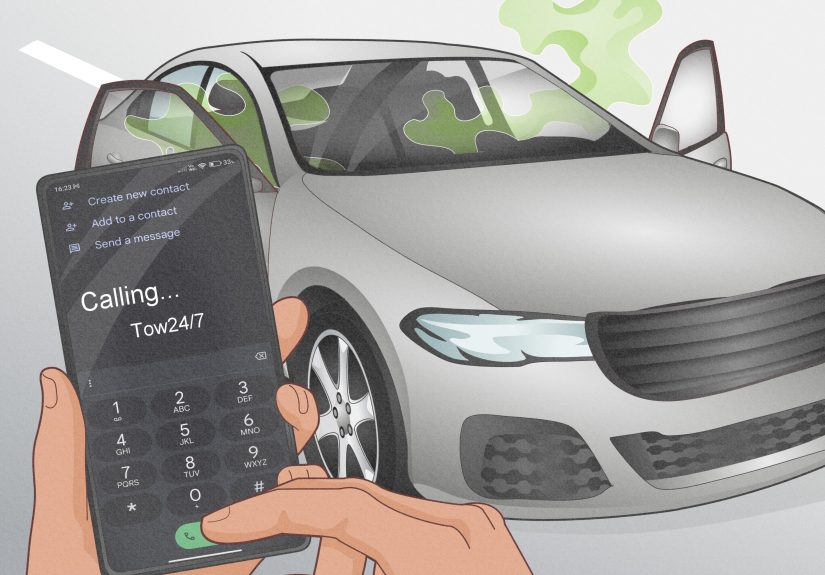
Some burning smells are “get it checked soon.” Others are “pull over before your day becomes a group text.”
Stop driving and shut the car off if you notice:
- Smoke from the hood, under the car, or near a wheel
- Loss of power steering, battery warning light, or sudden overheating
- Brakes pulling to one side, a wheel that feels abnormally hot, or a burning smell that’s strongest at one corner
- Strong electrical/plastic smell, flickering lights, or repeated fuse issues
- Smell that appears instantly and intensifies fast (this is the “don’t negotiate with physics” category)
The 7 most common reasons your car smells like burning rubber
1) A slipping serpentine belt (or a failing tensioner/pulley)
The serpentine belt is basically your engine’s multitasker: it helps run accessories like the alternator, power steering pump,
and A/C compressor. When it slipseven a littleit creates friction, and friction makes heat, and heat makes that classic hot-rubber smell.
Clues you’ll notice:
- Squealing or chirping from the engine bay, especially on startup
- Smell gets worse when you turn on the A/C
- Power steering feels heavier or the battery light flickers (depending on what’s driven by the belt)
What to do:
- With the engine off and cool, inspect the belt for cracks, glazing (shiny sections), fraying, or missing ribs.
- If you see rubber dust near pulleys, that’s a strong hint the belt is slipping or misaligned.
- Get it checked promptlybelts don’t “heal,” they just break at a more inconvenient time.
2) A loose rubber hose (or plastic under-hood part) rubbing something hot
Rubber hoses and plastic covers are supposed to keep their distance from hot engine parts and moving pulleys.
If a clamp loosens, a hose sags, or an engine cover shifts, it can touch something scorchinglike an exhaust componentor get nicked by a pulley.
The result can smell like burning rubber and can escalate quickly if the hose starts melting or leaking.
Clues you’ll notice:
- Smell comes and goes, often after driving a few minutes
- Odor is stronger with the hood up (carefully) than inside the cabin
- You may see a shiny “melted” spot or rubbing mark on a hose, liner, or cover
What to do:
- Look for anything visibly sagging or touching: hoses, wiring looms, splash shields, or heat shields.
- Don’t drive long if a hose is meltingcoolant or vacuum leaks can create bigger problems fast.
3) Overheating brakes (sticking caliper, stuck slide pins, or parking brake dragging)
Brakes create heat by design. The problem is when they don’t stop creating heat after you’re off the pedal.
A sticking brake caliper, seized slide pin, or dragging parking brake can keep pads pressed against the rotor.
That constant friction can smell like burning rubber, burnt carpet, or an acrid “hot metal” odoroften strongest near one wheel.
Clues you’ll notice:
- Smell strongest near one wheel (walk around the car carefully)
- Car may pull to one side while driving or braking
- Wheel area feels unusually hot (do not touch the rotor; feel near the wheel cautiously)
- Reduced fuel economy or the car feels like it’s “dragging”
What to do:
- If the smell is intense at one wheel, stop driving and get it inspected.
- Dragging brakes can damage rotors, cook brake fluid, and reduce stopping power.
4) A slipping clutch (most common in manuals, but not exclusive)
If you drive a manual, the clutch is the usual suspect when you smell something “rubbery” after stop-and-go traffic,
hill starts, or towing. A clutch that’s slipping turns engine power into heat instead of motion.
That heat can create a smell many people describe as burning rubber (or sometimes burning paper).
Clues you’ll notice:
- Engine revs rise without the car accelerating as much as expected
- Smell is strongest after heavy clutch use (traffic, hills, backing up a trailer)
- Engagement point feels different (higher pedal engagement, shudder, or chatter)
What to do:
- Give it a break: let the clutch cool and avoid riding the pedal.
- If slipping happens regularly, get it diagnosedcontinued slip can wear the clutch faster.
5) A tire rubbing the wheel well (or a stuck piece of debris)
Sometimes the burning rubber smell is… exactly rubber. Tire-to-body contact can happen after installing oversized tires,
changing suspension components, or carrying a heavy load that compresses the suspension.
It can also happen if a fender liner is loose and presses against the tire, or if debris (like a plastic bag) gets lodged near a hot or moving part.
Clues you’ll notice:
- Smell is worse during turns, bumps, or when the car is fully loaded
- You may hear rubbing or a rhythmic scuffing sound
- Visible shiny rub marks on the tire sidewall or inside the wheel well
What to do:
- Inspect wheel wells for loose liners, broken clips, or shiny “polished” rub spots.
- Check tire sidewalls for fresh scuffssidewall damage can be serious.
6) Fluid leaking onto hot engine or exhaust parts (and “smelling like rubber” by accident)
Not every “burning rubber” report is rubber. Oil, power steering fluid, or transmission fluid can drip onto hot exhaust components
and create an odor that people interpret as rubbery because it’s sharp and smoky.
Clues you’ll notice:
- Smell is strongest after the engine warms up
- You may see light smoke from under the hood after parking
- Oil spots under the car, or wet residue on engine components
What to do:
- Check fluid levels (oil, coolant, power steering if applicable, transmission if your vehicle allows checking).
- Look for fresh wetness around valve cover areas and along the underside of the engine.
- Don’t ignore itleaks can worsen, and fluids on hot parts can become a safety risk.
7) An electrical issue (overheating wires, a short, or an overworked component)
This is the one that deserves extra respect. Electrical problems often smell like burning plastic or rubbery insulation.
That can come from a short circuit, a failing alternator, a blower motor resistor, or damaged wiring near heat sources.
If the smell is strong, sudden, or paired with flickering lights or unusual electrical behavior, treat it as urgent.
Clues you’ll notice:
- Smell is sharp and “chemical,” sometimes strongest inside the cabin or near vents
- Electrical oddities: flickering dash lights, accessories cutting out, battery light
- Blown fuses, or the smell shows up when you run HVAC, defrost, or high electrical load
What to do:
- If the smell is intense, pull over, shut off the engine, and avoid continuing to drive.
- Have a technician inspect wiring, alternator output, and components for heat damage.
A 5-minute “detective” checklist (no lab coat required)
The fastest way to narrow the cause is to note when the smell happens and where it’s strongest.
Use this quick checklist:
- When does it happen? Startup? Turning? Braking? Accelerating? With A/C on?
- Is it localized? Walk around the car. Is it strongest at one wheel, the front grille, or the cabin vents?
- Look for obvious rub marks. Wheel wells, tires, loose liners, dangling splash shields.
- Peek at the belt. Cracks, fraying, shiny glazing, or rubber dust around pulleys.
- Check for leaks or smoke after parking. A faint wisp under the hood can hint at fluid on hot parts.
Why the smell changes when you accelerate
Acceleration increases engine load and belt demand, and it can also shift the engine slightly on its mounts.
That’s why these issues often show up “only when you step on it”:
- Belts slip more under load (alternator, A/C compressor, power steering demand)
- Clutches heat up when slipping under higher torque demands
- Engine movement increases, allowing a hose/liner/shield to touch something it normally misses
- Electrical load spikes (fans, defrost, lights), revealing weak wiring or components
What a mechanic will typically do to confirm the cause
A good diagnosis is less “vibes” and more “evidence.” Depending on symptoms, a shop may:
- Inspect belts, pulleys, tensioners, and alignment (often with a quick visual + listening test)
- Check wheel temperatures and brake drag (sometimes using an infrared thermometer)
- Lift the vehicle to inspect splash shields, liners, exhaust proximity, and fluid leaks
- Test the charging system and look for heat-damaged wiring or connectors
- Scan for codes if warning lights are present, especially with charging, transmission, or cooling issues
How to prevent burning rubber smells from coming back
- Inspect belts and hoses during oil changeslook for cracks, fraying, and loose clamps.
- Fix small leaks early (a “minor seep” loves turning into a major drip).
- Keep wheel wells clean and replace broken liner clips after tire/suspension work.
- Don’t ignore brake warning signs like pulling, squealing, or heat smell at one wheel.
- Be cautious with electrical add-ons (poor wiring and cheap connectors are trouble magnets).
FAQ
Is it safe to drive if I smell burning rubber?
Sometimes, brieflylike right after new brake pads “bed in”but you should treat it as a warning until you know the source.
If it’s strong, recurring, or paired with smoke, warning lights, or brake issues, don’t keep driving.
Why does it smell like burning rubber after a brake job?
New pads can create a temporary odor as materials cure and the braking surface breaks in. That said, a persistent smell,
smoke at a wheel, or poor braking can indicate a sticking caliper or misinstallationget it checked.
Can my A/C cause a burning rubber smell?
Yes. If the A/C compressor clutch or pulley is dragging, it can increase belt friction and produce a hot rubber smell.
If the odor shows up mostly when A/C is on, that’s a helpful clue.
Conclusion
A burning rubber smell is your car’s way of saying, “Something is getting hotter than it was designed to be.”
Most commonly, it’s a slipping belt, a hose rubbing where it shouldn’t, brakes dragging, a clutch overheating, a tire rubbing,
a fluid burning off on hot parts, or an electrical issue.
The good news: the smell often appears before a full breakdown. Use the timing (startup vs. braking vs. turning),
the location (one wheel vs. engine bay vs. vents), and a quick visual check to narrow it downand don’t wait if the odor is strong or escalating.
Your wallet prefers “early diagnosis” over “surprise tow truck.”
Real-world experiences: what this smell is like in the wild (and how people usually discover the culprit)
The funniest thing about a burning rubber smell is how quickly it turns a calm driver into a detective. One minute you’re singing along to the radio.
The next you’re driving in total silence, windows cracked, sniffing like a bloodhound who just got promoted.
Scenario #1: The “It only happens when I turn the A/C on” mystery.
A lot of people notice the smell the first time they crank the A/C on a warm day. The car’s been fine all winter, then suddenly:
hot rubber, faint squeal, and a vibe that screams “accessory belt.” Often it’s a belt that’s worn just enough to slip when the compressor loads up.
Some drivers describe it as a quick whiff that fadesuntil it doesn’t. The fix is usually straightforward (belt and sometimes tensioner),
but the experience is always the same: you start negotiating with your car like it can hear you. “Please just be a belt. I’ll wash you. I’ll stop eating fries in you.”
Scenario #2: The “one wheel smells like a tire fire” parking lot walk-around.
Brake drag tends to announce itself at the worst possible momentlike when you pull into a store, hop out, and realize the smell is way stronger near
the front left wheel. That’s also when you learn how many people will casually stroll past a clearly unhappy brake caliper like nothing is happening.
Drivers often report the car felt slightly sluggish, or it pulled a bit, but the smell was the “okay, now I’m worried” moment.
The tell is heat localized to one corner, and the solution is usually addressing a sticking caliper or hardware that isn’t sliding freely.
Scenario #3: The post-repair “Is this normal?” panic spiral.
After new brakes, it’s common for people to smell something “burning” during the first couple of drives, especially if bedding-in was involved.
The experience typically goes: first stop sign smells weird, second stop sign smells weirder, third stop sign triggers a full Google search at a red light.
In many cases it’s normal break-in odor that fades quickly. But when the smell is persistent, accompanied by smoke, or the car feels like it’s dragging,
that’s when it’s time to recheck the workbecause a brake that isn’t releasing won’t politely fix itself.
Scenario #4: The manual-transmission hill start “I swear I didn’t do that” moment.
If you’ve ever learned stick on a hill, you know the smell. It’s the scent of clutch material turning into heat while you’re trying to look cool
in front of literally nobody. Even experienced drivers can overheat a clutch in stop-and-go traffic, backing uphill, or creeping with a heavy load.
Usually the smell shows up after a few tough starts, then fades if you give everything time to cool. The key lesson most people learn:
the clutch pedal is not a footrest, and gravity is not your friend.
Scenario #5: The “Why does it only happen after I hit a bump?” riddle.
Tire rubbing and loose wheel-well liners are sneaky. Drivers often notice it after suspension work, a tire size change, or even after hitting a pothole
that pops a clip loose. The smell may show up during turns or over bumps, then vanish on smooth roadsmaking it feel like your car is gaslighting you.
When you finally look in the wheel well, you might see a liner flapping or a shiny rub track like the tire has been sanding plastic for fun.
Scenario #6: The “It smells like rubber, but it’s actually a leak” plot twist.
People are often surprised that burning oil or fluid can smell “rubbery.” A slow seep onto a hot exhaust shield can create a sharp, smoky odor that
doesn’t obviously scream “oil.” The real giveaway is usually a faint wisp of smoke after parking or a little wetness around a gasket area.
This is the experience where you learn that “just a small leak” is a phrase that ages poorly.
Scenario #7: The “electrical smell” that makes everyone suddenly brave about pulling over.
When the smell turns chemicallike hot plastic or insulationmost drivers don’t debate it for long. They pull over, because deep down,
we all know electricity is fast, petty, and not interested in your schedule. Sometimes it’s a struggling alternator or a wiring issue;
sometimes it’s HVAC-related and shows up when defrost is on. The common thread is urgency: if it smells electrical, treat it like the
serious warning it is and get it inspected.
The big takeaway from these real-life moments is that the smell is rarely random. It’s usually tied to load (accelerating, A/C on),
friction (brakes, clutch, rubbing tires), or heat (leaks burning off, electrical components overheating). If you connect the smell to the moment it happens,
you can often point a mechanic toward the answer in minutesand save yourself from paying for the “we replaced parts until it stopped” approach.