Table of Contents >> Show >> Hide
- Why Stairs Feel So Much Harder Than Walking on Flat Ground
- Start Here: What Kind of “Difficult” Are We Talking About?
- Breathless on Stairs: Common Causes (and What It Often Feels Like)
- Pain on Stairs: Why Knees and Hips Often Complain First
- Weak or Heavy Legs on Stairs: Muscles, Nerves, and Fuel Problems
- Leg Pain That Starts on Stairs and Stops With Rest: Think Circulation (PAD)
- Balance Trouble on Stairs: Not Just “Clumsy,” Not Just “Careless”
- When Stair Trouble Is a “Get Checked” Signal
- Practical Ways to Make Stairs Easier (and Safer) Starting Today
- Experiences People Commonly Share About Difficulty Climbing Stairs (Extended)
- Conclusion
Stairs look harmless until you meet them in real lifeusually while holding a bag of groceries, a coffee, and your dignity.
If climbing stairs suddenly feels harder than it used to (or has always felt weirdly difficult), you’re not imagining it.
Stairs are a sneaky “full-body pop quiz” that demands strength, balance, coordination, and a solid cardio systemall at the same time.
The good news: “Stairs are hard” doesn’t automatically mean “something is wrong.” The more important question is
why they’re hard for you. Are you short of breath? In pain? Weak or shaky? Dizzy?
The pattern matters, and it can point to very different causes.
This article breaks down the most common reasons stair-climbing gets difficult, what your symptoms may be trying to tell you,
when to get checked, and practical ways to make stairs easier and safer. (Not medical advicejust real-world, evidence-based guidance.)
Why Stairs Feel So Much Harder Than Walking on Flat Ground
Walking on level ground is like cruising. Climbing stairs is like hiking uphill while doing single-leg squatsrepeatedly.
Each step asks your body to lift your full weight against gravity. That requires:
- Leg power (glutes, quads, calves) to push you up
- Joint tolerance (knees, hips, ankles) to handle higher forces
- Breathing and circulation to deliver oxygen fast
- Balance and coordination to land each step safely
If any one of those systems is struggling, stairs expose it. That’s why people often notice stair trouble before they notice issues elsewhere.
Start Here: What Kind of “Difficult” Are We Talking About?
The fastest way to narrow down the cause is to match the symptom to the “system” involved:
1) Mostly breathlessness or getting winded
If you’re huffing and puffing on stairsespecially if it’s new, worsening, or out of proportion to your activity levelthink heart/lung/circulation,
fitness level, anemia, or sometimes anxiety.
2) Mostly pain (especially knees, hips, ankles, or back)
Pain that spikes on stairs often points to joint or tendon issueslike knee osteoarthritis, patellofemoral (kneecap) problems, hip arthritis, or a past injury.
3) Mostly weakness, heaviness, or “my legs quit”
Weakness can come from muscle loss (especially with aging or inactivity), nerve issues, certain neuromuscular conditions, or even medication side effects.
4) Mostly balance, wobbliness, or fear of falling
If stairs feel unsafelike you might miss a stepthink balance disorders, inner ear issues, vision changes, neuropathy, or low blood pressure with position changes.
Breathless on Stairs: Common Causes (and What It Often Feels Like)
Heart and circulation causes
Your heart has to pump more oxygen-rich blood when you climb. If it can’t keep up, you may feel breathless, unusually fatigued, or need to stop sooner than expected.
Some people notice swelling in the legs, needing more pillows at night, or waking short of breathpatterns that deserve medical attention.
Example: You used to climb one flight without thinking. Now you pause halfway, your breathing feels “tight,” and your legs feel heavy
especially if it’s accompanied by swelling, chest discomfort, or reduced exercise tolerance.
Lung causes (like COPD or asthma)
Lung conditions can make stair climbing feel like you’re breathing through a narrow straw.
You might notice wheezing, chest tightness, cough, or shortness of breath that shows up with activity first.
Smoking history, frequent respiratory infections, or long-term exposure to irritants can raise suspicion for COPD.
Anemia (low red blood cells or low hemoglobin)
If your blood can’t carry enough oxygen, stairs can trigger fast fatigue and breathlessnesseven if your lungs and heart are “doing their jobs.”
People sometimes describe feeling wiped out, lightheaded, or unusually short of breath with mild exertion.
Deconditioning (low fitness) or inactivity
This is incredibly common and very fixable. If you’ve been sedentary, recovering from illness, busy with work, or avoiding activity due to pain,
your “stair muscles” and cardio system lose efficiency. Stairs then feel dramatic because they require a quick surge of effort.
Clue: Your symptoms improve noticeably after a few weeks of gradual, consistent movement (walking, cycling, gentle strength training).
Living with obesity
Carrying more body weight increases the workload on both joints and breathing/circulation. It can also reduce breathing efficiency during exertion.
This doesn’t mean “it’s just weight”it means stairs are demanding more force and more oxygen delivery at the same time.
Anxiety or panic symptoms
Anxiety can amplify the sensation of breathlessness. Sometimes it shows up as chest tightness, rapid breathing, or a “can’t get a full breath” feeling.
It can also coexist with medical issuesso patterns and context matter.
Pain on Stairs: Why Knees and Hips Often Complain First
Knee osteoarthritis and “wear-and-tear” changes
Knee osteoarthritis can make stairs feel like your knee is grinding, aching, or stiffoften worse after activity or after sitting awhile.
Stairs increase compressive forces through the knee, so mild arthritis can feel loud and dramatic on steps.
Typical story: Flat walking is tolerable, but going down stairs triggers sharp pain around the knee or behind the kneecap.
Patellofemoral pain or kneecap arthritis
Problems around the kneecap often hurt going down stairs because your knee must control your body weight as you lower yourself.
Pain is commonly felt in the front of the knee and may flare with squatting, kneeling, or long periods of sitting.
Hip osteoarthritis or hip muscle weakness
Hip issues can show up as groin pain, outer hip pain, or stiffness that makes lifting the leg onto the next step feel difficult.
Weak hip stabilizers can also make knees work harder, creating a chain reaction of discomfort.
Achilles, ankle, or foot problems
If pushing off hurts, the issue may be in the ankle/foot complexAchilles irritation, plantar fascia pain, arthritis, or poor footwear support.
You may notice pain on the first few steps or after longer standing.
Weak or Heavy Legs on Stairs: Muscles, Nerves, and Fuel Problems
Sarcopenia (age-related muscle loss) and strength decline
Muscle mass and power tend to decline with ageespecially without strength training.
That decline can show up as difficulty rising from a chair, slower walking speed, and trouble climbing stairs.
The frustrating part is that many people assume it’s “just aging,” when it’s often “aging plus not enough strength work.”
Neuropathy (nerve problems), including from diabetes
When nerves don’t relay information well, you may feel numbness, tingling, burning pain, or reduced awareness of foot placement.
Stairs become harder because you rely on quick feedback from your feet and ankles to balance safely.
Neuromuscular conditions (less common, but important)
Some neuromuscular disorders can cause fatigue and weakness that’s especially noticeable with repeated movements like stairs
for example, difficulty climbing stairs and rising from a seated position.
If weakness is progressive, asymmetric, or paired with changes in speech, swallowing, vision, or coordination, it needs medical evaluation.
Medication side effects or low blood pressure
Some medications can contribute to dizziness, fatigue, or muscle weakness.
Low blood pressureespecially when standing up quicklycan cause lightheadedness that makes stairs feel risky.
Leg Pain That Starts on Stairs and Stops With Rest: Think Circulation (PAD)
Peripheral artery disease (PAD) can cause cramping, aching, heaviness, or pain in the legs that appears with walking or climbing stairs
and improves with rest. This pattern is called intermittent claudication.
Example: You’re fine at rest. After a short flight of stairs, your calves tighten and burn. You stop, wait a minute, and it easesthen returns when you start again.
That “on with effort, off with rest” rhythm is a classic clue.
Balance Trouble on Stairs: Not Just “Clumsy,” Not Just “Careless”
Inner ear (vestibular) issues
The inner ear helps control balance. If it’s offdue to vertigo-associated disorders or other vestibular problemsstairs can feel unstable,
especially when turning your head or changing direction.
General balance disorders
Balance problems can be mild or severe enough to interfere with daily activities like climbing stairs.
They’re more common with aging and can increase fall riskespecially if combined with weak legs or poor vision.
Vision changes and environmental hazards
Stairs require depth perception and good lighting. Dim stairwells, shiny steps, loose rugs, and clutter can turn mild balance issues into big problems.
If stairs feel scary, it’s worth treating that fear as data, not drama.
When Stair Trouble Is a “Get Checked” Signal
It’s smart to talk to a clinician if stair climbing becomes difficult quickly, keeps worsening, or limits your normal life.
Seek urgent care if you have:
- Chest pressure/pain, fainting, or severe shortness of breath
- New shortness of breath at rest or symptoms waking you at night
- Sudden one-sided weakness, new trouble speaking, severe dizziness, or confusion
- Leg pain with exertion that reliably stops with rest (possible PAD)
- Falls, near-falls, or feeling unsafe on stairs
Practical Ways to Make Stairs Easier (and Safer) Starting Today
These tips aren’t meant to replace medical carejust to reduce strain while you figure out what’s going on.
Pace and “micro-break” on purpose
Try a steady rhythm: climb 6–10 steps, pause for one slow breath cycle, then continue.
This is especially helpful for breathlessness, deconditioning, and recovery from illness.
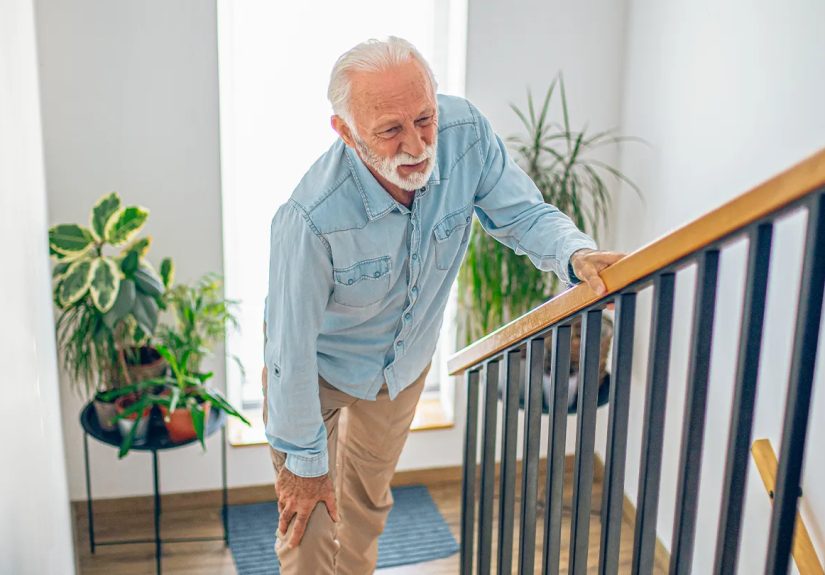
Use the handrail like it’s part of the design (because it is)
A handrail reduces fall risk and unloads joints. Using it isn’t “cheating.” It’s “engineering.”
Use the “strong leg up, sore leg down” approach if pain is one-sided
If one leg is more painful or weaker, a common strategy is to lead upward with the stronger leg and step downward with the weaker/painful leg first,
using the rail for support. If you use a cane or have recent surgery, get personalized guidance from a clinician or physical therapist.
Strengthen the exact muscles stairs demand
Stairs are mostly a “hips and thighs” job. Helpful beginner-friendly options include sit-to-stands from a chair,
supported step-ups (low step), and gentle calf raises. Start small, build gradually, and stop if pain spikes sharply.
Check your setup
- Shoes: stable soles, not slippery
- Lighting: brighter is safer
- Clutter: clear the steps
- Carrying loads: fewer heavy trips; use a bag that keeps hands free for the rail
If the problem is breathlessness, don’t hold your breath
Many people unconsciously hold their breath while climbing. Try breathing out on the “effort” step.
If you have a diagnosed heart or lung condition, ask your clinician for symptom-specific breathing and pacing strategies.
Experiences People Commonly Share About Difficulty Climbing Stairs (Extended)
Below are real-world patterns people often describe when stairs get tough. They’re not meant to diagnose youbut they can help you recognize your “type” of difficulty.
The “I’m Fine… Until I’m Not” Breathing Experience
A lot of people say the first few steps feel normal, and then suddenly their breathing changesfast. They describe it as “getting winded out of nowhere,”
even though it’s always the same staircase. Sometimes they notice they recover quickly once they stop; other times it takes several minutes to feel normal again.
What’s interesting is how the experience affects behavior: people start avoiding stairs without realizing it. They choose elevators “just this once,” park closer,
or carry lighter loads. Over time, that avoidance can lower fitness and make stairs feel even hardera frustrating loop that’s common with deconditioning,
but also something people do when they’re quietly compensating for heart or lung symptoms.
The “Downstairs Is Worse Than Upstairs” Knee Story
Many stair-strugglers report that going down hurts more than going up. They may feel sharp pain around the front of the knee,
a sense of instability, or a fear the knee will “give out.” Some describe a grinding feeling or stiffness that’s worse in the morning
and eases after moving around. Others notice pain after long sitting, then stairs feel like an instant penalty. People often start taking stairs sideways,
holding the rail tightly, or stepping down one foot at a time. This pattern frequently shows up in kneecap-related pain, arthritis changes,
or weakness in the hip and thigh muscles that normally control knee alignment.
The “My Legs Feel Heavy Like Wet Sand” Pattern
Another common experience is leg heavinessespecially in the thighs or calves. People say their legs “burn” on stairs, even with just one flight,
and they need to stop and let the feeling pass. Some notice it’s predictable: it hits at a certain point, eases with rest, then returns with exertion.
That predictable on/off pattern can be a clue to circulation-related issues like intermittent claudication, but it can also happen with
low fitness, anemia, or muscle weakness. What stands out is the mental load: when your legs feel unreliable, stairs become stressful,
and stress itself can make breathing feel worse. People may start gripping the rail, taking smaller steps, or avoiding carrying anything
so they can focus on balance.
The “I Don’t Trust My Balance” Stair Anxiety
Balance-related stair difficulty is often described as “I’m not dizzy exactlyI just don’t feel steady.” People may feel off when they look down the staircase,
when lighting is dim, or when the steps are visually busy (patterns, high gloss, strong shadows). Some report that turning their head mid-stair
makes them wobble. Others feel confident on flat ground but shaky on stairs because the margin for error feels smaller. This can be linked to
inner-ear balance issues, neuropathy, vision changes, medication side effects, or simple strength loss that makes single-leg support less stable.
The biggest shift people describe is the move from “stairs are annoying” to “stairs feel dangerous.” When that happens, practical changesbetter lighting,
clear steps, shoes with grip, consistent rail usecan make an immediate difference while the underlying cause gets evaluated.
The “Small Wins” Experience When People Rebuild Capacity
Many people who improve with gradual training describe the progress as surprisingly non-dramatic: the staircase doesn’t suddenly become easy;
it becomes less hard. They notice they pause less often, recover faster, or don’t need to plan the climb like a mission.
The most encouraging reports are from people who focus on function: chair sit-to-stands, gentle step-ups, walking more often,
and balance work near a stable surface. The wins show up in daily life firstcarrying laundry with less dread, taking one extra flight without stopping,
or feeling less “wobbly” at the top. Over time, those small wins stack into confidence, and confidence itself reduces the stress response that can
amplify breathlessness and fatigue. If your stair difficulty is new, severe, or progressing, medical evaluation mattersbut if the issue is primarily
deconditioning, mild strength loss, or manageable joint irritation, steady practice can be a game-changer.
Conclusion
Difficulty climbing stairs is common because stairs demand a lotstrength, joints that tolerate load, balanced coordination, and a cardio system that can respond fast.
The key is identifying your pattern: breathlessness, pain, weakness, or balance trouble. Each points to different possibilities, from deconditioning and knee arthritis
to anemia, PAD, lung disease, or heart issues. If the change is sudden, worsening, or paired with red-flag symptoms, get checked promptly.
Otherwise, smart pacing, rail use, targeted strength, and safer stair habits can help you reclaim the staircaseone step at a time.