Table of Contents >> Show >> Hide
- What Is Salty Licorice, Exactly?
- The Chemistry: Why It Tastes So Weird (and Fascinating)
- Why Northern Europeans Love It
- The History Angle: Pharmacy Roots and Flavor Drift
- Why Outsiders Often Hate It on First Bite
- Is Salty Licorice Safe?
- How to Try Salty Licorice Without Regretting Everything
- So, Why Are Some Northern Europeans So Into Salty Licorice?
- Experience Section (Approx. ): What People Commonly Experience With Salty Licorice
- SEO Tags
There are foods people politely “don’t care for,” and then there are foods that trigger a full face reboot. Salty licorice belongs firmly in the second category. One bite of a strong salmiak candy and a first-timer may look like they accidentally licked a battery, a tire, and an apothecary shelf all at once. Meanwhile, many people in Finland, Sweden, Denmark, Iceland, the Netherlands, and parts of northern Germany will happily shrug and say: “Yes, and? Pass the stronger one.”
So what’s going on here? Why do some Northern Europeans love a candy that so many outsiders describe as medicinal, aggressive, or downright bizarre?
The short answer: culture, chemistry, and conditioning. Salty licorice (often called salmiak or salmiakki) isn’t just “black licorice with extra salt.” It is a different taste experience, built around ammonium chloride, and often learned early in life through local candy traditions and repeated exposure. In other words, this is not a prank snack. It’s a regional comfort flavor with serious identity energy.
What Is Salty Licorice, Exactly?
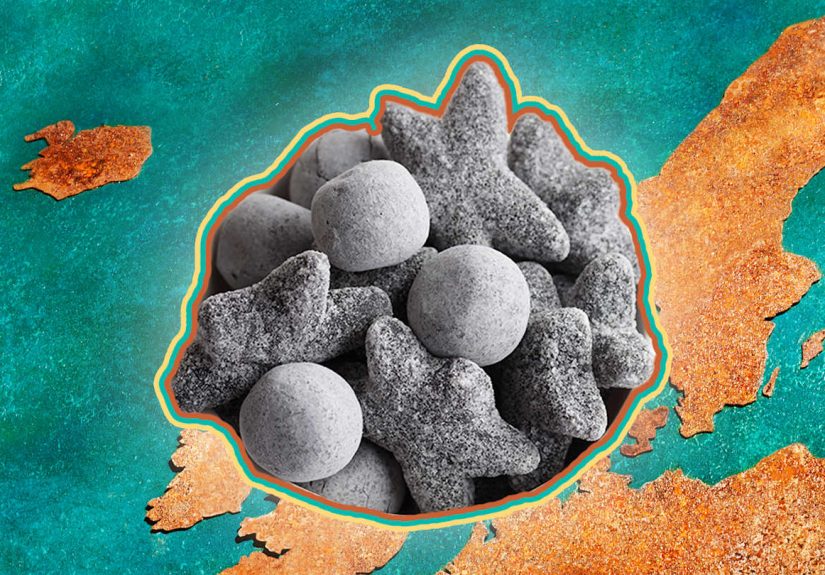
Salty licorice is a type of licorice candy flavored with salmiak salt (food-grade ammonium chloride). It is especially common in Northern Europe, where it appears in countless forms: chewy coins, hard pastilles, gummies, skulls, diamonds, and lozenges. Some versions are mild and sweet; others are “double salt” or “extra strong” and seem designed to test friendships.
If you are used to American-style “licorice” candy, salty licorice can be a shock. In the U.S., plenty of products sold as licorice are actually flavored with anise or licorice-like flavorings, and many are far sweeter and softer in profile. Salmiak candy, by contrast, can taste salty, bitter, mineral-like, herbal, and slightly cooling or stinging in the nose. That strange edge is the point.
And yes, the flavor family gets broad. In Northern Europe, salty licorice shows up not just in candy aisles but in things like liqueurs, novelty foods, and even ice cream. Once a flavor becomes culturally “normal,” people start doing what humans always do: putting it in everything.
The Chemistry: Why It Tastes So Weird (and Fascinating)
Let’s talk about the villain/hero of the story: ammonium chloride. This compound gives salmiak its signature punch. It is not table salt (sodium chloride), and that difference matters. The result isn’t simply “saltier candy”; it is a different sensory profile that can feel sharp, metallic, earthy, and almost electric depending on the concentration.
Recent research tied to USC Dornsife and published in Nature Communications helped explain why ammonium chloride registers so strongly. Researchers found evidence that the tongue responds to ammonium chloride via OTOP1, a receptor pathway associated with sour taste signaling, which may help explain why salty licorice can feel like a mash-up of salty, sour, bitter, and something-not-on-the-usual-menu. That “what am I even tasting?” reaction is not you being dramatic. Your tongue is genuinely doing extra work.
In plain English: salty licorice is not a flavor typo. It hits taste mechanisms in a way that is unusually intense, and that intensity becomes part of its appeal for people who grew up with it.
Why Northern Europeans Love It
1) It’s an acquired taste… and many people acquire it early
Food preference is not just biology; it is also repetition. Nutrition and sensory research has repeatedly shown that repeated taste exposure increases acceptance of foods, especially in children. That principle is often discussed with vegetables, but the same basic logic helps explain candy preferences too: if a flavor is familiar, it stops feeling “wrong” and starts feeling “comforting.”
Many Northern Europeans encounter salty licorice as kids, not as a dare on vacation. That changes everything. If your childhood includes regular access to pick-and-mix candy, family favorites, and regional sweets, salmiak doesn’t arrive as an alien object. It arrives as “the black one Uncle Lars always buys” or “the one my mom keeps in her bag.” Familiarity softens the shock and builds preference over time.
2) Candy culture is stronger and more ritualized in some places
Sweden’s candy culture is a great example. The tradition of lördagsgodis (“Saturday sweets”) has helped make candy a social ritual rather than a random impulse buy. When a culture has strong pick-and-mix habits and a high tolerance for diverse textures and flavors, niche candies don’t stay niche for long. Salty black licorice becomes one option in a broad, accepted candy ecosystem.
That also helps explain why the flavor keeps resurfacing in trend cycles outside the region. As Swedish candy shops gained social-media visibility in the U.S., many new shoppers discovered not only the fruity gummies but also the salty black licorice varieties. The reaction online is usually one of two things: “This is amazing” or “Call an adult.” Both are great marketing, honestly.
3) It scratches a flavor itch that sweet-only candy does not
A lot of candy is built on one main promise: sugar. Salty licorice offers a more complex deal. It can be sweet, but it is also herbal, bitter, saline, and sometimes spicy. Some fans describe it more like a digestif, a lozenge, or a grown-up palate cleanser than a standard candy. In that sense, salty licorice behaves more like coffee, tonic water, or very dark chocolate than a fruit chew.
This matters because flavor preference varies by food culture. In regions where people grow up with strong tastes across the boardbitter, sour, fermented, herbal, smokysalmiak can feel less like an outlier and more like a natural extension of the local palate.
4) It’s tied to identity, nostalgia, and “we get it” humor
Salty licorice is also a cultural badge. People use food to signal belonging all the time, and salmiak is excellent at this because it is so polarizing. If you love it, you are in the club. If your foreign friend spits it out, everyone laughs, and the club gets stronger.
That does not mean every person in Northern Europe loves salty licorice. Plenty do not. But the flavor has enough history and visibility that it functions as a recognizable regional taste marker. It is the kind of thing expats miss, travelers remember, and families argue about in the candy aisle.
The History Angle: Pharmacy Roots and Flavor Drift
Like many intense candies, salty licorice sits near the old border between medicine and sweets. Licorice root has a long medicinal history, and several modern accounts of salmiak culture point to possible pharmacy roots for ammonium chloride-laced licorice products, including use related to cough remedies and throat-soothing traditions. Over time, what may have started as medicinal or semi-medicinal flavor logic became a bona fide candy category.
That history helps explain the “why does this taste like a cough drop and a chemistry set?” vibe. Because, culturally speaking, that overlap is not accidental. In some markets, licorice still carries a faint “functional” aura, even when it is obviously candy. The Netherlands, in particular, has a famously deep licorice culture, with sweet, salty, and extra-salty varieties all having a place in everyday snacking.
Why Outsiders Often Hate It on First Bite
First-time disappointment usually comes from a simple mismatch: expectation. People hear “licorice candy” and imagine something sweet, soft, and familiar. Then they get a hit of ammonium chloride, bitterness, and a nose-tingling mineral note. That is not a bad product. That is a bad briefing.
Salty licorice also challenges the American candy script. U.S. candy preferences often lean fruit-forward, chocolate-forward, or sweet-and-sour. Salmiak is more like a flavor puzzle. If you approach it like a gummy bear, it can feel rude. If you approach it like a regional specialty with an herbal, savory-bitter edge, it becomes much more interesting.
There is also a psychological piece: humans are cautious around unfamiliar tastes, especially ones that register as bitter or medicinal. That is normal. But as food preference research shows, repeated exposure can shift acceptance. Translation: the second piece may taste better than the first. The third piece is where your friends start worrying.
Is Salty Licorice Safe?
In typical candy amounts, salty licorice is generally treated as a food product. But it is still smart to use common senseespecially with true black licorice products that contain licorice root extract. Health organizations and clinicians have warned that consuming large amounts of black licorice for extended periods can be risky for some adults because compounds in licorice (especially glycyrrhizin) may affect potassium levels, blood pressure, and heart rhythm.
Two practical notes:
- Not every “licorice” candy uses real licorice root; some use anise flavor instead.
- If you have heart, blood pressure, kidney, or electrolyte concerns (or take medications that could interact), moderation is wise and medical guidance is better than candy bravado.
In other words: enjoy the cultural adventure, but don’t treat a bag of extra-strong salmiak like popcorn during movie night.
How to Try Salty Licorice Without Regretting Everything
Start mild
Begin with a mixed bag or a softer, sweeter variety before jumping into “extra salty,” “double salt,” or “super salmiak” products. This is not the time to prove anything.
Reset your expectations
Think of it as a regional specialty with herbal and mineral notesnot as a substitute for American black licorice twists.
Try it in context
Salty licorice makes more sense when tasted alongside other Nordic or Dutch candies. In a pick-and-mix setting, it feels like one voice in a choir instead of a chemical ambush.
Give it a second try
You might still hate it, and that is fine. But many fans report that the second or third tasting is when “weird” turns into “wait… kind of good?” This is one of those flavors that rewards patience.
So, Why Are Some Northern Europeans So Into Salty Licorice?
Because for many people, it is not weird. It is home.
Salty licorice sits at the intersection of culture, memory, chemistry, and habit. It is intense, yesbut intensity is often what makes a flavor meaningful. When people grow up with salmiak in candy rituals, family snack bowls, and local shops, the taste becomes more than a novelty. It becomes a comfort food, a social signal, a nostalgia trigger, and a point of pride.
To outsiders, it can taste like a practical joke. To fans, it tastes like childhood, Saturday sweets, and a very specific kind of Northern European joy. Both reactions can be true at the same time. That is exactly why salty licorice remains one of the world’s most fascinating candies.
Experience Section (Approx. ): What People Commonly Experience With Salty Licorice
One of the most interesting things about salty licorice is that the “experience” of eating it changes almost minute by minute. A common first-time experience goes something like this: someone buys a mixed bag of Nordic candy because the fruit gummies look friendly, then spots a black diamond-shaped piece and assumes it will taste like ordinary black licorice. The first bite lands, and suddenly there is a pause. Not a graceful pause. A full system reboot. The taster gets sweetness, yes, but also salt, bitterness, and a strange cool-mineral sensation that seems to travel up the nose. The usual response is laughter, confusion, and a sentence that begins with, “Why does it taste like…?”
But the second experience is often different. Once the surprise is gone, some people start noticing layers. They describe it as herbal, earthy, and oddly balanced. Instead of tasting only “harsh,” they notice how the sugar softens the ammonium chloride edge, or how the chewy texture slows the flavor release. This is a big reason salty licorice keeps winning converts: the first bite is a shock, but the second bite is information.
For people who grew up with it, the experience is usually much less dramatic and much more emotional. They may talk about grabbing candy on weekends, sharing specific brands with siblings, or learning the difference between mild and extra-strong varieties as kids. In these stories, salty licorice is not a stunt food; it is ordinary in the best way. It is the candy you keep in a desk drawer, bring back from trips, or use to settle debates about which country makes the best version.
Travelers and expats often describe another kind of experience: the “translation problem.” They try to introduce salty licorice to friends abroad and realize that describing it in English is nearly impossible. Saying “salty black licorice” is technically correct, but it misses the medicinal-herbal character and the tingling ammonium kick. Saying “it tastes like a cough drop” is closer, but unfair. Saying “you just have to try it” usually works bestand leads to excellent facial expressions.
There is also a social experience built into salty licorice that helps explain its staying power. It starts conversations. It creates instant reactions. It becomes a mini cultural exchange in one bite. Fans enjoy watching newcomers try it, not only because the reactions are funny, but because the candy becomes a way to share a piece of home. And for the newcomers who end up liking it, there is often a small moment of pride: they crossed the salty licorice bridge and made it to the other side.
In that sense, salty licorice is more than a candy flavor. It is a repeatable experienceshock, curiosity, interpretation, and sometimes affection. Not many sweets can pull that off. Most candies are either “yum” or “no thanks.” Salmiak is a story. And that is exactly why people keep coming back for another piece.