Table of Contents >> Show >> Hide
- Measles Is Not “Just a Rash”
- The MMR Vaccine Worksand It Works Really Well
- Why Your Child’s Vaccine Helps Protect Other People Too
- What About Side Effects?
- When Should Your Child Get the Measles Vaccine?
- Why Vaccination Makes Parenting Easier, Not Harder
- Common Reasons Parents Hesitateand Why the Vaccine Still Makes Sense
- Experience-Based Stories Parents Often Relate To
- Conclusion
There are a lot of parenting decisions that feel complicated. Screen time? Complicated. Vegetables? A daily hostage negotiation. But measles vaccination should not live in the “maybe later” pile. If you want one of the clearest, most practical ways to protect your child from a dangerous illness, the measles vaccine belongs near the top of the list.
Measles is not a harmless childhood rite of passage, and it is definitely not some quaint throwback illness from your grandparents’ photo album. It is a highly contagious virus that can spread quickly, hit kids hard, and cause complications far beyond a fever and a rash. The good news is that modern medicine did not leave parents empty-handed. The MMR vaccine gives children strong protection against measles, and it has been studied for decades.
So if you are wondering why you should get your kid vaccinated for measles, here is the plain-English answer: because the disease spreads fast, the complications can be serious, and the vaccine is a safe, effective way to keep your child out of harm’s way. That is the short version. Now let’s get into the useful version.
Measles Is Not “Just a Rash”
When some people hear the word measles, they picture red spots, a few miserable days on the couch, and then a heroic return to normal life. Unfortunately, that picture is missing some very important plot points.
Measles usually starts with a high fever, cough, runny nose, and red, watery eyes before the famous rash even shows up. In other words, it does not make a grand entrance with confetti and a label. It sneaks in, looks like a bad viral illness, and then escalates. By the time the rash appears, a child may already feel absolutely awful.
More importantly, measles can lead to complications that no parent wants to gamble on. Ear infections and diarrhea are common, but that is not where the concern ends. Measles can also cause pneumonia, dehydration, hospitalization, swelling of the brain, and in some cases death. That is exactly why pediatricians do not shrug at measles and say, “Eh, kids bounce back.” Sometimes they do. Sometimes they do not.
Young children are especially vulnerable. Babies and children under 5 can have a harder time with the illness, and children with weakened immune systems face even greater risk. Measles can also cause a rare but devastating brain disorder years after the original infection. So no, this is not just a rash with a PR team.
Why measles spreads so easily
Measles is one of the most contagious diseases on the planet. That is not drama. That is biology. The virus spreads through the air when an infected person coughs, sneezes, or even breathes in a shared space. It can linger in the air after that person has left the room, which is an annoying level of persistence for something that is invisible.
This matters because your child does not need to share a sandwich, borrow a toy, or hug the sick kid to get exposed. Sometimes being in the wrong place at the wrong time is enough. That is a big reason measles outbreaks can move so quickly in schools, day cares, waiting rooms, airports, and other places where people gather.
The MMR Vaccine Worksand It Works Really Well
Here is the part every tired parent deserves to hear: the measles vaccine is highly effective. The MMR vaccine protects against measles, mumps, and rubella, and it has a long, strong record of doing exactly what it is supposed to do.
One dose of the MMR vaccine provides very good protection against measles. Two doses provide even better protection. That second dose is not there for decoration; it helps catch the small percentage of kids who did not develop enough immunity after the first dose. In practical terms, that means the full two-dose schedule gives your child a very high level of protection.
That is the key point parents should remember: vaccination dramatically lowers the odds that your child will get measles. And if a vaccinated child does become infected, illness is often less severe than in an unvaccinated child.
Vaccination also helped push measles out of routine circulation in the United States for years. That happened because enough people got vaccinated to make it much harder for the virus to spread. When vaccination rates slip, measles finds openings. Viruses are not sentimental. They do not care that it is 2026 and everyone has a smartphone.
Why two doses matter
Parents sometimes ask whether one shot is enough. One dose is good. Two doses are better. That is why the routine schedule includes both. It is a belt-and-suspenders approach, except in this case the belt and suspenders are backed by pediatric infectious disease experts instead of a nervous grandpa at a wedding.
Following the full schedule matters because measles is so contagious that “pretty good” immunity is not the same thing as “best available” immunity. When the stakes include hospitalization, brain inflammation, and outbreaks, best available is the goal.
Why Your Child’s Vaccine Helps Protect Other People Too
Vaccinating your child is not only a personal health decision. It is also a community health decision. That does not mean your child exists to serve public policy. It means viruses spread through networks of people, and vaccination helps break those chains.
Some people in your community may be too young to be fully vaccinated, such as infants. Others may have cancer, immune disorders, or medical conditions that make vaccination unsafe or less effective. These are the people who benefit when the rest of us keep measles from gaining traction.
This is where the phrase community immunity becomes more than a slogan. When vaccination rates stay high, measles has fewer chances to move from person to person. When those rates fall, clusters of unprotected people create space for outbreaks. That is why public health experts worry when kindergarten vaccination coverage drops. For a virus as contagious as measles, small gaps can become big problems.
So yes, vaccinating your child protects your child first. It also helps protect the baby in the grocery cart, the child on chemotherapy, and the pregnant person who really does not need rubella or measles anywhere near their life. That is not guilt. That is reality.
What About Side Effects?
No medical intervention is completely free of side effects, and the MMR vaccine is no exception. But this is where context mattersa lot.
Most side effects are mild and temporary. Your child might have soreness at the injection site, a low fever, or a mild rash. Some kids act cranky for a day or two, which, to be fair, is also how many adults behave after a bad night of sleep. These reactions are usually short-lived and manageable.
Serious reactions can happen, but they are rare. And that is the comparison parents should focus on: the risks from the vaccine are small, while the risks from measles infection are much more serious and much more unpredictable. In other words, vaccination is not the risky choice here. Measles is.
This is one of the biggest mistakes people make when thinking about vaccines: they compare vaccine side effects to an imaginary “nothing bad happens” scenario. But that is not the real comparison. The real comparison is vaccine side effects versus the disease itself. And measles is a terrible thing to compare yourself against if you are hoping to look harmless.
What about autism concerns?
Let’s address this directly because parents deserve clear information, not vague throat-clearing. The MMR vaccine does not cause autism. That claim has been studied extensively, and large bodies of research have found no causal link.
It is understandable for parents to worry when they read scary headlines or hear dramatic personal stories online. Parenting can turn anyone into a midnight researcher with 37 tabs open and a rising sense of dread. But scary does not always mean true. On this issue, the evidence is strong: MMR vaccination is not associated with autism.
That matters because fear-driven delays leave children vulnerable to a disease that is very real, very contagious, and very capable of causing serious harm.
When Should Your Child Get the Measles Vaccine?
For most children, the standard schedule is straightforward:
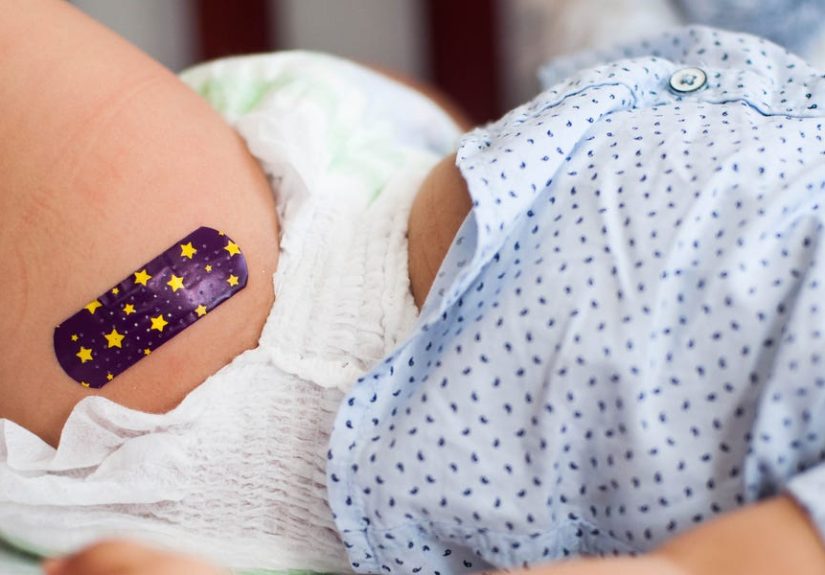
- First MMR dose: 12 to 15 months old
- Second MMR dose: 4 to 6 years old
That schedule exists for a reason. It is designed to protect children at the right ages and to build strong, lasting immunity.
There are also special situations. If your family is traveling internationally, or if there is a local outbreak, a baby between 6 and 11 months may be able to get an early dose. That early dose can help in higher-risk settings, but it does not replace the routine two-dose series that starts after the first birthday.
If your child is behind, catch-up vaccination is usually possible. The best move is to talk with your pediatrician instead of assuming you have missed the window forever. Vaccine schedules are more flexible than panic would have you believe.
What if your child was exposed to measles?
If you think your child was exposed, call your pediatrician right away. Do not just show up in the waiting room with a potentially contagious child like you are entering a game show. Measles is so contagious that clinics need to manage possible exposures carefully.
In some cases, the MMR vaccine can still help after exposure if given quickly. For certain high-risk children, immune globulin may also be used. Timing matters here, so early medical advice is important.
Why Vaccination Makes Parenting Easier, Not Harder
Parents already carry enough invisible mental load. You are tracking forms, lunches, sleep, growth charts, school emails, and whether that cough is “just dry air” or “this is how the zombie movie starts.” Vaccination removes one giant category of avoidable stress.
When your child is vaccinated against measles, you are not eliminating every possible health worry. That would require magic and probably a private island. But you are reducing one major, preventable risk in a meaningful way.
You also gain practical peace of mind during outbreak news, school notices, and travel plans. Instead of scrambling to figure out whether your child is protected, you already know. That certainty is worth a lot when public health headlines start getting loud.
Common Reasons Parents Hesitateand Why the Vaccine Still Makes Sense
“Measles seems rare, so is the vaccine really necessary?”
Measles can seem rare precisely because vaccination has worked so well. That success can create the illusion that the disease is no longer a threat. But when vaccination rates drop, measles comes back fast. Rare is not the same thing as gone.
“My child is healthy, so they would probably be fine.”
Healthy children can and do get seriously ill from measles. Good health is wonderful, but it is not a force field. Measles does not check your child’s soccer schedule and decide to be polite.
“I want to wait until my child is older.”
Waiting extends the time your child remains vulnerable. The recommended schedule is timed to protect children when they need protection, not when the calendar feels emotionally convenient.
“I’ve heard natural immunity is better.”
Natural infection may create immunity, but it comes at the price of getting the disease itself. That means accepting the risks of pneumonia, brain inflammation, hospitalization, and potential long-term complications. Vaccine immunity is the much safer bargain.
Experience-Based Stories Parents Often Relate To
One of the most common experiences parents describe is the moment measles suddenly stops feeling theoretical. Maybe it is a school email about a possible exposure. Maybe it is a news alert about an outbreak in another state. Maybe it is a pediatrician calmly asking, “Is your child up to date on MMR?” In that moment, the topic shifts from internet debate to real-life decision-making. Parents who already vaccinated often describe relief. They may still worry, because that is basically the job description, but it is a different kind of worry. It is informed, manageable worry instead of panic.
Another familiar experience is the parent who delayed a vaccine because life was chaotic, not because they were opposed. A move, a new baby, job stress, a missed well visit, a child with a cold on appointment daysmall delays add up. Then an outbreak headline appears, and suddenly that postponed appointment feels much more important. Many parents in that situation say the biggest lesson was not political or philosophical. It was practical: keeping up with the schedule is easier than trying to catch up while stressed and scared.
There is also the experience of parents who were initially worried by misinformation. They read frightening social media posts, heard a story from a friend of a friend, and felt stuck between “What if the vaccine is risky?” and “What if the disease is worse?” What often changes their mind is a straightforward conversation with a trusted pediatrician who explains the actual evidence, the real side effects, and the real complications of measles. Parents frequently say they did not need pressure. They needed clarity. Once they understood that the MMR vaccine has been studied extensively and that measles can hospitalize healthy kids, the decision felt less confusing.
Some parents only realize the value of measles vaccination when they have a younger baby at home. Suddenly the older child’s vaccine status feels connected to the infant’s safety. Families start thinking less in terms of one child and more in terms of how illness moves through a household. A vaccinated older sibling is not just protected personally; they are less likely to bring a dangerous virus home to a baby who is too young for full routine protection.
Then there are travel experiences. Parents planning an international trip often learn quickly that measles is not just a local issue. Pediatricians may recommend an early dose for certain babies traveling abroad, and that conversation can be eye-opening. Families realize the vaccine schedule is not arbitrary. It is connected to how real viruses move in the real world. Airports, airplanes, tourist attractions, and crowded indoor spaces are excellent places for memoriesand unfortunately, for respiratory viruses too.
Finally, many parents describe a simple emotional shift after vaccination: one less thing to fear. Not because vaccines make children invincible, but because they make families better protected. That feeling matters. Parenting is full of risks you cannot control. Measles vaccination is one of the few areas where you actually can do something concrete, evidence-based, and protective. For many families, that is what turns the decision from “Should we?” into “Why would we wait?”
Conclusion
If you are asking whether your child should get vaccinated for measles, the strongest answer is yes. Measles is highly contagious, it can cause serious complications, and it spreads faster than most parents realize. The MMR vaccine is effective, well-studied, and built into the childhood schedule for good reason. It protects your child, helps protect vulnerable people around you, and replaces uncertainty with preparation.
Parenting rarely offers guaranteed peace of mind, but this is one decision that tilts the odds clearly in your child’s favor. And when the choice is between a quick vaccine visit and a disease known for fever, rash, pneumonia, and outbreaks, the smart play is not exactly subtle.